
FIONA BOMBSHELL: 12-SECOND VIDEO EXPOSES A SHOCKING TWIST!
Fiona's Death Raises Questions About Cincinnati Zoo Enclosure After Hat Passes Through Narrow Opening
CINCINNATI, Ohio — November 21, 2026 — The death of Fiona, the Cincinnati Zoo's internationally known hippopotamus, has prompted questions about the design of her enclosure after a visitor's knit hat struck a ceiling fan, passed through a narrow opening above the viewing windows and landed inside the habitat.
Fiona swallowed the hat and died November 19 after an 11-day medical struggle. A subsequent examination found that the material had lodged deep in her small intestine, beyond the reach of available endoscopic procedures.
The zoo described the incident as accidental. Its explanation of the hat's unusual trajectory has nevertheless brought attention to a previously overlooked feature of the exhibit: an opening roughly 1 foot high above viewing windows that stood 12 feet tall.
The question is no longer simply how a hat reached a hippopotamus. It is whether the physical arrangement of the visitor area created a route through which an ordinary object could enter an animal habitat.
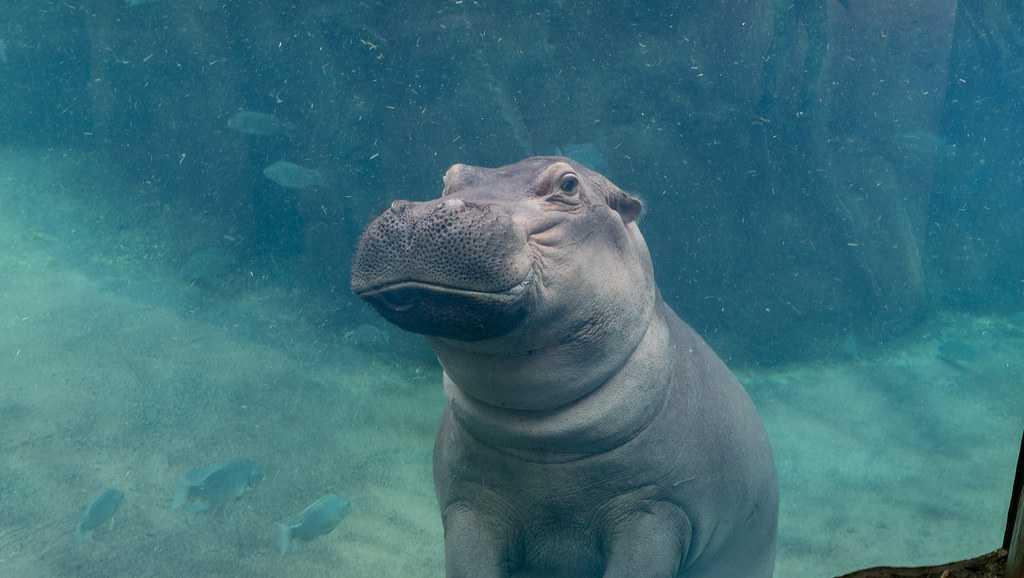
The incident began November 8, when a visitor tossed a knit hat into the air near Fiona's viewing area.
According to zoo spokesperson Michelle Curley, the hat did not travel directly from the visitor into the enclosure.
Instead, it struck or was caught by a ceiling fan.
The moving fan propelled it toward the habitat.
The hat then passed through an opening above the viewing windows and landed where Fiona could reach it.
The opening was approximately 1 foot high, according to descriptions provided by the zoo.
The viewing windows below it stood about 12 feet tall.
That combination of a fan, a narrow gap and an unexpected flight path is central to understanding the accident.
A short video can draw attention to the way an object moves through a space.
If it captures the hat striking a fan and changing direction, it may help viewers understand why the object did not follow an ordinary falling trajectory.
But the exact 12-second clip referenced in the headline has not been independently authenticated here.
The zoo's account, supported by subsequent reporting, establishes the essential sequence: the hat was tossed upward, a fan propelled it and the object passed into Fiona's habitat.
Those details matter when evaluating whether a different design could have prevented the accident
The dimensions of the opening have become a focus of questions about the habitat.
Visitors viewed Fiona through tall windows, with a smaller open section above the glass.
The gap allowed a route from the public viewing area into the animal's space.
Ordinarily, a hat tossed upward would be expected to fall back toward the visitor area.
In this case, the ceiling fan altered its direction.
The unusual movement allowed the hat to cross a barrier that would otherwise have kept it outside.
That sequence raises a design question: should an opening remain accessible to objects propelled by nearby equipment?
The fan was not merely part of the background.
According to the zoo, it supplied the force that redirected the hat toward Fiona's habitat.
Without that change in direction, the object might not have reached the opening.
The incident therefore involved more than the height of a window or the actions of one visitor.
It involved the relationship between equipment in the viewing area and the physical boundary separating people from the animal.
A safety assessment could consider whether moving air or rotating equipment can propel lightweight objects toward the habitat.
Curley described the sequence as highly unusual.
The zoo said the hat entered the enclosure accidentally.
Its account did not allege that the visitor deliberately attempted to feed Fiona or place the object inside the habitat.
The person who tossed the hat has not been publicly identified.
The zoo's explanation is consistent with witness accounts describing the hat striking a fan before entering the enclosure.
The circumstances are important because intention and consequence are different questions.
An accidental action can still have serious consequences.
At the same time, the tragic outcome does not establish that the visitor intended to harm Fiona.
The publicly available evidence supports the zoo's description of an unusual accident.
Once the hat landed inside the habitat, Fiona was able to reach it.
The hippopotamus swallowed the material.
The zoo later said the object created a medical emergency.
Unlike ordinary food, a knit hat cannot be broken down by a hippopotamus's digestive system in the same way.
Foreign material can move through portions of the gastrointestinal tract before becoming trapped.
That is what veterinarians ultimately found had happened to Fiona.
The object traveled into her small intestine.
It lodged in a location that the medical team could not reach safely.
The full seriousness of the obstruction became clear during the days that followed.
The Cincinnati Zoo publicly announced Fiona's condition on November 16.
By then, she had been under veterinary care following the November 8 incident.
The zoo said its team was monitoring her and trying to help her pass the swallowed material.
At that stage, officials expressed cautious optimism.
They hoped the hat would move through her digestive system without requiring surgery.
Fiona was kept away from her usual public exhibit while receiving care.
Her condition drew attention from visitors and followers who had watched her grow from a premature newborn into an adult hippopotamus.
The zoo promised additional updates as the medical situation developed.
Veterinarians used several methods to help Fiona pass the foreign material.
The zoo reported administering fluids and treatments intended to support gastrointestinal movement.
Medical personnel monitored her appetite and general condition.
They also used ultrasound imaging to examine her digestive tract.
A colonoscopy was attempted using a long scope supplied with assistance from another zoo.
The medical team explored whether the material could be located and removed without major surgery.
These efforts reflected the difficulty of treating a large animal with an obstruction deep inside its digestive system.
The team continued care while assessing whether Fiona could pass the hat naturally.
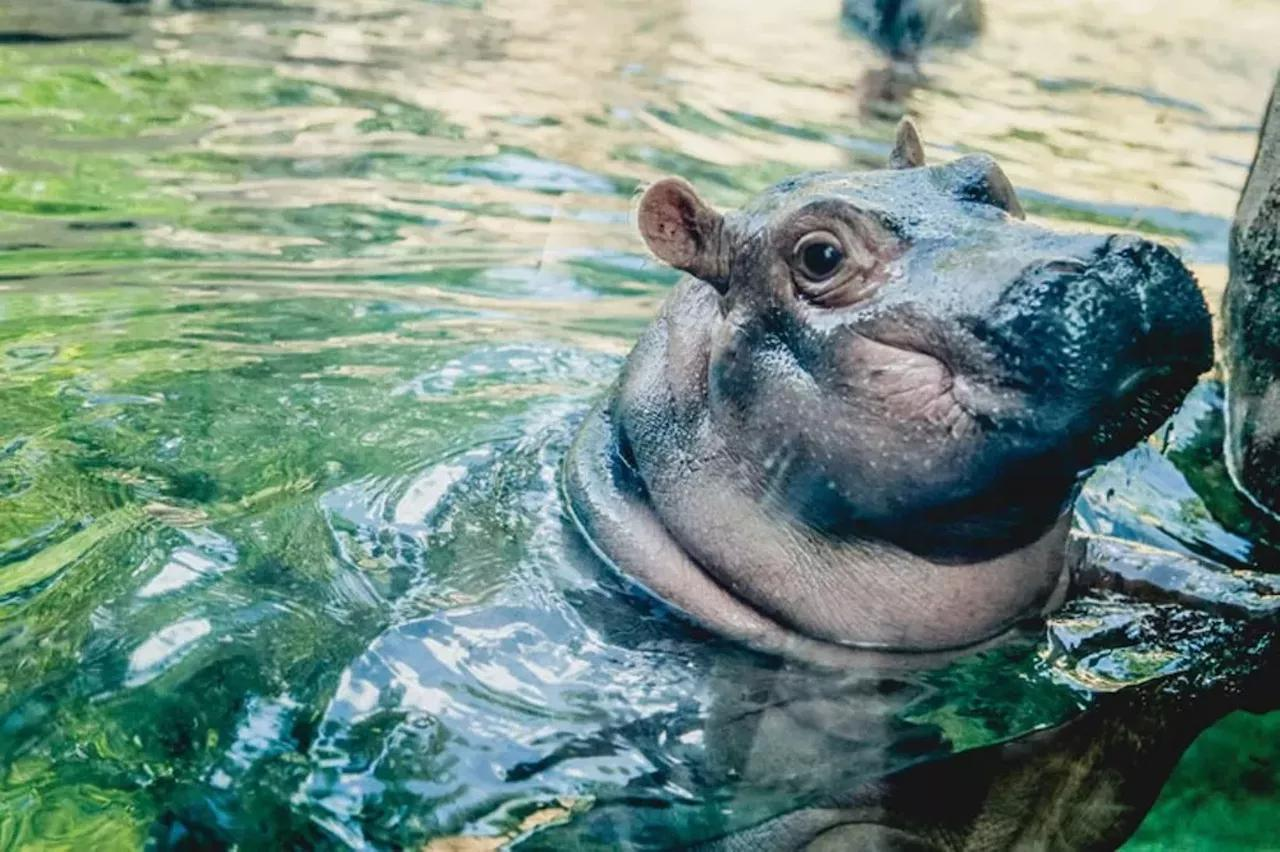
On November 18, the zoo described an additional treatment attempt.
Staff borrowed a vibration platform from a local horse farm.
They encouraged Fiona to stand on the equipment several times during the day.
The hope was that the vibrations might stimulate movement through her digestive tract.
The zoo shared video showing Fiona walking while under medical care.
Staff also offered familiar foods and other forms of encouragement.
The vibration treatment was an attempt to help the obstruction pass, not a proven cure.
The zoo continued round-the-clock monitoring.
Despite those efforts, Fiona's condition did not improve enough for her to recover.
The possibility of surgery became one of the most difficult questions surrounding Fiona's treatment.
In smaller animals, certain gastrointestinal obstructions can sometimes be removed surgically.
But Fiona was a large hippopotamus with a complex digestive system.
Her anatomy and the location of the obstruction created major challenges.
Veterinarians consulted specialists and evaluated whether a procedure could safely reach the material.
The zoo initially explained that surgery was not a viable option.
After Fiona died, a postmortem examination clarified why.
The hat had traveled so deeply into her intestines that the available endoscopic approaches could not reach it.
An extensive open operation was considered too dangerous.
A necropsy, the animal equivalent of a postmortem examination, confirmed that the hat was lodged deep in Fiona's small intestine.
The material was approximately 25 feet beyond the final stomach compartment and roughly 50 feet from the end of her intestinal tract, according to the zoo's veterinary explanation.
That location made the obstruction inaccessible from either direction using the available scopes.
The medical team also considered whether surgery could reach the affected area.
The zoo's director of animal health explained that the required incision and procedure would carry an extreme risk for Fiona.
Veterinarians therefore pursued supportive treatment.
The size difference between Fiona and the knit hat made the incident difficult for some observers to understand.
A hippopotamus can weigh thousands of pounds.
A knit hat weighs comparatively little.
But gastrointestinal obstruction is not determined simply by the weight of an object relative to the animal.
A foreign object can become lodged where the digestive tract narrows or changes direction.
It can interfere with the movement of food and other material.
The resulting complications can become life-threatening.
Veterinary experts interviewed by WIRED explained that intestinal obstruction can lead to dangerous changes in the bowel and surrounding tissues.
Fiona's necropsy established that the hat had lodged deep in her small intestine.
That obstruction ultimately proved fatal
The Cincinnati Zoo announced Fiona's death on Thursday, November 19.
She was 9 years old.
The zoo said its veterinary and animal-care teams had made repeated attempts to help her recover.
The announcement ended days of public concern over her condition.
Fiona had survived extraordinary medical challenges at birth, making the outcome particularly significant to those who had followed her life.
The zoo described the death as a devastating loss.
The subsequent necropsy established the location of the hat and explained why the obstruction could not be removed safely.
The medical findings also made the original accident's consequences clear.
An object that entered through a narrow opening had caused a fatal internal obstruction.
Following Fiona's death, attention shifted from the veterinary treatment to the habitat itself.
The reported route of the hat raised questions about whether the opening above the viewing windows was adequately protected.
The public viewing area was separated from Fiona by tall glass panels.
However, a gap remained above them.
The ceiling fan's position allowed a lightweight object to be propelled through that gap.
Those details create a legitimate basis for reviewing the physical layout.
The question is not whether every unusual accident can be predicted.
It is whether the arrangement of equipment, barriers and openings created a foreseeable route for foreign objects.
No official finding of defective enclosure design has been announced.
Zoo habitats must balance several competing requirements.
They need to protect animals and visitors.
They also need to support ventilation, visibility, maintenance and animal welfare.
An enclosure designed solely to prevent every possible object from entering might create other practical challenges.
Barriers can change how visitors see and hear animals.
They can also affect airflow and the experience of being near an exhibit.
Local 12 reported that habitat designer Paul Eberhart, an Aurora University lecturer, discussed those trade-offs after Fiona's death.
He explained that additional netting or transparent barriers can provide protection but may also affect the visitor experience.
His comments provide design context, not a finding that the Cincinnati Zoo's exhibit violated a standard.
One question raised by the incident is whether protective netting could have covered the opening.
A properly designed barrier might prevent some objects from crossing into an animal habitat.
However, the effectiveness of any proposed solution would depend on its material, installation and relationship to the surrounding structure.
The barrier would also need to meet the enclosure's operational requirements.
An engineering review would have to consider ventilation, maintenance access, animal behavior and the risk of entanglement.
It therefore cannot establish that one particular modification would have prevented the incident without creating other risks.
The possibility of additional protection is a subject for evaluation, not an established finding of negligence.
The accident also raises questions about how visitors interact with objects near animal exhibits.
The zoo said the hat was tossed into the air before the fan propelled it toward Fiona.
The action was not described as a deliberate attempt to feed the hippopotamus.
However, lightweight personal belongings can behave unpredictably around moving equipment.
Hats, bags, toys and other objects may be displaced by wind or accidental contact.
Zoos commonly seek to prevent foreign objects from entering animal habitats because animals may investigate or ingest them.
The Fiona incident demonstrates how an object can cross a barrier without being intentionally thrown into an enclosure.
The visitor's reported action and the enclosure's physical arrangement were both part of the sequence.
Witness accounts have provided additional detail about the moments after the hat entered Fiona's habitat.
In an interview summarized by FOX 32 Chicago, a visitor named King said his wife saw the hat strike the fan and fly into the enclosure.
He described the incident as accidental.
According to his account, some visitors were initially uncertain what to do.
He said a couple alerted zoo staff.
The account also described staff responding and Fiona swallowing the hat after the hippos interacted with it.
These details are attributed to a witness rather than presented as independent forensic findings.
They are consistent with the zoo's explanation of the hat's unusual route.
Those questions require additional records and professional assessment.
The zoo has explained how the hat entered the habitat.
That explanation establishes a sequence of events.
It does not constitute a complete engineering review.
The distinction matters because a plausible safety concern is not the same as a demonstrated safety violation.
Fiona's death attracted national attention because her life had become an unusually public story.
She was born January 24, 2017, approximately six weeks premature.
At birth, she weighed only 29 pounds.
That was about 25 pounds below the lowest previously recorded birth weight for her species, according to the zoo.
She was unable to nurse normally and required intensive human care.
Veterinarians and animal-care staff worked to keep her alive.
The zoo shared regular updates documenting her progress.
Millions of people followed the young hippopotamus as she gained weight, learned to move and gradually developed into a healthy animal.
Her survival made her a symbol of resilience.
Fiona's early medical struggle generated a large online following.
Visitors traveled to Cincinnati to see her.
Books and merchandise were produced around her story.
Her popularity extended beyond traditional zoo audiences.
She inspired local products and became a recognizable figure associated with Cincinnati.
Visitors also marked personal occasions at her exhibit.
The Associated Press recalled a couple whose engagement was photographed with Fiona visible underwater behind them.
These details help explain why the incident became more than a routine zoo medical report.
For many followers, Fiona had been part of their lives since 2017.
Her death prompted both grief and questions about how the accident could have occurred.
The announcement prompted an outpouring of grief.
Visitors left flowers, cards and other tributes at the Cincinnati Zoo.
Some brought items associated with Fiona's favorite foods, including watermelons.
Online discussions also turned toward the visitor whose hat entered the habitat.
The Washington Post reported that anger intensified as unsubstantiated accounts spread about the incident.
Some social media users demanded punishment for the child and family involved.
Others warned against assigning blame without reliable evidence.
The zoo maintained that the hat entered accidentally.
The identity of the visitor was not publicly established in the reporting reviewed.
The reaction illustrates how quickly a documented accident can become entangled with claims that go beyond the available evidence.
The reported incident involved a visitor tossing a hat into the air.
The ceiling fan then redirected it through an opening.
Identifying the visitor would not, by itself, determine whether the enclosure's design contributed to the outcome.
A safety review would instead examine the sequence and the physical conditions that made it possible.
That could include the position of the fan, the size of the opening and whether additional barriers would have been appropriate.
It could also consider visitor warnings and the zoo's procedures for retrieving foreign objects.
Those are operational questions that can be investigated without exposing a private individual to harassment.
The public evidence does not establish deliberate harm by the visitor.
The zoo has provided a detailed account of the hat's entry into the habitat and the veterinary treatment that followed.
That leaves several practical issues unresolved.
Will the opening be covered or modified?
Could nearby equipment be repositioned?
Would additional visitor guidance reduce the likelihood of similar incidents?
Those questions concern future prevention.
An accident can result from an unusual combination of events.
Safety assessments often examine whether an incident reveals a weakness that had not previously been recognized.
In Fiona's case, the reported sequence involved three elements: a tossed hat, a ceiling fan and an opening above the viewing windows.
Removing or changing one element might have altered the outcome.
But determining which changes are practical and appropriate requires professional evaluation.
The zoo's description of the event as accidental concerns the visitor's reported conduct.
The necropsy provided a medical explanation for Fiona's death.
It confirmed that the swallowed hat became lodged deep in the small intestine.
The location prevented veterinarians from reaching it through available endoscopic procedures.
The zoo also explained why major surgery was considered too dangerous.
Those findings address questions about the medical response.
They show that the obstruction had reached a location where treatment options were severely limited.
They do not answer whether the enclosure should have been designed differently.
The medical and engineering questions are separate.
One concerns why Fiona could not be saved after swallowing the hat.
The other concerns how the hat reached her in the first place.
Animal habitats must account for more than direct contact between visitors and animals.
They must also consider the movement of objects through the surrounding environment.
A barrier can prevent people from reaching an animal while still leaving a path for smaller items.
Equipment near the boundary may change how those items move.
The Fiona incident illustrates the importance of examining the complete visitor area rather than considering each feature in isolation.
The ceiling fan and viewing-window opening were both part of the reported sequence.
The Cincinnati Zoo has released the medical findings explaining Fiona's death.
The public record also establishes how the hat entered the habitat, according to the zoo's spokesperson.
What remains unclear is whether the zoo will make physical changes to the viewing area.
Any future modification would need to balance visitor access, animal welfare and protection against foreign objects.
The incident may also prompt questions at other zoological facilities about openings and equipment near animal habitats.
No specific nationwide rule change has been announced.
For Cincinnati, the immediate loss is Fiona, an animal whose survival story helped make the zoo internationally recognizable.
The longer-term question is whether the circumstances of her death will lead to changes intended to prevent similar accidents.
The available evidence establishes that the layout played a role in the hat's path into Fiona's habitat.
The ceiling fan propelled the object.
The opening above the viewing windows allowed it to cross into the enclosure.
Fiona then swallowed it.
The hat became lodged in her small intestine and caused a fatal obstruction.
The distinction is important.
The physical sequence is documented.
The question of design responsibility requires further assessment.
Fiona's death has therefore left the Cincinnati Zoo facing two different realities: a confirmed medical explanation for the loss of its most famous hippopotamus and an unresolved public question about the enclosure through which the fatal object entered.
Comments (0)
Loading comments...
May You Like

PACIFICA PIER IN CALIFORNIA COLLAPSE REVEALS MASSIVE CRACK BENEATH THE OCEANs!

10,000 CIA AND U.S. SPY RECORDS LEAKED—3 INTELLIGENCE AGENCIES ORDER EMERGENCY REVIEWS!

PENTAGON'S PATRIOT MISSILE DELAY — A MAJOR SETBACK FOR UKRAINE'S AIR DEFENSE?













