
FIONA DEATH SHOCK—$10 MILLION ZOO LAWSUIT?? WHY??
CINCINNATI, Ohio — November 21, 2026 — The death of Fiona, the Cincinnati Zoo's internationally known hippopotamus, has renewed scrutiny of visitor barriers after a child's knit hat reportedly struck a ceiling fan and flew through a narrow opening into her enclosure. The incident has also generated questions about responsibility, the actions of the young visitor and whether the zoo could face legal consequences.
Fiona died November 19, 11 days after swallowing the hat. The zoo described the hat's entry into the habitat as accidental.
The reported sequence has shifted attention toward an unusual feature of the viewing area: a 1-foot opening above glass windows standing approximately 12 feet high.
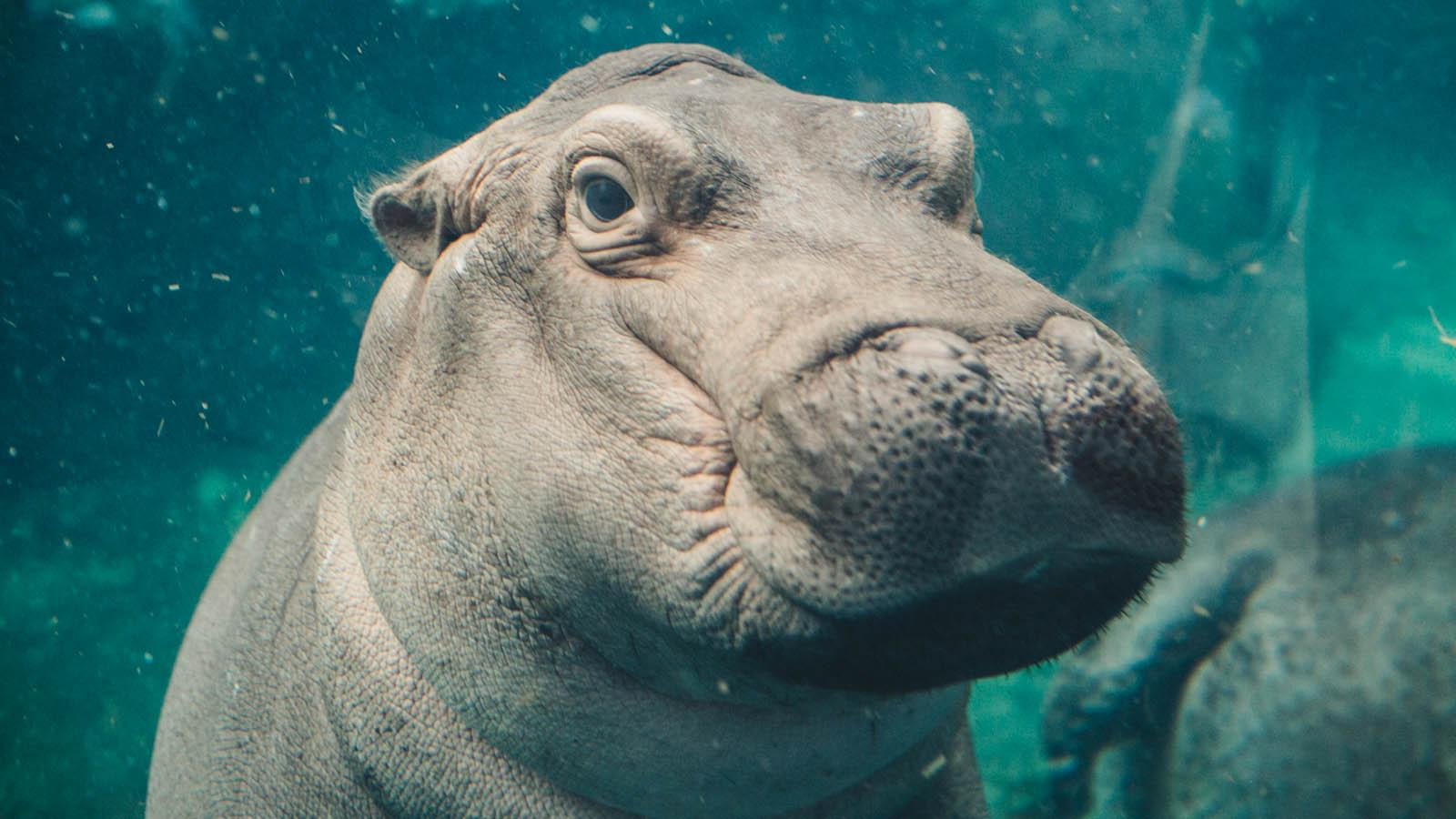
The chain of events began November 8 at the zoo's hippopotamus habitat.
According to the Cincinnati Zoo, a young visitor tossed a knit hat upward near the viewing area.
The hat struck a ceiling fan.
The fan redirected it toward the enclosure, sending it through a narrow opening above the viewing windows.
The object landed inside the habitat, where Fiona could reach it.
She swallowed the hat.
The incident was initially described as an accident, rather than an intentional attempt to feed the animal.
The distinction is important because it separates the visitor's reported action from the unexpected movement of the object.
A hat thrown into the air did not travel directly into the enclosure. It was propelled there after contacting equipment.
WLWT reported on November 16 that the zoo identified the person who tossed the hat as a child standing in front of the habitat.
The report did not publicly identify the child.
It also did not describe criminal charges or a civil lawsuit against the child or the child's family.
The zoo's spokesperson, Michelle Curley, characterized the incident as accidental.
The available accounts do not establish that the child intended to throw the hat into Fiona's enclosure.
They instead describe an object that changed direction after striking a fan.
The young visitor's reported involvement became a focus of online attention because the incident ended in Fiona's death.
But the public record does not establish deliberate harm by the child.
The ceiling fan is a critical part of the reported sequence.
A lightweight object thrown upward can be redirected when it contacts moving equipment.
In this case, the fan reportedly propelled the hat toward the habitat.
The resulting path allowed it to cross the physical separation between visitors and the hippopotamus.
That makes the incident different from a visitor deliberately dropping food or an object directly into an enclosure.
The reported movement involved an interaction between visitor behavior and the surrounding environment.
It also raises a practical safety question.
Could the placement of the fan relative to the opening have created a route for lightweight objects to reach the animal?
That question requires examination of the viewing area's design.
The zoo described a gap approximately 1 foot high above the viewing windows.
The windows themselves stood about 12 feet tall.
The glass provided a substantial barrier between visitors and Fiona.
But the opening above it allowed the hat to pass into the enclosure after the fan redirected it.
The gap's dimensions are significant because they help explain how an object could cross a barrier that appeared to separate people from the animal.
A tall viewing window can prevent direct contact while still leaving space above it.
Whether that opening met applicable design standards is a separate question.
It does, however, identify a physical feature relevant to the accident.
A short recording may show the moment the hat changed direction.
If the clip includes the ceiling fan and the opening above the windows, it could help viewers understand the object's path.
However, the specific 17-second recording described in circulating claims has not been independently authenticated here.
A short video also has important limitations.
It may not show the entire viewing area.
It may omit events before the hat was tossed or after it entered the habitat.
The verified sequence comes from the zoo's statements and reporting based on those statements.
Those accounts establish the unusual route the hat took into Fiona's enclosure.
Video footage can be useful evidence, but it is not a complete investigation.
An assessment of the incident would need to consider the location of the fan, the opening above the windows and the normal movement of visitors through the viewing area.
It might also examine warnings, staff procedures and previous incidents involving objects entering habitats.
The publicly available reporting does not establish that such a comprehensive assessment has been completed.
The zoo has explained the immediate sequence.
The distinction matters because viewers may interpret a short clip as proof of responsibility.
In reality, determining whether a safety measure was inadequate requires additional evidence.
After the hat landed inside the enclosure, Fiona was able to reach it.
She swallowed the material.
That changed over the following days.
Her appetite began to decline.
Veterinary staff monitored her condition and attempted to help the material move through her digestive system.
The zoo publicly announced her medical situation on November 16.
At that point, staff were cautiously optimistic that she might pass the object.
The obstruction later proved more serious than initially hoped.
Fiona's condition deteriorated despite repeated treatment efforts.
A hippopotamus is a large animal, but a relatively small object can still cause a serious gastrointestinal obstruction.
The danger depends on where the material travels and whether it can move through the digestive tract.
A knit hat is not normal food.
It cannot be digested like vegetation.
The material may become trapped as it passes through the stomach and intestines.
In Fiona's case, the hat traveled deep into the small intestine.
It lodged there and prevented normal movement through the digestive system.
The resulting obstruction became a medical emergency.
The size of the hat relative to Fiona's body did not prevent it from causing a fatal complication.
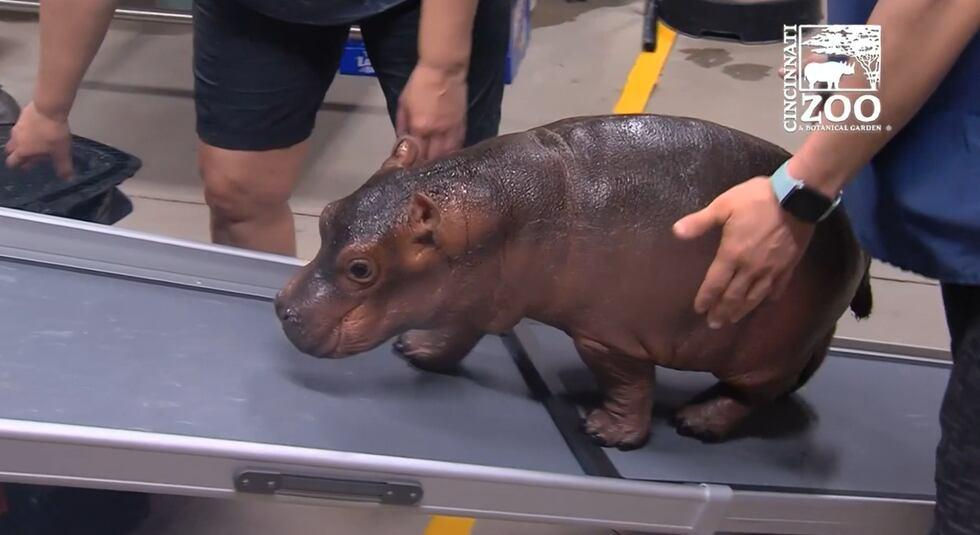
The zoo's veterinary team worked to help Fiona pass the object.
Staff monitored her hydration and appetite.
They administered fluids and used medical procedures intended to assess her digestive system.
Veterinarians performed ultrasound examinations.
They also attempted a colonoscopy using a long scope.
The team sought assistance and equipment from other facilities.
One treatment involved a vibration platform borrowed from a horse farm.
Staff encouraged Fiona to stand on it in the hope that the movement would stimulate her digestive tract.
The zoo shared updates showing the efforts to keep her active and comfortable.
Despite those measures, the obstruction remained.
Fiona's anatomy and the location of the obstruction made surgery extremely difficult.
A hippopotamus has a complex digestive system.
Major surgery also presents substantial challenges involving anesthesia, access to internal organs and recovery.
Veterinarians considered whether the material could be reached through less invasive procedures.
The zoo later explained that the hat was beyond the reach of available endoscopic approaches.
A major open operation would have carried an unacceptable risk.
The medical team therefore continued supportive care.
That decision reflected the available treatment options and the danger of attempting surgery.
The postmortem examination later confirmed the location of the obstruction.
The necropsy established that the hat was lodged deep in Fiona's small intestine.
According to the zoo, it was approximately 25 feet beyond the final stomach compartment.
It was also roughly 50 feet from the end of the intestinal tract.
Those distances help explain why veterinarians could not reach the material with available scopes.
The hat had traveled into a location inaccessible from either direction.
The zoo's director of animal health said a major operation to reach it would have been extremely dangerous.
The medical findings provided an explanation for why the treatment attempts failed.
They also confirmed that the swallowed hat caused the fatal obstruction.
The claim that Fiona's death has already resulted in a $10 million lawsuit is not supported by the sources reviewed.
Neither the Cincinnati Zoo's official death announcement nor the Associated Press reports identify such a filing.
The available reporting also does not identify a plaintiff, defendant, court, case number or legal complaint seeking that amount.
Those details would ordinarily be necessary to establish that a lawsuit had been filed.
Public criticism of a zoo is not the same as a civil action.
Nor does the existence of a fatal accident automatically establish a legal claim for a particular amount.
The documented development is Fiona's death and the subsequent explanation of how the hat entered her enclosure.
The incident raises questions that could be relevant to an examination of zoo safety practices.
Those include whether the viewing area had appropriate barriers and whether equipment near the enclosure created an avoidable risk.
A legal assessment would require evidence about the zoo's duties, applicable standards, the design of the habitat and the circumstances of the accident.
It would also need to establish who had standing to bring a claim and what legal remedies might be available.
The reported facts do not resolve those issues.
The presence of an opening above the viewing windows does not automatically prove a breach of duty.
Similarly, the zoo's description of the incident as accidental does not settle every question about the adequacy of the enclosure.
A monetary claim in a lawsuit is not an independently established financial loss.
Even when a complaint seeks a specific amount, that figure represents what a claimant is requesting.
It does not mean a court has agreed with the claim or ordered payment.
For the Fiona incident, no verified $10 million filing has been identified.
There is also no documented court judgment requiring the Cincinnati Zoo to pay that amount.
Any report presenting the figure as a confirmed lawsuit would need a court record or another reliable source.
Without one, the number cannot be used to describe an actual legal proceeding.
The central documented issue remains the accidental entry of a hat into an animal enclosure and its fatal consequences.
The reported trajectory of the hat raises a more complex question than whether the child tossed it.
According to the zoo, the child threw the hat upward.
The ceiling fan then propelled it through the opening.
Those two events formed part of the same sequence.
The fan's role helps explain how the object crossed the barrier.
But identifying the mechanical sequence does not automatically assign legal responsibility to the zoo.
It also does not establish that the child acted intentionally or negligently.
An assessment of responsibility would need to consider the circumstances and applicable standards.
The public record establishes the sequence described by the zoo, not a final determination of fault.
The zoo's account identifies the visitor as a child, but the reporting reviewed does not establish the child's exact age.
That matters because age can affect how actions are understood.
Children may act impulsively without appreciating the possible consequences of an ordinary gesture.
A lightweight hat thrown into the air would not ordinarily be expected to cause the death of a large animal.
In this incident, the reported interaction with the ceiling fan created an unusual outcome.
The zoo characterized the event as accidental.
There is no verified report that the child deliberately targeted Fiona or intended to place the hat inside her habitat.
The child's identity has not been publicly disclosed.
The reports reviewed do not identify the young visitor.
That leaves the public with information about the action but not the individual.
The distinction is important because the available evidence does not establish intentional harm.
Following Fiona's death, public anger focused partly on the person who tossed the hat.
Some online discussions called for punishment.
Others emphasized the accident's unusual circumstances and questioned the enclosure design.
None of those reactions substitutes for an official finding.
The zoo's account remains that the hat entered the habitat accidentally.
The available reports do not identify criminal charges against the child or the child's family.
The most significant physical detail is the relationship between the ceiling fan and the opening above the viewing windows.
The fan reportedly propelled the hat.
The opening provided a path into Fiona's habitat.
A safety review could examine whether the arrangement allowed lightweight objects to cross the barrier under foreseeable conditions.
It could also consider whether additional screening or other modifications would be practical.
However, a proposed change must account for the enclosure's full operation.
Zoo habitats need ventilation, maintenance access and appropriate conditions for animals.
The reporting does not establish that the Cincinnati Zoo has completed an engineering review or announced a specific redesign.
The design question remains open.
One potential modification would be to install a barrier over an opening through which objects might pass.
Netting, screening or other protective materials can sometimes reduce the risk of foreign objects entering an animal habitat.
But the effectiveness of any particular solution depends on its design.
A barrier must be suitable for the animal, the environment and the structure.
It must also avoid creating new hazards.
For Fiona's enclosure, no published engineering assessment establishes which modification would have been most appropriate.
The incident nevertheless demonstrates why the opening deserves examination.
The reported trajectory of the hat depended on the object passing through that space.
A physical barrier could change that route, although its suitability would require professional evaluation.
Zoos commonly warn visitors not to throw food or objects into animal habitats.
Such instructions are intended to protect animals from harmful materials.
The Cincinnati Zoo also reminded visitors to secure their belongings and notify staff if an object enters an enclosure.
Warnings can help reduce risky behavior.
However, the effectiveness of signs depends on their visibility, wording and placement.
The public reporting does not establish which warnings the child or accompanying adults saw before the November 8 incident.
It also does not establish whether staff had previously observed hats or other objects entering the enclosure through the same opening.
Those details would be relevant to a comprehensive review.
They are not answered by the short video claim alone.
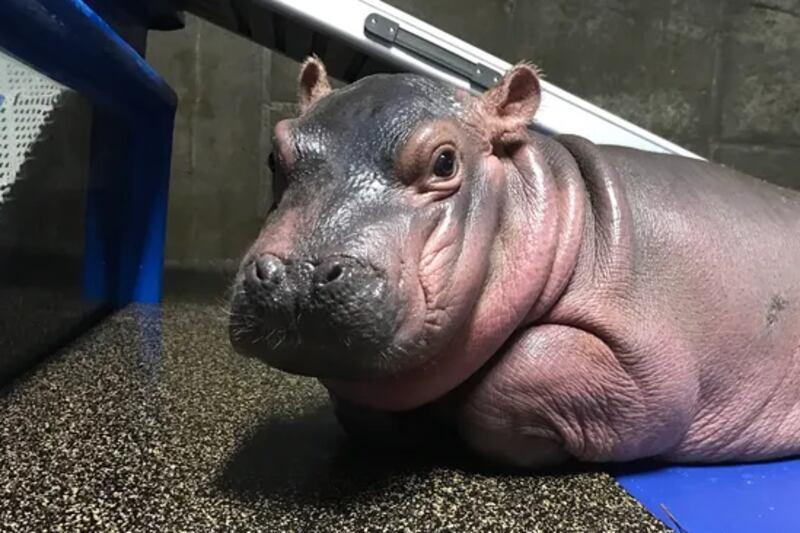
Fiona had been one of the Cincinnati Zoo's best-known animals since her birth in January 2017.
She arrived approximately six weeks prematurely and weighed only 29 pounds.
Her low birth weight created serious medical challenges.
She was initially too weak to nurse normally.
Zoo staff provided intensive care and documented her progress.
Images and videos of Fiona's recovery attracted a worldwide audience.
Her survival became an important part of the zoo's public identity.
Visitors followed her development from a fragile newborn to a full-grown hippopotamus.
Her death therefore affected people who had watched her for nearly a decade.
The circumstances surrounding the hat intensified public attention.
Fiona's early survival story helped make her a recognizable figure beyond Cincinnati.
She appeared in books, merchandise and educational materials.
Her progress was followed by families, teachers and animal enthusiasts.
The zoo frequently shared updates about her behavior and development.
Her story also became a way to introduce visitors to hippopotamus biology and conservation.
That public connection explains why the announcement of her death produced an unusually broad response.
Many people had first encountered Fiona as a premature calf.
They had watched her overcome serious early health problems.
The fact that she later died after swallowing an ordinary knit hat added to the public's difficulty in understanding the outcome.
Visitors began leaving tributes after the zoo announced Fiona's death on November 19.
Flowers and handwritten messages appeared near a hippopotamus statue.
Some visitors brought watermelons, a food associated with Fiona's birthday celebrations.
The Associated Press reported that children and adults participated in the memorial.
Public officials and local organizations also acknowledged the loss.
The response reflected Fiona's status as a symbol of Cincinnati.
Her story had reached audiences far beyond the zoo.
For many followers, the news was not simply the death of an animal they had once seen.
It marked the end of a story they had followed since her birth.
The Cincinnati Zoo announced Fiona's death on November 19.
Zoo director Dave Jenike said the outcome had surprised the animal-care team.
The zoo emphasized the efforts made by veterinarians and keepers during the 11 days after Fiona swallowed the hat.
Those efforts included repeated examinations, hydration, imaging and attempts to help the obstruction pass.
The institution also acknowledged the emotional impact on staff.
Fiona had been cared for by people who had known her since her premature birth.
The zoo's public statement focused on her medical struggle and the loss felt by staff and supporters.
It did not announce a $10 million lawsuit or a finding of defective enclosure design.
The postmortem examination established a medical cause of death.
It found that the hat became lodged deep in Fiona's small intestine.
Those findings explain why Fiona died.
They do not determine who, if anyone, bears legal responsibility.
A legal finding would require a separate process involving applicable duties and evidence.
The zoo's account of the fan and opening helps establish how the object reached Fiona.
But the medical evidence does not establish whether the enclosure was improperly designed.
Keeping those questions separate is essential.
The cause of death has been documented.
Responsibility for the circumstances that allowed the hat to enter remains a different issue.
A comprehensive review could begin with the physical layout of the viewing area.
Investigators or safety specialists could measure the distance between the fan and the opening.
They could examine how lightweight objects move when they contact the fan.
They could also assess whether the gap was necessary for ventilation or another operational purpose.
Visitor guidance and staff response procedures could be evaluated.
Records of previous incidents involving foreign objects might also be relevant.
Such an assessment would help distinguish an extremely unusual accident from a recurring hazard.
No completed review containing those findings has been identified in the public reporting.
The existing evidence explains the accident's immediate sequence but does not resolve every prevention question.
The Cincinnati Zoo may consider whether modifications could reduce the chance of similar incidents.
Potential measures could involve barriers, equipment placement or visitor guidance.
However, the institution has not announced a specific redesign in the sources reviewed.
Any change would need to account for animal welfare, maintenance and the visitor experience.
The central challenge is preventing foreign objects from entering the habitat without introducing other risks.
Fiona's death provides a concrete example of how an unexpected interaction between equipment and a personal belonging can have serious consequences.
Whether it results in permanent changes to the exhibit remains to be seen.
A short video may capture a moment that raises important questions.
It can show movement, timing and the relationship between visible objects.
But it cannot independently establish a zoo's legal duties or whether those duties were breached.
It also cannot prove that a child intended harm.
In Fiona's case, the zoo's account identifies the fan and opening as essential parts of the hat's path.
That is a factual basis for examining the enclosure.
Nor is it a finding that the zoo or the child is legally responsible.
Those conclusions would require additional evidence and, where applicable, legal proceedings.
The reported incident began when a child tossed a knit hat upward near Fiona's habitat.
The hat struck a ceiling fan.
The fan propelled it through an opening above the viewing windows.
Fiona swallowed it.
Eleven days later, she died after the material became lodged deep in her small intestine.
The postmortem examination confirmed the obstruction.
The zoo has described the event as accidental.
The young visitor has not been publicly identified, and no verified report establishes deliberate harm.
The remaining questions concern whether the enclosure's design could be improved and whether the zoo will make changes to prevent a similar incident.
For Fiona's supporters, the immediate outcome is already known: a hippopotamus whose survival inspired millions died because an ordinary object reached a place it was never meant to enter.
Comments (0)
Loading comments...
May You Like

PENTAGON'S DECLASSIFIED UFO FILES — THE MYSTERY OF AN UNDERGROUND STORAGE PROJECT!

TRUMP'S NVIDIA STOCK DEALINGS — IS THERE ANY TRUTH TO THE $14 MILLION PROFIT CLAIM?

TRUMP CALLED FOR KIMMEL’S FIRING—THE FCC ACTED THE VERY NEXT DAY













