Florida Becomes First State to Restrict Welfare Cash Purchases for Vapes, Tattoos and Theme Park Tickets
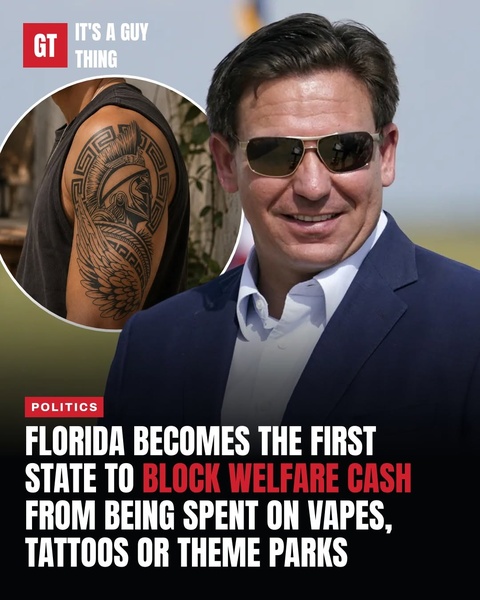
Florida Becomes First State to Restrict Welfare Cash Purchases for Vapes, Tattoos and Theme Park Tickets
Governor Ron DeSantis says the new restrictions will protect taxpayer-funded assistance and keep benefits focused on essential needs. The policy targets Temporary Cash Assistance—not all food-stamp benefits—and is being introduced in phases.
1. Florida Introduces First-in-the-Nation Welfare Spending Restrictions
Florida is moving to impose new limits on how recipients can spend certain government assistance benefits, making it the first state to amend its Temporary Assistance for Needy Families (TANF) plan with restrictions targeting purchases such as vaping products, tattoos, video games and theme park admission.
Governor Ron DeSantis announced the policy on August 24, 2026, during an event in Tampa. He described the changes as an effort to ensure taxpayer-funded assistance supports families' basic needs rather than luxury purchases and non-essential services.
The announcement has attracted national attention because it goes beyond traditional restrictions on where welfare benefits can be used, extending controls to specific products and services at otherwise eligible retailers.
2. What Purchases Will Be Prohibited?
Under Florida's amended TANF State Plan, Temporary Cash Assistance benefits will be prohibited from being used directly to purchase several categories of products and services.
The restricted categories include:
-
Tobacco, nicotine and vaping products.
Drugs and intoxicants.
Pornography.
Video games and entertainment subscriptions.
Entertainment tickets and theme park admission.
Tattoos, spa services, tanning and other luxury services.
Psychic and fortune-telling services.
The restrictions are designed to prevent these specific purchases from being made with the affected cash-assistance benefits. They do not make it illegal for recipients to purchase these products with their own money.
3. The Important Distinction: Temporary Cash Assistance Is Not SNAP
One of the most important details in this story is that Florida's new restrictions primarily concern Temporary Cash Assistance, commonly known as TCA.
The program is funded through the federal Temporary Assistance for Needy Families system and provides eligible households with cash assistance through Electronic Benefit Transfer cards.
It is separate from the Supplemental Nutrition Assistance Program, or SNAP, which provides food-purchasing benefits. Some households receive both types of assistance, with separate balances accessible through an EBT card.
That distinction matters because the announcement does not mean Florida has suddenly prohibited every SNAP recipient from spending food benefits on tattoos, entertainment or other non-food purchases. The new restrictions target the cash-assistance program.
4. DeSantis Says Public Assistance Should Focus on Basic Needs
DeSantis argued that government assistance should help families cover necessities such as food, clothing, housing, utilities and household expenses.
In his announcement, he said Florida wanted to establish stronger safeguards so taxpayer-funded benefits would be used for their intended purpose.
The governor also criticized what he described as misuse of public assistance, arguing that the new restrictions would help reduce fraud and encourage recipients to move toward greater financial independence.
His administration has framed the policy as a way to preserve assistance for people who genuinely need support while strengthening oversight of public funds.
5. How Much Money Do Florida Families Receive?
According to the Florida governor's office, the average household receiving Temporary Cash Assistance gets approximately $250 per month.
The program is intended to help eligible families manage ongoing expenses during periods of financial difficulty. Its stated purposes include helping households pay for necessities and supporting families as they work toward greater economic stability.
Florida also uses TANF funding for its Relative Caregiver Program, which provides assistance to relatives caring for children. The governor's office said that program supports more than 4,000 children across the state.
Officials have emphasized that the new purchase restrictions do not reduce a household's eligibility or the amount of cash assistance it receives.
6. How Will Florida Enforce the New Rules?
The restrictions are expected to rely on transaction controls involving EBT systems, retailers and financial institutions.
Florida's Department of Children and Families said the state would work with federal partners and payment-system providers to identify and block prohibited transactions.
Officials described a phased rollout, beginning with SNAP-authorized retailers before expanding transaction-level controls to additional prohibited products and services.
The state has not treated the announcement as an overnight switch affecting every retailer. Recipients and businesses are expected to receive further communication as implementation progresses.
7. The Trump Administration Signals Support for Florida's Approach
Florida's proposal has also drawn attention from officials in Washington.
A report by Fox News published August 27 said the Department of Health and Human Services' Administration for Children and Families had determined Florida's amended TANF plan to be complete. The report described the Trump administration as encouraging other states to consider similar restrictions.
Administration official Alex J. Adams defended the approach, arguing that temporary assistance should be directed toward basic needs rather than what he called superfluous purchases.
The federal response could make Florida's policy an influential example in the wider national debate over welfare spending and government oversight. However, other states would still need to consider their own program requirements and implementation procedures.
8. Supporters and Critics Face a Bigger Question About Welfare Policy
Supporters of the restrictions argue that public assistance should prioritize essentials and that taxpayers deserve greater confidence that government funds are being used responsibly.
They also point to the state's claim that the rules will not reduce benefit amounts or change eligibility, suggesting that families can continue receiving assistance while the state places limits on certain purchases.
Critics of restrictive welfare policies may raise a different concern: how far government agencies should go in controlling the spending decisions of low-income households receiving cash assistance. Questions about enforcement, transaction errors and how retailers distinguish restricted purchases from permitted ones will also matter as the system is implemented.
The debate therefore extends beyond vaping products or theme park tickets. It concerns the balance between protecting public funds and preserving flexibility for families facing financial hardship.
9. Florida's Policy Could Become a National Test Case
Florida's decision marks a significant development in the debate over how government assistance should be distributed and monitored.
The policy does not eliminate Temporary Cash Assistance, cut the announced benefit amounts or make the listed purchases illegal for recipients using their own money. Instead, it establishes new limits on what the affected government-funded cash benefits can directly purchase.
For now, the most important questions concern how quickly the restrictions become operational, how reliably retailers can enforce them and whether other states follow Florida's example.
DeSantis has presented the changes as a first-in-the-nation effort to strengthen accountability. Whether the approach becomes a broader model for welfare policy will depend on its implementation and the results that follow.
Comments (0)
Loading comments...
May You Like