
FLORIDA DMV BOMBSHELL: 360 FELONY CHARGES, 13 DEAD, 50 CRASHES—AND JUST A $15,000 BOND?!
Florida DMV Examiner Faces 360 Felony Charges as $15,000 Bond Decision Draws Attention to Licensing Fraud Case
FORT LAUDERDALE, Florida — November 21, 2026 — A former Florida driver's license examiner is facing 360 felony charges over an alleged scheme involving 60 questionable licensing transactions, while a judge's decision to set bond at $15,000 has drawn attention to the difference between pretrial release and criminal accountability.
Lynnette Stitt Williams, 56, of Miami, was arrested November 16 after Florida Highway Patrol investigators examined allegations that applicants were directed through a driving school to obtain licenses without meeting state requirements.
Prosecutors sought $900,000 in bond at her first court appearance. Broward County Judge Allison Gilman instead set the amount at $15,000 after considering the allegations and Williams' personal circumstances.
The decision concerned her eligibility for release while the case proceeds. It did not dismiss the charges or determine whether she was guilty.
The investigation centers on allegedly fraudulent residency documents, applicants who bypassed normal appointments and licenses issued despite incomplete testing requirements, according to court records reported by CBS News Miami and Local 10.

The investigation began with a tip involving a driving school and a state licensing employee.
According to the arrest warrant, an attorney informed investigators about applicants who had paid to obtain Florida driver's licenses.
The applicants allegedly dealt with First Driving School Corp., a business associated with Hallandale Beach.
Investigators say the school promised customers that they could obtain licenses regardless of their legal status or whether they met other eligibility requirements.
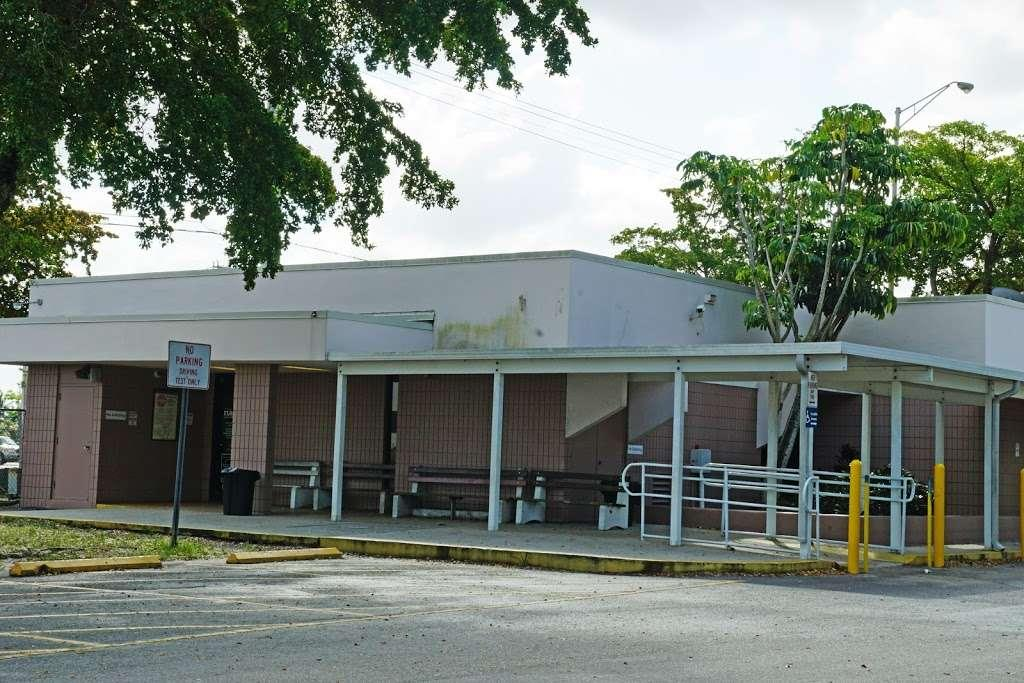
Applicants were then allegedly directed to Williams at the Pembroke Pines driver's license office.
Authorities reviewed records associated with those transactions.
They identified 60 applications they considered fraudulent.
Prosecutors brought six felony counts in connection with each transaction, producing a total of 360 charges.
The case concerns whether Williams knowingly approved applications that did not meet Florida's requirements.
The number of charges is one of the most prominent features of the case.
But the criminal count and the number of questioned transactions are different.
Investigators identified 60 allegedly fraudulent licensing transactions.
For each, prosecutors alleged six separate offenses.
Those offenses include unlawful license issuance, forgery, misuse of public records and official misconduct.
The resulting total is 360 felony counts.
That does not mean authorities identified 360 different recipients.
It also does not establish that thousands of licenses were involved.
The public reporting reviewed for this article identifies 60 transactions at the center of Williams' prosecution.
Any broader audit would need to be evaluated separately, using its own records and findings.
The available arrest reports do not identify 2,000 licenses as fraudulent transactions in Williams' case.
Investigators described 60 questioned records.
Florida officials have discussed reviewing and revoking licenses issued improperly, but the public reporting does not establish that 2,000 credentials were flagged in this particular investigation.
That distinction is important because the number of records under review can differ from the number of fraudulent transactions identified.
An agency may review many files to investigate a smaller group of suspicious applications.
A review also does not mean every document examined is fraudulent.
The documented criminal case is based on 60 transactions.
The prosecution must prove the alleged misconduct associated with those records.
First Driving School Corp. was identified in the arrest warrant as the business that allegedly connected applicants with Williams.
Investigators say customers paid the school a fee.
The school allegedly promised that they would obtain a license even if they did not satisfy legal or testing requirements.
A representative then directed customers to Williams at the licensing office.
Authorities considered that referral pattern significant.
Applicants were allegedly sent to a particular examiner rather than proceeding through ordinary appointment channels.
The allegation suggests an organized process rather than a single clerical mistake.
However, the criminal responsibility of individual school employees and applicants must be established separately.
Investigators found irregularities in documents submitted as proof of Florida residency.
Some applicants allegedly used utility or cable bills with identical account numbers.
Others submitted records containing repeated invoice or membership numbers.
Authorities also identified questionable addresses and multiple applications involving the same supporting documents.
These patterns raised concerns about whether the applicants genuinely resided at the addresses listed.
Proof of residency is an important part of the licensing process.
It helps the state establish whether an applicant satisfies applicable requirements.
The arrest warrant alleges that Williams accepted questionable documents and processed the applications.
Investigators interpreted the repeated irregularities as evidence supporting knowing participation.
That interpretation remains subject to challenge in court.
The investigation also concerns applicants who allegedly received licenses without completing required examinations.
Court records described in local reporting indicate that some customers had not passed necessary written or road tests.
Others were reportedly required to retake examinations.
Investigators allege that licenses were nevertheless issued.
That raises a distinct issue from the use of questionable residency documents.
A valid address does not demonstrate that a person understands traffic laws or can operate a vehicle safely.
Required examinations are intended to establish those qualifications.
The allegation is that Williams approved some applicants despite outstanding testing requirements.
The legal question concerns whether mandatory procedures were knowingly bypassed.
A driver's license is an official credential indicating that a person has met the requirements applicable to that license.
When a license is issued improperly, the reliability of the system can be undermined.
An applicant who has not completed a required driving test may not have demonstrated the skills the state expects.
That creates a legitimate concern for road safety.
But the existence of an improperly issued license does not prove that its holder later caused an accident.
A collision investigation requires separate evidence about driver conduct, vehicle conditions and the circumstances of the crash.
The case against Williams concerns alleged licensing fraud.
No documented list of 50 collisions connected to Williams' alleged licensing scheme appears in the reporting reviewed.
Nor do those sources identify 13 fatalities attributed to drivers who received the questioned licenses.
To establish such a connection, investigators would need to identify the relevant drivers, crashes and official findings.
They would also need to distinguish between a driver merely being involved in a collision and being responsible for causing it.
The number of licensing transactions cannot be used to calculate a crash or death toll.
The case presents serious allegations involving official records and required examinations.
Those allegations stand independently of unsupported casualty figures.
The documented investigation is about whether licenses were issued unlawfully, not a confirmed series of 50 traffic crashes.
Florida Highway Patrol troopers arrested Williams on November 16 following the investigation.
The arrest came after investigators reviewed records associated with the Pembroke Pines licensing office.
Williams had worked for the Florida Department of Highway Safety and Motor Vehicles for approximately 20 years, according to statements made during her court appearance.
By the time of her arrest, she was working in a different government licensing role.
The allegations concern her earlier work at the Pembroke Pines office.
The length of her employment drew attention because the charges involve a person entrusted with issuing official state credentials.
But an arrest does not establish guilt.
Williams remains entitled to contest the allegations and the evidence against her.
Williams appeared before Broward County Judge Allison Gilman on November 17.
The prosecution requested a bond amount totaling $900,000.
The judge found probable cause to proceed on the charges but set bond at $15,000.
Williams' husband and a friend appeared in support of her.
The court heard that she had worked in licensing for nearly two decades and had no previous criminal record.
Those circumstances were considered during the bond decision.
The judge's ruling attracted attention because the requested amount and the final amount differed substantially.
But the decision addressed release before trial.
The state requested $900,000 in bond because Williams faced hundreds of felony counts.
The requested amount reflected the cumulative bond amounts associated with the charges.
Prosecutors sought a substantially higher financial condition than the judge ultimately imposed.
A bond hearing is not a trial.
The prosecution does not need to prove guilt beyond a reasonable doubt at that stage.
Instead, the court considers legal standards governing pretrial release.
Those can include the nature of the allegations, the defendant's history, ties to the community and other relevant circumstances.
The judge may impose conditions intended to ensure that the defendant appears for future proceedings.
The amount requested by prosecutors is not automatically the amount the court must set.
Local 10 reported that Judge Gilman referred to Williams' lack of a prior criminal record and the support she received from people present in court.
The judge also acknowledged the seriousness and duration of the alleged conduct.
Williams' husband described her employment history.
A friend asked the court to consider a lower bond.
Those statements were part of the information presented at the hearing.
The judge ultimately set bond at $15,000.
That decision did not mean the court found the charges insignificant.
Nor did it mean prosecutors had withdrawn their allegations.
The court had already found probable cause.
The ruling instead established a financial condition for potential release while the prosecution continued.
Bond is a mechanism used in criminal proceedings to address release from custody before trial.
Depending on the applicable arrangement, a defendant may post money or use a licensed surety to secure release.
The purpose is to help ensure compliance with court requirements, including future appearances.
Bond is not a payment that purchases innocence.
It is not a fine imposed after conviction.
And it is not a settlement that eliminates criminal charges.
A defendant released on bond still faces prosecution.
The court may impose additional conditions and can respond if those conditions are violated.
In Williams' case, the $15,000 figure concerns pretrial release.
The 360 felony charges remained pending following the bond hearing.
No. The bond ruling did not dismiss the charges.
Paying or securing a $15,000 bond does not give a defendant the right to have a criminal case erased.
A dismissal would require a separate legal basis and action within the criminal proceedings.
Charges may be contested through motions, negotiations or trial.
The prosecution must prove its case under the applicable standard.
A defendant may be acquitted, convicted or have charges resolved through another lawful procedure.
None of those outcomes follows automatically from posting bond.
The difference between bond and dismissal is central to understanding this case.
The amount set by the judge governs release conditions, not the ultimate disposition of 360 felony allegations.
Judge Gilman found probable cause during Williams' initial appearance.
Probable cause is a legal threshold that permits criminal proceedings to move forward.
It does not mean the court has concluded that the defendant committed every alleged offense.
A conviction requires a substantially different determination.
The prosecution must establish the necessary elements of each offense beyond a reasonable doubt.
Williams may challenge the documents, witness accounts and conclusions presented by investigators.
She may also dispute whether she knowingly participated in unlawful transactions.
The number of charges does not alter the presumption of innocence.
The court proceedings will determine whether the evidence supports convictions on any of the counts.
The arrest warrant alleges that Williams knowingly participated in the improper issuance of licenses.
That allegation is significant because criminal liability can depend on what a defendant knew and intended.
A licensing examiner may encounter incorrect documents during ordinary work.
An isolated mistake does not necessarily establish deliberate fraud.
Investigators therefore examined repeated patterns.
They identified applicants referred through the same driving school, questionable residency documents and transactions involving incomplete requirements.
The warrant described those circumstances as supporting an inference of knowing participation.
The prosecution will need to prove the applicable mental-state requirements for the charged offenses.
The defense may argue that the records do not establish the knowledge prosecutors allege.
The investigation was built around an examination of licensing transactions.
Auditors reviewed records associated with Williams' work.
They looked for unusual patterns in applicant documents and processing history.
The repeated use of utility-account numbers was one concern.
Another was the routing of applicants through a particular driving school.
Investigators also examined whether required tests had been completed.
This approach is important because individual documents may not reveal an entire suspected scheme.
Patterns across multiple records can raise questions that would not be apparent from a single application.
But the prosecution must still establish the significance of those patterns.
An audit finding is evidence to be evaluated, not a substitute for a criminal verdict.
Florida officials subsequently addressed the status of credentials allegedly issued improperly.
Florida Chief Financial Officer Blaise Ingoglia said he had coordinated with licensing authorities to revoke licenses issued unlawfully to applicants lacking legal status.
Reporting published November 19 described his announcement that the relevant credentials had been revoked.
However, the publicly available statements did not provide a complete, independently verified accounting of every license affected.
The number of credentials revoked should not automatically be equated with the number of criminal charges.
The charges concern Williams' alleged conduct.
Administrative revocation concerns whether particular licenses remain valid.
Those processes can proceed separately.
A license may be reviewed or canceled without determining the criminal guilt of the examiner who processed it.
Williams had worked in state licensing for many years.
The allegations concern transactions processed while she was assigned to the Pembroke Pines office.
Later reporting said she was working for the Miami-Dade County Tax Collector when she was arrested.
That office stated that the allegations related to her previous employment.
It also said her access to its systems had been removed and that a preliminary review of her work there had not identified wrongdoing.
The review was continuing.
That distinction matters because the arrest should not be interpreted as evidence that fraudulent transactions occurred at every office where Williams worked.
The documented allegations focus on the Pembroke Pines records.
Any additional findings would require their own evidence.
Williams' case emerged days after another licensing examiner was arrested in a separate investigation.
Quonteria Lameshae Dixon, 37, faced 77 felony charges involving allegations of fraudulent driver's licenses and stolen identities.
Dixon had worked at a licensing office in Sunrise.
Investigators alleged that credentials were issued using victims' identities and later used in attempted financial fraud.
The two cases involved different alleged schemes.
Williams' case focuses on licenses issued to applicants who allegedly did not meet requirements.
Dixon's case concerns identity-related fraud.
Local 10 reported that the investigations appeared to be unrelated.
Their timing nevertheless increased attention on the integrity of licensing procedures in Broward County.
Both cases involve government employees accused of misusing authority over official credentials.
That authority matters because a driver's license can serve several functions.
It authorizes eligible people to drive.
It also operates as a widely accepted form of identification.
A fraudulent credential can therefore have consequences beyond road use.
In Williams' case, the concern is whether applicants received licenses without meeting requirements.
In Dixon's case, the concern involves identities allegedly used without authorization.
The investigations highlight different risks within the same administrative system.
But two arrests do not establish the prevalence of misconduct statewide.
Determining whether broader failures exist would require comprehensive audits and official findings.
The Florida Highway Patrol conducted the investigation into Williams.
Troopers examined information provided through the initial tip and reviewed licensing records.
The work involved allegations of document fraud, improper processing and official misconduct.
FHP's role is important because the case concerns the integrity of Florida's driver licensing system.
The agency's investigation led to the arrest and criminal charges.
The public reporting does not identify an FBI investigation connecting Williams to dozens of fatal crashes.
The documented case is a Florida criminal proceeding based on state investigators' findings.
Those findings will be tested through the judicial process.
A broader administrative review could examine whether similar irregularities occurred in other transactions.
Investigators could look for repeated addresses, duplicated supporting documents and unusual examiner activity.
They could also compare licensing records with examination histories.
Those steps could help identify additional transactions requiring review.
However, reviewing a record does not establish that it is fraudulent.
Authorities would need to evaluate each case according to its facts.
The same principle applies to any claimed connection with traffic collisions.
A driver's license record alone cannot establish responsibility for a crash.
The investigation's documented scope should therefore remain distinct from wider questions that have not been resolved.
Williams' case will continue through the Florida court system.
Prosecutors may present the licensing records, supporting documents and testimony from investigators.
They may also seek evidence concerning the alleged driving-school referral arrangement.
Defense attorneys can challenge whether the transactions were fraudulent and whether Williams knowingly participated.
The court will address legal motions and procedural questions as the case develops.
If the matter proceeds to trial, the prosecution will have to prove the charges.
A plea agreement or other lawful resolution is also possible, but no particular outcome can be assumed.
The $15,000 bond decision does not predetermine any of those possibilities.
The criminal case remains separate from the question of pretrial release.
The documented case involves several figures that must be kept distinct.
Investigators identified 60 licensing transactions they considered fraudulent.
Prosecutors brought 360 felony charges, reflecting six alleged offenses per transaction.
The state requested $900,000 in bond.
The judge set bond at $15,000.
Those figures describe different aspects of the same criminal proceeding.
It concerns the conditions under which Williams may be released while awaiting further proceedings.
Understanding the numbers is necessary to understand the case itself.
The prosecution's central allegation is that Williams knowingly used her position to approve licenses for applicants who did not meet state requirements.
Investigators point to questionable residency documents, unusual processing patterns and allegedly bypassed examinations.
The case raises questions about how licensing offices detect improper transactions and monitor employees entrusted with issuing credentials.
It also raises questions about the role of driving schools that refer applicants to government examiners.
Those are legitimate issues for investigators and licensing administrators.
But responsibility must be established through evidence.
Comments (0)
Loading comments...
May You Like

IRAN WARNS WASHINGTON — HOW SERIOUS IS THE THREAT TO U.S. MILITARY BASES?


PENTAGON'S PATRIOT MISSILE DELAY — A MAJOR SETBACK FOR UKRAINE'S AIR DEFENSE?












