
Former Miss Teen USA Contestant Goes Public With Allegations Against Trump — What Remains Unverified?
Former Miss Teen USA Contestant Goes Public With Allegations Against Trump — What Remains Unverified?
A new video circulating across social media has thrust a deeply serious allegation involving President Donald Trump into the public spotlight. The person making the accusation, Dr. Larissa Portnoff, has chosen to identify herself publicly rather than remain anonymous.
Portnoff, described in recent coverage as a New York clinical psychologist and former Miss Teen USA contestant, posted a video in which she alleged that Trump sexually abused her when she was a child. Her account has drawn attention because of the gravity of the accusations and her decision to speak on camera.
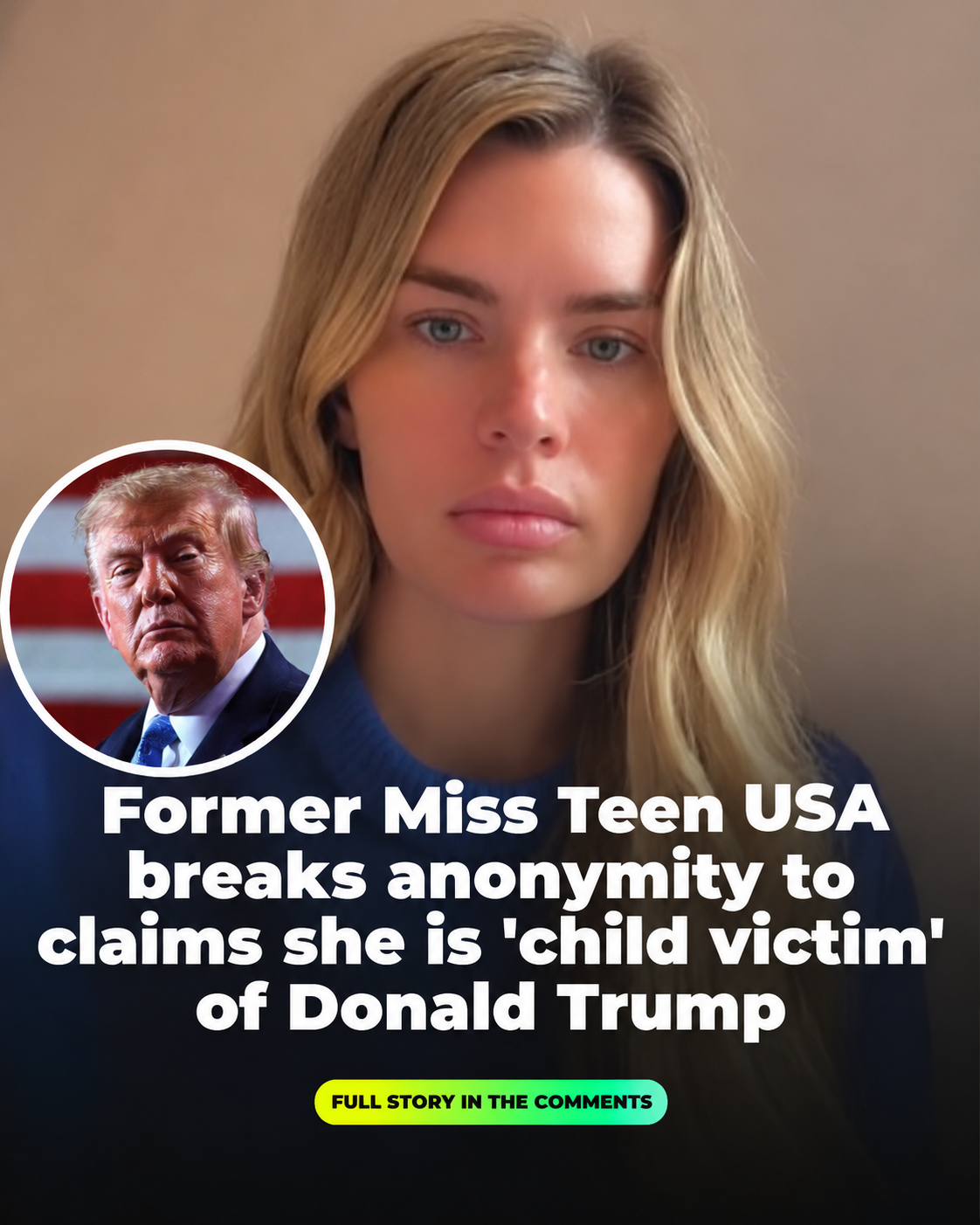
The allegations are not established facts. Independent confirmation of the underlying events has not emerged in the reporting reviewed for this article, and the public appearance of an accusation is not proof that the alleged conduct occurred.
In the video, Portnoff said the alleged abuse began when she was approximately eight years old, intensified around age ten and continued until she was about twelve. These are her assertions, not findings made by a court or an independent investigator.
She also alleged that she faced further inappropriate conduct as a teenager and as an adult. Those additional claims likewise require independent scrutiny and should not be treated as verified simply because they were stated publicly.
Portnoff said she had previously been identified anonymously in records connected to her allegations. Public reporting has not independently authenticated the specific sealed records she referenced or established what those documents contain.
Her decision to speak openly has become a major part of the story. Identifying oneself in a public accusation against a sitting president can generate substantial attention, intense scrutiny and significant personal consequences.

In her remarks, Portnoff also described what she believed to be attempts to intimidate her. She alleged that intermediaries had contacted her and that her efforts to discuss the matter were met with pressure. These allegations have not been independently substantiated.
The video arrived in an already polarized political environment, where dramatic clips can travel far faster than documentary evidence or official responses. That gap makes careful attribution especially important.
Some online posts have circulated screenshots and condensed versions of her statements. Short excerpts may omit qualifications, chronology or context, so viewers should distinguish what Portnoff actually said from the interpretations attached to the clip.
The allegation also revived discussion of Trump's former ownership of beauty pageants, including Miss Teen USA. That background is relevant to the public conversation, but ownership of a pageant does not itself establish the truth of any individual allegation.
Separate claims concerning Trump's behavior at pageants have circulated for years. Several former contestants previously alleged that he entered dressing areas while participants were changing; his campaign denied those allegations when they emerged.

Fact-checkers have also documented misleading versions of a 2005 interview that falsely inserted references to Miss Teen USA and teenage contestants into Trump's remarks. Such distortions illustrate why older claims must be checked separately rather than combined into a single narrative.
Portnoff's allegations should also be kept distinct from other accusations involving Trump. Different people, different events and different evidentiary records cannot responsibly be merged merely because they concern the same public figure.
At the time of the initial reporting on Portnoff's video, a verified direct response from Trump addressing her specific allegations had not been identified. That absence is not evidence either for or against the allegations.
The key unanswered questions concern corroboration: whether relevant records exist, whether their authenticity can be established, whether witnesses or contemporaneous accounts support the timeline and whether authorities have reviewed the claims.
A formal investigation, if one occurs, would need to evaluate those questions through evidence and established procedures. A viral video, however emotionally powerful, cannot replace that process.
The public also has a legitimate interest in understanding how accusations against powerful officials are handled. Fair scrutiny requires both taking an accuser's account seriously and preserving the distinction between allegation and proven misconduct.
For readers encountering the story for the first time, the central verified development is straightforward: Portnoff publicly identified herself and made serious allegations in a video. The accuracy of the underlying accusations remains unresolved.
As the story develops, the most consequential information will be verifiable documents, independently corroborated testimony and any official response or investigative findings—not the volume of social-media reaction. Until then, the allegations must be reported as allegations.
Comments (0)
Loading comments...
May You Like

STORM WARNING: MILLIONS FACE EVACUATION, MACY'S GIANT BALLOONS GROUNDED!

IOWA EMERGENCY: TOXIC AIR, POLLUTED WATER, 3,000 FAMILIES FORCED OUT AFTER 5-TON WASTE BLAST!

TRUMP CALLS GDP FIGURE “FAKE” AFTER GOVERNMENT’S SCHEDULED REVISION

Latest Posts








Popular Posts




