
G7 Agrees to Release 100 Million Barrels of Oil After Trump Pressure Over Diesel Crisis
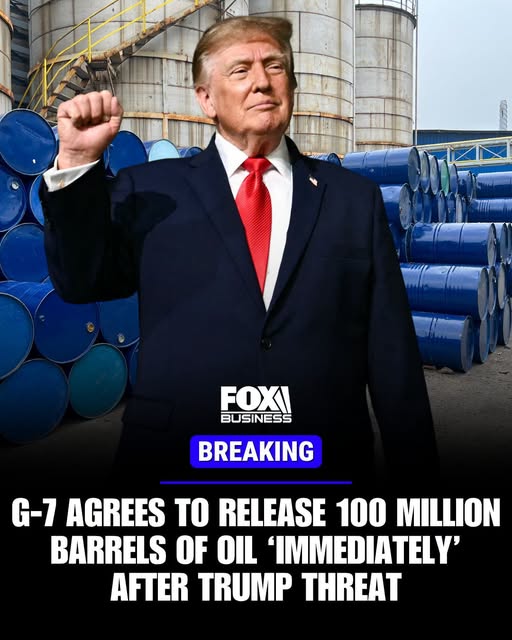
The Group of Seven has agreed to release 100 million barrels of crude oil and refined fuel from emergency reserves, responding to severe energy-market pressure and rapidly rising diesel prices.
The coordinated release will begin immediately and continue for four months, with G7 members and partners promising a substantial front-loaded diesel release during the first 20 days.
The agreement followed intense pressure from President Donald Trump, who had urged European countries to draw down reserves while considering restrictions on U.S. diesel exports.
Trump publicly supported a diesel export ban in September, arguing that keeping more American diesel at home could help address record domestic fuel prices and supply concerns.
On September 30, however, Trump said he was still considering the idea, acknowledging that restricting exports could lower diesel prices while potentially increasing gasoline and other costs.


European governments were particularly concerned because Europe has become heavily dependent on American diesel imports after disruptions affecting supplies from Russia and the Middle East.
Reuters reported that Europe obtained about 41 percent of its diesel imports from the United States in September, underscoring the potential consequences of an American export restriction.
French President Emmanuel Macron convened the G7 video conference after speaking with Trump, as governments sought a coordinated response to increasingly expensive fuel and tighter global supplies.
The G7 statement says the emergency release will be coordinated through the International Energy Agency, with countries also discussing whether additional diesel releases may become necessary.
Leaders simultaneously reaffirmed that G7 members would refrain from imposing energy export restrictions against one another, addressing one of the central concerns surrounding the U.S. proposal.
The agreement comes during an unusually severe global fuel disruption, with conflicts involving Iran and Ukraine damaging refineries, interrupting shipping routes and reducing available diesel supplies.
Russia, traditionally a major diesel exporter, has also extended restrictions on diesel exports through October, while repeated attacks on Russian refineries have reduced available refining capacity.


The combined disruptions have pushed diesel prices to record levels in several markets, creating additional inflationary pressure because diesel powers trucks, farm equipment, industrial machinery and other transportation.
In the United States, diesel prices have become an increasingly important political issue ahead of the November 3 midterm elections, adding pressure on the Trump administration.
Markets reacted positively to the G7 announcement, with oil and diesel futures declining after leaders signaled that additional supplies would enter markets relatively quickly.
However, the release does not guarantee an immediate equivalent increase in diesel available to consumers because crude oil must be refined, transported and distributed before reaching fuel stations.
Analysts have also warned that emergency stock releases can provide temporary relief while reducing inventories that countries may need if geopolitical disruptions continue or worsen.
The G7 agreement therefore represents both a short-term supply intervention and an effort to prevent individual countries from adopting export restrictions that could further fragment energy markets.


The image's wording that the release came “after Trump's threat” captures the sequence broadly, although official statements describe coordinated pressure and negotiations rather than a formal ultimatum.
Ultimately, the 100-million-barrel release is intended to stabilize energy markets and reduce price pressures, while its longer-term effectiveness will depend on refinery capacity, geopolitical developments and replenishment of reserves.
Key Facts
- Release: 100 million barrels of oil and fuel products
- Timing: Immediately, over approximately four months
- Diesel: Substantial quantities targeted within the first 20 days
- Coordination: International Energy Agency
- U.S. pressure: Trump had considered restricting U.S. diesel exports
- G7 position: Members pledged not to restrict energy exports among themselves
Sources & References
Comments (0)
Loading comments...
May You Like

FIGHT OVER OBAMA’S IRAN POLICY

Obama Steps Back Into the Political Spotlight as Democrats Target Trump’s

Jack Smith Defends His Integrity as Trump Investigations Face Renewed Political Firestorm













