Gas Prices Surging: Oil Hits Six-Week High as U.S.-Iran Tanker War Tightens Hormuz Flows
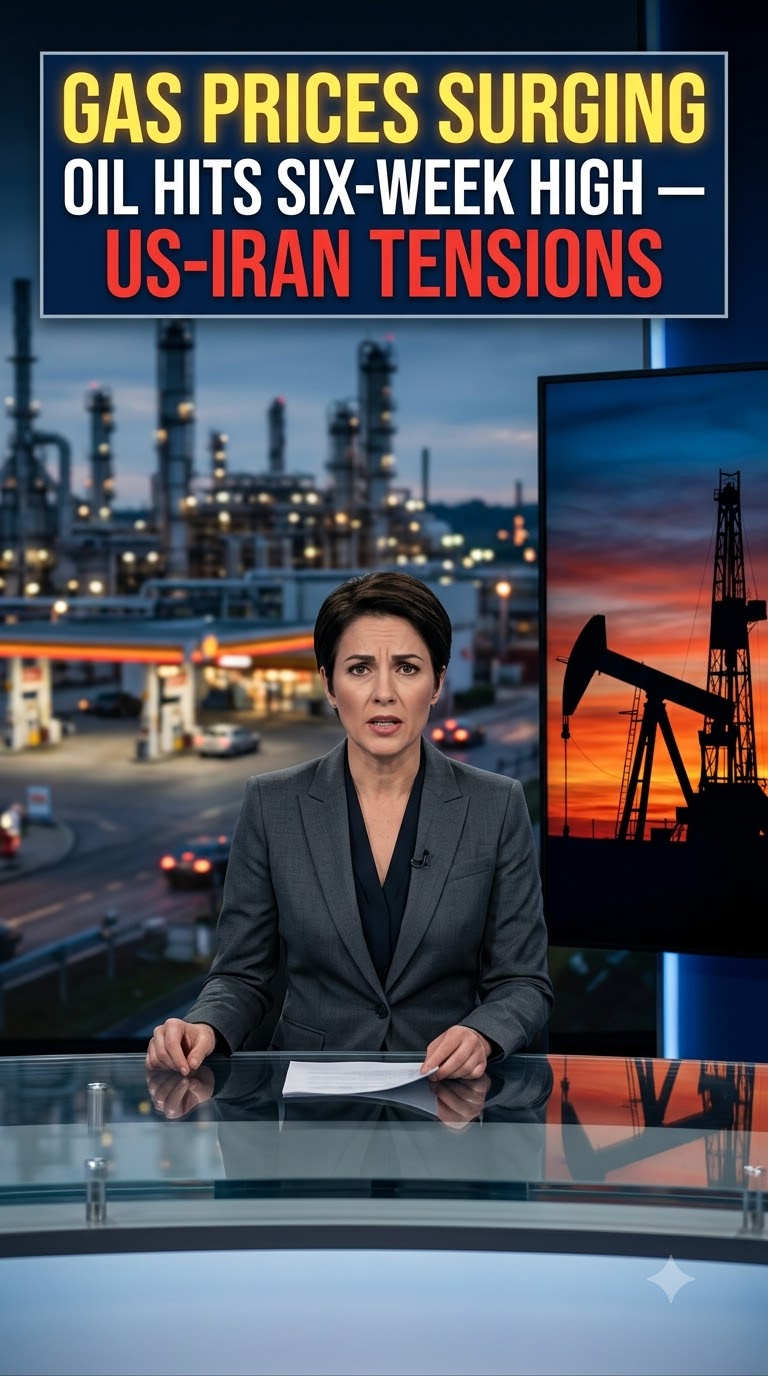
Brent crude oil surged to $97.93 a barrel on Monday, its highest level since July 24, as tit-for-tat strikes between the U.S. and Iran on vessels in and around the Strait of Hormuz intensified fears of prolonged supply disruptions. The spike has already pushed U.S. gas prices to a record $4.14 per gallon for Labor Day weekend, with diesel hitting an all-time high of $5.85 a gallon — a cost that is being passed directly to consumers through higher prices for groceries and package deliveries.
NEW YORK – Oil prices are climbing at an alarming rate, with Brent crude reaching $97.93 a barrel on Monday before settling at $97.17, while U.S. West Texas Intermediate traded near $92.27 . The rally — which saw Brent gain roughly 8% last week and WTI surge nearly 10% — comes as the U.S. and Iran resumed direct military exchanges, targeting commercial shipping in one of the world's most critical energy chokepoints .
A Dangerous Escalation in the Strait of Hormuz
The latest price spike was triggered by a dramatic escalation over the weekend. U.S. Central Command confirmed that U.S. forces struck three Iranian oil tankers on Saturday, including one off the coast of Kharg Island, Iran's key oil export hub . The strikes came after Iran launched ballistic missiles at two U.S. Navy warships .
Iran's Islamic Revolutionary Guard Corps responded by targeting three oil tankers traveling through "unauthorized routes" in the Strait of Hormuz, as well as three additional U.S.-linked vessels in other areas . Maritime intelligence firm Marisks described the developments as a "major escalation in the maritime conflict," warning that commercial tankers are now "being deliberately used as instruments of reciprocal economic pressure" .
Hormuz Traffic Plunges to Lowest Since May
The impact on shipping has been immediate and severe. Data from analytics firm Kpler showed that an average of only 10 commodity vessels per day transited the Strait of Hormuz over the past 10 days — the lowest level since May . That is a dramatic drop from pre-war levels. The U.S. Energy Information Administration reported that oil flows through Hormuz had already fallen to just 4.9 million barrels per day in the second quarter of 2026, down from 21.6 million barrels per day in Q4 2025 .
The Strait of Hormuz historically carries roughly one-fifth of the world's oil supply . Any sustained disruption could have consequences far beyond the Middle East, increasing costs for refiners, transport companies, and consumers.
How This Affects Americans at the Pump
The surge in crude prices is already hitting American drivers hard. According to AAA, the average price of regular gas reached **$4.14 per gallon** heading into the Labor Day weekend — nearly a dollar higher than last year and well above the previous weekend record of $3.82 set in 2012 .
Diesel, however, has seen an even more dramatic spike, reaching a record national average of $5.85 per gallon . This is particularly concerning because trucks and freight delivery systems rely heavily on diesel, meaning higher transportation costs are being passed on to consumers at the grocery store and through package delivery services .
One driver, Nicole Collins, told the Associated Press that her family has spent most of the summer close to home instead of taking typical weekend trips because driving has become too expensive. "Gas is pretty high right now. It doesn't help that we also have a baby, so we also have to pay for that," she said outside a station in Claymont, Delaware, where regular gas was $4.199 per gallon .
'Everything Points to the Iran War'
Experts point to a single cause. "Everything points to the Iran war and the Strait of Hormuz," said Tom Seng, a professor of energy finance at Texas Christian University . Since the U.S. and Israel attacked Iran in February 2026, crude oil traffic through the key waterway has plunged, and Iran has refused to reopen it .
The situation is compounded by other pressures. U.S. refineries are operating at 98% capacity, many under harsh Texas heat, leaving little room for additional supply if problems arise or hurricanes knock systems offline . Ukrainian drone attacks on Russian refineries are also squeezing diesel supplies .
What's Next? A $120 Oil Scenario
Goldman Sachs has warned that oil prices could rally to as much as **$120 a barrel** if attacks on shipping continue to broaden . The investment bank sees an unusually wide range of potential outcomes, with prices potentially falling to around $80 a barrel if Middle East exports normalize — highlighting the uncertainty surrounding shipping and regional supply .
ANZ analysts expect exports to "remain constrained through the rest of 2026, before a gradual reopening late in Q4 2026," with a return to pre-war throughput not expected until late Q1 or early Q2 of 2027 .
Iran has further complicated the outlook by announcing that a restricted zone will be declared outside the Strait of Hormuz in the coming days .
Energy Secretary: 'Doing Everything We Can'
Energy Secretary Chris Wright offered few specifics on when drivers might see relief at the pump, acknowledging that prices are higher now than Labor Day 2025. "Yes, they're higher today, but we're doing everything we can to push them down," Wright said Sunday on ABC's "This Week" .
Wright expressed optimism about futures prices, noting that buying bulk gasoline for November is about 35 cents cheaper per gallon than current prices. "So the marketplace thinks gasoline prices are going to move meaningfully lower," he said .
The Bottom Line
| Key Detail | Information |
|---|---|
| Brent Crude Price | $97.93 (6-week high) |
| U.S. Gas Price | $4.14/gallon (record for Labor Day weekend) |
| Diesel Price | $5.85/gallon (record high) |
| Hormuz Traffic | 10 ships/day over past 10 days (lowest since May) |
| Key Escalation | U.S. struck 3 Iranian oil tankers; Iran hit multiple vessels |
| Goldman Sachs Warning | Oil could hit $120 if attacks broaden |
| ANZ Forecast | Exports constrained through rest of 2026 |
For American consumers, the price of crude oil is no longer an abstract number on a screen. It's the difference between a summer road trip and staying home. It's the cost of groceries delivered to the local store. It's the price of getting to work every day. And as long as the tanker war in the Gulf intensifies, those costs are only likely to go higher.
Comments (0)
Loading comments...
May You Like

Russian Drone Strikes Kyiv Bridge as German Chancellor Arrives in Ukraine

Shocking news from Ohio: an unexpected development ahead of Trump's rally

Obama Steps Back Into the Political Spotlight as Democrats Target Trump’s