
Gaza’s Fragile Ceasefire Faces Mounting Pressure as Trump Administration Escalates Its Clash With the ICC
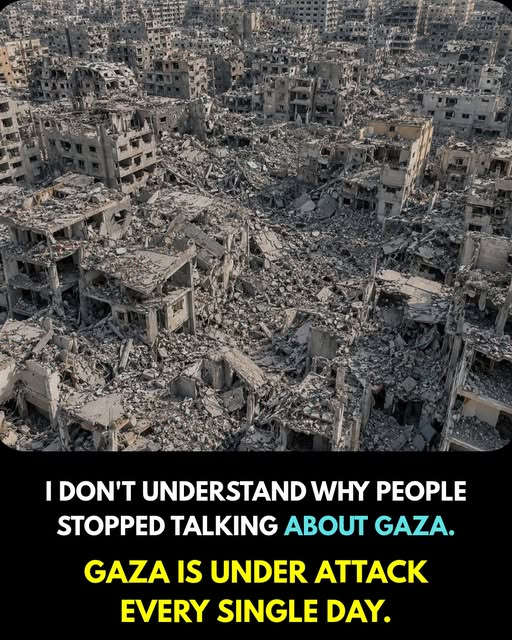
Gaza remains trapped in a devastating humanitarian and political crisis, even after a U.S.-brokered ceasefire formally halted the war’s large-scale military operations. Nearly a year after the agreement took effect, Israeli strikes continue, reconstruction has barely begun, and the future of the territory remains uncertain. At the same time, Washington’s escalating confrontation with the International Criminal Court (ICC) has intensified a wider debate over accountability, international law, and the limits of U.S. support for Israel.
One important distinction is essential: the ICC’s arrest warrant for Israeli Prime Minister Benjamin Netanyahu concerns allegations of war crimes and crimes against humanity; it is not a criminal conviction. Netanyahu and Israel reject the allegations and dispute the court’s authority.
The scale of destruction remains a defining feature of the crisis, with many displaced families still living among damaged buildings and temporary shelters.
1. A ceasefire on paper, but violence has not stopped
The ceasefire that began on October 10, 2025, delivered important initial results, including the return of the remaining hostages taken during the October 7, 2023, Hamas-led attack and the release of Palestinian prisoners and detainees. It also created expectations of expanded humanitarian aid, Israeli troop withdrawals, new Palestinian governance, and eventual reconstruction.
But the wider agreement has stalled. An Associated Press report published in October 2026 described a territory where Israeli military strikes continue and most residents remain displaced, with little progress toward rebuilding homes and essential infrastructure. Gaza’s Health Ministry has reported more than 1,400 Palestinian deaths since the ceasefire began, although its figures do not distinguish civilians from combatants.
The dispute centers on what must happen next. Israel has insisted that Hamas disarm before a full withdrawal. Hamas and the Trump administration have supported a process in which disarmament and Israeli withdrawal proceed in stages and in coordination. That disagreement has prevented the ceasefire from developing into a durable political settlement.
Israel has also expanded its effective control over Gaza, according to Reuters reporting earlier this month, leaving Palestinians concentrated in an increasingly restricted area. The prospect of renewed large-scale fighting remains a serious concern.
2. The Trump administration’s confrontation with the ICC
The legal and diplomatic battle has intensified alongside the stalled ceasefire. In November 2024, the ICC issued arrest warrants for Netanyahu and former Israeli defense minister Yoav Gallant over alleged war crimes and crimes against humanity in Gaza. The accused reject the allegations, and Israel disputes the court’s jurisdiction.
The Trump administration has responded by increasing pressure on the institution. In October 2026, the United States imposed additional sanctions targeting the ICC, drawing criticism from international institutions, European governments, and human-rights organizations. The administration argues that the court has exceeded its authority and threatens U.S. sovereignty; critics say the measures risk undermining international justice and shielding powerful officials from scrutiny.
The dispute is not simply about one arrest warrant. It raises a broader question: can a government use financial and diplomatic pressure to limit the work of an international court when that court investigates officials from a close ally?
Supporters of the ICC argue that alleged violations should be assessed through legal proceedings rather than political retaliation. Washington and Jerusalem, meanwhile, reject the court’s authority in this matter. The resulting confrontation has placed allies on opposing sides of a dispute over how international law should be enforced.
3. A new UN report adds pressure—and Israel pushes back
On October 26, Reuters reported findings from a United Nations Commission of Inquiry that accused Israel of continuing genocidal acts in Gaza after the ceasefire began. The commission examined events from October 2023 through September 2026 and cited the use of heavy weapons, drones, artillery, and sniper fire in densely populated areas. It also described the expanding Israeli-controlled “Yellow Line” as functioning increasingly like a de facto border.
These are serious allegations from a UN investigative body, not a final judgment by an international criminal court. Israel rejected the report, describing its findings as misinformation intended to demonize the country and undermine its legitimacy.
The report is likely to deepen existing divisions among governments over accountability, military operations, and the future of Gaza. It also underscores the importance of distinguishing between documented events, investigative findings, disputed allegations, and legal conclusions.
4. Why the next phase of the ceasefire matters
The ceasefire’s future depends on more than a reduction in battlefield activity. The original plan envisioned a new Palestinian administration, an international stabilization force, Israeli withdrawals, Hamas disarmament, and a major reconstruction effort. As of October 2026, several of these central commitments remain unfulfilled.
The unresolved questions are consequential:
-
Security: Can further attacks be prevented without a return to full-scale war?
Governance: Who will administer Gaza, provide public services, and oversee security?
Humanitarian relief: Can aid reach people consistently, and can displaced families return safely?
Reconstruction: Who will fund and manage the rebuilding of homes, hospitals, schools, and infrastructure?
Accountability: Will allegations of serious violations receive independent legal scrutiny despite mounting political pressure?
For Gaza’s roughly two million residents, the difference between a ceasefire and a lasting peace is immediate and deeply personal. A pause in large-scale combat does not automatically restore homes, guarantee safety, or create a viable path toward normal life.
5. The wider political stakes
The Gaza crisis has become a test of U.S. foreign policy as well as international institutions. The Trump administration faces competing pressures: maintaining its relationship with Israel, advancing a ceasefire framework it helped broker, and responding to international criticism of its approach to the ICC.
Meanwhile, the legal proceedings and UN investigations continue to fuel disputes over whether international accountability mechanisms can operate effectively when powerful states oppose their actions.
The most consequential development may not be a single speech or political confrontation. It may be whether the ceasefire can progress beyond its current stalemate—or whether continued strikes, territorial disputes, humanitarian suffering, and the breakdown of trust will make a lasting settlement increasingly difficult.
The bottom line: Gaza’s ceasefire remains fragile, the promised political transition has stalled, and Washington’s confrontation with the ICC has sharpened the global debate over accountability. The available reporting supports that broader picture, but it does not establish that a single new U.S. action has definitively “shielded” Netanyahu from all legal consequences.
Editorial note: The article above reflects reporting available as of October 30, 2026. The image’s slogan that Gaza is under attack every single day is a broad social-media claim; the verified reporting supports continued strikes during the ceasefire, but it should not be read as proof that an attack occurred at every location on every day. The viral post’s claim of a decisive new “counter-strike” should likewise be tied to a specific, verifiable government action before being presented as fact.
Comments (0)
Loading comments...
May You Like

BLACK FRIDAY TENSIONS IN NYC — DID PROTESTERS CROSS THE LINE AT A DISNEY STORE?

IRAN CLAIMS IT FIRED AT U.S. WARPLANES — WAS AN AMERICAN F-16 FORCED TO RETREAT?

FCC CLEARS SPACEX FOR ONE MILLION AI SATELLITES AS ASTRONOMERS SOUND ALARM













