George W. Bush Dodged Two Flying Shoes in Baghdad
George W. Bush Dodged Two Flying Shoes in Baghdad — The 2008 Moment Became an Instant Political Symbol
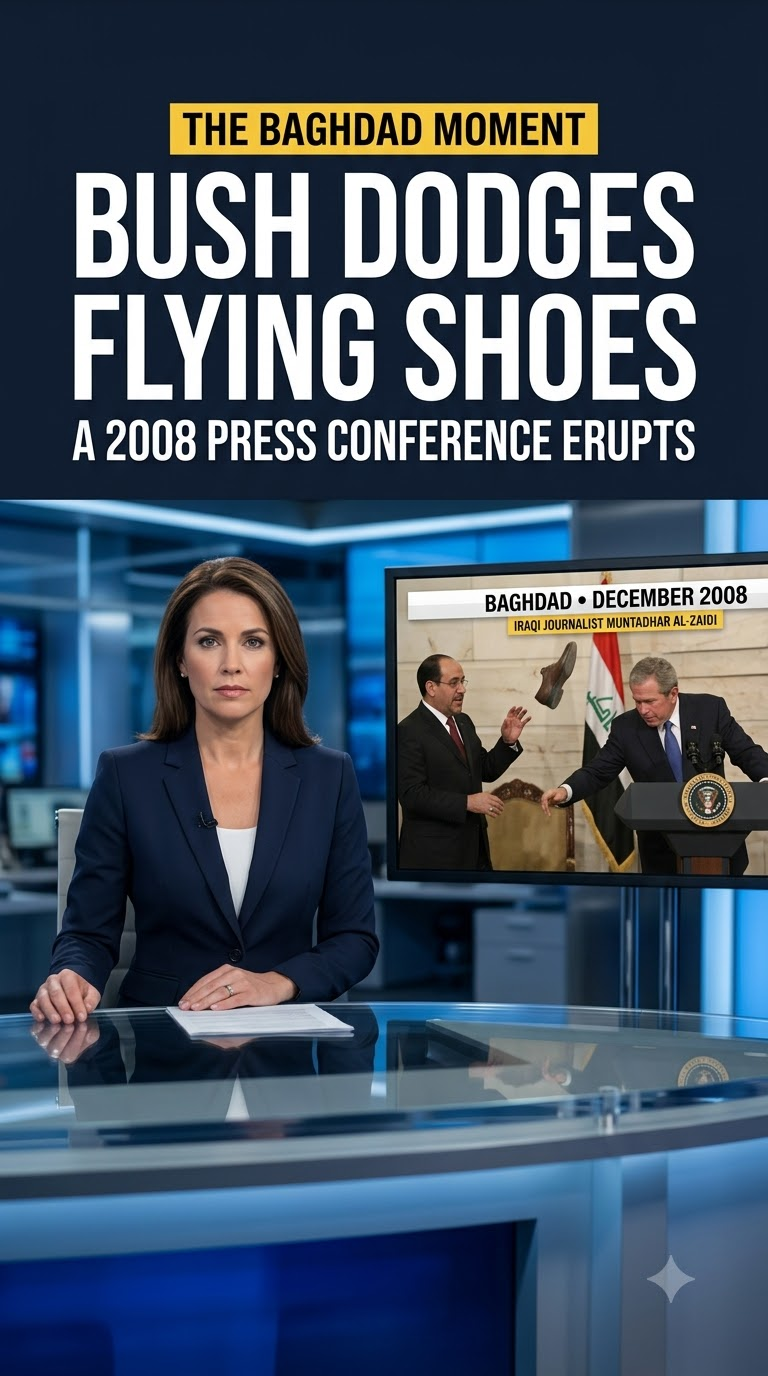
It lasted only a few seconds, but the images became one of the most recognizable moments from the final weeks of George W. Bush’s presidency.
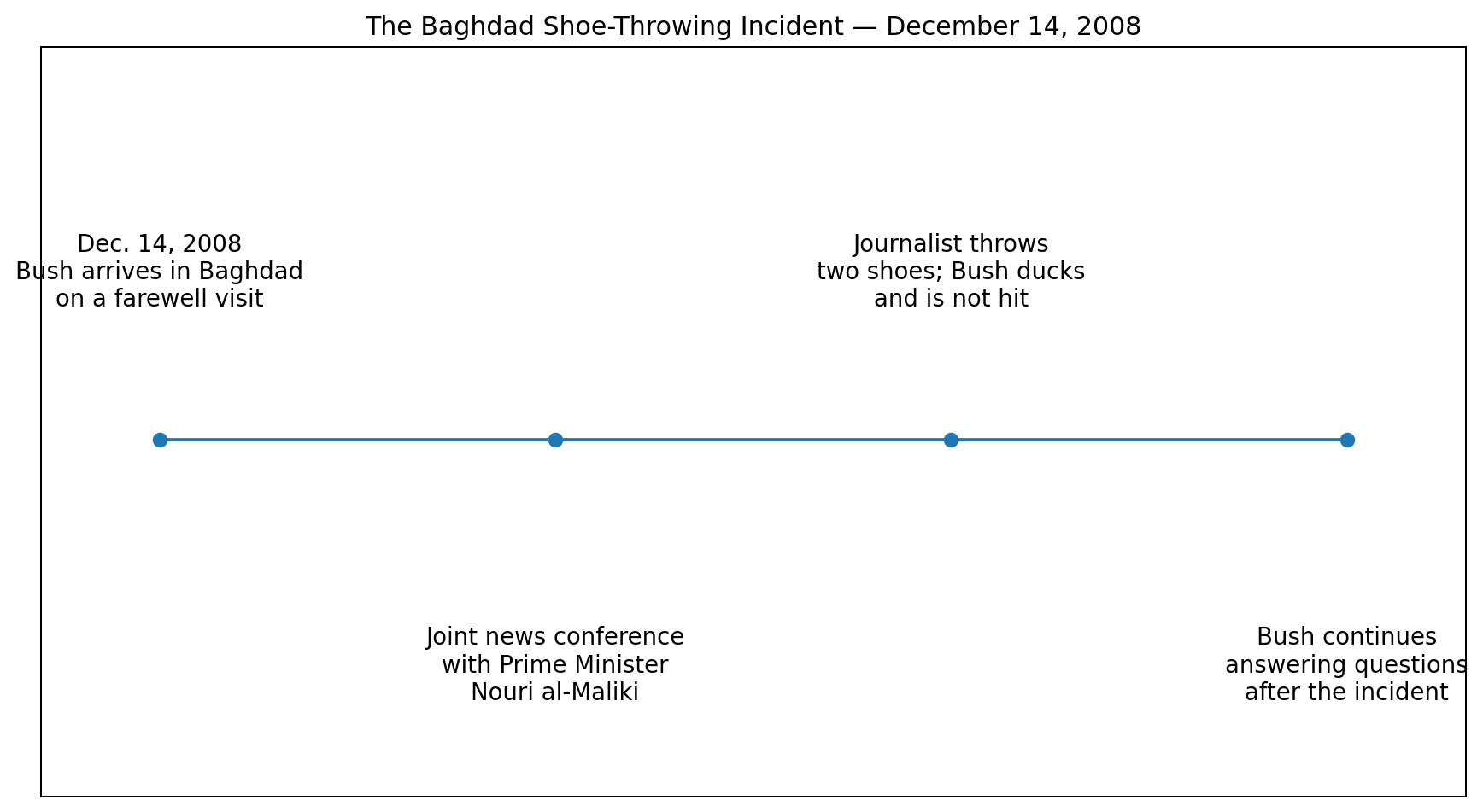
On December 14, 2008, Bush was appearing at a news conference in Baghdad beside Iraqi Prime Minister Nouri al-Maliki when an Iraqi journalist suddenly rose from the audience and threw a shoe toward the American president.
Bush ducked.
A second shoe followed. Bush moved again as Maliki raised an arm in front of him. Neither shoe struck the president.
Security officers rushed toward the journalist, Muntadhar al-Zaidi, and removed him from the room. Bush then remained at the podium and continued taking questions.
The Visit Was Supposed to Be About a New U.S.–Iraq Agreement
Bush had arrived in Baghdad on a surprise trip near the end of his second term.
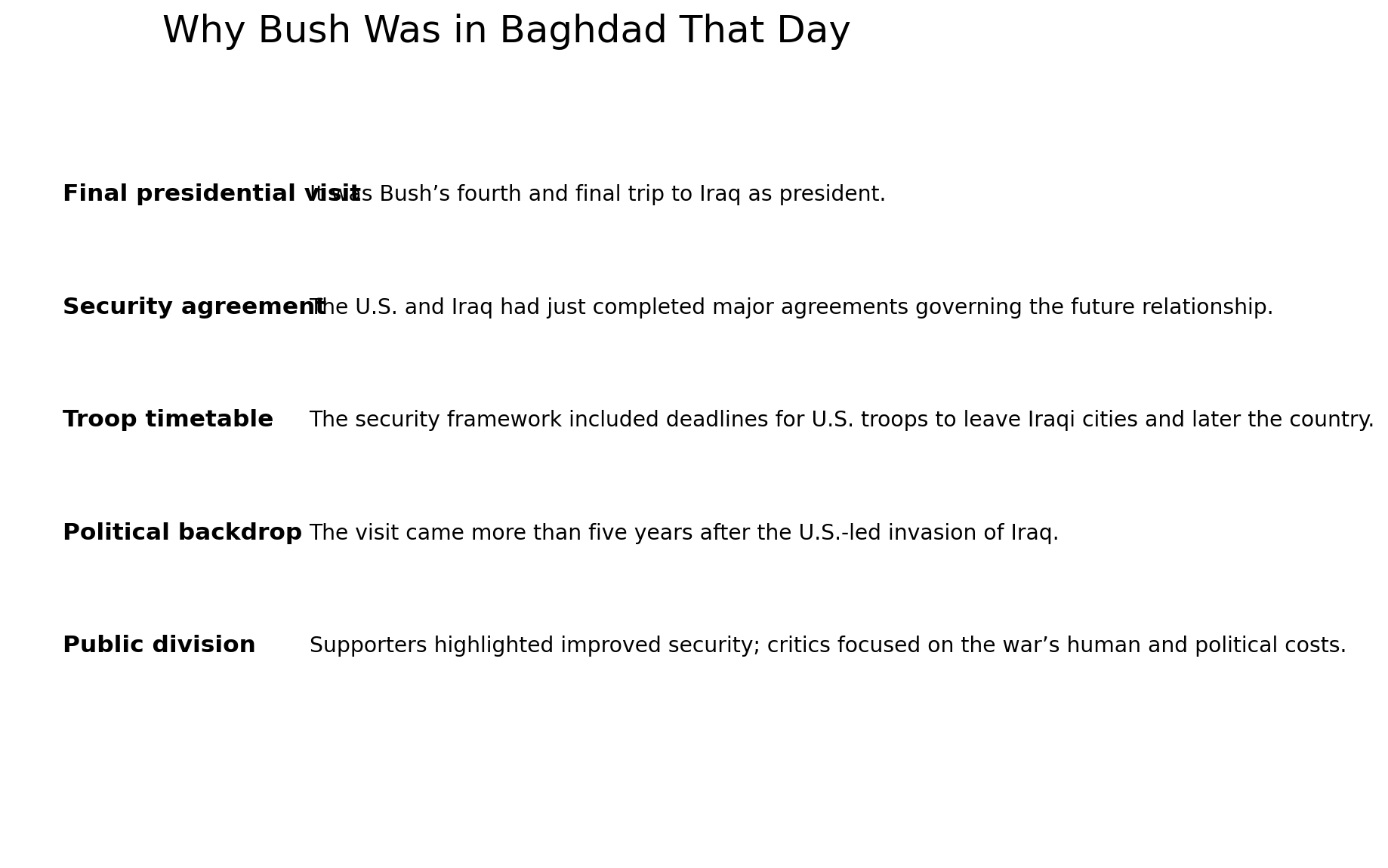
The visit was intended to highlight a new phase in the U.S.–Iraq relationship after years of war and occupation. Washington and Baghdad had reached a Strategic Framework Agreement and a separate security agreement that set rules for the continued presence and eventual withdrawal of U.S. forces.
At the joint appearance, Bush and Maliki spoke about Iraq’s political future, security and the timetable for American troops.
The president described the agreements as an important step toward an Iraq that could govern and defend itself.
Then the focus of the room changed completely.
The First Shoe Came Without Warning
Al-Zaidi, a correspondent for the Cairo-based Al-Baghdadia television network, stood and shouted in Arabic before throwing the first shoe.
The gesture carried particular meaning in the region. Showing or using the sole of a shoe against someone is widely understood as a serious insult, and the act was immediately interpreted as a protest against Bush and the Iraq War.
The first shoe passed over Bush after he quickly leaned away.
Al-Zaidi then threw the second. Maliki reached across as if to block it while Bush again avoided being hit.
The speed of Bush’s reaction became part of the reason the footage spread so widely. The president had only a fraction of a second to respond.
Bush’s Response Was Unexpectedly Casual
Instead of ending the appearance, Bush stayed in the room.
When reporters asked about the incident, he played it down. At one point he said, “So what if a guy threw a shoe at me?”
He also joked that the footwear appeared to be a size 10.
Bush said the episode was one person’s way of gaining attention and argued that it should not automatically be treated as a statement on behalf of all Iraqis.
The White House later said Bush was satisfied with the Secret Service response and had not been injured.
Why the Moment Resonated Far Beyond the Room
The incident happened at a time when the Iraq War remained deeply divisive.
Bush had ordered the U.S.-led invasion in 2003 after his administration argued that Saddam Hussein’s government posed a serious security threat. The war removed Saddam from power, but it was followed by years of insurgency, sectarian violence, American and Iraqi deaths, and an intense political debate over the original case for war and the conduct of the occupation.
By late 2008, violence had declined significantly from its earlier peak, and the Bush administration pointed to the military surge and changes in Iraqi security conditions as evidence of progress.
Critics, however, continued to emphasize the war’s human cost, displacement and the failure to find the stockpiles of weapons of mass destruction that had been central to the prewar argument.
Against that backdrop, a shoe flying across a Baghdad press conference could be read very differently depending on who was watching.
For Some, al-Zaidi Became a Protest Symbol
Across parts of Iraq and the wider Arab world, al-Zaidi’s act drew significant public support.
Some people treated him as a symbol of anger toward the U.S. invasion and occupation. Demonstrations called for his release, and the shoe itself became a recurring symbol in political protest.
Others criticized the act as an assault on a visiting head of state and an inappropriate use of a press event.
Bush himself rejected the idea that one journalist’s actions represented the entire Iraqi public.
That disagreement over what the moment meant is part of why the footage remained culturally powerful long after the immediate news cycle ended.
Al-Zaidi Faced Prison After the Incident
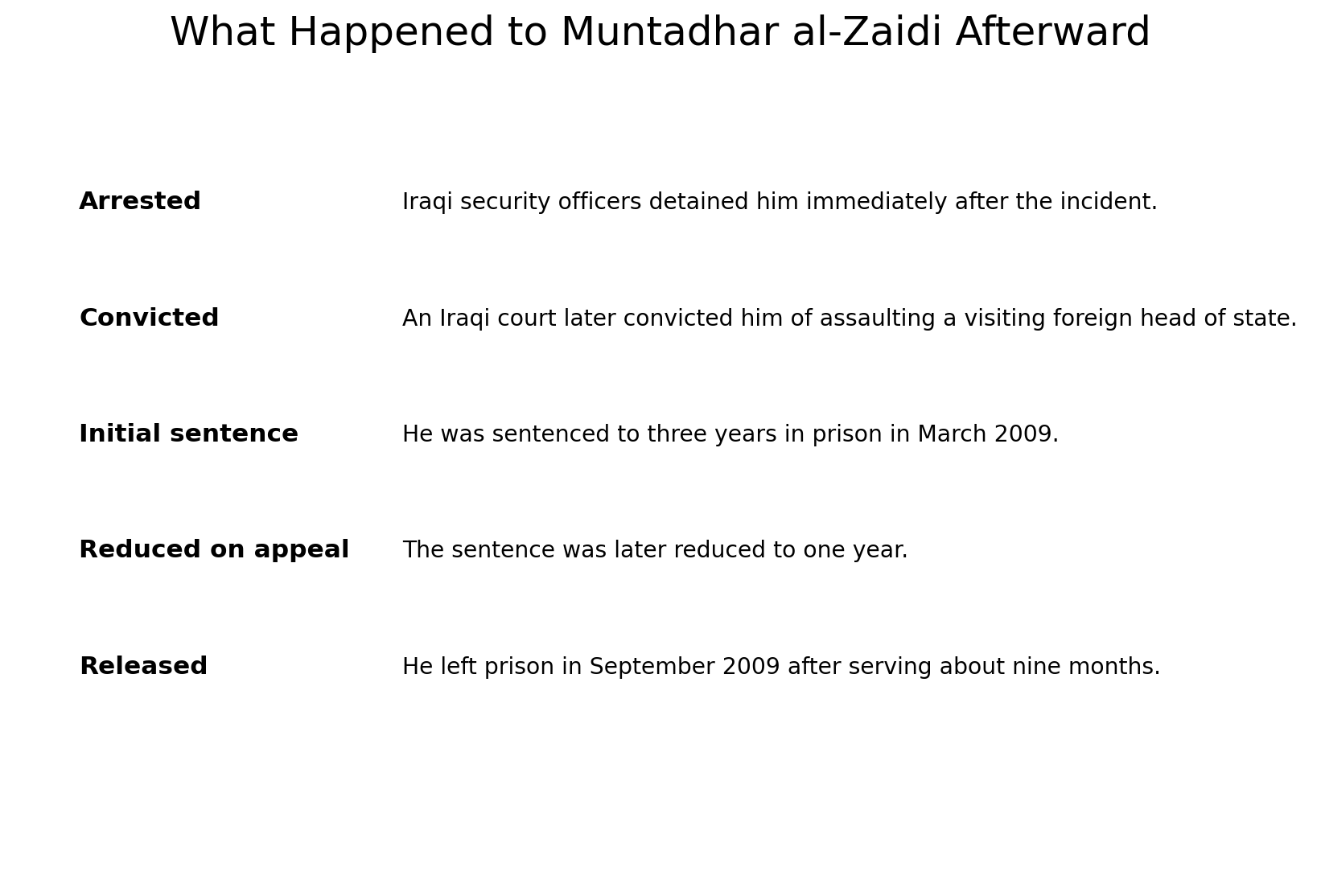
Iraqi security forces detained al-Zaidi immediately.
In March 2009, an Iraqi court convicted him of assaulting a visiting foreign head of state and sentenced him to three years in prison.
The sentence was later reduced to one year on appeal.
Al-Zaidi was released in September 2009 after serving roughly nine months, receiving an early release for good behavior.
After his release, he continued to defend the shoe-throwing as a protest against the war. He also alleged that he had been abused while in custody, allegations that drew additional attention at the time.
The Image Was Bigger Than the Political Event Around It
One reason the episode endured is that the underlying news conference was complicated while the image was instantly understandable.
The security agreement involved troop deadlines, sovereignty, military coordination and the long-term relationship between Washington and Baghdad.
The visual required almost no explanation: a journalist threw two shoes at the president of the United States, and the president ducked.
Television replayed the footage repeatedly. Still images froze the shoes in midair. Political cartoons and internet videos quickly turned the scene into a global reference point.
The result was a classic example of a single visual moment overtaking the policy story that originally brought everyone into the room.
What the Photo Does — and Does Not — Tell Us
The famous images document a real confrontation, but they do not by themselves explain how Iraqis as a whole viewed Bush, the United States or the war.
Iraqi opinion was not uniform. The country had experienced dictatorship, invasion, insurgency, sectarian conflict, elections and enormous social disruption within a short period.
Some Iraqis opposed the U.S. presence intensely. Others worked closely with American forces or supported aspects of the political order that emerged after Saddam Hussein.
That complexity is easy to lose when one dramatic image becomes shorthand for an entire era.
The shoe-throwing incident was real and politically meaningful. It was not a public-opinion survey.
A Few Seconds That Outlived the Press Conference
Bush left office a little more than a month after the Baghdad visit.
The agreements discussed at the news conference went on to shape the next phase of the U.S. military presence in Iraq, while American forces would later undergo major withdrawals and subsequent redeployments under later administrations.
But the moment most people remember from that December evening is not a clause in the security agreement.
It is Bush leaning away as a shoe passed near his head.
The president was not hit. The news conference did not collapse. He remained at the podium.
Yet those few seconds created an image that captured the anger, tension and political symbolism surrounding the Iraq War more efficiently than almost any prepared statement could have.
Comments (0)
Loading comments...
May You Like

South Korea–Ukraine Rift Deepens Over North Korean POW Transfer as PURL Draws New Scrutiny

South Korea–Ukraine Rift Deepens Over North Korean POW Transfer as PURL Draws New Scrutiny