
George W. Bush Is Speaking Again — But His Message About Trump Is More Complicated Than It Seems
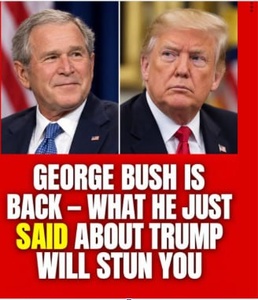
DALLAS — George W. Bush has returned to the public conversation at a moment when Donald Trump dominates the Republican Party. But the former president’s most revealing message about Trump may have been what he chose not to say.
A Rare Return to the Spotlight
Bush made rare public remarks in September as the United States marked the 25th anniversary of the September 11 attacks, reflecting on the event that defined much of his presidency.
Speaking at his presidential library in Dallas, Bush argued that Americans should remember that events overseas can directly affect national security at home.
He warned against isolationist thinking, saying that the lessons of September 11 included the importance of understanding developments beyond America’s borders.
His comments came as Trump pursued a markedly different foreign-policy agenda, including the administration’s military campaign against Iran and its broader emphasis on American sovereignty.
But What About Trump?
The question surrounding Bush has become increasingly difficult to avoid: Why has one of the most prominent Republican presidents of the modern era largely refrained from publicly criticizing Trump?
A recent New Yorker essay by journalist Jacob Weisberg examined Bush’s silence, arguing that the former president has avoided directly confronting Trump even as Trump has attacked Bush’s family and challenged parts of his presidential legacy.
Weisberg discussed the subject again on PBS’s Amanpour & Company, where he characterized Bush’s reluctance to address Trump publicly as a deliberate silence rather than an endorsement of Trump.
That distinction matters. There is substantial commentary about Bush’s silence, but it should not be confused with a direct statement from Bush endorsing or condemning Trump.
A Complicated Republican Relationship
Trump and the Bush family have had a difficult political relationship dating back to the 2016 presidential campaign.
Trump repeatedly attacked Jeb Bush during the 2016 Republican primaries, portraying the former Florida governor and his family as representatives of an older Republican establishment.
Trump also criticized George W. Bush’s administration, particularly its foreign policy and the Iraq War, while questioning the legacy of the Bush political dynasty.
The relationship therefore predates Trump’s return to the White House and involves disagreements over foreign policy, immigration, political leadership and the direction of the Republican Party.
Bush’s Different Republican Tradition
During his presidency, Bush emphasized international alliances, free trade, immigration reform and an active American role overseas.
His administration also created the President’s Emergency Plan for AIDS Relief, known as PEPFAR, which became one of the most significant global-health initiatives of his presidency.
The Trump administration has taken a different approach on several of those issues, including trade, immigration, international institutions and the United States’ role abroad.
Those differences have fueled speculation about how Bush privately views Trump’s second presidency, although the former president has generally avoided making his position explicit.
The Silence Is the Story
The New Yorker’s Weisberg has argued that Bush’s reluctance to criticize Trump is especially notable because Trump has previously directed harsh attacks toward Bush and his family.
Weisberg also suggested that Bush’s focus on his presidential library and foundation may give him reasons to avoid becoming a direct political opponent of a sitting Republican president.
That is an interpretation offered by Weisberg, not a publicly confirmed explanation from Bush himself.
Bush has not publicly said that preserving Republican relationships, protecting his foundation or avoiding conflict with Trump is the reason for his silence.
A Different Kind of Statement
Bush’s September remarks nevertheless offer a glimpse into the subjects he is willing to discuss publicly.
Rather than focusing on Trump, Bush returned to themes that have defined his post-presidential public work: democracy, history, international engagement and the lasting consequences of September 11.
He also reflected on the vulnerability exposed by the attacks and the way they changed American foreign policy and national security.
The former president’s comments therefore attracted attention partly because of their contrast with the political environment surrounding him.
Trump’s Foreign Policy Changes the Context
Trump’s 2026 foreign policy has included military action against Iran, producing comparisons with the wars that followed the September 11 attacks.
Reuters reported that Trump's campaign against Iran has revived debates about the lessons of the post-9/11 period and the risks of prolonged American military involvement overseas.
That historical connection makes Bush’s reflections particularly relevant, even though he did not directly frame his comments as criticism of Trump.
The former president was speaking about his own experience and the lessons he believes Americans should draw from September 11, rather than issuing a direct assessment of Trump’s policies.
A Republican Party That Has Changed
Bush left office in 2009, years before Trump transformed the Republican political coalition and became its dominant national figure.
The Republican Party that Bush led emphasized traditional conservative positions while maintaining a strong internationalist foreign-policy outlook.
Trump’s movement has placed greater emphasis on nationalism, immigration enforcement, tariffs, skepticism toward international institutions and reducing America’s involvement in some overseas conflicts.
The contrast has created an unusual situation in which a former Republican president from an earlier era remains influential historically while largely staying outside the current party’s political battles.
What Bush Actually Said
The most clearly documented recent remarks from Bush concern September 11 and foreign policy—not a direct attack on Trump.
That makes the sensational framing of his supposed “bombshell” about Trump difficult to support from the available public record.
Instead, the more interesting story may be the gap between the enormous interest in Bush’s opinion and his continued reluctance to provide one publicly.
For now, Bush appears more comfortable discussing the lessons of his presidency than directly judging the presidency that followed his political era.
The Question That Remains
Twenty-five years after September 11, Bush is once again discussing the events that shaped his presidency, while Trump is pursuing policies that have reopened debates about war, isolationism and America’s role abroad.
Yet despite the political pressure surrounding him, Bush has largely avoided turning those historical reflections into a direct confrontation with Trump.
That silence has itself become newsworthy.
And perhaps the most revealing development is not that George W. Bush has suddenly returned to attack Donald Trump, but that after years of political upheaval, Americans are still waiting to hear exactly what the former president thinks.
Comments (0)
Loading comments...
May You Like

Russian Drone Strikes Kyiv Bridge as German Chancellor Arrives in Ukraine














