
GEORGIA BOMBSHELL: 6 MURDERS, SECRET PAYMENTS—TOP DEMOCRATIC OFFICIAL LINKED TO THE TRAIL!
Six Georgia Murders Linked by Surveillance and Ballistics as Renewed Attention Falls on Convicted Killer
NEWNAN, Georgia — November 21, 2026 — A Georgia murder case involving six victims across three crime scenes has drawn renewed attention following the release of a documentary examining how investigators identified the gunman. Surveillance footage, witness accounts and forensic evidence helped authorities connect the killings, which occurred over several days in November 2020.
The suspect, Nicholas Martez Nelson, was arrested after police traced a vehicle associated with one of the shootings. He later pleaded guilty to the murders and received six consecutive life sentences without parole.
The case has resurfaced in public discussion as newly assembled police recordings and investigative material provide a detailed account of how detectives connected the crimes.
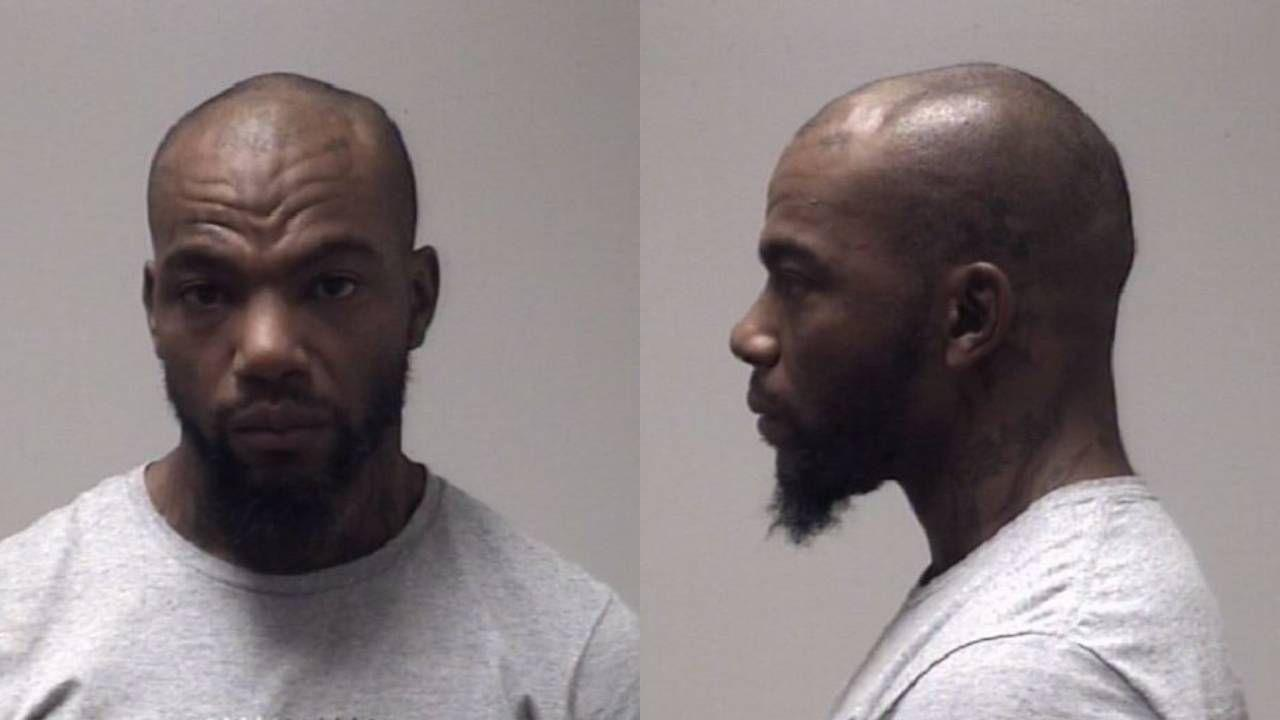
The murders occurred in Newnan, a city in Coweta County southwest of Atlanta.
The six victims were Willie Edward Bussie III, Kevin Duane Robbins, Warner Mandrel Parks, Tangela Molden, Monte James Ballard and Michael Lang.
Their bodies were discovered at three locations.
Two men were found outside a residence on East Broad Street.
A third victim was shot in a parking lot on Dowdell Street.
The remaining three were discovered inside Room 117 of a Motel 6 on Herring Road.
The deaths occurred during a period of approximately three days.
Investigators concluded that the shootings were connected.
The case became one of the most serious multiple-homicide investigations in the county's recent history.
Police responded to East Broad Street shortly before 8 p.m. on November 5, 2020.
Officers found Willie Edward Bussie III, 39, and Kevin Duane Robbins, 43, suffering from gunshot wounds.
Both men were pronounced dead at the scene.
The shooting was initially investigated as a double homicide.
Detectives collected evidence and began interviewing witnesses.
At that stage, authorities had not publicly established that the deaths were part of a larger series.
The investigation would later connect the two victims to additional shootings elsewhere in Newnan.
The discovery marked the beginning of a sequence that would leave six people dead before investigators identified and arrested the suspect.
Before the East Broad Street shooting, investigators said Nelson had committed a home invasion on Steeplechase Drive.
According to police, he entered a residence while people were present.
He stole firearms and distinctive gold jewelry.
The occupants were not injured during the incident.
Authorities later considered the stolen property important evidence.
The home invasion helped establish a timeline of Nelson's movements before the killings.
It also provided investigators with specific items that could be connected to him.
The theft was a separate crime from the six murders, but it became part of the broader reconstruction.
Police did not establish that the stolen property represented a political payment or a secret financial arrangement.
On November 7, police responded to reports of gunfire at the Eastgate Apartments on Dowdell Street.
The victim was Warner Mandrel Parks, 39.
Witnesses described a shooting in the parking lot.
Parks was transported to a hospital but died from his injuries.
The investigation produced an important lead.
Witnesses described a gray Ford Crown Victoria associated with the shooter.
Officers began searching for a vehicle matching that description.
The car would become a central part of the investigation.
Its discovery allowed police to identify a potential suspect and connect him to the shooting.
The vehicle evidence helped move the investigation from witness descriptions toward a specific individual.
Investigators located a gray Ford Crown Victoria near a Red Roof Inn on Bullsboro Drive.
The vehicle was associated with Nicholas Martez Nelson.
Police detained him for questioning.
He was initially charged in connection with Parks' death.
The arrest occurred before authorities had publicly established his responsibility for all six killings.
Investigators continued examining evidence from the other scenes.
The vehicle became important because its description matched information provided by witnesses.
Later reporting also described surveillance footage showing a vehicle consistent with Nelson's car near the Motel 6.
The combination of witness accounts and recorded images helped investigators reconstruct movements across the crime scenes.
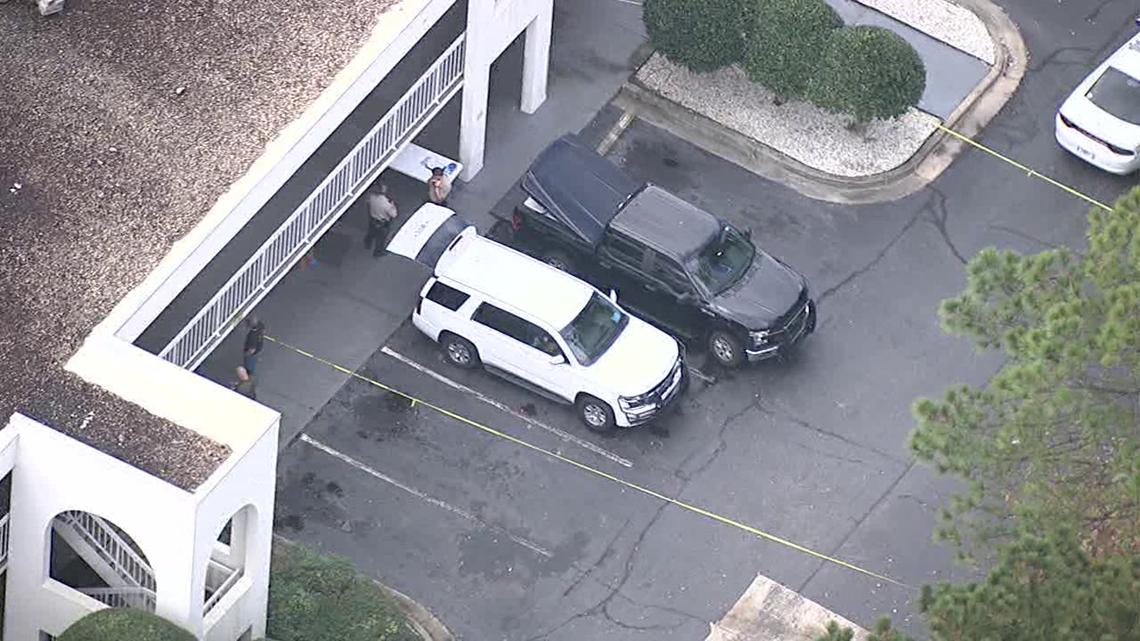
On November 8, Coweta County deputies responded to a welfare check at a Motel 6 on Herring Road.
A relative had become concerned after being unable to contact someone staying there.
Deputies entered Room 117.
Inside, they discovered three people who had been shot to death.
The victims were Tangela Molden, 32, Monte James Ballard, 58, and Michael Lang, 37.
Investigators believed the victims had been killed earlier and left inside the room.
The discovery brought the total number of victims to six.
It also expanded the investigation beyond the two shootings already known to police.
Authorities began examining whether the same gunman was responsible for all three crime scenes.
The Motel 6 discovery provided a third location connected to the broader investigation.
Detectives examined the room and collected physical evidence.
The scene also offered an opportunity to compare evidence with the earlier shootings.
Investigators looked for similarities in the ammunition and other materials recovered.
The new evidence helped connect the motel killings to the deaths on East Broad Street and Dowdell Street.
The discovery also raised questions about when the three victims had been killed.
Authorities believed they had been dead for more than a day before deputies entered the room.
That meant the order in which bodies were discovered did not necessarily match the order in which the murders occurred.
Investigators examined surveillance footage from locations associated with the crimes.
The recordings helped establish the movements of vehicles and individuals.
According to later accounts of the investigation, motel surveillance showed a man wearing dark clothing arriving in a Ford Crown Victoria.
The vehicle was consistent with the car linked to Nelson.
Investigators also examined footage associated with the Eastgate shooting.
The recordings helped support the connection between Nelson and the locations.
Surveillance evidence was important because it provided information independent of witness recollections.
However, video alone did not establish every element of the case.
Detectives combined it with physical evidence, interviews and the results of searches.
Forensic testing became a major part of the investigation.
Investigators recovered cartridge cases from the crime scenes.
Ballistic examination can compare markings left on ammunition components when a firearm is discharged.
Those markings may help determine whether ammunition recovered at different locations was fired from the same weapon.
Later accounts of the Nelson case reported that the cartridge cases from the three scenes were linked to a single 9-millimeter pistol.
That connection supported the conclusion that the killings were related.
It also strengthened the case against Nelson when considered alongside the vehicle evidence and other investigative findings.
The ballistic evidence helped transform several separate homicide investigations into a connected prosecution.
Investigators searched locations associated with Nelson after his arrest.
According to a November 2026 account of the case, detectives recovered a Taurus 9-millimeter pistol from a storage closet.
They also recovered ammunition and items associated with the earlier home invasion.
The firearm became significant because forensic testing connected evidence from the three murder scenes.
A weapon linked to multiple shootings can help investigators establish that separate incidents were committed by the same person.
The discovery also provided a physical connection between Nelson and the investigation.
However, the weapon's recovery did not establish a political motive.
The evidence described in the reporting concerns firearms, stolen property and the shootings themselves.
The home invasion on Steeplechase Drive produced another important investigative lead.
Police said distinctive gold jewelry had been stolen from the residence.
Later searches recovered property associated with that burglary.
Such evidence can help establish whether a suspect was involved in a crime preceding a homicide.
The jewelry also helped investigators reconstruct Nelson's activities during the period of the killings.
It was evidence of an alleged theft, not a documented payment for murder.
That distinction matters when examining claims about secret financial transactions.
The public accounts describe stolen property recovered during the investigation.
They do not identify six payments to Nelson, a financial intermediary or a person who commissioned the killings.
Witness accounts also contributed to the investigation.
A documentary released in November 2026 described a young witness who identified Nelson in connection with the Eastgate shooting.
The witness account gave detectives another reason to focus on him.
Police also relied on descriptions of the vehicle used in the shooting.
Investigators compared the information with other evidence rather than relying on a single statement.
That approach was important because the case involved multiple locations and a rapidly developing investigation.
Witness testimony can help identify suspects, but its reliability must be evaluated alongside independent evidence.
In this case, the vehicle, surveillance and ballistic findings supported the broader investigation.
The November 2026 documentary also described how investigators examined an earlier lead involving another individual.
Detectives considered witness statements and attempted to verify the person's whereabouts.
As additional shootings occurred, investigators gathered evidence that pointed toward Nelson.
The documentary described how one earlier lead was ruled out through further investigative work.
This sequence illustrates how homicide investigations can change as new information becomes available.
Investigators must test competing explanations.
In the Newnan case, the eventual prosecution centered on Nelson.
The available reporting does not establish that the earlier person was involved in the six killings.
The evidence did not come from a single source.
Police had witness accounts from the shootings.
They had a vehicle description.
They recovered physical evidence from the crime scenes.
They also examined surveillance recordings and items recovered during searches.
Each category of evidence helped answer a different question.
The witnesses helped identify a possible suspect.
The vehicle evidence helped connect locations.
The ballistic findings supported the conclusion that the same firearm was used.
The stolen property linked Nelson to events preceding the killings.
Together, the evidence supported charges involving all six victims.
The investigation developed over several days rather than through one decisive discovery.
Nelson was detained on November 7, 2020, after police located his vehicle near the Red Roof Inn.
He was initially charged in connection with Parks' death.
Authorities subsequently connected him to the three victims found at the Motel 6.
Investigators also examined his possible involvement in the East Broad Street double homicide.
The number of charges increased as police established probable cause.
By November 11, detectives had obtained warrants involving the final two murder victims.
Nelson ultimately faced charges connected to all six deaths.
The progression from one murder charge to six reflected the continuing investigation.
It did not represent six separate suspects or six independently established murder-for-hire arrangements.
Newnan police and the Coweta County Sheriff's Office held a joint briefing on November 10, 2020.
Officials described the series of killings and the investigation that led to Nelson's arrest.
Police said the suspect knew the victims.
They also indicated that the shootings appeared to involve drug-related circumstances.
Authorities said they believed Nelson acted alone.
They also sought to reassure residents that there was no continuing threat from an unidentified gunman.
The briefing was important because it connected the deaths publicly and identified the central suspect.
It did not announce evidence of a political conspiracy or secret payments.
The motive was one of the most difficult questions in the case.
Investigators believed Nelson knew the six victims.
That relationship distinguished the shootings from a series of random attacks against strangers.
Authorities also discussed possible drug-related circumstances.
However, a suspected connection to drugs did not establish a precise reason for each killing.
The investigation did not publicly identify a single financial transaction or dispute explaining all six deaths.
Nor did it identify a political official directing Nelson.
The available record therefore supports a limited conclusion.
Police believed the victims and suspect had connections, but the exact motive remained difficult to explain.
That uncertainty continued even after the prosecution reached its conclusion.
During the November 2020 briefing, police distinguished the case from the common public image of a serial killer.
Deputy Chief Mark Cooper described the events as a killing spree because the deaths occurred over a short period without a lengthy interval between them.
The distinction concerned the timing and pattern of the offenses.
Six victims were killed across three crime scenes in a matter of days.
Investigators did not describe years of separate murders or a long-running unidentified offender.
The rapid sequence placed pressure on local law enforcement.
It also made the discovery of the Motel 6 victims especially significant.
By then, police had already arrested Nelson in connection with another shooting.
The victims were six adults from the Newnan area.
Willie Edward Bussie III and Kevin Duane Robbins died on East Broad Street.
Warner Mandrel Parks died after the shooting at Eastgate Apartments.
Tangela Molden, Monte James Ballard and Michael Lang were found inside the Motel 6.
Each death left relatives and friends confronting an unexpected loss.
Local reporting included statements from families struggling to understand how one person could be connected to so many killings.
The investigation eventually established a common perpetrator through the criminal proceedings.
But the legal outcome could not reverse the losses.
The names of the victims remain central to the case, even as later documentaries focus on the investigative methods.
The prosecution reached a decisive stage in February 2023.
Nelson pleaded guilty to charges arising from the killings.
A November 2026 account of the case reported that the plea covered 27 criminal counts.
The guilty plea eliminated the need for a full trial on those charges.
It also established a different legal status from the initial November 2020 investigation.
At the time of his arrest, Nelson was a suspect facing allegations.
Following his guilty plea and sentencing, he became a convicted murderer.
The distinction matters when reporting the case today.
The six killings are no longer merely allegations awaiting a criminal trial.
The prosecution resulted in a conviction and sentence.
Superior Court Judge Travis Sakrison sentenced Nelson to six consecutive life terms without the possibility of parole.
The sentence reflected the six murder convictions.
The consecutive structure meant that the life terms were imposed one after another rather than being served concurrently.
The punishment followed Nelson's guilty plea.
It also brought the principal criminal proceedings to a conclusion.
The number six refers to the murder victims and corresponding life sentences.
That is the documented numerical significance of the case.
The case resurfaced after the release of a true-crime documentary in November 2026.
The documentary, titled Cops Discover Motel Room Filled With Serial Killer's Bodies, revisited the investigation using police recordings and other material.
It reconstructed the sequence of shootings, the discovery at Motel 6 and the evidence that led investigators to Nelson.
The presentation included accounts of the witness statements, surveillance footage and ballistic findings.
Its release introduced the case to audiences who may not have followed the original 2020 investigation.
The documentary did not create a new murder case.
It examined a prosecution that had already ended with a guilty plea and life sentences.
One of the documentary's central episodes concerns the Motel 6 room where three victims were discovered.
The program describes an earlier police response near the motel before deputies later found the bodies.
The sequence emphasizes how difficult it can be for officers to recognize a crime when there are no obvious signs outside a room.
The discovery became a turning point because it revealed three additional victims.
The motel evidence then helped connect the killings across Newnan.
The documentary's account draws attention to investigative timing and the importance of revisiting earlier information.
It does not establish that the room was used for political meetings or secret financial transactions.
The documentary offers a more detailed presentation of the investigation than many of the original breaking-news reports.
It includes material concerning the suspect's movements, the questioning of witnesses and the recovery of evidence.
Such material can help viewers understand how detectives developed their case.
However, a documentary is not the same as a court judgment or an official investigative report.
Its reconstruction should be considered alongside contemporaneous reporting and the outcome of the criminal proceedings.
The strongest documented conclusions remain Nelson's identification, the six victims, the connected crime scenes and the guilty plea.
Claims about additional conspirators or hidden payments require separate evidence.
The documentary's focus on investigative footage does not establish those claims.
The allegation of a political connection would be a significant development if supported by evidence.
It would require identification of the relevant person or organization and documentation connecting that entity to the killings.
Potential evidence could include authenticated communications, financial records or sworn testimony.
The reporting reviewed contains no such documented connection.
Police said Nelson knew the victims and believed the crimes might involve drug-related circumstances.
They did not identify a political figure as the organizer.
The criminal proceedings described in the available sources also do not establish a political conspiracy.
The documented case therefore remains a series of murders committed by Nelson, not a proven politically directed operation.
They do not describe bank transfers or cash transactions linking Nelson to a person who ordered the killings.
Investigators recovered stolen property associated with the home invasion.
That evidence should not be confused with payment for murder.
The case involved six victims, but the number of deaths does not establish six financial transactions.
A claim of payment would require its own evidence.
The investigation produced several independent categories of evidence.
Witnesses described a vehicle associated with one shooting.
Police located a matching vehicle connected to Nelson.
Surveillance recordings helped reconstruct movements.
Ballistic findings connected ammunition evidence from different crime scenes.
Recovered property linked Nelson to events preceding the killings.
These findings supported the prosecution.
They are different from an unsupported claim that an unidentified political figure financed the crimes.
The first group of facts can be traced to reporting and the criminal case.
The second allegation lacks a documented evidentiary basis.
That distinction is essential to understanding what investigators actually established.
The investigation involved Newnan police, the Coweta County Sheriff's Office and assistance from other law enforcement agencies.
Contemporaneous reporting identified the Georgia Bureau of Investigation and the Bureau of Alcohol, Tobacco, Firearms and Explosives among agencies involved in supporting the investigation.
The case required coordination because the crime scenes fell within different areas of local law enforcement responsibility.
The agencies had to compare evidence and share information about the suspect.
That cooperation helped investigators identify connections among the deaths.
It also allowed them to develop charges as evidence became available.
The investigation illustrates the importance of coordination when several violent incidents occur within a short period.
Nelson was 38 years old when arrested in November 2020.
He lived in the Newnan area.
Investigators connected him to a gray Ford Crown Victoria.
They also recovered evidence associated with the earlier home invasion.
Police said he knew the victims.
Those facts helped establish his relationship to the events.
The available reporting does not provide a complete explanation of his motive.
Later accounts describe statements he made during the criminal proceedings, but those statements did not establish a political conspiracy.
His guilty plea and sentence resolved the central question of criminal responsibility.
The broader question of why he killed six people remains less clearly explained.
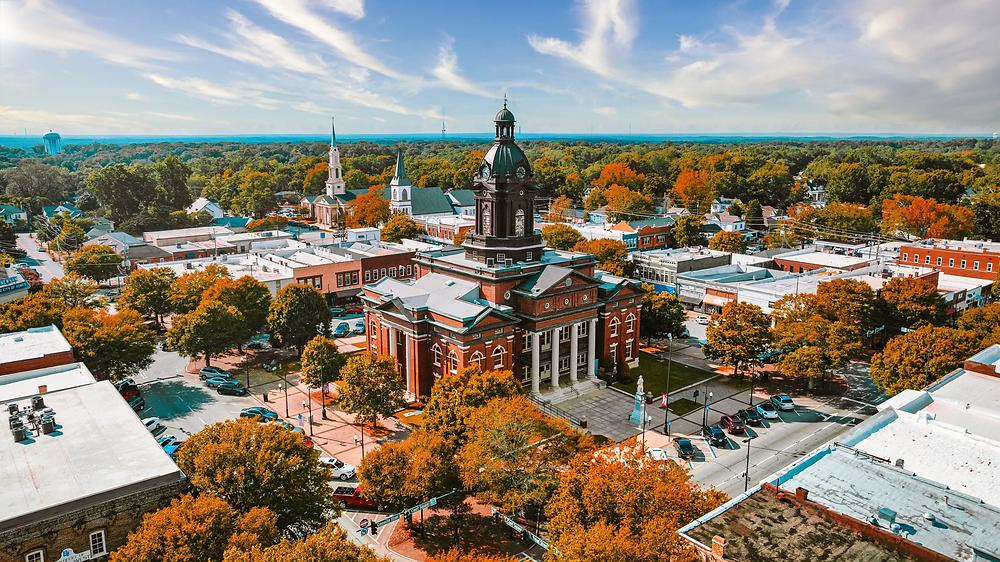
The killings affected a community where six deaths in such a short period were highly unusual.
Residents learned about the shootings as separate incidents before police publicly connected them.
The discovery of three victims at Motel 6 intensified concern.
Authorities attempted to reassure the public after Nelson's arrest.
They said they believed the suspect acted alone.
The investigation eventually resulted in six murder convictions.
For the victims' families, the criminal outcome provided a measure of legal accountability.
It did not explain every aspect of the violence.
The renewed attention in 2026 has brought the victims' names and the investigation back into public discussion.
The central criminal case has been resolved.
Nelson pleaded guilty and received six consecutive life sentences without parole.
But the precise motive remains difficult to establish from the public record.
Police believed the victims were connected to Nelson and discussed possible drug-related circumstances.
The remaining uncertainty concerns motive, not the identity of the convicted murderer.
The distinction is important when interpreting new videos or commentary about the case.
The person responsible for the six murders was Nicholas Martez Nelson, who pleaded guilty in February 2023.
The victims were Willie Edward Bussie III, Kevin Duane Robbins, Warner Mandrel Parks, Tangela Molden, Monte James Ballard and Michael Lang.
Investigators linked the crimes through witness accounts, surveillance footage, vehicle evidence, recovered property and ballistic testing.
The documentary released in November 2026 has renewed attention to how the case was solved, but the documented outcome remains the same: one convicted murderer, six victims and a prosecution built on evidence gathered across three crime scenes.
Comments (0)
Loading comments...
May You Like

PENTAGON'S DECLASSIFIED UFO FILES — THE MYSTERY OF AN UNDERGROUND STORAGE PROJECT!

TRUMP'S NVIDIA STOCK DEALINGS — IS THERE ANY TRUTH TO THE $14 MILLION PROFIT CLAIM?

PENTAGON'S PATRIOT MISSILE DELAY — A MAJOR SETBACK FOR UKRAINE'S AIR DEFENSE?












