Hillary Clinton’s Recent Public Remarks Ignite Controversy — Here’s What She Actually Said
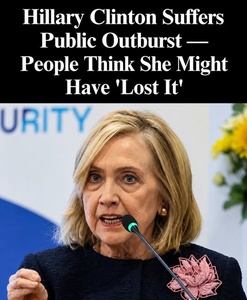
The former secretary of state has generated headlines with an angry Epstein-hearing confrontation and provocative comments about Trump and Benjamin Netanyahu, fueling another round of intense political debate.
WASHINGTON — Hillary Clinton has returned to the center of political controversy after several unusually heated public appearances generated viral clips, criticism and renewed debate about the former Democratic presidential nominee.
One of the most dramatic moments originated in Clinton’s deposition before the House Oversight Committee concerning Jeffrey Epstein, footage of which was subsequently released publicly by the Republican-led committee.
During the deposition, Republican lawmakers questioned Clinton about Epstein, her husband Bill Clinton’s connections to him and other allegations that have circulated for years around the disgraced financier.
The session became particularly contentious after Clinton learned that Republican Rep. Lauren Boebert had reportedly shared an image from the proceeding with a political influencer while questioning was still underway.
Clinton reacted angrily, striking the table, declaring that she was finished with the exchange and briefly leaving the proceeding before later returning to continue answering questions.
The footage resurfaced widely in September, with social-media accounts portraying the confrontation as Clinton “losing it” while supporters argued she was responding to what she considered improper conduct during the deposition.
Those characterizations are interpretations. The video establishes that Clinton became visibly angry and walked out temporarily; it does not establish broader conclusions about her mental state.
Another controversy emerged September 10 during Clinton’s extensive interview on MS NOW’s “Morning Joe,” where she discussed Trump, Israel, artificial intelligence, terrorism and the approaching midterm elections.
Clinton sharply attacked President Donald Trump during that interview, calling him the “Olympic champion of lying” and accusing him of repeatedly making false statements that affect Americans’ lives.
She argued that presidential dishonesty becomes particularly consequential when it concerns health, household finances, national security or American military personnel rather than ordinary partisan political disputes.
Clinton also offered a striking formulation about the governments of Trump and Israeli Prime Minister Benjamin Netanyahu, separating her opposition to those administrations from her feelings toward their countries.
She said she loves America while opposing Trump’s government and loves Israel while strongly opposing Netanyahu’s government and policies, framing both positions as political rather than national hostility.
Her most controversial remarks concerned the October 7 Hamas attack. Clinton discussed reports that Netanyahu had received warnings before the assault and speculated about why those warnings were not acted upon.
Clinton raised the possibility that Netanyahu either did not believe the warning or might have allowed events to develop before responding more aggressively, while explicitly saying she did not know his thinking.
That speculation immediately generated criticism from commentators across the political spectrum, with some accusing Clinton of promoting an unsupported theory about Netanyahu’s motives surrounding the October 7 attack.
Her actual statement was more qualified than many viral summaries. Clinton presented possibilities rather than claiming she possessed evidence proving Netanyahu intentionally allowed the attack to proceed.
Nevertheless, suggesting such a possibility without evidence establishing Netanyahu’s intent produced significant backlash, particularly given the scale of the October 7 killings and hostage-taking.
Clinton characterized the underlying events as a failure of leadership and protection, arguing that Israeli voters should consider Netanyahu’s record when determining their country’s political future.
She also argued that a different Israeli government could potentially change Washington’s relationship with Jerusalem, particularly regarding settler violence and Israeli policy in the West Bank.
Clinton’s recent interviews have covered American domestic politics as well. She said she believes Trump’s September Republican convention speech ultimately benefited Democrats by highlighting contrasts between the parties.
She predicted Democrats would regain the House in November, arguing voters increasingly distrust Trump’s promises and remain dissatisfied with the administration’s performance on major issues.
Those statements are Clinton’s political assessments rather than established predictions about the election outcome. The November results will depend on individual races, turnout and voter decisions.
Clinton has also returned to debates about decisions from her own career, including her 2002 Senate vote authorizing military force against Iraq and her support for the post-9/11 Patriot Act.
During her recent “Morning Joe” interview, Clinton defended her Iraq vote by saying she believed the authorization would provide leverage to force Saddam Hussein to comply with international demands.
Discussing the Patriot Act separately, she cautioned against overly simple hindsight judgments about decisions taken immediately after September 11, while acknowledging the difficulty of policymaking during a national crisis.
Clinton has simultaneously warned that the United States may now be underestimating terrorism risks, saying she worries the country has reduced its vigilance 25 years after September 11.
She told NBC News that her concern was not intended to frighten Americans but reflected her view that the government is paying insufficient attention to potentially resurgent terrorist threats.
The combination of those appearances helps explain why Clinton has suddenly become more visible online: she has simultaneously discussed Trump, Epstein, Israel, terrorism, Iraq and the approaching midterm elections.
But the viral headline “People Think She Might Have ‘Lost It’” goes beyond reporting those events and substitutes an assessment of Clinton herself for a description of what occurred.
A factual account can establish that Clinton became angry during her Epstein deposition, made speculative remarks about Netanyahu and sharply criticized Trump. It cannot establish from those events that she has “lost it.”
The more substantive story is that Clinton has reentered several of America’s most contentious political debates and, in doing so, has generated strong reactions from both critics and supporters.
Her comments about Netanyahu deserve particular scrutiny because they involved speculation about intent surrounding an extraordinarily serious security failure, while her Epstein confrontation should be understood within the full context of the deposition.
Those controversies are independently newsworthy without making unsupported claims about Clinton’s health, mental state or capacity.
Comments (0)
Loading comments...
May You Like

Obama Steps Back Into the Political Spotlight as Democrats Target Trump’s

South Korea–Ukraine Rift Deepens Over North Korean POW Transfer as PURL Draws New Scrutiny

OBAMA STEPS BACK INTO THE POLITICAL SPOTLIGHT