
HILLSBOROUGH, FLORIDA, US. 5 DEAD. ONE DOCTOR'S GUN. A DELETED APPOINTMENT!
HILLSBOROUGH, FLORIDA, US. 5 DEAD. ONE DOCTOR'S GUN. A DELETED APPOINTMENT!
PLANT CITY, Florida — November 21, 2026 — The Hillsborough County Sheriff's Office has identified the five members of a Florida family found dead inside their Plant City home on November 19, as investigators continue examining an apparent murder-suicide involving a father, his wife and their three young children.
The latest official update, released November 20, identified 34-year-old Isaac Luechtefeld as the suspect and named his wife and three children as victims.
Authorities have not publicly established where the firearm came from or identified a physician connected to the weapon.
The investigation began after an emergency call from the family's residence captured a disturbance and sounds resembling gunshots. Deputies arrived approximately 11 minutes later and found all five family members dead.
The Sheriff's Office has classified the incident as an active investigation.
The November 20 statement provided the identities of the five people involved in the case.
Authorities named Raquel Luechtefeld, 34, as one of the victims.
Their children were identified as Enoch Luechtefeld, 5, Hannah Luechtefeld, 3, and Job Luechtefeld, 1.
Isaac Luechtefeld, 34, was identified as the suspect.
The announcement followed the initial investigation at the family's residence on Sparkman Road.
The statement confirmed the timeline of the emergency call and deputies' arrival.
It did not identify a new suspect or describe evidence implicating another person.
The Sheriff's Office said further developments would be released through its Public Affairs Office.
The incident occurred Thursday afternoon at a residence in the 1700 block of Sparkman Road.
The Sheriff's Office received a 911 call from inside the property at 3:29 p.m.
Dispatchers heard a disturbance and what sounded like gunshots.
Deputies arrived at 3:40 p.m.
They entered the residence and discovered an adult man, an adult woman and three children dead from gunshot wounds.
The Sheriff's Office classified the deaths as a murder-suicide.
Investigators believe Isaac killed his wife and children before taking his own life.
The deaths involved all five members of the immediate family.
The emergency call became a central part of the investigation.
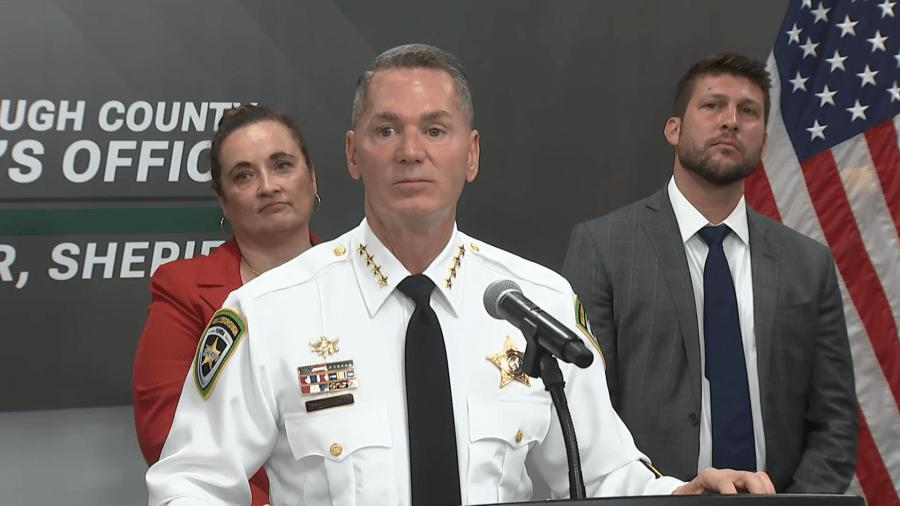
Sheriff Chronister told reporters that a dispatcher heard a man's voice apparently apologizing to a child.
The sheriff described a loud bang, followed by a young child's pleas not to be shot.
Another loud bang was reportedly heard afterward.
Those details were provided during the sheriff's public briefing.
The department's written statement confirmed that dispatchers heard a disturbance and sounds resembling gunfire.
Investigators have not publicly established who placed the emergency call.
Nor have they released a complete official transcript establishing every word spoken inside the residence.
The available account is based on the sheriff's description of the emergency recording.
The documented timeline is unusually precise.
The 911 call was received at 3:29 p.m.
Deputies arrived at 3:40 p.m.
That places approximately 11 minutes between the initial emergency call and the officers' arrival.
The responding deputies encountered a situation in which gunshots had apparently already been heard.
The sheriff said officers forced their way inside the residence.
They found the family members dead.
The official reports do not establish the exact moment each person was shot.
They also do not identify who initiated the call or how the phone connection was made.
Those details remain relevant to reconstructing the final minutes.
Isaac Luechtefeld was 34 years old.
The Sheriff's Office identified him as the suspect in its November 20 update.
That identification formalized the initial conclusion announced after the bodies were discovered.
Authorities believe Isaac fatally shot Raquel and the three children before dying by suicide.
The department has not announced that an outside attacker was involved.
The case is therefore being investigated as a murder-suicide rather than a homicide involving an unidentified fugitive.
Because the suspected perpetrator is deceased, investigators cannot obtain his account through an interview.
The reconstruction of events must instead rely on the emergency call, physical evidence, forensic findings and other available records.
The ages of the children illustrate the scale of the family's loss.
All three were younger than 6.
The Sheriff's Office did not provide detailed personal biographies in its official release.
The statement focused on confirming identities and the circumstances of the investigation.
The family members' names also clarified the distinction between the four people investigators believe were killed and Isaac, whom authorities identified as the suspect.
The total death toll was five.
The investigation concerns four suspected homicides followed by the father's suicide.
The origin of the firearm is one of the details not addressed in the Sheriff's Office's published updates.
Authorities confirmed that the five family members died from gunshot wounds.
They did not identify the firearm's make, model or serial number.
They also did not disclose its purchase history, registration information or chain of possession.
Those omissions do not establish that the weapon was obtained unlawfully.
They simply mean the relevant information has not been made public.
A firearm recovered during a homicide investigation may be examined for fingerprints, biological material, ballistic evidence and identifying markings.
Investigators can also seek records showing how the weapon was acquired.
The official Plant City statements do not describe the results of such inquiries.
The allegation that the firearm was linked to Isaac's doctor is not supported by the Sheriff's Office's November 19 or November 20 statements.
Neither release identifies a physician associated with the gun.
Neither reports that a doctor supplied, owned, transferred or previously possessed the weapon.
The distinction is significant because a firearm connection can have several meanings.
A person might have purchased a gun, temporarily possessed it, transferred it or simply appeared in a record connected to it.
Those circumstances would carry different implications.
Even a documented ownership connection would not automatically establish knowledge of, or involvement in, a subsequent crime.
The public evidence currently identifies Isaac as the suspected perpetrator, without establishing a physician's involvement.
Firearm tracing can help investigators reconstruct a weapon's commercial history.
In the United States, the Bureau of Alcohol, Tobacco, Firearms and Explosives assists law enforcement with tracing firearms recovered in criminal investigations.
A trace may identify a manufacturer, distributor, licensed dealer and first retail purchaser.
That information can provide investigative leads.
However, the first retail purchaser is not necessarily the person who most recently possessed the weapon.
A gun may change hands after its initial sale.
Tracing records also do not, by themselves, establish criminal responsibility.
The Hillsborough County Sheriff's Office has not publicly announced a firearm-tracing result in this case.
Any claim connecting the gun to a named individual would require evidence beyond the existence of a possible trace.
A firearm's ownership history may be relevant to an investigation without proving that every previous owner committed wrongdoing.
Investigators must distinguish possession from participation.
For example, a lawful transfer of a firearm may occur long before it is used in a crime.
A person who once owned a weapon may have no knowledge of its later use.
Conversely, investigators may examine whether a transfer violated applicable laws.
The answer depends on records, dates, circumstances and evidence of knowledge or intent.
In the Plant City case, the publicly available official reports do not identify any such transfer.
They do not establish a connection to a physician or another third party.
The known allegation remains that Isaac killed his family.
The agency issued two relevant public statements.
Its November 19 release confirmed that five people had been found dead after a 911 call.
The statement provided the address block, emergency timeline and classification of the investigation.
The November 20 release identified the family members.
It named Isaac as the suspect and Raquel and the three children as victims.
The second statement did not announce a newly discovered accomplice.
It did not disclose a new firearm lead.
It also did not establish a medical professional's involvement.
The updates are significant because they provide a direct official record against which other claims can be compared.
Thursday, November 19, 2026
|
3:29 p.m. |
HCSO receives a 911 call from inside the Sparkman Road residence.
3:40 p.m.
Deputies arrive and discover five family members dead from gunshot wounds.
Later that day
Sheriff Chronister discusses the apparent murder-suicide and the emergency call.
Friday, November 20, 2026
The Sheriff's Office identifies the four victims and names Isaac Luechtefeld as the suspect.
The sequence shows how the public record developed over approximately 24 hours.
The first announcement established what officers encountered.
The second confirmed the identities.
Neither statement reported a change in the central conclusion that the deaths resulted from a murder-suicide.
Plant City is east of Tampa in Hillsborough County.
The property where the deaths occurred was a private family residence.
Deputies responded after receiving the emergency call, not because of a publicly announced search warrant or an ongoing pursuit.
The sheriff's initial statements did not describe an external threat to neighboring residents.
Authorities did not announce that another armed suspect was being sought.
The focus remained on the events inside the house.
The property became a crime scene as investigators worked to document the deaths.
Its location is relevant to the emergency response and jurisdiction.
It does not establish anything about the family's private circumstances or the origin of the weapon.
During the initial briefing, Chronister said neither parent had a known criminal history.
He also indicated that deputies had not previously been called to the residence during the family's approximately one-year stay.
Those details help explain why the incident appeared unexpected to authorities.
They do not establish what occurred privately within the home.
A lack of police reports is not equivalent to proof that a household never experienced conflict.
It also does not establish a particular motive.
Investigators have not publicly identified a prior incident that directly explains the shootings.
The sheriff's statements therefore leave a distinction between the apparent sequence of violence and the circumstances that preceded it.
The former has been described by authorities; the latter remains unresolved.
That remains one of the investigation's most consequential unanswered questions.
Detectives may examine communications, witness accounts and other records to understand events before the shootings.
But the public releases do not identify a specific dispute or triggering event.
They also do not attribute the killings to a diagnosed medical condition, medication, financial problem or relationship conflict.
Such explanations would require evidence.
The official account concerns the killings and the suspect's identity, not a documented explanation for his actions.
According to the sheriff, the dispatcher heard a man apologize, apparent gunfire and a child's pleas.
That information can be compared with other evidence.
Investigators may examine the call's duration and the timing of audible events.
They may also compare the recording with physical evidence recovered at the scene.
However, the publicly described audio does not independently identify the firearm.
It cannot establish the weapon's purchase history.
And it does not identify a doctor or another third party.
The recording is significant evidence concerning the emergency itself.
It should not be treated as proof of an unrelated allegation about the gun's origin.
The Sheriff's Office's written statements provide a concise description of the emergency call.
The sheriff supplied additional details during his briefing.
Those public accounts are not the same as a full forensic analysis of the recording.
A complete audio review could help investigators establish the sequence and timing of audible events.
It might also clarify whether multiple voices were present.
That remains a separate question.
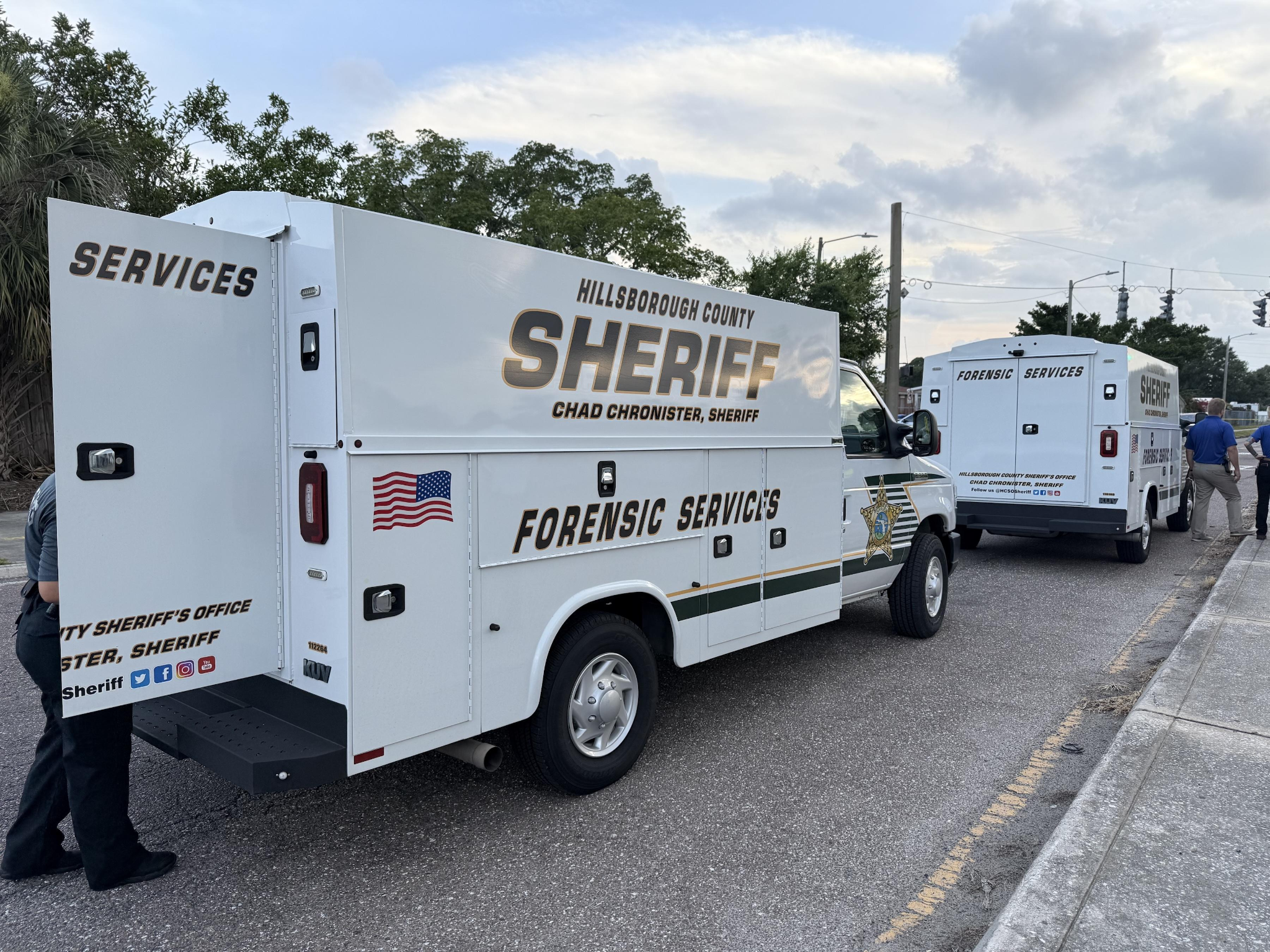
The physical investigation can provide information that witnesses and recordings cannot.
Investigators may document the location of the victims and examine firearms or ammunition evidence recovered from the scene.
They may also evaluate the relationship between injuries and the physical surroundings.
Medical examiner findings can assist in establishing the cause and manner of each death.
These procedures can support or challenge an initial reconstruction.
In the Plant City case, authorities reported that all five people died from gunshot wounds.
They classified the incident as a murder-suicide.
The Sheriff's Office has described the incident as a murder-suicide.
Under that preliminary reconstruction, Isaac killed four family members and then himself.
The five deaths therefore represent four suspected homicide victims and the suspected perpetrator's death.
The classification is based on the investigation conducted by law enforcement.
The medical examiner's work may provide additional findings concerning individual causes and manners of death.
The Sheriff's Office must nevertheless complete its investigation.
That includes documenting the evidence and determining whether any further findings alter the reconstruction.
Identifying a suspected perpetrator does not necessarily complete a homicide investigation.
Authorities may still need to determine the precise sequence of events, examine evidence and establish how the weapon was obtained.
They may also need to clarify whether anyone else had relevant knowledge before the incident.
Those inquiries are distinct from an allegation that another person participated in the crime.
In the Plant City case, the sheriff has identified Isaac as the suspect.
The investigation remains active.
That status allows authorities to continue gathering information without implying that a new suspect has emerged.
A subsequent official update could provide additional details, but none should be assumed in advance.
The case also affected the personnel who responded to the emergency.
Chronister described the circumstances as deeply distressing for the dispatcher and deputies.
The dispatcher heard a child's pleas while the call remained connected.
Deputies subsequently entered the residence and found the family dead.
The deaths of three young children added to the gravity of the response.
The sheriff expressed sympathy for the family's loved ones and the wider community.
In his official statement, he said the loss was difficult to describe and emphasized that help is available to people experiencing a crisis.
His remarks were part of the department's public response to the tragedy.
For residents of Plant City, the central questions concern how such violence occurred within one household and whether warning signs were visible.
The Sheriff's Office has reported no previous calls for service to the residence during the family's stay.
That fact does not answer what happened before November 19.
The community also faces the loss of three children and their mother.
Relatives and neighbors may have information about the family's daily life, but public speculation cannot substitute for evidence.
The sheriff's statements provide a foundation for understanding the incident.
They establish the emergency timeline, the deaths and the suspected perpetrator.
The unresolved questions concern motive, the initiation of the emergency call and details of the weapon.
A documented connection between the firearm and a physician would require identifiable supporting evidence.
Relevant records might include a firearm trace, a lawful transfer document, a statement from investigators or another authenticated record.
The information would also need to establish the nature of the connection.
A former owner, for example, is not necessarily a participant in a later crime.
A medical professional who treated the suspect would not automatically have any connection to a firearm used by that patient.
The two relationships are legally and factually distinct.
The Sheriff's Office has not released a statement establishing either relationship in connection with the Plant City weapon.
Consequently, the official evidence does not support naming a doctor or attributing involvement to one.
Criminal investigations often generate leads that require further examination.
A lead may come from a witness, a document or a forensic result.
Investigators then determine whether the information is reliable and relevant.
An official finding carries a different level of evidentiary support.
In this case, the November 20 update is an official statement confirming the family's identities.
It is not an announcement that a new person has been connected to the weapon.
The distinction matters because an allegation about a doctor could affect the reputation of someone who has not been identified by authorities as involved in any wrongdoing.
The available evidence does not establish such involvement.
Several important questions remain unanswered in the public record.
They define the limits of what can currently be reported.
The confirmed account remains that deputies found five family members dead and investigators believe the father killed his wife and children before taking his own life.
As of November 21, the Hillsborough County Sheriff's Office's most recent published case-specific update was issued November 20.
That release identified the four victims and Isaac as the suspect.
It repeated the emergency call and response timeline.
The department stated that the investigation remained active and that additional updates would come from its Public Affairs Office.
The official record therefore supports a clear distinction between the confirmed murder-suicide investigation and the separate allegation about the weapon.
Investigators may continue examining forensic evidence, the emergency recording and circumstances preceding the deaths.
Any future information about the firearm's origin would need to be assessed against official records.
The same applies to potential information about the suspect's relationships or activities.
The case is already significant because five members of one family died, including three children.
The Sheriff's Office has identified the suspected perpetrator and the victims.
The remaining work concerns completing the reconstruction and establishing facts that were not available during the initial response.
The latest verified development in the Plant City investigation is the identification of the family members.
The Sheriff's Office named Isaac Luechtefeld as the suspect in the deaths of Raquel, Enoch, Hannah and Job Luechtefeld.
The department continues to investigate the November 19 incident as a murder-suicide.
The origin of the weapon remains outside the details publicly disclosed in the two Sheriff's Office statements.
Further evidence may clarify how the firearm was obtained and what preceded the shootings.
For now, the documented facts establish the loss of five family members, the emergency response and the sheriff's conclusion that the father was responsible for the killings.
Comments (0)
Loading comments...
May You Like


IRAN WARNS WASHINGTON — HOW SERIOUS IS THE THREAT TO U.S. MILITARY BASES?

PENTAGON'S DECLASSIFIED UFO FILES — THE MYSTERY OF AN UNDERGROUND STORAGE PROJECT!












