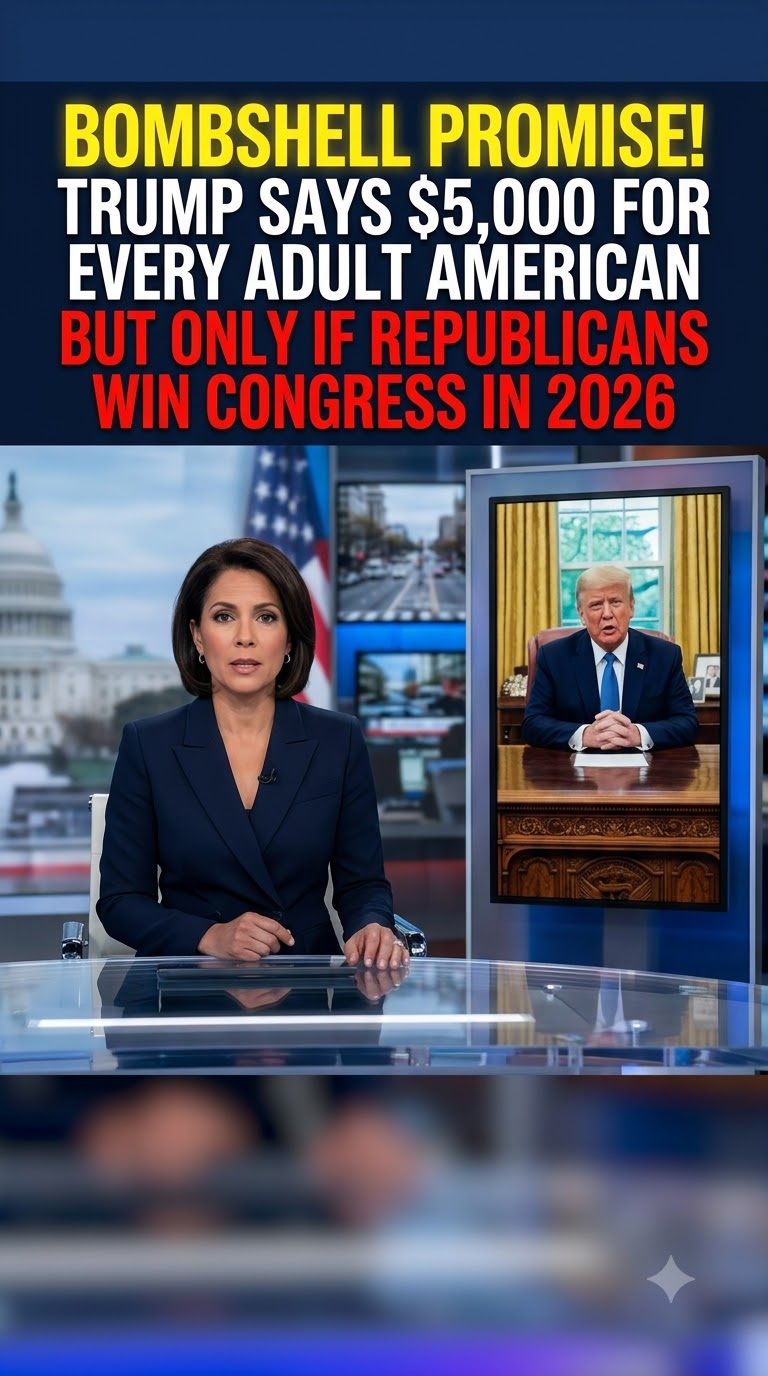
House Passes Congressional Stock-Trading Restrictions as AOC Slams GOP Strategy
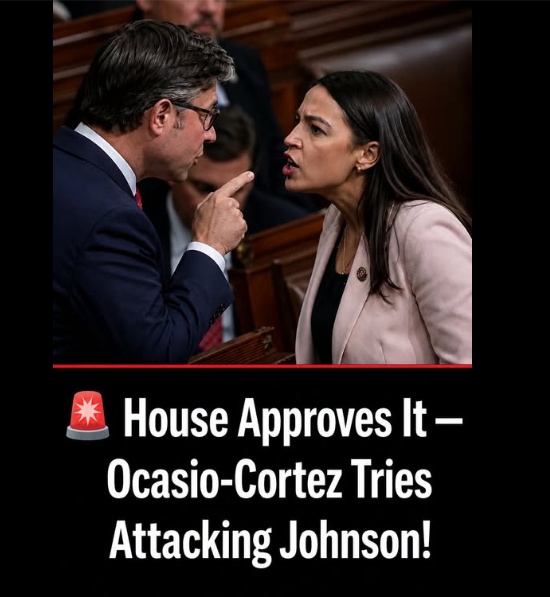
A viral graphic showing Rep. Alexandria Ocasio-Cortez and House Speaker Mike Johnson in a heated exchange carries a dramatic message: “House Approves It — Ocasio-Cortez Tries Attacking Johnson!”
The underlying event is real, but the graphic strips away important context.
On July 22, 2026, the House passed the Stop Insider Trading Act, legislation restricting stock purchases and sales by members of Congress and their immediate families. The measure passed 232–198, with 13 Democrats joining Republicans.
Ocasio-Cortez opposed the measure, arguing that Republicans had combined the stock-trading restrictions with controversial voter-identification provisions. But there is no evidence that the photograph itself depicts a specific confrontation over the bill.
What the House Actually Approved
The legislation, H.R. 7008, was introduced as the Stop Insider Trading Act.
Under the House-passed version, members of Congress, their spouses and dependent children would generally be prohibited from purchasing securities issued by publicly traded companies. Existing holdings could still be sold, but lawmakers would have to provide public notice at least seven days and no more than 14 days before a planned sale.
The bill also establishes financial penalties for violations. The relevant ethics committee would impose a fine of at least $2,000 or 10% of the investment value, whichever is greater, while realized profits would be subject to forfeiture.
The House vote was bipartisan, although the overwhelming majority of Democrats opposed the final package.
Why Ocasio-Cortez Voted Against It
Ocasio-Cortez has supported efforts to restrict congressional stock trading, making her opposition to this particular version significant.
Her objection centered on the decision to combine the stock-trading legislation with a voter-identification measure.
Before the vote, she argued that Republicans were using a popular congressional stock-trading proposal as a vehicle for provisions modeled on the SAVE America Act, President Donald Trump's broader election legislation.
She characterized the maneuver as an attempt to make Democrats choose between supporting stock-trading restrictions and rejecting the voting provisions. Her position was that the two issues should be considered separately.
That criticism was not unique to Ocasio-Cortez. Some Republicans also objected to combining the measures.
Rep. Thomas Massie, a Republican who has supported a congressional stock-trading ban, argued that if lawmakers genuinely wanted to prohibit congressional trading, they should pass a standalone bill rather than attach voter-ID provisions that could make Democratic support impossible.
The Voter-ID Provision Became the Flashpoint
The final legislation was combined with the Voter ID Act, requiring identification for federal elections.
That provision changed the political calculation surrounding the stock-trading bill.
Republicans promoted the package as a combination of two popular reforms: restricting lawmakers' ability to trade individual stocks and strengthening voter-identification requirements.
Democrats countered that the voter-ID language had been deliberately attached to legislation that otherwise had bipartisan appeal.
Rep. Lori Trahan, a member of Democratic leadership, argued that the measure would still allow lawmakers to retain and sell existing stocks and criticized the inclusion of the voter-ID provisions.
Johnson and Republicans Called It an Ethics Reform
Republican leaders presented the bill very differently.
House Administration Committee Chairman Bryan Steil, the Republican sponsor, called the legislation a major step toward ethics reform and said lawmakers should not be able to profit from information obtained through their public positions.
Rep. Zach Nunn, another supporter, similarly described congressional stock trading as an accountability issue rather than a partisan one.
The House vote therefore produced an unusual political dynamic: the basic idea of restricting congressional stock trading had bipartisan support, but the particular package became sharply partisan because of the voter-ID provisions.
The Senate Still Has the Final Say
The House vote did not make the restrictions law.
The legislation was sent to the Senate on July 23 and was placed on the Senate Legislative Calendar on August 6.
Senators subsequently debated the measure's contents. Sen. Pete Ricketts, a Republican supporter of congressional trading restrictions, argued that lawmakers should be prohibited from buying individual stocks and should provide advance notice before selling existing holdings.
But as of the latest congressional action reflected in the official record, the House-passed H.R. 7008 had not become law. The Senate's consideration remained the next major hurdle.
What About the Photo of AOC and Johnson?
This is where the viral graphic becomes misleading.
The photograph shows Ocasio-Cortez and Johnson in what appears to be a tense exchange on the House floor. But a photograph of two lawmakers arguing or speaking emphatically does not establish what they were discussing.
More importantly, the available reporting does not establish that the pictured exchange was a direct confrontation over the Stop Insider Trading Act.
The image therefore appears to be being used to dramatize a genuine political disagreement.
There certainly was a confrontation in the broader political sense: Ocasio-Cortez attacked the Republican strategy behind the legislation, while Johnson and Republican leaders pushed the bill through the House.
But saying that “Ocasio-Cortez tries attacking Johnson” implies a specific personal showdown that the evidence does not establish.
The Bigger Political Fight
The dispute reflects a broader argument over congressional ethics and election rules.
There is substantial bipartisan interest in preventing lawmakers from using public office for personal financial gain. A Senate version of the Stop Insider Trading Act was introduced earlier in 2026 by Republican Sens. Bill Cassidy and Pete Ricketts and likewise proposed restrictions on stock purchases and advance notice for sales.
The disagreement is over how far the restrictions should go and what other policies should be attached to them.
That distinction matters because a bill can have a popular central purpose while still generating fierce opposition over its details.
What the viral graphic gets right
- The House did approve congressional stock-trading restrictions.
- The vote was 232–198 on July 22, 2026.
- Ocasio-Cortez opposed the measure and publicly criticized the Republican strategy.
- Voter-ID provisions were combined with the stock-trading legislation.
- The bill subsequently moved to the Senate.
What the graphic exaggerates
- It does not establish that AOC and Johnson had a specific confrontation over this legislation.
- The House vote did not make the proposal law.
- AOC's objection was primarily about the combined package, rather than opposition to every effort to restrict congressional stock trading.
- The Senate still had to act before the measure could reach the president.
Bottom Line
The viral image is built around a real Washington fight, but its framing is more dramatic than the underlying facts.
The House did pass a bipartisan congressional stock-trading measure, and Alexandria Ocasio-Cortez was one of its opponents because Republicans had paired the restrictions with voter-ID provisions she strongly opposed.
The next question was—and remains—whether the Senate would take up the legislation and whether lawmakers could separate the broadly popular goal of restricting congressional stock trading from the much more divisive debate over federal voting requirements.
The House approved the bill. It was not yet law—and the picture alone does not prove a personal AOC-Johnson showdown.
Comments (0)
Loading comments...
May You Like

gfnhgmnghnmfgnbvvvvvvvvv
OBAMA STUNS ON INSTAGRAM: MESSAGE MARKING 34-YEAR MILESTONE SPARKS A BUZZ

Jack Smith Defends His Integrity as Trump Investigations Face Renewed Political Firestorm