
House Passes Deporting Fraudsters Act 231–186: What the Vote Actually Means
House Passes Deporting Fraudsters Act 231–186: What the Vote Actually Means
Twenty Democrats joined Republicans in backing H.R. 1958. The tally is real, but describing the vote as a “trap” is political framing—not a conclusion established by the roll call itself.
Congress · October 27, 2026 · Based on the official House roll call
The U.S. House of Representatives passed the Deporting Fraudsters Act of 2026, H.R. 1958, on March 18 by 231 votes to 186. The official roll call records 211 Republicans and 20 Democrats voting in favor, while 186 Democrats voted against the bill; 15 members did not vote.

The measure is titled the Deporting Fraudsters Act of 2026. Its stated purpose is to amend immigration law so that certain noncitizens convicted of defrauding the federal government or unlawfully receiving public benefits can be deemed inadmissible or deportable.
The bill covers specified conduct involving programs such as Supplemental Nutrition Assistance Program benefits, Social Security benefits, other federally funded programs, and fraudulent identification documents. The law’s effect would depend on the statutory language and the facts of each case; it does not mean every paperwork mistake automatically triggers deportation.
The roll-call numbers in the thumbnail are accurate for this bill: 231 “yea” votes and 186 “nay” votes. The partisan breakdown is also important: all 211 Republicans who voted supported it, alongside 20 Democrats. No Republican voted against it, and 15 members were recorded as not voting.
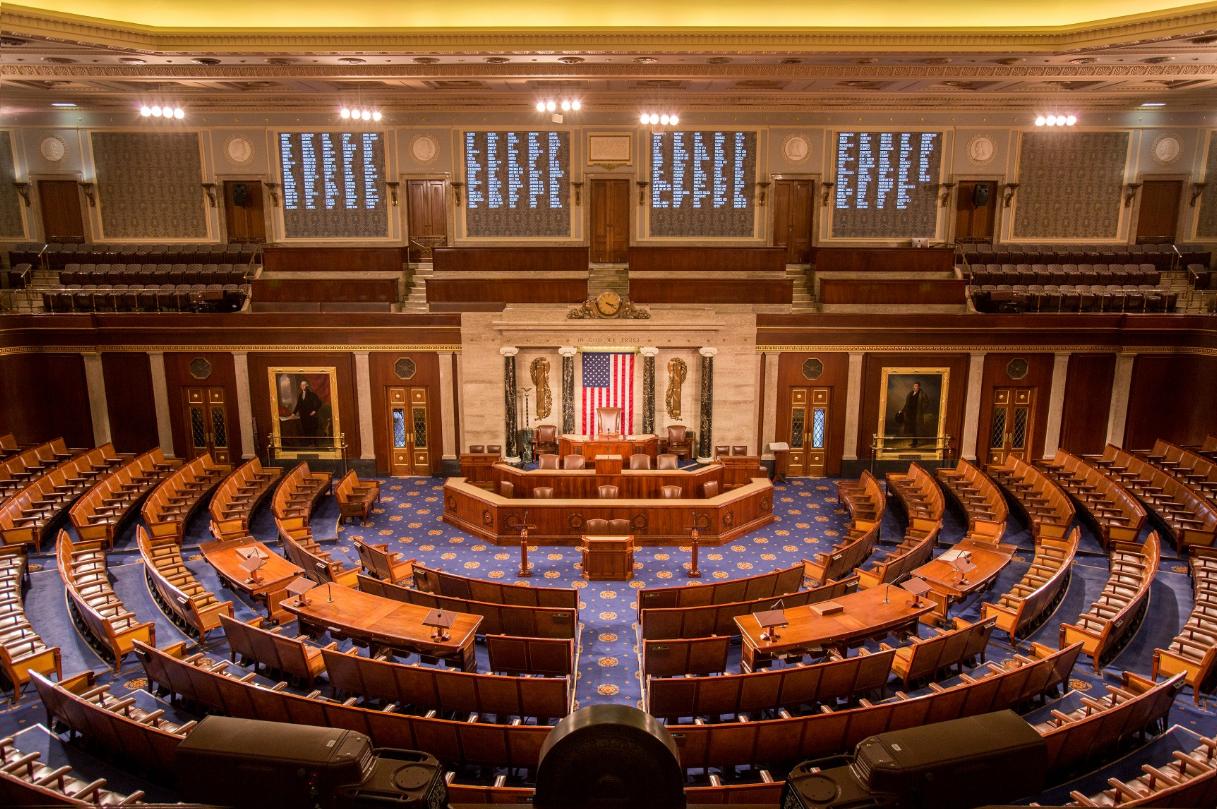
So did Democrats “fall for a trap”? That wording is an opinion about political strategy, not a factual finding contained in the official vote record. A roll call can show who voted for or against a bill, but it cannot establish what each member intended or whether a party was tricked.
Supporters of H.R. 1958 argue that people who commit fraud involving public benefits should face consequences under immigration law. From that perspective, the bill is presented as an accountability measure designed to deter abuse of government programs.
Opponents may object to the scope of the bill, its interaction with immigration protections, or the possibility that a broad rule could have disproportionate consequences. Those concerns are policy arguments and need to be evaluated against the actual text, not inferred from the vote count alone.
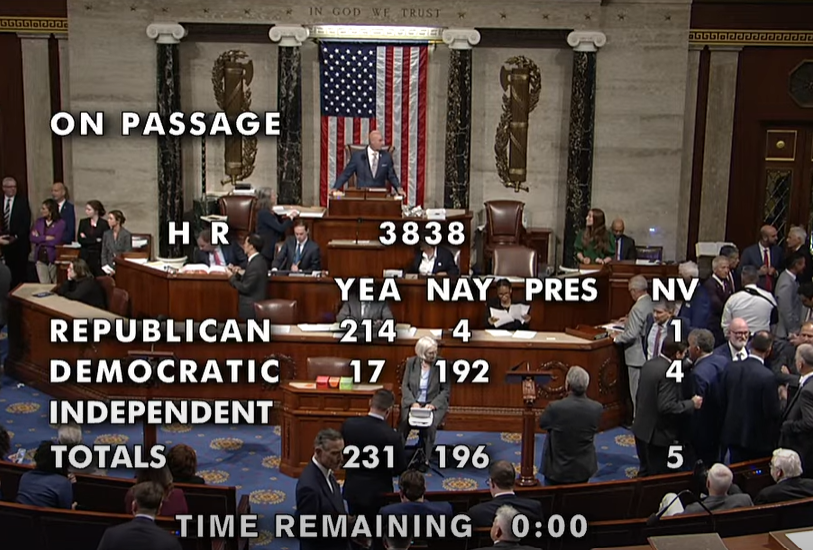
The official Clerk of the House page is the best source for the numbers because it records the vote by member and party. It identifies the question as “On Passage,” meaning members were voting on whether the House should approve the bill itself, rather than merely voting on a procedural motion.
Passage in the House does not, by itself, make a bill federal law. A bill generally must also pass the Senate in identical form and be presented to the president, who may sign or veto it, subject to Congress’s ability to override a veto.
That distinction is often lost in viral posts. “The House passed it” means one chamber approved the measure. It does not automatically mean that the bill has completed the legislative process or that its provisions are already in force.
The 20 Democratic “yes” votes are the most politically notable part of the tally. They show that a group of Democrats crossed the party-line pattern on this measure, but individual members can support a bill for different reasons, including their district’s priorities, the bill’s specific wording, or a desire to demonstrate support for enforcement against fraud.
It is therefore too broad to say that “Democrats” as a whole supported the bill. The official result shows the opposite: 186 Democrats voted no, while 20 voted yes and eight did not vote. Those numbers reveal a split within the Democratic caucus, not a unified party position.

The supplied thumbnail also features Representative Alexandria Ocasio-Cortez, but the official vote record lists her among the members who voted “nay.” Her presence in the graphic should not be mistaken for evidence that she supported the measure or that the bill was specifically aimed at her.
In evaluating claims that the bill was a political “trap,” readers should look for direct statements from lawmakers, debate transcripts, amendments, and the bill’s legislative history. Without that evidence, the phrase remains commentary intended to frame the vote in a dramatic way.
The bill’s practical impact would depend on the final text, how immigration authorities interpret it, and how courts apply it to individual cases. Legal protections, the required proof of misconduct, and any applicable relief from removal can matter substantially in real-world proceedings.
Public-benefit fraud is already subject to a range of federal and state laws. H.R. 1958’s focus is specifically on immigration consequences for certain noncitizens who have been convicted of, admitted to, or engaged in conduct that meets the bill’s statutory criteria. The exact legal trigger matters.
For that reason, the bill should not be summarized as allowing deportation for any accusation of fraud. The statutory text uses defined categories of conduct, and the application of those categories would have to be assessed in context.
The vote also illustrates a recurring feature of Congress: party divisions are strong, but they are not absolute. A minority of Democrats joined all voting Republicans in approving this measure, while the majority of Democrats opposed it.
The clearest takeaway is straightforward. The House passed H.R. 1958 on March 18, 2026, by 231–186, with 20 Democrats voting yes. That result is verified by the official Clerk of the House. Calling it a “trap” is a political interpretation, and claims about the bill’s legal effect should be checked against the text and subsequent legislative action.
• Bill: H.R. 1958, Deporting Fraudsters Act of 2026
• Date: March 18, 2026
• House result: 231 yes, 186 no, 15 not voting
• Party split: 211 Republicans and 20 Democrats voted yes; 186 Democrats voted no
• The House vote alone does not establish that the bill became law
Comments (0)
Loading comments...
May You Like

WWE BRONSON REED—INSPIRED—SUDDEN COLLAPSE, MYSTERIOUS STIMULANTS, DEAD AT 38!

WWE BRONSON REED DEAD AT 38, STIMULANTS DETECTED, $10M INSURANCE PAYOUT FROZEN!

1,000+ MILITARY FAMILY RECORDS BREACHED, 200+ MILITARY SITES AT RISK!










Popular Posts



