
House Votes 226–197 on SHOWER Act as Debate Over Showerhead Rules Reaches Congress
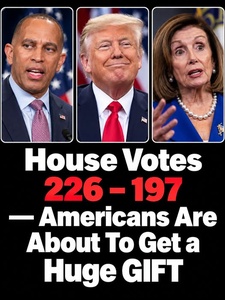
WASHINGTON — The U.S. House of Representatives voted 226–197 to pass legislation changing how federal regulations define showerheads, reviving a long-running debate over water-flow rules and consumer choice.
The measure, known as the Saving Homeowners from Overregulation With Exceptional Rinsing Act, or SHOWER Act, is formally designated as H.R. 4593.
The House approved the bill on January 13, 2026, with 226 lawmakers voting in favor and 197 voting against it, according to the official roll call.
The vote was strongly divided by party, with 215 Republicans supporting the legislation and all 197 voting against it coming from Democrats. Eleven Democrats voted for the measure.
The legislation would amend the Energy Policy and Conservation Act by adopting an industry-standard definition of “showerhead” established by the American Society of Mechanical Engineers.
Under the bill, the Department of Energy would have 180 days after enactment to revise federal regulations so they conform to the new statutory definition.
Supporters describe the proposal as a way to provide consumers with greater choice while preventing future administrations from changing showerhead regulations through what they characterize as regulatory reinterpretation.
House Energy and Commerce Chairman Brett Guthrie and Representative Russell Fry, the bill’s sponsor, celebrated passage and argued that the legislation would reduce regulatory uncertainty affecting manufacturers and consumers.
The bill also addresses how multiple-nozzle shower systems are treated, with supporters saying each nozzle could qualify as an individual showerhead under the revised definition.
That provision has become one of the most recognizable aspects of the legislation because it could affect how multi-head shower systems are treated under federal efficiency requirements.
The Congressional Budget Office found that H.R. 4593 would adopt the ASME industry-standard definition and require the Energy Department to update related regulations within 180 days.
CBO estimated that implementing the legislation would cost less than $500,000 in 2026, while projecting no direct changes to federal revenues or spending from the legislation itself.
The debate is partly connected to earlier federal disputes over how showerhead water-flow limits should apply when fixtures contain multiple outlets or nozzles.
Supporters argue that regulatory changes affecting everyday household products should not leave manufacturers repeatedly adjusting products and consumers facing uncertainty about what fixtures they can purchase.
Opponents, meanwhile, voted against the measure in overwhelming numbers, reflecting a broader disagreement over federal energy-efficiency regulation and how Congress should establish standards for household appliances.
The official House record shows that the legislation passed by 226–197, with eight members not voting, before being sent to the Senate for further consideration.
The Senate received H.R. 4593 on January 15, 2026, and referred it to the Senate Committee on Energy and Natural Resources, according to the congressional legislative record.
That means the House vote did not immediately change federal law, and Americans should not interpret the 226–197 vote as an immediate nationwide change to showerhead requirements.
The images used in viral posts about the vote can also create confusion because photographs of President Donald Trump, Hakeem Jeffries and Nancy Pelosi do not necessarily represent participants in the specific legislative debate.
For example, the official roll-call record shows that Pelosi voted against H.R. 4593, while the legislation’s passage reflected a much broader House vote involving hundreds of representatives.
Ultimately, the 226–197 vote represents a significant congressional action on federal showerhead definitions, but the legislation still requires further Senate action before it could become federal law.
The viral phrase “Americans Are About To Get a Huge Gift” is therefore better understood as promotional language rather than an established description of the legislation’s effects.
Comments (0)
Loading comments...
May You Like

OBAMA STEPS BACK INTO THE POLITICAL SPOTLIGHT

OBAMA STUNS ON INSTAGRAM: MESSAGE MARKING 34-YEAR MILESTONE SPARKS A BUZZ
TRUMP HIT WITH 26 ARTICLES OF IMPEACHMENT














