
Trump Boasts of “Hundreds of Billions” in Oil Profits as Americans Face Rising Gas Prices
October 29, 2026 | Perry, Georgia, United States | Politics & Economy
Trump Claims Energy Boom Will Benefit America
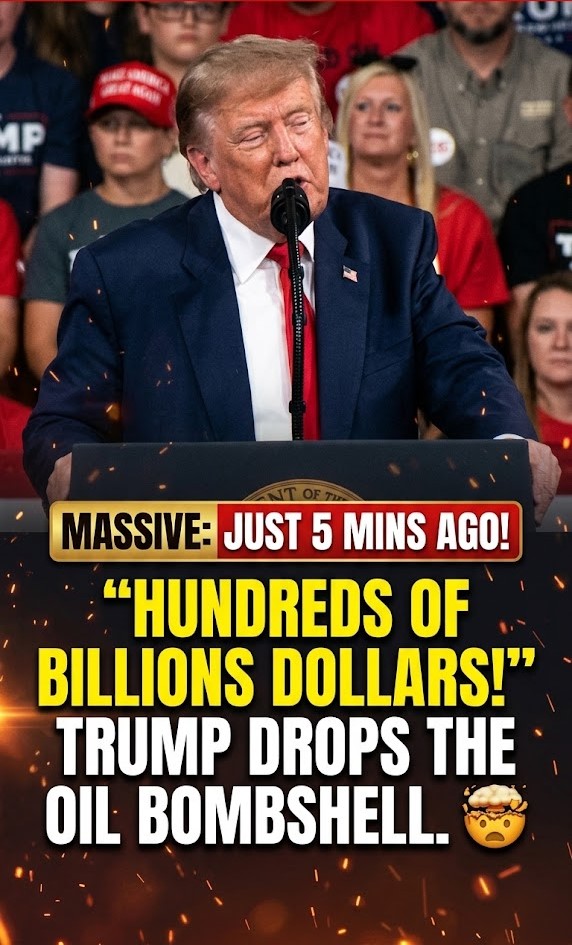
President Donald Trump defended his energy policies at a Republican campaign rally in Perry, Georgia, on October 24, claiming the United States was making enormous sums from higher oil prices while promising gasoline costs would eventually fall.
“We’re making hundreds and hundreds of billions, trillions of dollars,” Trump told supporters, referring to the financial gains he attributed to developments in the global oil market. He acknowledged that his advisers had warned him against emphasizing those gains while drivers were paying more at the pump.
Trump nevertheless insisted that the country was becoming stronger and predicted that gasoline prices would come down. His comments placed the economic benefits claimed for American energy producers alongside the immediate financial pressure facing consumers.
The speech came as Republicans campaigned for the November 3 midterm elections, with household affordability emerging as a major political concern. Rising fuel prices have increased transportation costs for commuters, farmers, truck drivers, and businesses that depend on petroleum products.
The president presented increased energy revenue as evidence of American economic strength. However, higher oil prices can benefit producers while simultaneously increasing expenses for households and companies, meaning national industry earnings do not necessarily translate into lower living costs for ordinary Americans.
Why Higher Oil Prices Can Produce Conflicting Results
The global oil market has been affected by the war involving Iran, which began on February 28, 2026. Disruptions to shipping through the Strait of Hormuz have contributed to higher crude prices and uncertainty over future supplies.


Higher crude prices can increase revenue for oil producers, particularly companies operating in regions with substantial domestic production. But motorists usually experience the opposite effect when rising crude costs pass through to wholesale gasoline markets and retail fuel prices.
The distinction between revenue and profit is also important. Trump’s claim that the country is making hundreds of billions or trillions of dollars was not accompanied by a detailed calculation separating government revenue, industry earnings, investment, and wider economic effects.
Some American energy companies may benefit from elevated prices, but the national economy also absorbs higher costs for transportation, agriculture, manufacturing, and distribution. Those expenses can eventually influence the prices consumers pay for food and other goods.
The result is a complicated economic picture: higher prices may strengthen parts of the energy sector while placing a heavier burden on people who spend a significant share of their income on fuel and essential goods.
Gasoline Prices Remain a Political Liability
By October 26, the national average price of regular gasoline had reached approximately $4.29 per gallon, compared with about $2.98 before the war, according to figures cited by the Associated Press. Diesel prices had climbed even more sharply, increasing costs for freight operators and farmers.

These increases have created a challenge for the Trump administration as it tries to convince voters that its economic policies are improving living standards. Even Americans who support domestic energy production may be frustrated when higher fuel costs consume more of their household budgets.
Trump has repeatedly predicted that gasoline prices will decline when the conflict ends and shipping routes become more reliable. However, the timing and scale of any reduction remain uncertain because oil markets also depend on production levels, refinery capacity, transportation costs, and global demand.
The administration has promoted measures intended to expand American energy production and ease fuel costs. Yet increased domestic output does not automatically guarantee lower prices at the pump, because crude oil and refined petroleum products are traded in interconnected international markets.
Midterm Politics and the Affordability Debate
Trump’s remarks came during a campaign event intended to help Republican candidates ahead of the November 3 midterm elections. His appearance in Perry also featured economic promises and attacks on political opponents, as Republicans sought to maintain control of Congress.
For Democrats, the president’s comments offered an opportunity to argue that the administration was celebrating industry gains while households struggled with rising expenses. Republicans counter that expanding energy production and strengthening American industry will benefit the country over time.
The competing arguments reflect a central question facing voters: whether the administration’s broader economic strategy justifies the immediate costs many households are experiencing. That judgment may depend on how quickly prices change and whether wages and other income keep pace with expenses.
A Promise That Will Be Tested at the Pump
Trump’s prediction that gasoline prices will come down is measurable, but its fulfillment depends on developments that the president cannot fully control. A sustained reduction in oil prices would likely ease pressure on motorists, while continued disruption could prolong the financial strain.
His claim that the United States is making unprecedented sums from the energy market also requires careful interpretation. Industry revenue, company profits, government income, and household welfare are different measures, and gains in one area do not necessarily indicate improvement across the economy.
Ultimately, the rally highlighted the tension between the administration’s confidence in American energy strength and the immediate cost of fuel for consumers. With Election Day approaching, gasoline prices have become both an economic concern and a political test.
The decisive question for many drivers will not be how much the energy industry earns, but whether filling their tanks becomes more affordable. Trump has promised that prices will fall; consumers and voters will judge that promise against what they actually pay.
Comments (0)
Loading comments...
May You Like

DAVENPORT AIRBNB HORROR — 40 OF 50 TEENS TEST POSITIVE FOR DRUGS SUPPLIED BY THE HOST'S MOM!

WWE BRONSON REED DEAD AT 38, STIMULANTS DETECTED, $10M INSURANCE PAYOUT FROZEN!

BOMBSHELL NEW JERSEY FLOOD — 112 KM/H WINDS, SEAWATER FLOODING INLAND, 120,000 HOMES AT RISK!










Popular Posts



