Nancy Mace Sparks Backlash With Attack on Lindsay Clancy Defense: “If Hormones Can Be an Excuse for Murder…”
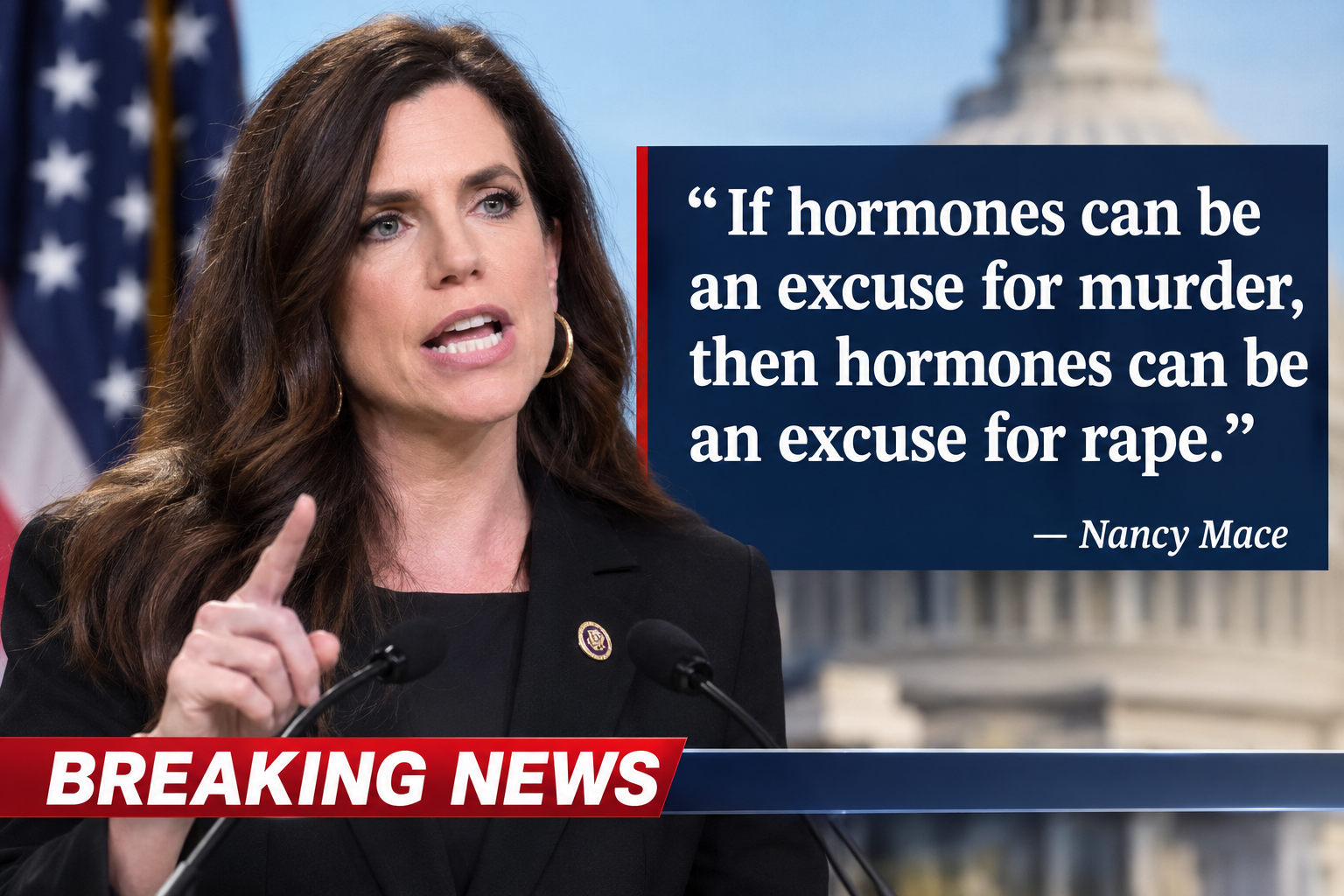
WASHINGTON — Rep. Nancy Mace has ignited a fierce online debate after criticizing arguments surrounding postpartum mental illness in the Lindsay Clancy murder case, warning that treating hormonal or psychiatric conditions as an explanation for criminal behavior could create what she described as a dangerous precedent.
Mace, a Republican congresswoman from South Carolina, posted on X following the collapse of Clancy's Massachusetts murder trial, writing:
“If hormones can be an excuse for murder; then hormones can be an excuse for rape. Dear Liberal White Women PLEASE Stop being so completely STUPID.”
The post quickly drew significant attention online, with supporters praising Mace for challenging what they view as excessive reliance on mental-health defenses, while critics accused her of misrepresenting postpartum psychiatric disorders and using rape as a provocative political analogy.
The controversy comes just days after a Massachusetts judge declared a mistrial in the highly publicized case after jurors failed to reach a unanimous verdict.
The Lindsay Clancy Trial Ended Without a Verdict
Clancy, a former labor-and-delivery nurse, was charged with killing her three children — Cora, 5, Dawson, 3, and Callan, 8 months — at the family's Duxbury, Massachusetts, home in January 2023.
Clancy did not deny that she killed the children.
Her defense, however, argued that she should not be held criminally responsible because she was suffering from severe postpartum psychiatric illness, including postpartum psychosis, during the killings.
The prosecution presented a very different account.
Prosecutors argued that Clancy remained capable of understanding her actions and had made a series of deliberate decisions before and during the killings. Their psychiatric experts challenged the defense's account of a command hallucination telling Clancy to kill her children.
After nearly six weeks of testimony and roughly seven days of jury deliberations, the jury remained deadlocked.
Judge William Sullivan ultimately declared a mistrial on Sept. 4.
Why Mace's “Hormones” Comment Is So Controversial
Mace's post reduces a complicated psychiatric and legal question to the word “hormones.”
That is not how the defense case was presented.
The defense argued that Clancy experienced postpartum psychosis — a rare but potentially severe psychiatric disorder associated with the period following childbirth. The condition can involve hallucinations, delusions, confusion and loss of contact with reality.
The legal question was not whether Clancy's hormones simply made her angry, emotional or impulsive.
It was whether a serious mental disorder left her unable to understand the nature or wrongfulness of her actions to such an extent that she should not be considered criminally responsible.
That distinction was central to the trial.
Experts Disagreed Sharply Over Her Mental State
The courtroom heard conflicting testimony from psychiatric experts.
Defense experts argued that Clancy had experienced psychosis and that her mental state was profoundly impaired at the time of the killings.
Prosecution experts reached a different conclusion.
Forensic psychiatrist Dr. Gregory Saathoff testified that he did not find Clancy's account of hearing a voice ordering her to kill her children convincing. Forensic psychologist Kirk Heilbrun testified that the evidence pointed more strongly toward Clancy killing the children as part of a suicide-related plan rather than acting under a command hallucination.
Heilbrun nevertheless acknowledged that Clancy had significant psychiatric problems, including depression, bipolar disorder and severe insomnia.
His conclusion was that those conditions did not eliminate her criminal responsibility.
That disagreement ultimately became one of the defining issues of the trial.
The Jury Never Resolved the Question
The jury was faced with several possible outcomes, including findings of first-degree murder, second-degree murder, manslaughter, not guilty, or not guilty by reason of insanity.
Any verdict had to be unanimous.
But after almost 40 hours of deliberations spread across seven days, the jurors could not reach agreement.
The result was not an acquittal.
It was also not a conviction.
A mistrial means the criminal case ended without a verdict, leaving prosecutors to decide what happens next.
Plymouth County District Attorney Timothy Cruz has said no immediate decision has been announced on whether Clancy will be tried again. A retrial, a plea agreement or a decision not to proceed are among the possible outcomes.
Mace's Argument Goes Beyond the Clancy Case
Mace's statement appears to be aimed at a broader political and cultural argument.
Her underlying concern is that mental illness or biological factors could gradually become accepted as blanket explanations for violent criminal behavior.
Her rhetorical question — if hormones can be used to explain murder, could they also be used to excuse rape? — is intended to highlight what she sees as a potential double standard.
But the comparison has drawn criticism because an insanity defense does not automatically excuse criminal conduct, nor does the existence of a psychiatric disorder establish legal insanity.
The legal standard is much narrower.
The question is generally whether a defendant's mental condition reached a level that satisfies the jurisdiction's test for criminal responsibility.
Postpartum Psychosis Is Not Simply “Hormonal Behavior”
Mental-health specialists have emphasized that postpartum psychosis is substantially different from ordinary hormonal fluctuations after childbirth.
The condition is considered a psychiatric emergency and can involve hallucinations, delusions, paranoia and severely impaired judgment.
A recent analysis in STAT argued that the public debate surrounding the Clancy case risks oversimplifying postpartum psychiatric illness and the evidence presented at trial.
The case has therefore become larger than the question of one defendant.
It has raised questions about how American society understands postpartum mental illness, how physicians identify severe psychiatric deterioration after childbirth and how courts should determine criminal responsibility when mental illness and violent behavior intersect.
Mace Has Taken a Hard Line on Criminal Responsibility
Mace has continued to criticize the idea that mental illness should shield Clancy from responsibility.
In another post following the mistrial, she wrote that mental illness should not automatically prevent a person from being held responsible for a crime, comparing the issue with notorious serial killers.
Her position reflects a broader conservative argument that the criminal justice system must prioritize victims and public safety rather than explanations for offenders' behavior.
But supporters of the insanity defense argue that criminal punishment is fundamentally different when a person was legally incapable of understanding what they were doing.
That tension has existed in American law for decades.
The Case Has Become a National Argument About Motherhood and Mental Health
The Clancy case has attracted extraordinary public attention because it combines several emotionally charged issues: the deaths of three children, postpartum mental illness, psychiatric medication, suicide and the question of whether a mother can be legally responsible for an act committed while experiencing psychosis.
The trial also exposed a sharp divide in public opinion.
Some observers have focused almost entirely on the children's deaths and argued that Clancy must be held accountable.
Others have focused on her psychiatric history and argued that the justice system must recognize what severe postpartum psychosis can do to a person's perception of reality.
The jury's inability to agree demonstrated just how difficult that question can be even after weeks of testimony.
Critics Say Mace's Language Oversimplifies the Science
The strongest criticism of Mace's statement centers on the implication that postpartum mental illness amounts to a simple hormonal excuse.
That is not the medical argument presented in court.
The defense case involved psychiatric diagnoses, medication history, sleep deprivation, hallucinations and questions about whether Clancy was experiencing a break from reality.
Likewise, the prosecution did not simply argue that Clancy was a mentally healthy woman who committed the killings for no reason. Its experts acknowledged significant mental illness while disputing whether that illness eliminated criminal responsibility.
In other words, both sides accepted that mental illness was part of the story. They disagreed about what that illness meant legally.
A Mistrial Leaves the Most Important Question Unanswered
The most consequential result of the trial may be that there is still no legal answer to the central question:
Was Lindsay Clancy criminally responsible for the deaths of her children?
A jury did not answer it.
And a mistrial does not resolve it.
Clancy remains in custody at Tewksbury State Hospital, where she has received psychiatric care since 2023. Prosecutors must now decide whether to attempt another trial.
The next legal chapter could therefore become just as contentious as the first.
The Larger Debate Is Only Beginning
Nancy Mace's post has transformed an already emotionally explosive criminal case into another national political argument over gender, mental illness and criminal responsibility.
Her supporters see her message as a blunt warning against turning biological differences into legal excuses.
Her critics argue that the comparison ignores the medical and legal complexity of postpartum psychosis and risks stigmatizing women suffering from severe psychiatric disorders.
What is beyond dispute is that the Lindsay Clancy trial did not establish that “hormones are an excuse for murder.”
It established something much narrower — and much more difficult: a jury could not unanimously decide whether severe mental illness made Clancy legally responsible for the deaths of her three children.
And until prosecutors decide whether to retry the case, that question remains unresolved.
For now, Mace's explosive statement has added another layer to a national debate that was already extending far beyond the Massachusetts courtroom.
Comments (0)
Loading comments...
May You Like

Obama Steps Back Into the Political Spotlight as Democrats Target Trump’s Senate Majority

Russian Drone Strikes Kyiv Bridge as German Chancellor Arrives in Ukraine

TRUMP HIT WITH 26 ARTICLES OF IMPEACHMENT