Illinois Mother Charged With Murder of 2-Year-Old Son as Case Draws Comparisons to Lindsay Clancy
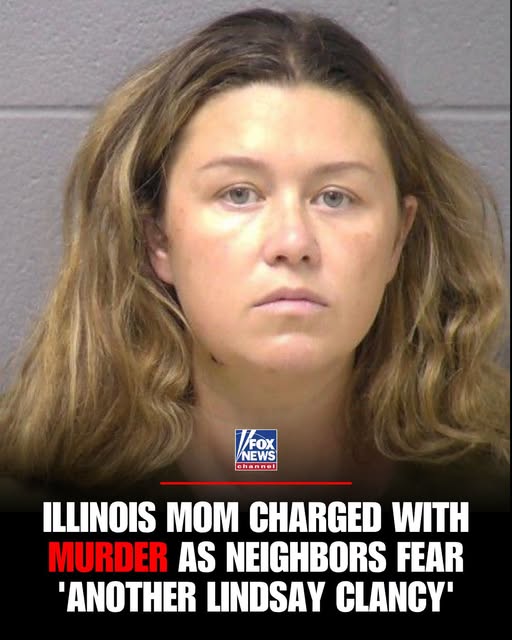
Fact-check verdict: Accurate on the central claim, but the “another Lindsay Clancy” comparison needs important context
A disturbing case in suburban Illinois has taken a new turn after a mother was charged with three counts of first-degree murder following the death of her 2-year-old son.
The graphic circulating online says an “Illinois mom” was charged with murder and warns that neighbors fear “another Lindsay Clancy.” The underlying murder-charge claim is accurate. Frankfort police confirmed Friday that Corie A. Walsh, 38, was charged with three counts of first-degree murder in connection with the death of her toddler son.
But the comparison to Lindsay Clancy is a comparison made by neighbors and prosecutors—not a finding that the Illinois case is a copycat. And there is another striking coincidence: the same day Walsh was charged, Clancy's own Massachusetts murder trial ended in a mistrial after jurors failed to reach a unanimous verdict.
What happened in Frankfort?
Police were called at approximately 4:04 p.m. Tuesday, September 1, to a home in the 22700 block of Brook Stone Court in Frankfort, a suburb roughly 36 miles southwest of Chicago.
The call concerned an unresponsive 2-year-old boy.
When officers arrived, the child was receiving CPR. He was taken to a local hospital but later died. Police said Walsh, the child's mother, was also found inside the residence attempting to harm herself and was taken to a hospital for treatment.
Three other children were found in the home unharmed.
The Will County Coroner's Office performed an autopsy on Wednesday. Early reports initially said the exact cause of death remained under investigation, with toxicology and further examination pending.
By Friday, however, prosecutors had filed three first-degree murder counts against Walsh.
She remains in custody while receiving medical treatment and is expected to be transferred to the Will County Adult Detention Facility for a detention hearing once medically cleared.
As with any criminal prosecution, the charges are allegations and Walsh is presumed innocent unless proven guilty in court.
New court documents provide more disturbing details
Information released after the initial police reports has substantially changed what is known about the case.
According to a prosecution court filing reported by local media, a neighbor found the toddler in the basement and attempted CPR after discovering him hanging from a device attached to a rafter.
Prosecutors say preliminary autopsy findings indicate that the child died from asphyxia caused by ligature compression of the neck.
The prosecution also alleges that Walsh told investigators she killed the boy because she believed he was the “anti-Christ.” Court documents reportedly say she also referred to him as the “devil.”
Those details come from prosecution filings and should therefore be understood as allegations presented by prosecutors, not established facts after a trial.
Why are people mentioning Lindsay Clancy?
The comparison isn't coming solely from social-media users.
A Frankfort neighbor, Carolyn Pappas, told NBC Chicago that the circumstances immediately reminded her of the Clancy case.
The connection is obvious at a basic level: both cases involve mothers accused of killing young children and then attempting to harm themselves.
But the circumstances and legal questions are not necessarily identical.
Clancy was accused of killing her three children in Duxbury, Massachusetts, in January 2023. Her defense argued that she was suffering from severe postpartum psychosis and therefore lacked criminal responsibility. Prosecutors argued that she intentionally planned the killings.
In the Illinois case, investigators and prosecutors are still developing the evidence, and it would be premature to conclude that the same psychiatric circumstances were involved.
A remarkable coincidence involving the Clancy trial
The timing has made the comparison even more striking.
On September 4, 2026, the very day Walsh was charged in Illinois, a judge declared a mistrial in Clancy's Massachusetts case after the jury was unable to reach a unanimous verdict.
The jury had deliberated for six days. Eleven jurors reportedly favored one outcome while one juror remained opposed, and the judge ultimately declared a mistrial.
That does not establish any connection between the two cases. It simply explains why the Lindsay Clancy name was already dominating news coverage when the Illinois charges were announced.
Walsh reportedly followed the Clancy case
The comparison becomes more notable because prosecutors say Walsh had been following the Clancy proceedings.
According to court documents reported by Patch and Fox-affiliated local reporting, Walsh had been communicating with friends about the Clancy trial hours before the Illinois killing.
That is a significant piece of evidence for investigators, but it still does not prove that Walsh deliberately copied Clancy or that the cases have the same underlying cause.
A person can follow a notorious criminal case without committing a crime because of it.
The distinction matters, particularly in a case involving mental health and alleged motive.
What was known before the murder charge?
The first reports on September 2 were much more limited.
Police initially described the incident as a “domestic-related homicide.” They said the toddler had been found unresponsive, the mother had been found attempting self-harm, and the investigation was continuing.
At that stage, authorities had not publicly identified Walsh as a suspect or released the circumstances of the child's death.
That changed on September 4, when police announced the three first-degree murder charges.
The progression is important because some early social-media posts presented speculation as though it were already established fact.
What the viral graphic gets right — and what it leaves out
The graphic gets right:
- An Illinois mother has been charged with murder.
- The case involves the death of a 2-year-old child.
- The mother was also found attempting to harm herself.
- Authorities have filed three counts of first-degree murder.
- People in the community have explicitly compared the circumstances with the Lindsay Clancy case.
But it leaves out important context:
- “Another Lindsay Clancy” is not an official classification of the Illinois case.
- The comparison originated with people reacting to the circumstances; it does not establish that Walsh was a copycat.
- Initial reports did not establish the cause of the toddler's death; later court filings provided substantially more detail.
- Prosecutors' claims about Walsh's statements and actions remain allegations unless established in court.
- The three murder counts do not mean that Walsh has been convicted.
The broader issue: when a shocking case becomes a comparison
The rapid comparison between the Frankfort case and Clancy's prosecution demonstrates how heavily the latter case has resonated nationally.
Clancy's case has become one of the most closely watched American criminal proceedings involving alleged postpartum psychosis. Her defense has argued that severe mental illness rendered her legally insane, while prosecutors have maintained that she understood and intentionally carried out her actions.
Now, because the Illinois case involves a mother, young children, an alleged homicide and an apparent suicide attempt—and because investigators say the defendant was following the Clancy proceedings—the comparison is likely to continue.
But similar circumstances do not necessarily mean similar motives, diagnoses or legal defenses.
Those questions will have to be established through the Illinois investigation and court proceedings.
Bottom line
The viral graphic's central news claim is accurate: an Illinois mother, Corie A. Walsh, has been charged with three counts of first-degree murder following the death of her 2-year-old son.
The “another Lindsay Clancy” wording, however, should be treated as context rather than fact. Neighbors made that comparison, and prosecutors say Walsh had been following the Clancy trial. But there is currently no basis to declare the Illinois case an official “copycat” case or to assume that the two women had the same mental-health condition or legal defense.
The story is also unfolding against the extraordinary backdrop of Clancy's own case reaching a mistrial on the same day Walsh was charged.
This remains a developing criminal investigation, and additional court records could significantly change what is known about the Illinois case.
Comments (0)
Loading comments...
May You Like

TRUMP’S OHIO WARNING UNDER THE SPOTLIGHT

Jack Smith Defends His Integrity as Trump Investigations Face Renewed Political Firestorm

Russian Drone Strikes Kyiv Bridge as German Chancellor Arrives in Ukraine