Inside Lindsay Clancy’s Life at Psych Hospital Where She’ll Remain Following Mistrial
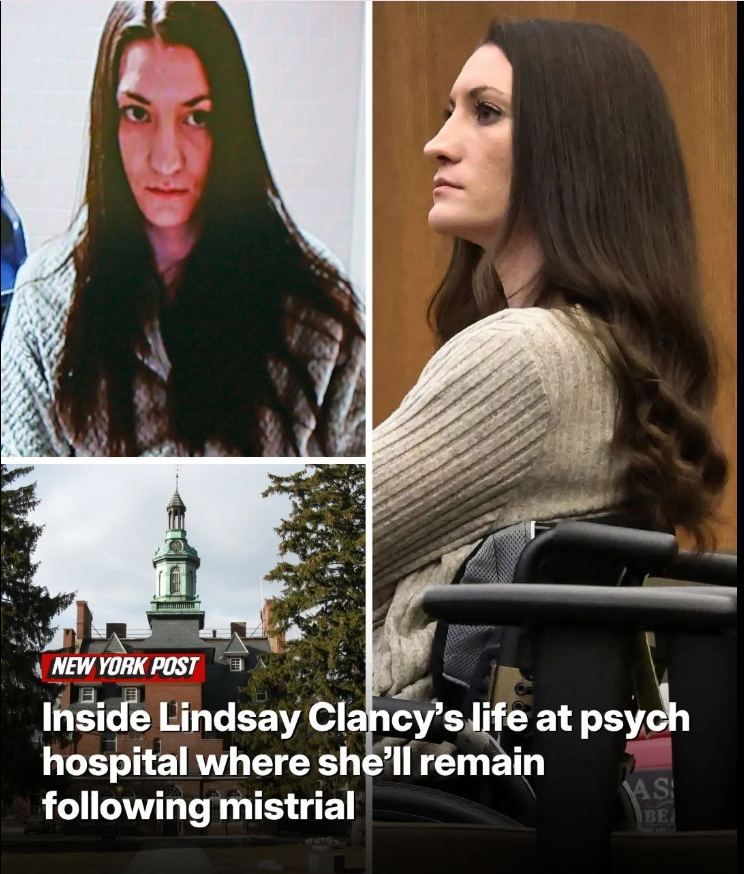
Lindsay Clancy will remain at Tewksbury State Hospital, a Massachusetts psychiatric facility, after her triple-murder trial ended in a mistrial on Friday. The 36-year-old former nurse, paralyzed from a suicide attempt, spends most of her days in bed, isolated from other patients, and struggles with basic hygiene, according to trial testimony.
TEWKSBURY, Massachusetts – The murder trial of Lindsay Clancy, the Massachusetts mother accused of strangling her three young children in January 2023, ended in a stunning mistrial on Friday after a jury deadlocked 11-1. Now, Clancy will return to the state-run psychiatric hospital where she has been held since the killings, awaiting the next chapter in a case that has captivated the nation .
Clancy, 36, will remain at Tewksbury State Hospital, a 370-bed facility about 30 miles north of Boston that provides "comprehensive treatment, care, and comfort to adults with medical and/or mental illnesses" . Her defense attorney, Kevin Reddington, confirmed she will stay there under the same murder charges as prosecutors weigh whether to retry her .
A Dreary Routine Behind Locked Doors
During the trial, psychiatrist Dr. Avram Mack, a prosecution witness, painted a bleak picture of Clancy's daily existence at the facility when he testified on Aug. 21 .
"Mostly, she described, she stays in bed or on her own," Mack told the courtroom, referencing interviews with Clancy . "I don't think she described interacting with patients very much. There were a couple of ways in which she did interact with staff, at least. There was a therapist that she described working with" .
Clancy, who uses a wheelchair after her suicide attempt left her partially paralyzed, also worked with a physical therapist but "wasn't very interested" in the therapy . She described herself as uninterested in the food at the facility and relied on visitors to bring meals and drinks .
"She described that she wasn't very interested in her own hygiene or grooming," Mack added. "Showering is embarrassing. It requires staff to help her, and that's one way in which she would rather not. It may also be that she described a lack of interest … so, it's both components" .
When asked about her emotional state, Clancy told the psychiatrist she felt "depressed, which she termed situational depression," and described "feeling miserable, not wanting to be alive" .
The Case That Ended in Deadlock
Clancy was charged with murdering her three children — Cora, 5, Dawson, 3, and eight-month-old Callan — in the basement of their Duxbury home on Jan. 24, 2023 . She then slit her wrists and throat and jumped from a second-story window, leaving her paralyzed from the waist down .
The jury of nine women and three men deliberated for more than 38 hours over seven days but remained deadlocked, with one male holdout juror preventing a unanimous verdict . The jury sent three notes to the judge indicating they could not reach a consensus . Judge William Sullivan declared a mistrial after the Massachusetts Supreme Court denied Reddington's last-ditch appeal .
What Happens Next?
With the mistrial, Clancy's case reverts to its pre-trial status — she remains in custody at Tewksbury Hospital under the same bail conditions . A hearing is scheduled for Sept. 29, during which the judge will likely hear arguments about the path forward .
Prosecutors, led by Plymouth County District Attorney Timothy J. Cruz, have three options :
-
Retry the case with a new jury — considered the most likely outcome
Offer a plea deal for a lesser charge such as second-degree murder or manslaughter
Drop the charges entirely (nolle prosequi) — considered highly unlikely
Brad Bailey, a Boston defense attorney and former prosecutor not involved in the case, told the New York Post he expects Cruz to push for a retrial . "I do anticipate that Tim Cruz will choose to retry the case, not only because, in his opinion, he has to stand up for the three deceased children, but also because the case hasn't been resolved" .
Legal experts say prosecutors will likely refine their strategy, potentially seeking stronger expert witnesses with experience in postpartum psychosis . The defense will aim to better explain how patients can fluctuate between psychosis and lucidity .
The Core Dispute
Both sides agree Clancy was mentally ill. The prosecution argues she made a calculated decision to kill her children, sending her husband out for dinner to buy time . The defense contends she was suffering from postpartum psychosis, overmedicated and unable to distinguish right from wrong .
Psychologist Paul Zeizel, who testified for the defense, offered a similarly downbeat portrayal of Clancy's life at Tewksbury. "Lindsay Clancy has bad days and worse days," he testified . He said she often talked about her children "and misses them and thinks of them every single day" .
The Bottom Line
| What Happens Next | Details |
|---|---|
| Where Clancy stays | Tewksbury State Hospital |
| Next hearing | Sept. 29, 2026 |
| Likely outcome | Retrial, possibly in late 2026 or early 2027 |
| Possible alternatives | Plea deal or dismissal of charges |
For now, Clancy's life remains confined to the walls of Tewksbury Hospital, where she continues to receive psychiatric care, isolated from the world — and from the children she once raised, and whose deaths will continue to haunt this case for years to come.
Comments (0)
Loading comments...
May You Like

Russian Drone Strikes Kyiv Bridge as German Chancellor Arrives in Ukraine

Shocking news from Ohio: an unexpected development ahead of Trump's rally

Russian Drone Strikes Kyiv Bridge as German Chancellor Arrives in Ukraine