
Trump Warns Iran Could Be ‘Totally Wiped Out’
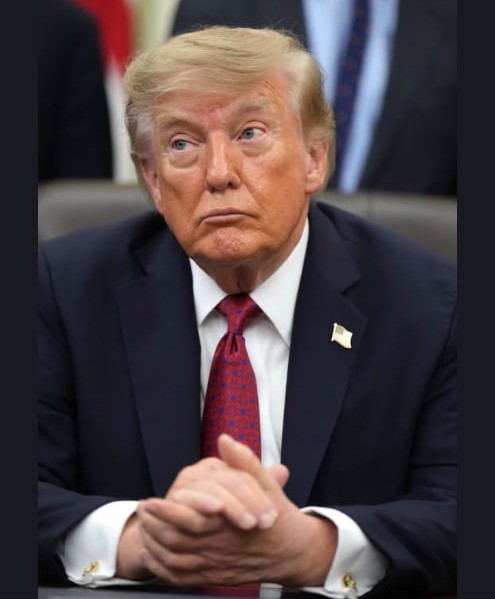
Trump Warns Iran Could Be ‘Totally Wiped Out’ if Retaliatory Attacks Continue, Raising Fears of Wider War
October 31, 2026 | Washington, D.C. | U.S. Politics & Middle East
President Donald Trump has drawn renewed attention with a stark warning directed at Iran, suggesting that continued retaliation against American military strikes could expose the country to devastating consequences and further intensify the regional conflict.
A circulating news post attributes the remarks to Trump's telephone interview with Trey Yingst, highlighting the president's willingness to threaten overwhelming military force in response to Iranian attacks.
The warning reflects an increasingly confrontational relationship between Washington and Tehran, where military escalation, nuclear concerns, regional security, and diplomatic negotiations remain closely interconnected.
However, the language surrounding Trump's statement requires careful interpretation. A threat of military destruction does not establish that Washington has ordered such an operation or that Iran faces imminent elimination.
Verification note: The image identifies an interview with Trey Yingst but does not provide its publication date or complete transcript. The exact wording and context should be checked against the original reporting.
The Statement Originated on September 1, Not October 31
The central quotation is authentic. Trump made the remarks during a September 1, 2026, telephone conversation with correspondent Trey Yingst, following renewed American strikes against Iranian military targets.
The president warned that additional Iranian retaliation would trigger a substantially stronger American response, describing the latest military operation as a significant escalation in Washington's campaign.
He also expressed skepticism about negotiating another agreement with Tehran, arguing that previous diplomatic opportunities had failed to produce an acceptable outcome for the United States.
Contemporary reporting independently reproduced the warning, confirming that the circulating screenshot reflects a genuine presidential statement rather than a fabricated quotation.
What Triggered the September Military Escalation?
American forces launched strikes against Iranian Revolutionary Guard targets near the Strait of Hormuz after reported threats involving commercial shipping and American military personnel stationed in the region.
U.S. Central Command identified air-defense installations, radar systems, maritime assets, and other military infrastructure among the targets associated with the operation.
Washington described its actions as a response to Iranian military activity, including alleged attempts to threaten vessels navigating one of the world's most strategically important waterways.
Iranian officials rejected the American justification and warned that additional attacks would provoke retaliation, increasing fears that the confrontation could expand beyond its immediate military objectives.
Iran Responds With Missiles and Drones
Following the American strikes, Iranian forces launched missiles and drones toward regional targets, according to Iranian media and subsequent reporting from American and international news organizations.
A senior American official said U.S. personnel were accounted for and that most incoming missiles had been intercepted, with no major damage initially reported at American bases.
Jordan also reported missile activity in its airspace, demonstrating how military exchanges between Washington and Tehran could create immediate security concerns for neighboring countries.
Trump's Warning Raises Questions About Escalation
The president's language suggested that Washington was prepared to employ considerably greater military force if Iranian leaders continued retaliating against American operations.
Such threats can serve a deterrent purpose, communicating that further attacks may carry unacceptable costs while attempting to influence an adversary's calculations before another military exchange.
However, exceptionally severe warnings can also complicate diplomacy by narrowing political room for compromise and increasing pressure on both governments to demonstrate resolve.
The possibility of further attacks raised concerns about civilian protection, regional stability, military proportionality, and the potential consequences of an expanding confrontation between the two countries.
International Energy Markets Face Additional Pressure
The Strait of Hormuz remains particularly vulnerable to military escalation because substantial volumes of internationally traded oil and liquefied natural gas move through its narrow shipping corridors.
Renewed attacks on commercial vessels, port facilities, or surrounding military infrastructure could increase transportation costs, disrupt energy deliveries, and create additional uncertainty for international markets.
The September confrontation contributed to rising oil prices as investors assessed the possibility of prolonged disruptions and further military exchanges between American and Iranian forces.
Diplomacy Remains a Critical Question
Trump's dismissal of another potential agreement with Iran highlighted the administration's growing frustration with negotiations and its preference for maintaining military and economic pressure.
Nevertheless, achieving a sustainable resolution would require addressing competing security demands, nuclear concerns, maritime access, economic sanctions, and the interests of neighboring Middle Eastern governments.
Military superiority alone cannot guarantee a lasting political settlement, particularly when both governments retain incentives to resist concessions they consider damaging to their national interests.
What Happens Next?
The September statement remains relevant to understanding Trump's approach toward Iran, but it should not be mistaken for a newly delivered October 31 warning.
Future developments will depend on military decisions, Iranian responses, diplomatic initiatives, and whether regional governments can help prevent additional exchanges from producing a wider confrontation.
The verified record establishes that Trump issued an exceptionally severe warning. It does not establish that an operation to destroy Iran as a country was subsequently authorized.
Comments (0)
Loading comments...
May You Like


IRAN CLAIMS IT FIRED AT U.S. WARPLANES — WAS AN AMERICAN F-16 FORCED TO RETREAT?

IOWA CRISIS — 150+ WITH LEAD AND MERCURY POISONING, 69 CRITICAL!












