Iran Rejects Trump’s Talk Claims as War Enters Seventh Month — But the Story Is More Complicated
TEHRAN/WASHINGTON — September 17, 2026 — Iran has publicly rejected the idea of resuming negotiations with the United States under current conditions, after President Donald Trump said Washington was open to talks and suggested that the conflict could be approaching its end.
Iranian Supreme National Security Council Secretary Mohsen Rezaei said on September 15 that Tehran would not enter negotiations until its conditions were met, accusing Washington of sending contradictory signals about diplomacy.
The exchange comes as the U.S.-Iran war enters its seventh month, with the Strait of Hormuz still heavily disrupted, regional fighting continuing and the economic cost of the conflict mounting.
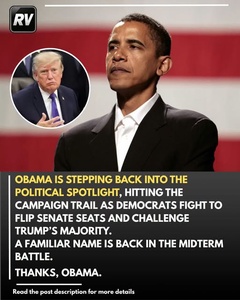
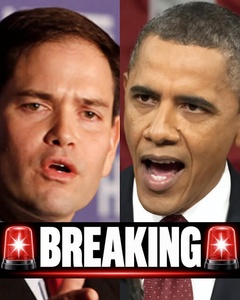
But the viral headline in the supplied image — which describes Trump's “secret talks” claim as a “total sham” — goes further than the available evidence establishes. There have been documented indirect and backchannel contacts between Washington and Tehran during the conflict, while both sides have also publicly denied or disputed the existence of formal negotiations at various points.


President Donald Trump and Israeli Prime Minister Benjamin Netanyahu have discussed multiple options for dealing with Iran during the conflict.
Trump Says the War Could Be Nearing Its End
Trump's latest comments were notably more open to diplomacy than some of his statements in recent weeks.
On September 16, Trump said he hoped the war was nearing an end and indicated that Iran could be interested in negotiations. Reuters reported that he also was expected to meet with leaders or foreign ministers from the six Gulf Cooperation Council states during the United Nations General Assembly in New York.
Those countries — Saudi Arabia, the United Arab Emirates, Qatar, Bahrain, Kuwait and Oman — have all been affected by the conflict, either through attacks, disruptions to energy exports or the presence of U.S. military forces on their territory.
According to Axios, Trump's planned meeting with Gulf leaders is expected to focus on U.S. thinking about the postwar situation, although the White House and State Department had not publicly confirmed the details when Reuters reported them.
That is significant because Trump's public language has shifted over time from rejecting negotiations to saying that Washington is open to the possibility.
Iran's Response: “No Talks” Under Current Conditions
Tehran's public response has been considerably less conciliatory.
Rezaei, Iran's top national security official, responded to Trump's comments by warning against what he described as mixed signals from Washington.
His position was straightforward: Iran would not enter new negotiations until its conditions were satisfied.
Iran has previously demanded measures including the lifting of sanctions and compensation for wartime damage as conditions for ending the conflict and restrictions around the Strait of Hormuz.
This creates an obvious diplomatic gap.
| Washington's recent position | Tehran's stated position |
|---|---|
| Trump says the U.S. is open to negotiations | Iran says no talks until its conditions are met |
| Trump says the war may be approaching an end | Iran has not announced a final peace agreement |
| Washington wants an outcome addressing the conflict | Tehran continues to demand changes to sanctions and other conditions |
| U.S. officials are discussing a possible postwar framework | Iran continues to emphasize its sovereignty and stated conditions |
These are publicly stated positions, not evidence that either side has accepted the other's terms.
Were There Actually “Secret Talks”?
This is where the viral headline requires the most context.
There have been backchannel communications and indirect negotiations between the United States and Iran during the conflict.
In March, for example, Axios reported that Iranian messages had reached the Trump administration through Gulf and other regional countries. At that time, U.S. officials denied that senior Trump officials were directly negotiating with Iranian representatives.
The two sides subsequently engaged in much more substantial indirect diplomacy.
In May, Reuters reported that an emerging U.S.-Iran framework was being developed through indirect negotiations, with Pakistan playing an important mediating role.
That process eventually produced a June memorandum.
So saying “there have never been secret or backchannel contacts” would be inaccurate.
At the same time, there is no current public evidence establishing that Trump and Iranian leaders have secretly reached a new final peace agreement behind the scenes.
That distinction is important.
The June Agreement Shows Why the Current Dispute Is So Complicated
On June 18, the White House submitted the text of an interim U.S.-Iran agreement to Congress.
The document, known as the Islamabad Memorandum of Understanding, called for an immediate and permanent cessation of military operations and established a 60-day period for negotiating a final agreement.
The memorandum also addressed the Strait of Hormuz.
Under the agreement, the United States was to end its naval blockade of Iranian ports within 30 days, while Iran committed to allowing commercial vessels to pass through the Strait of Hormuz without charge for 60 days.
The framework therefore represented a real diplomatic process — not merely an unsubstantiated rumor.
But it was also incomplete.
Reuters reported at the time that both sides retained the ability to walk away and that the difficult questions would be addressed during the subsequent negotiating period.


The Strait of Hormuz has remained central to the conflict because of its importance to global energy shipments.
The 60-Day Negotiating Window Failed to Produce a Final Settlement
The June framework created expectations that the fighting could move toward a broader diplomatic settlement.
But the 60-day negotiating period ended in August without a final agreement.
The Arms Control Association reported that Washington and Tehran had communicated through mediators including Pakistan and Qatar during that period, but the negotiating process did not produce a comprehensive settlement on the core issues.
By August, Trump was publicly saying that no formal talks were taking place.
On August 18, Reuters reported that Trump said there were no talks taking place and none scheduled, while Trump's special envoy Jared Kushner described communications with Iranian officials more optimistically.
Nine days later, Trump again said the United States was not negotiating with Iran and announced a stronger economic-pressure strategy.
This history explains why the latest claims about “secret talks” are difficult to characterize in simple terms.
There have been:
- formal negotiations;
- indirect negotiations;
- messages carried through intermediaries;
- alleged backchannel contacts;
- periods when Washington publicly denied negotiations;
- and renewed public discussion of diplomacy.
The existence of those different channels does not necessarily mean that a secret peace agreement currently exists.
Iran Has Also Denied Earlier Backchannel Claims
The dispute is not new.
In August, Trump claimed that Washington maintained a backchannel with Iranian Revolutionary Guard officials.
Iran's Islamic Revolutionary Guard Corps publicly rejected that claim, saying no talks were taking place between IRGC officials and American representatives.
That episode is particularly relevant to the image's framing.
It demonstrates that Washington and Tehran have repeatedly offered conflicting accounts about the extent and nature of behind-the-scenes communication.
Therefore, the safest factual description is that diplomatic channels and intermediaries have existed, but the exact scope of current direct or indirect contacts remains disputed.
The War Itself Has Not Ended
Trump's statement that the conflict may be nearing an end should not be confused with an actual ceasefire or peace agreement.
Reuters reported on September 16 that the war remained in its seventh month, while the Strait of Hormuz continued to face major restrictions and regional tensions remained high.
The Associated Press similarly reported that despite U.S. military pressure and partial progress around the Strait, the war remained unresolved, with continuing fighting and no clear political exit strategy publicly established.
The conflict has also generated significant financial costs.
The Congressional Budget Office estimated that the war had already cost the United States approximately $38 billion by September 15, with the cost projected to increase by around $3 billion per month if the conflict continued.
That makes any credible diplomatic pathway economically significant as well as militarily and politically important.
The Strait of Hormuz Remains a Major Obstacle
The Strait is one of the central issues preventing an easy resolution.
Before the conflict, roughly 20% of global oil exports passed through the waterway.
The war severely disrupted that traffic.
Iran has sought arrangements concerning the future management and reopening of the strait, while the United States has maintained pressure over maritime access and the Iranian blockade.
A planned Gulf-Iran diplomatic meeting concerning the strait was postponed in September amid renewed regional fighting. Reuters reported that the delay further complicated efforts to achieve de-escalation.
China's Foreign Minister Wang Yi also called on Iran and the United States to return to the June interim agreement and resume substantive consultations, while urging the reopening of the waterway.
Israel Is Watching the Diplomatic Track Closely
Israel is another important factor.
Trump and Netanyahu have discussed several possible approaches to Iran, including diplomacy, continued economic pressure and military action. A senior Israeli official said after their July meeting that all three possibilities had been discussed.
Earlier in the conflict, Israeli officials also sought clarification from Washington over reports of possible U.S.-Iran communications.
Axios reported in March that Netanyahu's office had asked the White House whether Trump administration officials were communicating with Tehran. U.S. officials at the time denied that senior Trump officials were conducting direct negotiations with Iranian officials.
This helps explain why reports of renewed U.S.-Iran diplomacy can have consequences beyond Washington and Tehran.
Why Trump Is Now Talking About an End to the War
Several developments are occurring simultaneously.
First, the conflict has become expensive.
CBO estimates put the U.S. cost at $38 billion by September 15, with additional monthly costs if fighting continues.
Second, energy markets remain under pressure.
Disruptions around the Strait of Hormuz have affected global oil flows and prices.
Third, Gulf states have strong incentives to prevent further escalation.
Several host U.S. forces and have suffered direct economic or security consequences from the conflict.
Fourth, diplomacy has not disappeared.
Even while fighting continues, China and regional mediators are pushing Washington and Tehran toward another negotiating framework.
These factors help explain why Trump is again publicly discussing negotiations.
They do not, however, establish that a final peace agreement is imminent.
What the Viral Image Gets Right — and What It Leaves Out
The image accurately captures the central tension: Trump has recently suggested that diplomacy with Iran could resume, while Iranian officials have publicly rejected talks under current conditions.
But several parts of the headline need qualification.
| Viral claim | What the available evidence shows |
|---|---|
| “The war is ending” | Not established. Trump expressed hope that the war is nearing its end, but fighting and major disputes continue. |
| “Trump has secret talks with Iran” | Partly supported only in a broader historical sense. Backchannels and indirect negotiations have existed, but current secret negotiations are not publicly verified. |
| “Iran blasted the claim” | Broadly supported. Iranian officials have publicly rejected Trump's characterization of Tehran's position. |
| “Total sham” | Not an independently established fact. It reflects the image's framing rather than a verified description of the diplomatic situation. |
| “No negotiations exist” | Too broad. The two sides have previously negotiated through mediators and signed a June interim agreement. |
| “A peace deal is imminent” | Not established. There is no publicly confirmed final peace agreement as of September 17. |
What Happens Next?
The immediate diplomatic question is whether Washington and Tehran can move from publicly conflicting statements to an actual negotiating framework.
Trump is expected to meet Gulf leaders around the UN General Assembly, with discussions reportedly focused on what happens after the war.
Meanwhile, Iran continues to insist that its conditions must be addressed before new negotiations can begin.
The June memorandum provides a possible starting point because it already established a framework for ending military operations, reopening the Strait and negotiating a final agreement. But that framework did not survive into a permanent settlement.
For now, the evidence supports a more cautious conclusion than the viral headline: diplomacy is being discussed again, but the war has not ended, Iran has publicly rejected talks under current conditions, and the existence of a new secret U.S.-Iran peace negotiation has not been independently established.


Diplomatic channels have existed throughout the conflict, but the terms for a durable settlement remain unresolved.
Comments (0)
Loading comments...
May You Like
South Korea–Ukraine Rift Deepens Over North Korean POW Transfer as PURL Draws New Scrutiny
South Korea–Ukraine Rift Deepens Over North Korean POW Transfer as PURL Draws New Scrutiny