
Israel Warns US of Potential Iranian Chemical Weapons Threat
Israel's Chemical Weapons Warning Raises New Questions About Iran and the Risk of Renewed War
November 6, 2026 | Middle East | International Security
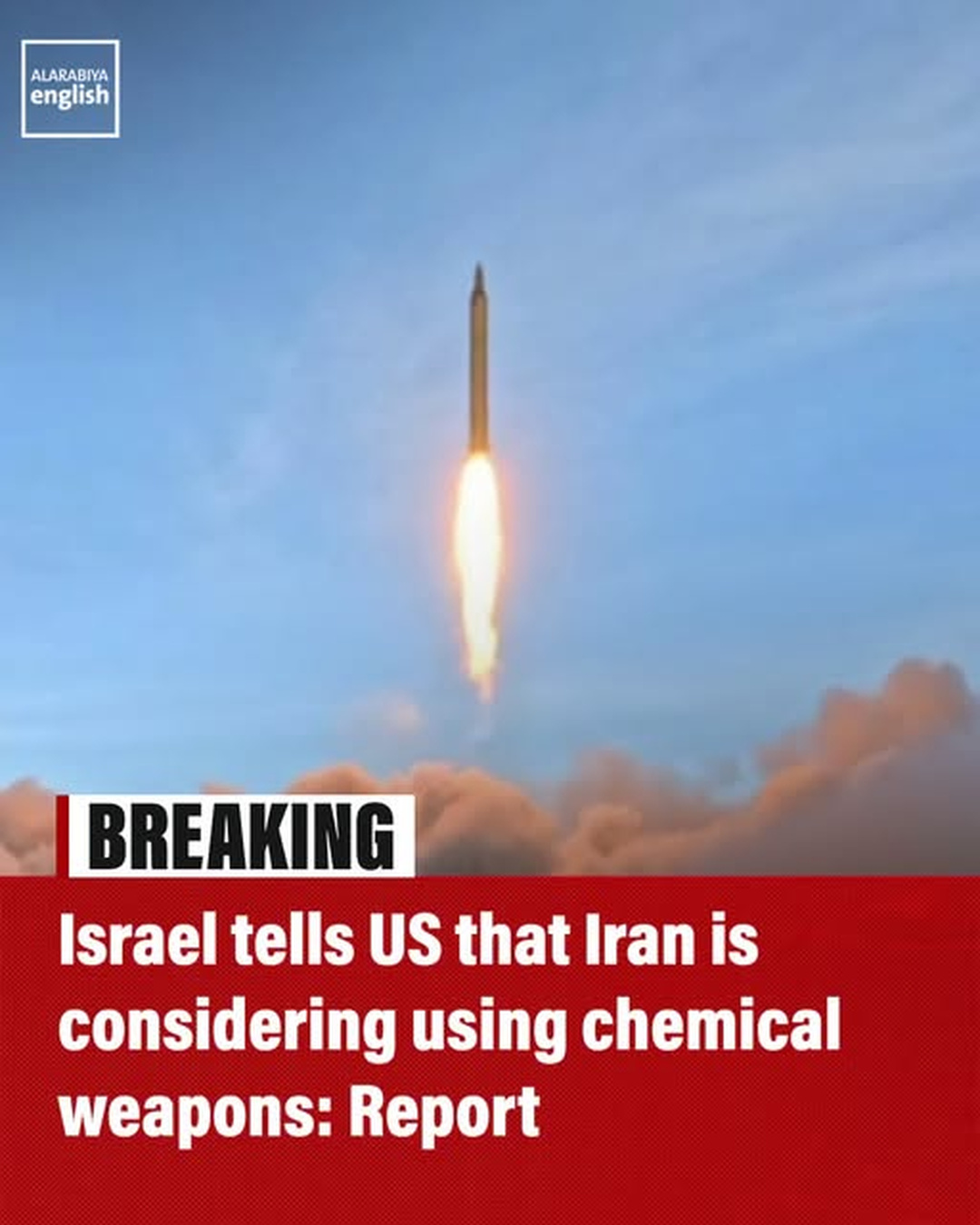
Israel has reportedly warned the United States that Iran may be considering the use of chemical weapons against Israel and other adversaries, adding a new dimension to an already dangerous regional confrontation.
The intelligence assessment was shared with American officials and several Gulf countries, according to a November 3 report by The New York Times, cited by multiple international news organizations.
Israeli officials reportedly argued that the chemical weapons threat could be more immediate than Iran's nuclear ambitions, which had previously been a central justification for military action.
According to the reporting, Israeli intelligence officials believe Iran is developing ways to deliver chemical agents through missiles or potentially smuggle them into countries considered hostile to Tehran.
However, the allegations have not been independently established. The intelligence assessment was presented privately, and publicly available evidence confirming an Iranian decision to use chemical weapons has not been released.
The warnings have reportedly divided American officials. Some consider the possibility serious, while others question the intelligence's credibility and whether it is being used to influence Washington's military decisions.
Some officials reportedly suspect that Israeli Prime Minister Benjamin Netanyahu's government is trying to persuade President Donald Trump to resume major military operations against Iran.
That concern has also been expressed by officials in Gulf countries, who reportedly found the Israeli briefings unconvincing because they were presented without supporting evidence.
The disagreement is particularly sensitive because intelligence assessments about weapons of mass destruction have previously played a major role in decisions involving American military intervention.
Some American officials reportedly recalled the disputed intelligence about Iraq's alleged weapons of mass destruction before the 2003 invasion, raising concerns about the consequences of acting on unverified claims.
Iran has repeatedly rejected accusations that it possesses chemical weapons, describing such allegations as politically motivated attempts to damage its international standing.
Tehran's position contrasts sharply with Israel's warnings, leaving Washington to assess whether the reported threat represents an immediate danger or an intelligence claim requiring further verification.
The issue is also connected to the wider confrontation surrounding Iran's missile capabilities, nuclear activities, and threats against American and Israeli interests throughout the Middle East.
The timing of the warning is significant. Washington and Tehran have been exploring diplomatic options to prevent renewed large-scale fighting, while American military forces remain positioned in the region.
According to the reporting, the US military has prepared contingency plans for possible renewed strikes against Iran. However, preparing a military plan does not mean President Trump has authorized an attack.
Some members of Trump's administration reportedly favor maintaining economic pressure and the American blockade around the Strait of Hormuz rather than immediately returning to a major military campaign.
Others believe additional military action may be necessary to weaken Iran's capabilities and prevent Tehran from rebuilding its military infrastructure.
The reported chemical weapons warning has also raised questions about civilian protection. Chemical attacks could create serious humanitarian consequences, particularly in densely populated cities and areas near military installations.
Nevertheless, Israeli emergency preparedness exercises reportedly have not focused specifically on the alleged chemical weapons threat, and the country has not resumed distributing gas masks to civilians.
The Israeli Prime Minister's Office did not directly confirm the specific intelligence claims when approached by The Times of Israel, instead stating that Israel was monitoring threats from Iran.
For Washington, the challenge is balancing national security concerns with the danger of allowing unverified intelligence to become the basis for another major military escalation.
The controversy also complicates diplomatic efforts because accusations involving chemical weapons could further reduce trust between Iran, Israel, and the United States.
Ultimately, the central question remains unanswered: whether Iran is genuinely preparing to use chemical weapons or whether the Israeli assessment is intended to influence the next phase of the conflict.
Until stronger evidence emerges, the allegations should be treated as an intelligence warning rather than proof that Iran has decided to launch a chemical attack.
Comments (0)
Loading comments...
May You Like



CAIRO INFERNO — CAR CARRYING SENIOR U.S. OFFICIAL SLAMS INTO FUEL TANKER, 31 DEAD, 21 INJURED!
Latest Posts









Popular Posts



