
“It Could Happen”: Inside Trump’s Sudden Shift Toward an Iran Deal—and the Fragile Diplomacy Racing Against the Clock
“It Could Happen”: Inside Trump’s Sudden Shift Toward an Iran Deal—and the Fragile Diplomacy Racing Against the Clock
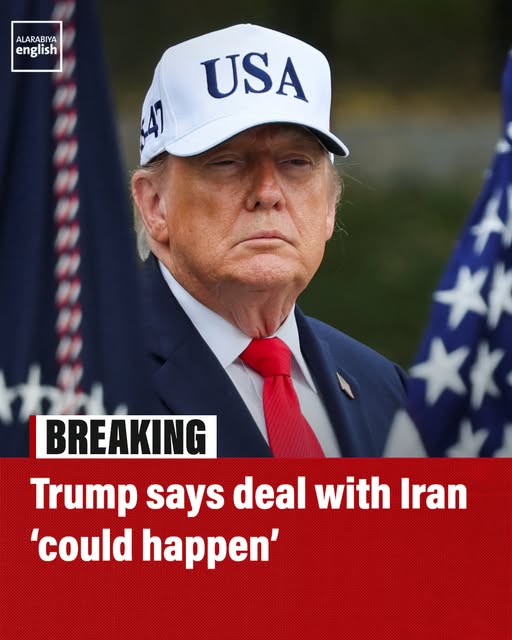
The image is a study in contradiction: Donald Trump, clad in a white “USA” cap, his expression set in a familiar scowl. The Al Arabiya chyron is blunt and unexpected: “BREAKING: Trump says deal with Iran ‘could happen’.”
The post, shared widely on the eve of the November 3 midterm elections, captures a moment of extraordinary whiplash in American foreign policy. Just days after threatening to “give them the hammer” and boasting that the war would end “whenever I want it to end,” the President of the United States was suddenly striking a conciliatory tone. It was not a full-throated peace overture. But it was a signal—a carefully calibrated hint that the nine-month conflict that has reshaped the global economy and dominated the political landscape might, finally, be approaching its end.
This is the story behind the quote, the diplomatic scramble it has triggered, and the high-stakes gamble that could define the final years of Trump’s presidency.
The Verdict: A Real Shift in Tone, But a Long Road Ahead
Unlike many viral political headlines, this one is grounded in verifiable reporting and direct quotes. On Monday, November 2, 2026, speaking at the reopening of the Lincoln Memorial Reflecting Pool in Washington, D.C., Trump told reporters that Iran was eager to end the fighting.
“They want to make a deal, and that could happen,” Trump said. He added that Iran had asked Washington to stop targeting its leaders, “and we will”. Later that day, he took to Truth Social to amplify the message: “Oil Prices are DROPPING LIKE A ROCK, down almost $10 a Barrel, A RECORD, because people feel that there will not be a War with Iran. Iran wants a settlement, as soon as possible. It could happen!”.
The shift was remarkable not just for what it said, but for what it followed. Just 48 hours earlier, Trump had been warning of a “hammer” and naming Pickaxe Mountain as a planned target. Now, he was suggesting that the war might end not with a bang, but with a deal.
The Diplomatic Surge: Vance’s “Pretty Good” Prospects
Trump’s comments were not an isolated gesture. They were part of a coordinated, two-track messaging strategy that included Vice President JD Vance, who spoke to reporters just hours later.
“The president and I both feel pretty good about the prospects for potentially coming to a negotiated settlement,” Vance said at Joint Base Andrews. “We’re going to keep on working at it”. He confirmed that Washington had made “progress” in indirect talks with Tehran, but he was careful to keep the pressure on. “The Iranians are always a little unpredictable, and as the president always says, he retains kinetic options. He retains non-kinetic options”.
Crucially, Vance made clear that the U.S. had not set a deadline for Tehran. “No, we haven’t set deadlines,” he said. But he also laid out the bottom line: any deal would require “a firm commitment and a verifiable commitment” that Iran would not rebuild its nuclear program. “Having destroyed their nuclear program, we want to make sure they don’t rebuild it or try to rebuild it” , he added.
Iran’s Offer: A Two-Day Window for the Strait of Hormuz
The American shift in tone was matched by a corresponding move from Tehran. According to Al Jazeera, Iranian officials signaled that their seven-step plan to de-escalate the conflict—which had originally been designed to be implemented over a week—could now be “condensed and can be implemented within two days”.
The centerpiece of the proposal is the reopening of the Strait of Hormuz, the vital waterway that has been disrupted by the conflict and the naval blockade that the U.S. has imposed on Iranian ports. “If Iran’s demands are met, it is possible that both security will be restored to the Strait of Hormuz and the negotiation process will begin within a short period of time,” Foreign Ministry spokesman Esmaeil Baghaei said.
But Iran’s conditions remain steep. They include the lifting of the U.S. naval blockade, the repeal of sanctions, guarantees that the U.S. will not resume strikes, and the release of frozen Iranian assets. The sequencing of these steps—and who moves first—remains the central sticking point.
The Mediators: Qatar and Pakistan’s Quiet Diplomacy
Behind the scenes, a quiet diplomatic scramble is underway. Qatar and Pakistan have been facilitating the indirect talks, shuttling messages between Washington and Tehran in an effort to prevent a return to the intense 40-day bombing campaign that shook the global economy this summer.
Iranian Foreign Minister Abbas Araghchi, speaking from Ashgabat, Turkmenistan, described the consultations as “very intense” and acknowledged the “very active mediating role” of both countries. The urgency is palpable. As Araghchi put it, “By accepting these conditions, the Strait of Hormuz will be opened, and negotiations will resume. Otherwise, the current situation will continue, and Iran will not bow down”.
The Political Calculus: A Deal Before the Midterms?
The timing of the diplomatic thaw is impossible to ignore. Trump’s “could happen” comments came just one day before the November 3 midterm elections. The war has been deeply unpopular, driving up oil prices and contributing to inflation that has squeezed American families. Trump himself acknowledged the economic stakes, framing the falling oil prices as evidence that peace is already paying dividends. “Oil Prices are DROPPING LIKE A ROCK... A RECORD, because people feel that there will not be a War with Iran” , he wrote.
For a president whose approval ratings have been battered by the conflict, a pre-election peace signal—even a tentative one—offers a political lifeline. It allows him to project strength (“we destroyed their nuclear program”) while simultaneously offering the prospect of relief at the gas pump. Whether voters will reward him for it remains to be seen. But the message was unmistakable: a deal, if it comes, will not be a surrender. It will be a victory.
The Bottom Line
The viral graphic is right about one thing: Donald Trump did say a deal with Iran “could happen.” But the story is not as simple as a single optimistic quote. It is a story about a president who is trying to pivot from a war he once promised would be quick and decisive, an adversary that is eager to escape the grip of sanctions and military pressure, and a diplomatic process that is racing against the clock of a midterm election and the unpredictable whims of two leaders who have spent months trading threats.
Whether the “could” becomes “will” depends on whether the two sides can bridge their deep mistrust—and whether Trump, who has repeatedly threatened to “just end it” with military force, is willing to accept a deal that falls short of his maximalist demands. For now, the guns are quieter, the oil prices are falling, and the world is watching to see if a war that has lasted nine months can finally end not with a bang, but with a handshake.
📸 Suggested Images
-
The Announcement: A photo of Trump speaking at the Lincoln Memorial Reflecting Pool, with a quote overlay of “They want to make a deal, and that could happen.”
The Diplomatic Signal: A screenshot of Trump’s Truth Social post about falling oil prices and the possibility of a settlement.
The Mediators: A photo of Qatari and Pakistani diplomats, with a caption noting their role in facilitating the indirect talks.
The Waterway: A photo of the Strait of Hormuz, with a caption explaining its strategic importance and Iran’s offer to reopen it within two days.
The Vice President: A photo of JD Vance speaking to reporters, with a quote overlay of “The president and I both feel pretty good about the prospects.”
Comments (0)
Loading comments...
May You Like

IOWA CRISIS — 150+ WITH LEAD AND MERCURY POISONING, 69 CRITICAL!


WARNING: OVER 1 MILLION COULD LOSE POWER AND NEARLY 2 MILLION FACE WATER ALERTS ON THANKSGIVING!

Latest Posts








Popular Posts




