
James Comey Faces New DOJ Case Over Alleged Disclosure of National Defense Information
James Comey Faces New DOJ Case Over Alleged Disclosure of National Defense Information

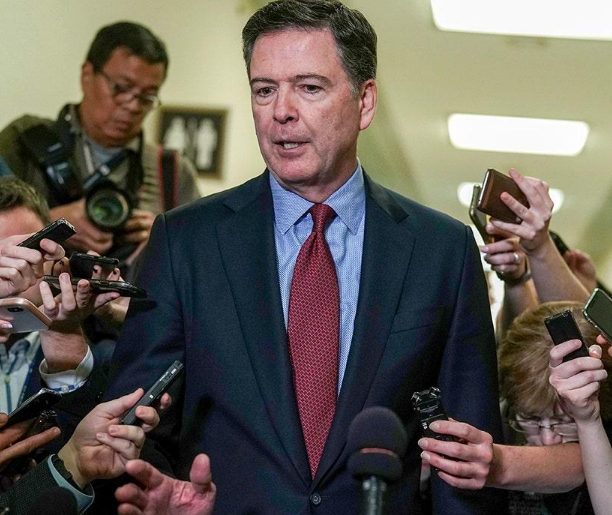
Former FBI Director James Comey is facing a new legal battle after the U.S. Department of Justice took steps to prosecute him over an alleged disclosure of national defense information dating back to 2016. The case marks another chapter in the long-running conflict between Comey and President Donald Trump.
The latest action became public on October 26, 2026, after court records were unsealed. Prosecutors allege that Comey participated in the unauthorized transmission of sensitive information to a reporter, along with a conspiracy to disclose that information. Comey denies wrongdoing and says he will fight the allegations.
It is important to clarify the legal status of the case. Although headlines have described Comey as facing new charges, prosecutors filed a criminal information, not a grand jury indictment. The distinction is significant because the case has not yet proceeded through the usual grand-jury indictment process.

According to the charging document, the allegations concern events around October 5, 2016, when Comey was leading the FBI. Prosecutors claim he directed information related to national defense to be passed to a reporter through one or more intermediaries.
The reporting at the center of the dispute concerned U.S. surveillance and a secret court order involving email accounts associated with a suspected foreign terrorist group. The government alleges that information disclosed to the press was protected and should not have been shared with someone unauthorized to receive it.
The allegations do not establish that Comey committed a crime. Prosecutors must prove the elements of the offenses in court, and the defense has the right to challenge both the evidence and the legal basis for the case.

The Justice Department filed the document on October 5, shortly before the 10-year anniversary of the alleged conduct. A department spokesperson said the filing was intended to preserve the government’s ability to pursue the allegations before the statute of limitations expired.
That procedural move is now a central point of contention. Comey’s lawyers argue that prosecutors cannot use the filing to bypass the legal requirement for a timely grand jury indictment. They have asked a federal judge to dismiss the case, and the court’s decision could determine whether the prosecution can proceed.
Comey’s attorney, Patrick Fitzgerald, has said that his client “steadfastly maintains his innocence.” Comey himself described the latest action as an abuse of the Justice Department and said he was not afraid of the people pursuing the case.
The dispute is unfolding before U.S. District Judge Trevor McFadden, who was appointed by Trump during his first term. The judge ordered the matter unsealed, allowing the public to learn about the allegations and the defense’s challenge. As of the latest reporting, the judge had not ruled on the motion to dismiss.

The new case is especially politically sensitive because Comey has been one of Trump’s most prominent adversaries. Trump fired him as FBI director in May 2017, amid the FBI’s investigation into Russian interference in the 2016 presidential election.
Comey’s dismissal helped trigger the appointment of special counsel Robert Mueller, whose investigation documented Russian interference in the election but did not establish a criminal conspiracy between Trump’s campaign and Russia. The fallout deepened the conflict between Trump and the former FBI director, who later became a public critic of the president.
This is not the first criminal case the Trump administration has pursued against Comey. A previous prosecution concerning statements he made to Congress was dismissed after a judge found that the prosecutor had been unlawfully appointed; the Justice Department has sought to appeal that decision.
Comey is also facing a separate case in North Carolina involving an Instagram post that prosecutors allege constituted threats against Trump and another person. Comey has denied criminal intent in that matter as well. The separate proceedings involve different allegations and should not be treated as evidence that the new disclosure case is proven.
The latest prosecution raises broader questions about how the government handles information involving national security. Federal law can criminalize the unauthorized transmission of certain national defense information, but prosecutors must establish that the specific information and conduct meet the law’s requirements.
The phrase “national defense information” also has a legal meaning that is not always identical to the everyday use of “classified information.” Whether the material at issue qualifies under the statute—and whether Comey knowingly and unlawfully caused its disclosure—will be important questions if the case reaches trial.
The dispute also revives questions about the boundaries between government secrecy and the public’s right to know. Officials have a duty to protect legitimate national security information, while journalists and the public have an interest in reporting on government surveillance and other matters of public importance. The legal outcome will depend on the evidence and applicable law, not on those broad principles alone.

Comey’s lawyers have argued that the underlying disclosure was examined previously by investigators during Trump’s first administration and that those investigations did not result in criminal charges. They contend that the renewed prosecution is unfair and politically motivated. The government, by contrast, maintains that it has a legal basis to pursue the case.
The political implications extend beyond Comey personally. The Justice Department’s independence has become a major point of contention in Washington, with critics warning that criminal investigations of prominent political opponents can undermine public confidence if they appear driven by personal grievances.
Supporters of the prosecution argue that former officials should be held accountable if evidence shows they violated national security laws. From that perspective, a person’s former position or political standing should not place them above the law.

The central issue, however, is not whether Comey has clashed with Trump or whether the public views the prosecution as politically charged. It is whether the government can establish the alleged conduct, satisfy the legal requirements for bringing the case, and overcome the defense’s procedural objections.
The case may also test the limits of the government’s ability to preserve criminal allegations when a statute of limitations is about to expire. If the judge agrees with the defense that the filing was insufficient, the prosecution could face a major legal obstacle before the underlying allegations are tried.
For now, no verdict has been reached in this national defense disclosure case, and the allegations remain unproven. The court’s next decisions will help determine whether prosecutors can move forward and whether the case will ultimately be decided by a jury.

The case places Comey once again at the intersection of national security, law enforcement, and partisan conflict. Its outcome could carry consequences not only for the former FBI director but also for public trust in the Justice Department and the rules governing sensitive government information.
Fact-check note: The image’s headline is broadly accurate in describing a new DOJ case, but “faces a new case” is more precise than implying a conviction or a completed indictment. Prosecutors filed a criminal information alleging two offenses; Comey has not been convicted, denies wrongdoing, and is challenging whether the case can legally proceed
Comments (0)
Loading comments...
May You Like

WWE BRONSON REED—INSPIRED—SUDDEN COLLAPSE, MYSTERIOUS STIMULANTS, DEAD AT 38!

1,000+ MILITARY FAMILY RECORDS BREACHED, 200+ MILITARY SITES AT RISK!

BOMBSHELL NEW JERSEY FLOOD — 112 KM/H WINDS, SEAWATER FLOODING INLAND, 120,000 HOMES AT RISK!










Popular Posts




