
JD Vance Discusses U.S.-Iran Deal
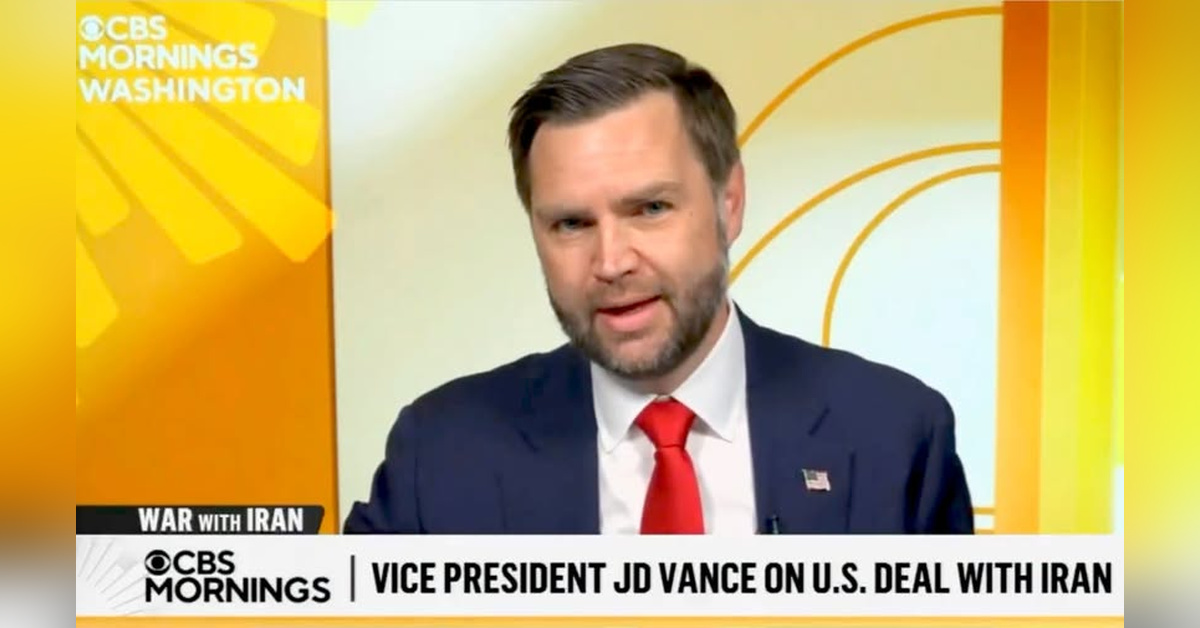
JD Vance Discusses U.S.-Iran Deal as Questions Mount Over Nuclear Restrictions and the Future of the War
October 31, 2026 | Washington, D.C. | U.S. Politics & Middle East
Vice President JD Vance is featured in a televised interview discussing a potential U.S. agreement with Iran, bringing renewed attention to Washington's diplomatic objectives and the difficult question of how the ongoing confrontation might end.
The circulating screenshot shows Vance speaking during a morning television interview, accompanied by an on-screen headline identifying the subject as a United States deal with Iran.
Unlike several viral political graphics, the image does not attribute a sensational quotation to Vance or claim that a final agreement has already been signed.
Instead, it highlights a central foreign-policy issue confronting the Trump administration: whether negotiations can produce enforceable nuclear restrictions while reducing the possibility of further military escalation.
Verification note: The screenshot identifies the interview's general subject but does not display its broadcast date or provide Vance's complete remarks. It cannot independently establish the terms or status of any agreement.
Vance's Role in the Administration's Iran Strategy
Vice President Vance has emerged as an important public defender of the administration's approach toward Iran, explaining its military objectives and discussing the conditions necessary for a diplomatic settlement.
His involvement reflects the administration's effort to combine military pressure with negotiations, presenting both instruments as complementary elements of American national security policy.
For Washington, the central objective remains preventing Iran from acquiring nuclear weapons while addressing broader concerns about regional military threats and the security of American personnel.
Iranian leaders, meanwhile, have historically insisted that their nuclear activities serve peaceful purposes and that any sustainable agreement must address economic sanctions and national sovereignty.
The Interview Dates Back to June 15, 2026
The original broadcast has now been identified. Vance appeared on a June 15 morning television program to explain the framework announced by President Trump the previous day.
During the interview, he discussed nuclear inspections, the future of Iran's enriched uranium stockpile, the Strait of Hormuz, and competing accounts of possible economic concessions.
Vance said the administration intended to publish the agreement's full text, arguing that Americans should have an opportunity to examine its provisions rather than rely on conflicting descriptions.
His appearance therefore concerned an actual diplomatic announcement, not merely speculation about whether Washington and Tehran might eventually begin negotiating an agreement.
Vance Rejects Claims of a $24 Billion Payment
One of the interview's most consequential moments involved reports that Iran would receive approximately $24 billion in previously frozen assets during a proposed negotiation period.
Vance rejected that figure, maintaining that it did not appear in the documents discussed with Iranian negotiators, although he acknowledged that releasing certain frozen assets remained negotiable.
He distinguished between direct financial transfers and broader economic benefits, arguing that sanctions relief could become available if Tehran fulfilled its commitments under the proposed arrangement.
Iranian accounts of the agreement differed from Washington's description, demonstrating why publication of the complete text and independent verification would be essential to evaluating its provisions.
Nuclear Inspections Remain Central to the Agreement
Vance described preventing Iran from acquiring nuclear weapons as a central objective, emphasizing that any arrangement needed enforceable commitments rather than relying exclusively on political assurances.
He said American officials had discussed destroying Iran's enriched uranium stockpile and were preparing additional technical negotiations to determine how that process could be implemented.
The vice president indicated that international nuclear inspectors could participate in verification, while leaving open questions about whether American personnel would assume an observational or more active role.
He also acknowledged that several technical details remained unresolved, illustrating the distinction between announcing a diplomatic framework and successfully implementing its most demanding provisions.
Reopening the Strait of Hormuz
Another major element of the proposed agreement involved restoring maritime traffic through the Strait of Hormuz, a strategically important passage connecting Persian Gulf energy producers with international markets.
Vance argued that reopening the waterway would benefit American consumers by reducing pressure on global energy supplies and helping stabilize transportation and fuel costs.
The administration presented maritime security and nuclear restrictions as interconnected priorities, arguing that a sustainable agreement needed to address both concerns rather than treating them separately.
October Developments Reveal Continuing Challenges
Despite the optimism surrounding June's announcement, subsequent developments demonstrated that implementing the framework remained considerably more complicated than reaching an initial diplomatic understanding.
During an October 15 town hall in Michigan, Vance acknowledged that Iran's response to American military operations had complicated the administration's efforts to secure a lasting settlement.
He maintained that Washington needed a long-term, verifiable Iranian commitment not to rebuild its nuclear capabilities while simultaneously protecting international commercial shipping.
The vice president also acknowledged that gasoline prices remained too high, connecting continued economic pressure to instability affecting energy transportation through the Strait of Hormuz.
What Happens Next?
The continuing challenge for Washington is translating diplomatic commitments into enforceable arrangements that can survive political disagreements, military incidents, and changes in regional security conditions.
For Iran, economic sanctions relief remains a major incentive, while American officials continue emphasizing verification, nuclear restrictions, and guarantees protecting international maritime commerce.
The June interview remains an important record of the administration's initial expectations, but it should not be mistaken for a newly broadcast October announcement or evidence of complete implementation.
Final Fact-Check Verdict
The screenshot is authentic and originates from June 15, 2026. Vance discussed an announced U.S.-Iran agreement, rejected claims of an automatic $24 billion payment, and outlined proposed nuclear verification arrangements.
His subsequent October remarks demonstrate that significant challenges remained, particularly concerning Iran's nuclear commitments, maritime security, and the broader economic consequences of the conflict.
Comments (0)
Loading comments...
May You Like

KUWAIT DRONE ATTACK SPARKS TENSION BETWEEN ISRAEL, THE U.S AND IRAN

TRUMP NAMES PICKAXE TARGET AS NETANYAHU PUSHES FOR MORE IRAN STRIKES

TRUMP CALLS GDP FIGURE “FAKE” AFTER GOVERNMENT’S SCHEDULED REVISION

Latest Posts






Popular Posts





