
JD Vance Rallies Americans to ‘Send a Message’ Ahead of Midterms
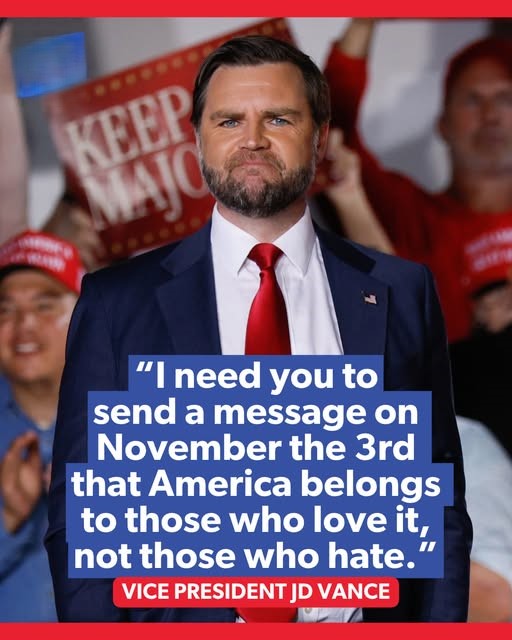
JD Vance Urges Americans to “Send a Message” on November 3 as Midterm Election Day Nears
U.S. Politics | November 2, 2026
The quote in the image is authentic. Vice President JD Vance used those words during a Republican campaign rally in Weatherford, Texas, on October 29, urging supporters to vote in the November 3, 2026, election.
The image, however, leaves out important context: Vance was speaking at a partisan campaign event, promoting Republican candidates and criticizing their Democratic opponents. This was not simply a general patriotic appeal.
Vance’s remarks came during an intense final stretch of campaigning before Election Day, when Republicans and Democrats were competing for control of Congress and several closely watched state-level offices.
According to the published transcript, Vance told the Texas audience he needed their help, then specifically urged them to vote for Republican Senate candidate Ken Paxton.
He followed that appeal with the line featured in the graphic: “I need you to send a message on November the 3rd that America belongs to those who love it, not those who hate it.”
The speech then turned directly toward Paxton’s Democratic opponent, James Talarico. Vance criticized Talarico’s positions and asked supporters to reject what he described as the Democratic candidate’s political agenda.
This context matters because the quote was part of an explicit effort to mobilize Republican voters, rather than a nonpartisan statement about national identity or civic participation.
Vance has used similar language at other campaign appearances. At a North Carolina rally on October 19, he also urged voters to send a message on November 3.
The repeated wording suggests a coordinated campaign theme: portraying the election as a choice between competing visions of American identity, patriotism, and the country’s political future.
At a Florida rally earlier in October, Vance similarly declared that America belonged to those who loved it, while encouraging supporters to vote and oppose what he called far-left radicals.
The message reflects a broader Republican strategy of framing the midterms around cultural identity, national belonging, immigration, public safety, and criticism of Democratic leadership.
For Vance, the campaign appearances also provide a national platform to strengthen his political profile and help Republican candidates in competitive races ahead of the vote.
The November 3 election is the regularly scheduled federal general election date for 2026, according to the Federal Election Commission. It is also the country’s midterm election year.
All 435 seats in the House of Representatives are being contested, alongside roughly one-third of the Senate. The results will determine which party controls both chambers of Congress.
That balance of power will shape the legislative environment for the remainder of President Donald Trump’s term, affecting spending negotiations, oversight, judicial confirmations, and the administration’s policy priorities.
The image’s wording is therefore accurate, but its presentation removes the campaign setting and the specific candidates Vance was promoting during the Texas rally.
It also does not establish that every American who disagrees with Vance’s politics dislikes the country. That implication belongs to the speaker’s partisan framing, not to a verifiable fact.
As Election Day approaches, both parties are trying to convert enthusiasm, campaign appearances, and strong political messaging into actual voter turnout across key states and congressional districts.
Republicans are emphasizing loyalty to Trump’s agenda and conservative cultural priorities, while Democrats are seeking to persuade voters that the administration’s policies deserve greater scrutiny.
Vance’s appeal captures the emotional tone of the closing campaign period: a contest in which political leaders are presenting the stakes as much larger than individual candidates or local races.
The decisive question will be whether this language motivates enough voters to participate—and whether the resulting turnout translates into victories for the candidates Vance and other Republican leaders have endorsed.
Comments (0)
Loading comments...
May You Like

IOWA ENVIRONMENTAL DISASTER: 5-TON WASTE BLAST DISPLACES 3,000 FAMILIES!


WARNING: OVER 1 MILLION COULD LOSE POWER AND NEARLY 2 MILLION FACE WATER ALERTS ON THANKSGIVING!

Latest Posts









Popular Posts




