
JD Vance’s Election Day
JD Vance’s Election Day Message Sparks Debate: “America Belongs to Those Who Love It, Not Those Who Hate”
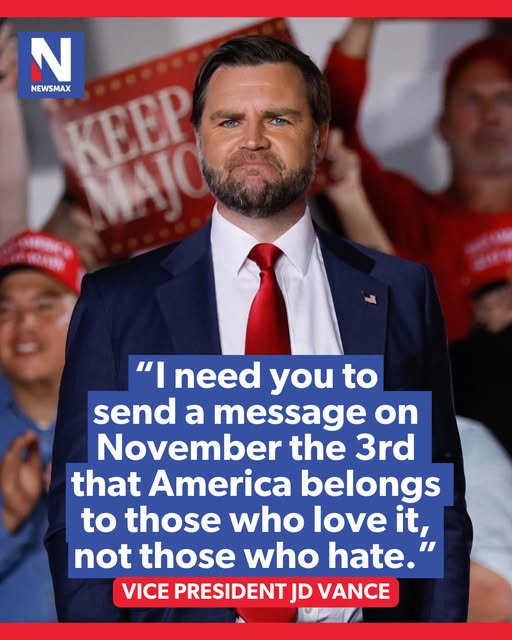
Vice President JD Vance has delivered a powerful message to American voters ahead of the November 3 midterm elections, urging citizens to make their voices heard in a political contest that could shape the future of the United States. His statement, “I need you to send a message on November the 3rd that America belongs to those who love it, not those who hate,” has attracted attention for its strong emphasis on patriotism, national identity and the importance of voter participation.
The remark, featured in a Newsmax graphic showing Vance at a political rally, reflects a recurring theme in his public speeches. Rather than presenting the upcoming election simply as a competition between Republicans and Democrats, Vance frames it as a broader choice about the values that should guide the country. His words are intended to encourage supporters to see their votes as part of a larger national decision.
With Election Day approaching, political activity has intensified across the country. Republican candidates are seeking support for the Trump administration's policy agenda, while Democratic candidates are campaigning on their own proposals and criticisms of the administration. Control of Congress is particularly important because lawmakers will determine which legislative priorities receive attention during the remaining years of President Donald Trump's term.
Vance has become a prominent figure in the Republican campaign effort. As vice president, he has used public appearances to discuss immigration, economic policy, national security and the challenges facing American families. His speeches frequently combine practical policy concerns with broader arguments about national identity, government responsibility and the direction of American society.

The language of Vance's latest message is especially notable because it draws a distinction between people who love their country and those who supposedly hate it. Supporters may interpret the statement as a call for civic responsibility and leadership that prioritizes American interests. Critics, however, may question whether such language risks portraying political opponents as less patriotic simply because they hold different views.
Patriotism has always been an important part of American political life, but citizens do not necessarily agree on what it means. Some associate patriotism with protecting national borders, supporting the armed forces and defending established institutions. Others emphasize constitutional freedoms, democratic accountability, civil rights and the ability to criticize elected officials. These different interpretations often coexist within the same society.
The United States was founded on a political system that permits disagreement and protects freedom of expression. The First Amendment guarantees important rights involving speech, religion, assembly and political advocacy. As a result, criticism of a president or political party does not automatically indicate hostility toward the country itself. Americans may disagree strongly about public policy while sharing a sincere commitment to the nation's future.
Vance's remarks come at a particularly consequential moment for Congress. All 435 voting seats in the House of Representatives are scheduled to be contested, along with the Senate seats up for election in 2026. Numerous gubernatorial, state legislative and local races will also take place, giving voters opportunities to influence decisions at multiple levels of government.
The results will help determine the balance of power in Washington. Congressional majorities affect the consideration of legislation, federal spending negotiations, oversight investigations and the confirmation of certain presidential appointments. A change in control of either chamber could alter the administration's ability to advance its agenda and increase political conflict over major policy decisions.

For Republicans, the election is an opportunity to defend their approach to immigration enforcement, taxation, energy production and national security. The administration has argued that its policies are designed to strengthen the economy, protect American interests and improve government effectiveness. Democratic candidates have challenged aspects of that record and offered competing proposals addressing economic pressures, healthcare and other domestic concerns.
Economic conditions remain central to the election debate. Many voters are concerned about housing affordability, grocery prices, employment opportunities, healthcare expenses and the financial pressures facing families. Although campaign speeches often emphasize national identity, these everyday issues can play a decisive role in how citizens evaluate candidates and political parties.
Vance's political background helps explain his emphasis on economic and cultural questions. Before becoming vice president, he served as a U.S. senator from Ohio and gained national recognition for his writing about working-class communities, economic hardship and social change. His public arguments frequently connect national policy decisions with their consequences for families and communities outside major economic centers.
His campaign appearances also reflect the importance of voter turnout. Political parties invest significant resources in encouraging supporters to participate, particularly in closely contested districts and states. A nationally recognized figure such as Vance can draw attention to local candidates and reinforce messages that campaign organizations hope will motivate voters.
Early voting has become another important element of modern election campaigns. In many states, citizens can cast ballots before Election Day through in-person early voting or absentee procedures. Campaign teams therefore work to reach voters throughout the voting period rather than concentrating all their efforts on a single day.

The vice president's statement also illustrates how political leaders use emotionally memorable language to communicate with supporters. Short phrases about patriotism and national purpose can be easier to remember than detailed explanations of legislation. Such messages may strengthen enthusiasm among existing supporters, although their effect on undecided voters is more difficult to determine.
Political communication researchers have long examined the role of identity in voting behavior. People may support candidates not only because of specific policy proposals but also because they believe those candidates represent their values, communities or understanding of the nation. This helps explain why cultural issues and patriotic appeals remain prominent even when economic concerns dominate public discussion.
However, broad statements about national loyalty can also intensify political polarization. When political competition is described as a contest between people who love the country and people who hate it, the language may discourage recognition that opposing voters can hold sincere beliefs. Democratic debate depends on the ability to challenge policies without automatically questioning the legitimacy of those who disagree.
A disagreement over foreign policy provides a useful example. Some citizens may support military intervention because they believe it protects American security, while others may oppose the same intervention because they fear it will create unnecessary risks. Both positions can emerge from concern for the country's safety and long-term interests.
Similar disagreements arise over immigration, taxation, education and healthcare. Citizens may share goals such as economic stability, public safety and national prosperity while advocating different methods of achieving them. The existence of competing political approaches does not necessarily establish that one group is more committed to the country than another.
Vance's message therefore functions primarily as a political appeal rather than an objective assessment of individual patriotism. It encourages listeners to connect their electoral choices with their understanding of America's values. The practical significance of that appeal will depend on how voters interpret it alongside the candidates' records and proposals.

As the final hours before the November 3 elections approach, Republican and Democratic campaigns are expected to continue emphasizing their strongest arguments. Candidates will seek to persuade undecided voters, encourage participation and respond to criticism from their opponents. The intensity of the closing campaign reflects the substantial consequences of congressional and state elections.
For individual Americans, the election presents an opportunity to evaluate both political messages and governing records. Voters can consider economic conditions, legislative decisions, public statements and the likely consequences of competing proposals. These concrete factors provide a foundation for political judgment beyond the emotional impact of campaign rhetoric.
The larger debate surrounding Vance's words concerns the relationship between patriotism and political disagreement. American history includes many examples of citizens expressing loyalty to the nation through different forms of political participation, including public service, voting, protest and advocacy. The country's constitutional system protects those activities even when they challenge the decisions of powerful officials.
Ultimately, Vance's statement captures the intensity of the 2026 midterm campaign and the administration's effort to connect political participation with national identity. Whether voters embrace his message or disagree with its framing, the election will be decided through the democratic process rather than through any single politician's definition of patriotism.
The central question now is how Americans will translate their views about the country's future into votes on November 3. The results will determine the next balance of political power, while the broader debate over what it means to love America will continue long after Election Day.
Comments (0)
Loading comments...
May You Like
NY AG James Faces Unwelcome Courtroom Scrutiny In Criminal Investigation
Trump’s Bold Iran War Statement
Trump Says Iran War Will “Get Wrapped Up Soon”

Popular Posts
Treasury Flags $8 Billion
Nov 2, 2026
Trump Backs Bukele’s
Nov 2, 2026
Danica Patrick Accuses Democrats
Nov 2, 2026