
JENSEN HUANG BOMBSHELL: PAYMENT RECORDS EXPOSE STAGED CHEERS!
JENSEN HUANG BOMBSHELL: PAYMENT RECORDS EXPOSE STAGED CHEERS!
SANTA CLARA, California — November 24, 2026 — Jensen Huang returned to NVIDIA's California headquarters on Monday to enthusiastic applause, chants and embraces from employees, just 11 days after stepping down as chief executive of the semiconductor company amid a controversy involving his personal conduct and national security concerns.
Videos circulating across social media showed employees gathering around the reinstated executive, raising their phones and celebrating his return. Huang briefly addressed the crowd, thanking employees for another opportunity to lead the company.
The celebration followed a unanimous decision by NVIDIA's board of directors to reinstate its co-founder, reversing an earlier leadership transition after pressure from investors, technology executives and President Donald Trump.
However, reporting from inside the company suggests the enthusiastic reception did not represent the views of every NVIDIA employee. Some workers expressed frustration with the decision, introducing a more complicated picture of the company's internal environment than the widely distributed celebration videos initially suggested.
Huang's departure on November 12 represented an extraordinary moment for a company that had become one of the most important businesses in the global artificial intelligence industry.
His resignation followed disclosures concerning his personal relationships and questions about whether he had been targeted by foreign intelligence activities. NVIDIA appointed Chief Financial Officer Colette Kress as interim chief executive while its directors considered the company's future.
The leadership transition generated uncertainty throughout Silicon Valley. Investors questioned whether NVIDIA could maintain its existing strategy without the executive who had helped establish its position in advanced computing.
Huang subsequently indicated that he would accept reinstatement if the board determined that his return would serve the interests of the company, employees and shareholders.
The board ultimately reversed its decision. According to a corporate filing, directors reinstated Huang on November 22, with the announcement becoming public the following morning.
Kress returned to her position overseeing the company's finances.
The scenes inside NVIDIA's headquarters appeared to demonstrate an extraordinary level of enthusiasm for a returning corporate executive.
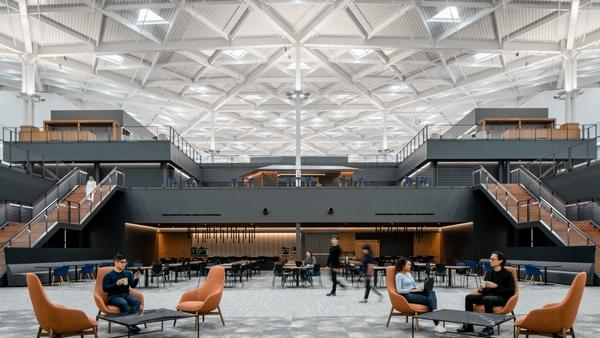
Employees gathered across multiple levels of the company's office building, applauding and calling out Huang's name. Several workers recorded the gathering from different positions, capturing both the crowd's reaction and Huang's response.
One video published by an NVIDIA employee on X showed the executive standing in the center of the gathering as people welcomed him back.
Another recording, shared by NVIDIA research executive Ming-Yu Liu, captured portions of Huang's remarks to employees.
“Thank you all for the second chance,” Huang told the gathering, according to footage published by multiple news organizations.
Other recordings showed employees encouraging Huang to resume his work. The videos spread rapidly across technology news outlets and financial reporting platforms, becoming a prominent visual representation of NVIDIA's leadership reversal.
The existence of multiple recordings establishes that the gathering occurred. It leaves a separate question about how the event was arranged and whether the visible participants represented broader employee sentiment.
While the widely circulated footage presented an enthusiastic reception, another account from inside NVIDIA revealed a substantially different reaction.
Tom's Hardware reported that an anonymous NVIDIA engineer had expressed dissatisfaction with Huang's reinstatement in comments to Yahoo Finance.
“This is the worst outcome,” the employee said.
The worker indicated that employees had already experienced the consequences of Huang's departure and were now being required to continue working under his leadership.
Some employees may have welcomed the restoration of corporate stability. Others may have been concerned about workplace conduct, management accountability or the implications of reversing the original leadership decision.
Claims that more than 50 NVIDIA employees disclosed internal correspondence concerning Huang's reception introduce a separate issue involving the authenticity and significance of corporate communications.
Internal emails could provide valuable information about the organization of an event. Messages might establish when employees were informed of an executive's arrival, whether particular departments were invited to attend and whether corporate communications personnel participated in planning the gathering.
Establishing that distinction would require examining the precise language of the communications, their original recipients, the identity of the organizers and any associated instructions.
There is, however, documented evidence of differing employee opinions. That evidence provides a legitimate basis for examining whether the public reception accurately represented the company's internal response to Huang's reinstatement.
Financial transactions would represent another potentially important category of evidence in evaluating how the reception was organized.
Large companies routinely incur expenses associated with internal meetings, employee events, corporate communications and executive appearances. Those expenditures can include audiovisual equipment, photography, catering, event management and compensation for employees performing ordinary work responsibilities.
 A substantially different situation would arise if authenticated financial records demonstrated that employees received specific compensation in exchange for publicly praising an executive or participating in a misleading presentation of workforce opinion.
Establishing such an arrangement would require documents connecting individual payments to explicit conditions of participation.
Investigators would also need to distinguish ordinary salary payments, reimbursement of legitimate expenses and employee incentives from compensation specifically intended to influence public behavior.
Recordings appeared on social media through several individuals associated with the technology industry, including NVIDIA employees and supporters of the executive.
These different perspectives provide an opportunity to examine the physical arrangement of the gathering, the size of the visible crowd and portions of Huang's remarks.
They also demonstrate the limitations of interpreting corporate events through short recordings.
The original footage remains valuable because it establishes what occurred in front of the cameras. Internal communications would be necessary to determine what arrangements preceded it.
Huang's return followed an unusual level of involvement from the White House in the leadership decisions of a private technology company.
President Donald Trump publicly supported Huang's reinstatement, arguing that NVIDIA's position in the technology industry made its leadership important to American economic interests.
NVIDIA's November 23 announcement acknowledged that the board had received information from senior officials within the United States government before reaching its decision.
The involvement of the administration placed the leadership controversy within the wider context of American competition with China over artificial intelligence, semiconductor production and advanced computing infrastructure.
Those competing positions remain separate from questions about the organization of the employee reception.
 According to financial market reporting by The Guardian, NVIDIA shares closed at $165.05 on Monday, representing an increase of approximately 31.48%.
The rally added an estimated $952 billion to the company's market capitalization, bringing its total valuation to nearly $3.98 trillion.
The recovery also contributed to broader gains across the technology sector.
Such a dramatic market movement illustrates the extent to which investor expectations surrounding NVIDIA had become connected to Huang's personal leadership.
The financial recovery provided a powerful economic backdrop to Monday's celebration, particularly for employees holding company stock or equity-based compensation.
Stock-based compensation is a common feature of employment at major American technology companies.
Employees may receive restricted stock units or other equity-based awards as part of their compensation packages. The eventual financial value of those awards can be affected by changes in a company's share price.
Consequently, a corporate leadership crisis that produces substantial market losses can have implications extending beyond institutional investors.
For employees with significant equity holdings, a recovery in the company's share price may improve the value of their compensation. That financial relationship can create understandable interest in management decisions.
At the same time, employee support for a chief executive may reflect professional admiration, confidence in corporate strategy or concern about the company's future.
These different motivations can coexist within the same workforce.
Understanding them is important when evaluating claims that a public demonstration of support must necessarily have resulted from direct financial incentives.
Major corporations devote considerable resources to communicating with employees, investors, customers and the wider public.
During a leadership crisis, communication becomes particularly important. Organizations must explain changes in management, respond to external inquiries and reassure business partners that operations will continue.
A returning chief executive may participate in employee meetings, public statements and internal presentations intended to communicate the company's priorities.
Such activities can be organized in advance without being inherently deceptive.
The distinction becomes more consequential when determining whether an event was presented as a spontaneous expression of employee sentiment despite being deliberately structured to produce a particular public impression.
Evidence of instructions to participate, restrictions on employee responses or conditional payments could change how such a gathering should be understood.
In NVIDIA's case, the highly visible reception naturally contributed to public perceptions of restored stability. The evidence necessary to establish deliberate manipulation of that perception would extend beyond the celebration footage itself.
The board's decision to reinstate Huang resolved NVIDIA's immediate leadership uncertainty but did not eliminate all the issues surrounding his original departure.
NVIDIA's internal examination of the circumstances surrounding the controversy remains an important element of the company's response.
The Wall Street Journal reported that Huang's return has generated debate about corporate accountability, the treatment of senior executives and the consequences of relying heavily on a single individual.
Those concerns extend beyond NVIDIA's short-term financial performance.
Corporate directors must oversee management conduct, establish consistent workplace standards and consider long-term risks affecting shareholders.
The distinction could become increasingly important as NVIDIA resumes normal operations following the reinstatement.
A credible examination of the celebration would require access to several different categories of information.
Original event invitations could establish when the gathering was arranged. Corporate communications might clarify whether attendance was voluntary or encouraged by management. Financial documentation could identify whether special payments were connected to participation.
Independent employee accounts could help establish whether individuals experienced pressure to attend, whether the reception developed naturally and whether workers were free to express disagreement.
Those records would need to be authenticated and considered together.
For example, an ordinary payment to an event contractor would have a different significance from a payment made directly to an employee in exchange for delivering a predetermined statement.
The central issue is not simply whether an event was organized, but whether its participants were financially induced or otherwise pressured to create a misleading impression.
Huang's return to NVIDIA has already produced one of the most dramatic corporate leadership reversals of the year.
The board's unanimous decision, Trump's public support, the substantial stock market recovery and the enthusiastic scenes inside NVIDIA headquarters demonstrate the scale of the executive's continuing influence.
Yet the account of an employee who opposed his reinstatement also shows that the company's workforce cannot be understood solely through recordings of a celebratory crowd.
The distinction between genuine employee enthusiasm, organized corporate communications and potentially compensated expressions of support remains important when interpreting the footage.
NVIDIA's next challenge extends beyond maintaining investor confidence. The company must also demonstrate that its leadership decisions are accompanied by effective oversight, credible workplace standards and appropriate accountability.
The public celebration lasted only a short period. The questions surrounding NVIDIA's corporate culture and the responsibilities of its reinstated chief executive are likely to remain relevant considerably longer.
Comments (0)
Loading comments...
May You Like

AMERICA'S LUCAS DRONE — A POTENTIAL GAME CHANGER IN THE SOUTH CHINA SEA?

IRAN THREATENS SHIPS OVER HORMUZ PASSAGE AFTER CLAIMING A MINE STRIKE

FIVE-STAR LUXURY RESORT FOR SENIORS — UPSCALE RETIREMENT LIVING WITHOUT THE PRICE TAG?













