Jesse Ventura Takes Aim at Trump’s Vietnam-Era Draft Deferments in Fiery Hasan Piker Interview
Jesse Ventura Takes Aim at Trump’s Vietnam-Era Draft Deferments in Fiery Hasan Piker Interview
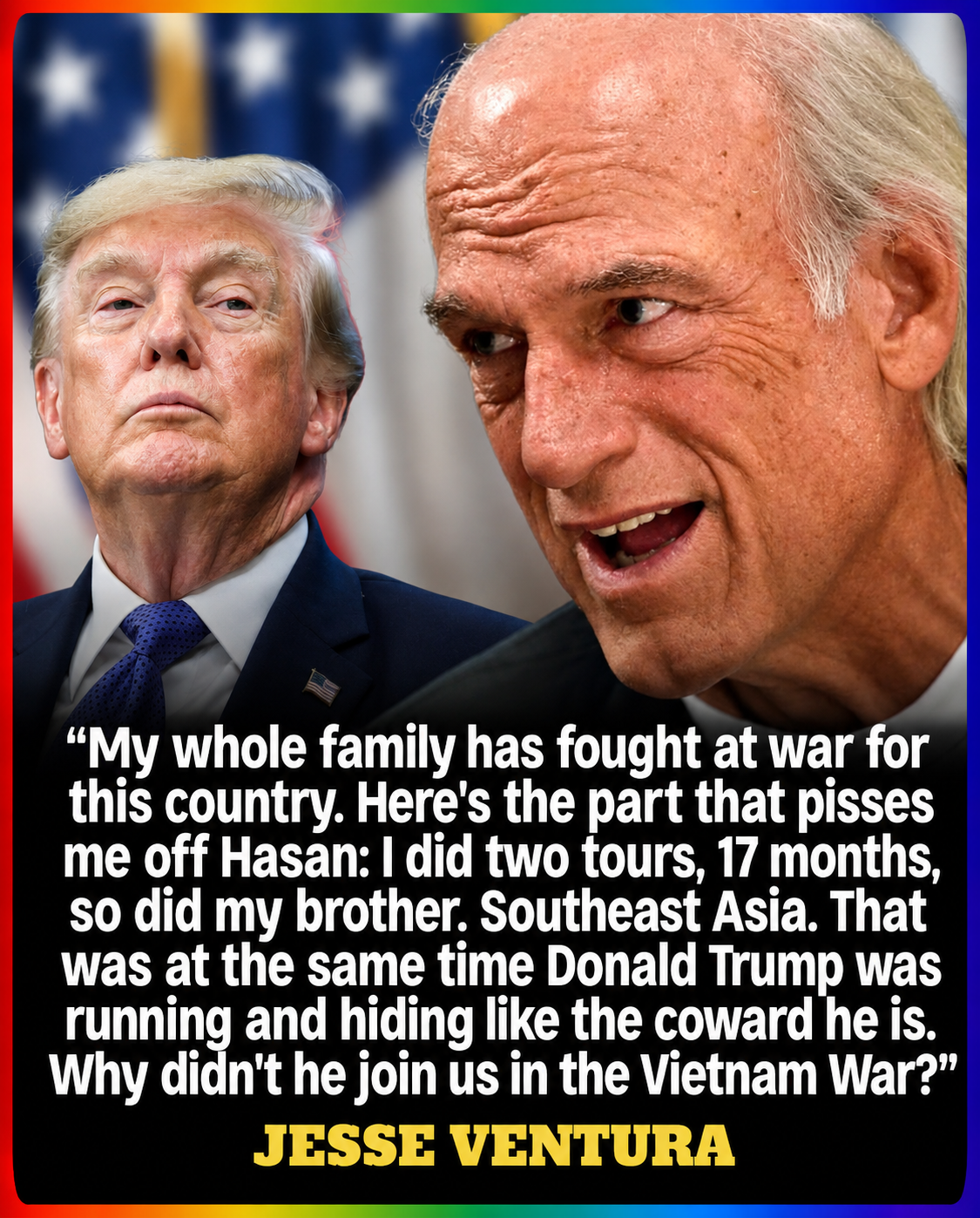
Former Minnesota governor and Navy veteran Jesse Ventura has reignited a long-running argument over Donald Trump’s Vietnam-era military deferments, saying his own service makes him especially angry when the president talks about military strength and leadership.

Ventura made the remarks during a recent livestream conversation with political commentator Hasan Piker. Clips from the exchange circulated widely online, drawing attention to Ventura’s blunt comparison between his military experience and Trump’s decision not to serve.
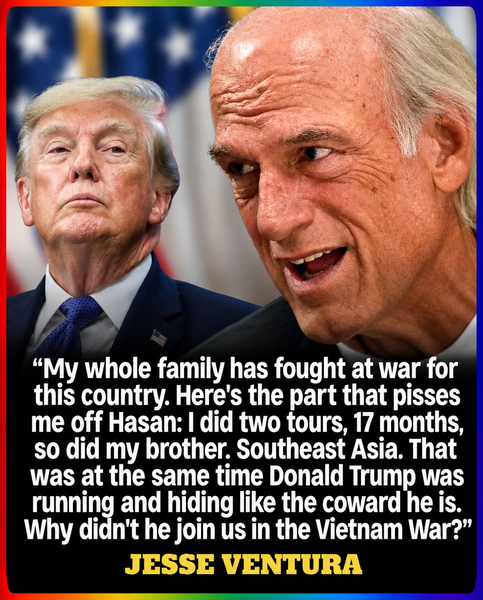
“I did two tours, 17 months. So did my brother. Southeast Asia,” Ventura said, describing the period when he and his brother served. He then challenged Trump directly: “Why didn’t he join us in the Vietnam War?”
The comments were personal as well as political. Ventura said that members of his family had served in wartime, framing his criticism around the sacrifices made by service members and their relatives while the country was engaged in the Vietnam conflict.
Trump did not serve in the armed forces during the Vietnam War era. Contemporary reporting and biographies have described four student deferments and a later medical deferment connected to bone spurs in his heels. The deferments meant he was not drafted for active military service.
During the livestream, Piker reminded Ventura of the bone-spur explanation. Ventura responded with a pointed joke about Trump’s ability to play golf, suggesting that the condition had not kept him away from the golf course. The remark became one of the most widely shared moments from the exchange.
Ventura’s language was unusually forceful, calling Trump a coward and a bully. Those are Ventura’s political judgments, not neutral descriptions of the president, and they reflect a long-running dispute about how military service should figure into assessments of political leaders.

The controversy touches a sensitive divide in American public life: the distinction between legally receiving deferments and the moral expectations some veterans place on people who later wield authority over the armed forces. Supporters of Trump’s position have pointed to the medical explanation; critics argue that his record remains relevant when he speaks about military courage.
Trump’s deferments have been debated for decades. The Vietnam-era draft system allowed certain students and people with medical classifications to postpone or avoid induction, and the rules changed over time. A person’s deferment history, by itself, does not establish what their health condition was or whether a specific medical judgment was justified.
Ventura’s own background gives his criticism a particular context. He served in the U.S. Navy during the Vietnam War period and later became known nationally as a professional wrestler before entering politics. He served as Minnesota governor from 1999 to 2003.
His remarks were not limited to Trump’s military history. In the broader discussion, Ventura criticized the Republican Party and argued that its actions around the January 6, 2021, attack on the U.S. Capitol raised serious constitutional concerns. Those comments were part of his wider political critique rather than a separate factual finding.
The livestream also ranged into other controversial topics, including Ventura’s longstanding skepticism about the official account of the September 11 attacks. Such claims have been disputed and should not be confused with the documented details of his military-service criticism.
The exchange quickly moved beyond the original broadcast as clips were reposted by political accounts and entertainment-news outlets. Short videos can make a heated remark travel far faster than the full conversation, while leaving viewers with less of the context around it.
Ventura’s argument rests on a question that has resurfaced repeatedly in American politics: should a leader’s personal record of military service—or non-service—affect how voters judge that leader’s statements about war? There is no single answer accepted by all voters, but the question can carry particular weight for veterans and military families.

Some Americans view service as a meaningful test of sacrifice and firsthand understanding. Others argue that military experience is not a prerequisite for civilian leadership and that elected officials should be judged primarily on their decisions, policies, and respect for constitutional limits.
The distinction matters because the president serves as commander in chief, but the role is civilian by design. The United States has long had presidents with varied military backgrounds, and public debate often returns to whether a leader’s experience offers insight—or whether judgment and accountability matter more.
Ventura’s own career has frequently blurred the line between entertainment and politics. His wrestling persona made him a recognizable public figure, while his governorship and later commentary gave him a platform to challenge political leaders in language that is often deliberately confrontational.
The latest comments also fit a broader pattern: Trump’s military deferments have remained a recurring target for critics, especially when he makes forceful claims about national security or military capability. Similar criticism has appeared in interviews and public statements by Ventura earlier in 2026.
At the same time, viral political clips should be read carefully. The quote shown in the graphic captures the core of Ventura’s complaint, but it is an edited presentation of a longer discussion. The strongest way to assess the exchange is to compare the clip with fuller reporting and the original conversation where available.
Whatever viewers think of Ventura’s tone, the episode has again placed a familiar issue in the spotlight: how a candidate’s past, personal explanations, and public rhetoric shape perceptions of credibility. The debate is likely to continue whenever questions of war, sacrifice, and presidential leadership return to the center of American politics.
Comments (0)
Loading comments...
May You Like
Zelensky’s Reported Oil-Strike Threat Puts Ukraine–U.S. Relations Under Fresh Scrutiny
Trump’s Oval Office vs. Obama’s: Inside the White House’s Golden Makeover
Trump’s ‘Zero Illegal Aliens’ Claim: What the Border Numbers Actually Show
Popular Posts