
Jimmy Kimmel–James Talarico Interview Surges Online After FCC Dispute
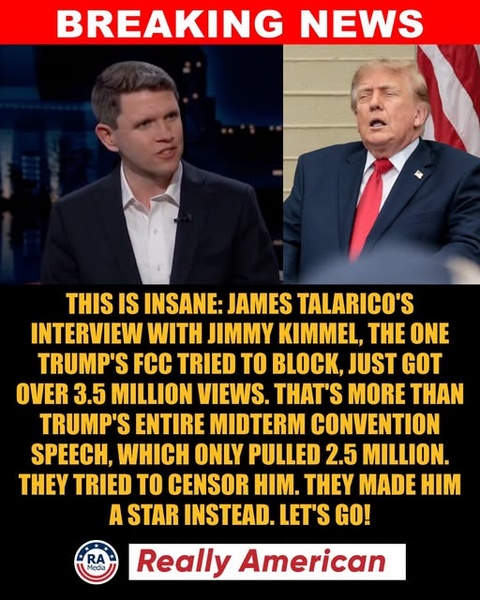
Jimmy Kimmel’s interview with Texas Senate candidate James Talarico has become a major political media story after ABC declined to broadcast the segment, citing concerns surrounding Federal Communications Commission pressure.
The interview was instead released on YouTube, where it quickly attracted millions of views and generated a broader debate about political speech, broadcast regulation, and the changing role of late-night television.
Kimmel said the FCC had threatened his show, ABC, and affiliated stations over the decision to feature Talarico, a claim that has intensified scrutiny of the regulator’s approach to political programming.
Reuters reported that the Republican-led FCC changed its interpretation in January, ending a long-standing exemption that had allowed daytime and late-night talk shows greater freedom when interviewing political candidates.
The equal-time rule generally requires broadcasters to provide comparable opportunities to opposing legally qualified candidates when they give airtime to one candidate, although important exceptions and legal questions remain.
Talarico is campaigning for the U.S. Senate in Texas, where he faces Republican Attorney General Ken Paxton in a closely watched contest that could influence control of the Senate after November’s elections.
The controversy is not Talarico’s first encounter with broadcast restrictions. Earlier this year, CBS moved his scheduled appearance with Stephen Colbert online after concerns about FCC rules and equal-time requirements.
That earlier interview became a striking example of the so-called Streisand effect, drawing millions of YouTube views after it was prevented from appearing on traditional broadcast television.
According to Reuters, Colbert’s interview had surpassed 9.5 million YouTube views by September, illustrating how attempts to limit broadcast exposure can sometimes produce substantially larger audiences online.
Kimmel’s decision followed the same basic pattern: the interview remained available to viewers, but the distribution platform changed from a regulated broadcast network to a digital video service.
By September 12, reports indicated that Kimmel’s Talarico interview had exceeded 4.3 million YouTube views, surpassing the television audience reported for President Donald Trump’s speech at the Republican midterm convention.
Trump’s convention address drew approximately 2.5 million viewers on Fox News during the speech, according to Nielsen figures cited by multiple reports, while other cable networks attracted smaller audiences.
The comparison is not perfectly equivalent because television ratings and YouTube views measure different forms of consumption, but the numbers nevertheless highlight the reach political content can achieve online.
The Talarico interview also carried political significance because the candidate used the conversation to discuss his Senate campaign, his Republican opponent, and attacks surrounding his public image.
Texas political coverage has increasingly focused on the Senate contest, with Talarico attempting to compete in a state where Republicans have maintained a strong statewide presence for decades.
The FCC controversy has also expanded beyond one television segment, with ABC’s parent company Disney challenging regulatory actions that it says amount to improper government pressure over editorial decisions.
Reuters reported that the FCC ordered early reviews of eight Disney-owned ABC station licenses, an unusual step that Disney has challenged in federal court as part of a broader dispute.
Critics argue that regulatory threats involving broadcast licenses could discourage networks from covering candidates or political issues aggressively, while the FCC maintains that it is enforcing existing communications rules.
The dispute has therefore become larger than a single late-night interview, raising questions about how traditional broadcasting rules should apply when political conversations increasingly move between television, streaming platforms, and social media.
For Talarico, the episode has once again transformed a restricted television appearance into a high-profile online event, demonstrating how attempts to limit political programming can sometimes amplify the very message they seek to contain.


Editor’s note: The supplied graphic contains a claim that the interview received “over 3.5 million views.” Current reporting indicates the figure had risen above 4.3 million YouTube views by September 12, 2026, so this article uses the newer reported figure.
Sources referenced: Reuters, Texas Tribune, New York Magazine, and Hindustan Times. The available reporting describes FCC pressure or threats alleged by Kimmel, rather than establishing that the FCC formally ordered ABC to censor the interview.
Comments (0)
Loading comments...
May You Like
Jack Smith Defends His Integrity as Trump Investigations Face Renewed Political Firestorm
Jack Smith Defends His Integrity as Trump Investigations Face Renewed Political Firestorm















