Joe Biden: The economy under his administration is much better
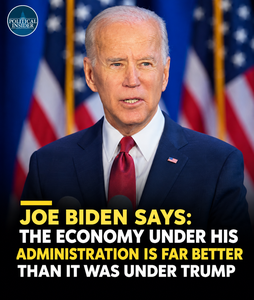
WASHINGTON — A graphic circulating online attributes a sweeping claim to former President Joe Biden: that the U.S. economy under his administration was “far better” than under Donald Trump. The underlying comparison requires context.
The Claim Behind The Graphic
The image presents Biden as saying his administration delivered a significantly stronger economy than Trump’s, framing the comparison as a straightforward assessment of presidential economic performance.


Biden did make comparisons between his economic record and Trump’s during a February 2026 speech in South Carolina, but fact-checkers found several of his specific claims were exaggerated or relied on outdated employment figures.
That distinction matters because presidential economic records involve multiple indicators, including employment, inflation, economic growth, wages, consumer spending and overall price levels.
Biden’s Record On Economic Growth
During Biden’s four years in office, real gross domestic product increased annually, with growth reaching 6.2% in 2021 before moderating to 2.5% in 2022, 2.9% in 2023 and 2.8% in 2024.
FactCheck.org calculated Biden’s average annual economic growth at about 3.6%, although much of the strongest growth occurred during the post-pandemic recovery period.
The same analysis noted that removing the pandemic-rebound year leaves average growth during Biden’s final three years around 2.7%, broadly comparable with the longer-term U.S. growth rate.
Employment Was Another Major Difference
The labor market expanded considerably during Biden’s presidency, although the employment numbers were heavily influenced by the reopening and recovery following pandemic-related disruptions.
FactCheck.org reported that employers added an average of nearly 329,000 jobs monthly during Biden’s four years, with particularly rapid hiring during 2021 and 2022.
However, Biden’s February comparison of job creation with Trump used figures that did not align with the latest revised Bureau of Labor Statistics data available at the time.
According to FactCheck.org, employment increased by slightly more than 1.2 million between January 2024 and January 2025, rather than the 2.2 million Biden cited for his final year.
For Trump’s first full year back in office, employment increased by approximately 359,000 between January 2025 and January 2026, according to the same analysis.


Inflation Complicates Biden’s Record
Inflation remains one of the biggest challenges when evaluating Biden’s economic record because consumer prices accelerated sharply during his presidency, reaching a 9.1% annual increase in June 2022.
That increase was the highest 12-month CPI rise since 1981, according to Bureau of Labor Statistics data cited by FactCheck.org.
By the end of Biden’s presidency, however, annual inflation had fallen substantially, reaching about 3% when Trump returned to office in January 2025.
The important distinction is that falling inflation does not mean prices return to previous levels; it means prices continue rising more slowly than before.
What Has Happened Under Trump?
Trump inherited an economy with relatively low unemployment, but economic conditions have changed during his second term, with inflation remaining above the Federal Reserve’s long-term target.
FactCheck.org reported that real GDP growth slowed to an annual rate of 2.2% in 2025, while unemployment reached 4.3% in January 2026.
By August 2026, the unemployment rate stood at 4.1%, while employers added 162,000 nonfarm jobs during the month, according to the latest BLS employment report.
August’s job gain was stronger than the previous twelve-month average, although employment trends vary considerably across industries and individual months can be revised.
Prices Remain A Central Issue
The latest inflation data show that consumer prices increased 3.4% over the twelve months ending August 2026, while food prices increased 2.7% during the same period.
Energy prices remain particularly significant, with the energy index rising 16.3% over the year and gasoline prices increasing 27.4% from August 2025.
These figures help explain why Americans can simultaneously experience continued economic growth and employment while still feeling financial pressure from expensive housing, food, gasoline and other necessities.
Trump’s Own Economic Claims
Trump has repeatedly argued that his administration inherited an economy damaged by inflation and that his policies have improved prices, investment and economic growth.
During his 2026 State of the Union address, Trump described the economy as entering a “golden age” while emphasizing inflation, stock-market performance and other economic indicators.
However, Reuters reported that voters continued expressing dissatisfaction with high living costs, even as Trump promoted improvements in inflation and financial markets.
No Simple Presidential Scorecard
Economists generally caution against attributing every economic development directly to a president because monetary policy, global events, consumer behavior, technological changes and previous administrations can influence results.
Biden benefited from the powerful post-pandemic recovery, while Trump’s current economic record is unfolding amid geopolitical tensions, higher energy prices and changing global trade conditions.


The available data therefore support a mixed comparison: Biden oversaw strong employment and economic growth alongside a major inflation surge, while Trump has faced slower growth and continuing affordability pressures.
The viral graphic’s broad statement that Biden’s economy was “far better” is ultimately a political judgment rather than a single measurable economic fact.
Different indicators can produce different comparisons, depending on whether the focus is employment, inflation, real GDP growth, wages, household purchasing power or financial-market performance.
What the latest evidence establishes is that both administrations experienced significant economic gains and serious economic challenges, making sweeping claims about one period being categorically better difficult to substantiate without specifying the measure.
For consumers, the most relevant question may be less about which president receives credit and more about whether incomes, employment opportunities and purchasing power are improving relative to the costs households face today.
Comments (0)
Loading comments...
May You Like

FIGHT OVER OBAMA’S IRAN POLICY

Shocking news from Ohio: an unexpected development ahead of Trump's rally