
JORDAN WRIGHT'S STRANGE EYE MOVEMENTS—12 POLITICIANS SHOW THE SAME BEHAVIOR!
JORDAN WRIGHT'S STRANGE EYE MOVEMENTS—12 POLITICIANS SHOW THE SAME BEHAVIOR!
NEW YORK — November 24, 2026 — New York State Assemblyman Jordan J.G. Wright has become the subject of an unexpected national controversy after footage showing an unusual movement of his eyes during a press conference by Mayor Zohran Mamdani circulated widely across social media.
The incident occurred on November 20 at New York City Hall, where Mamdani announced proposals concerning the future of the Rikers Island jail complex. Wright was standing behind the mayor when his eyes briefly appeared to roll upward, attracting attention from viewers watching recordings of the announcement.
Over the following weekend, the footage spread across social media platforms, generating numerous interpretations and prompting Wright to respond publicly.
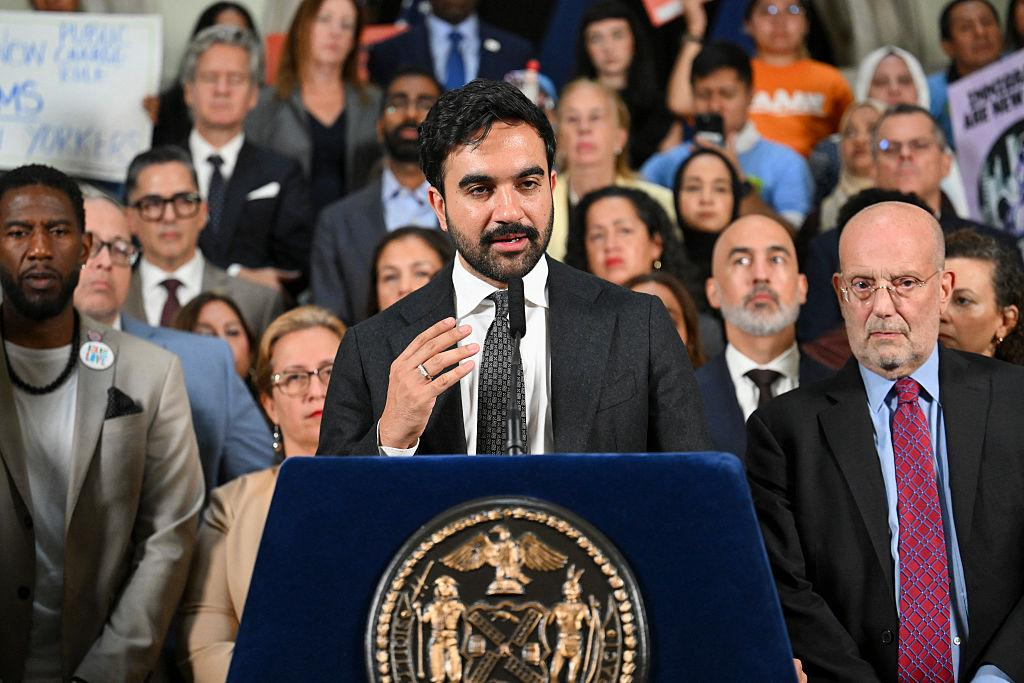
During the announcement, Wright stood among the people assembled behind the mayor. As Mamdani addressed reporters, Wright appeared to smile briefly before blinking and moving his eyes upward.
The movement lasted only a moment, but its appearance in recorded footage attracted considerable attention.
Short extracts from the press conference subsequently circulated independently of the mayor's policy announcement. Instead of focusing on the future of New York City's detention facilities, many viewers concentrated on Wright's facial expression.
The transformation of an ordinary background moment into a widely discussed political video illustrates how social media distribution can redefine the significance of a public event.
As discussion surrounding the footage intensified, Wright responded to questions from the New York Post on Sunday, November 22.
“I have no idea what was going on in that video. I'm really not sure,” Wright told the publication.
The assemblyman rejected extraordinary claims circulating about his identity and redirected attention toward his legislative work.
Among the accomplishments he highlighted was his involvement in securing $4 million for an environmental justice center associated with WE ACT in Harlem.
His response received additional coverage from American and international media outlets, further extending the reach of the original recording.
The statement was notable because Wright did not attempt to provide a technical or medical explanation for the movement. Instead, he addressed the speculation directly and emphasized his responsibilities as an elected representative.
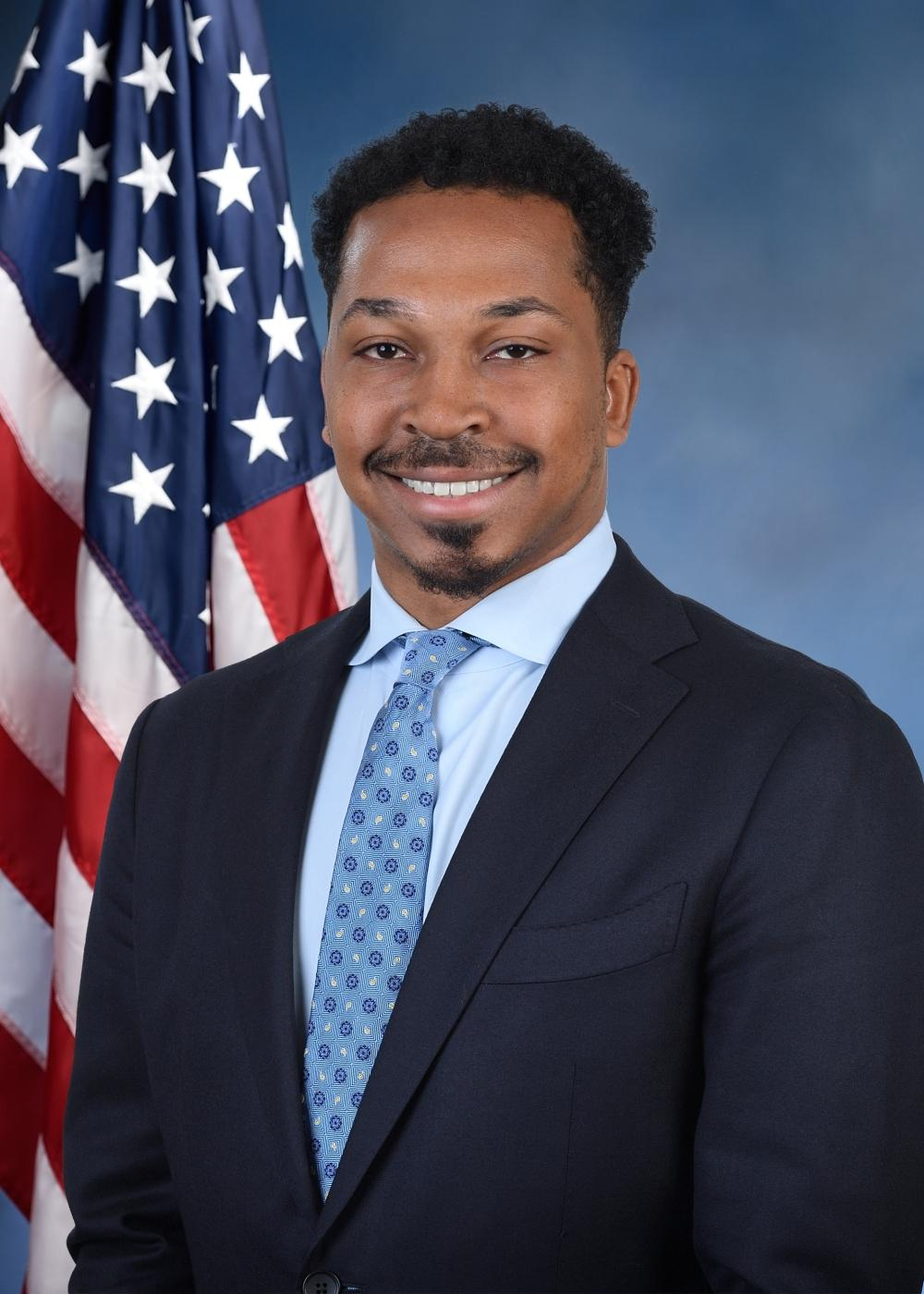
Wright, 32, is a Democratic member of the New York State Assembly representing the 70th Assembly District in Manhattan, which includes parts of Harlem.
His involvement in New York politics extends across generations. His father, Keith L.T. Wright, previously served in the State Assembly, while his grandfather, Bruce Wright, served as a New York judge.
The assemblyman was reelected in November 2026 after defeating a challenger in the Democratic primary and subsequently running without opposition in the general election.
His legislative priorities include issues affecting Harlem residents, such as affordable housing, public safety, healthcare access and environmental justice.
Before the video circulated, Wright was primarily known within the context of state and local politics. His appearance at Mamdani's press conference unexpectedly introduced him to an international audience, many of whom had previously been unfamiliar with his political career.
One important distinction in evaluating the controversy is the difference between the complete recording and the shorter versions distributed across social media.
The mayor's office published footage of the press conference. According to reporting by HuffPost, the movement attracting attention appears around the 1-minute, 54-second mark in one version of the official video.
The availability of a longer recording provides viewers with an opportunity to observe the sequence in its original context rather than relying exclusively on shortened extracts.
A video can establish that a particular visible movement occurred or appeared to occur. It cannot necessarily establish the physiological process responsible for that movement, the intentions of the individual or any relationship with other people displaying comparable expressions.
Those conclusions would require different forms of evidence.
In Wright's case, the original footage offers a starting point for examining the controversy, but the significance attributed to individual frames extends considerably beyond what the recording establishes.

As speculation spread, another explanation emerged involving a natural movement of the human eye known as Bell's phenomenon.
The phenomenon generally involves an upward rotation of the eyes associated with eyelid closure. It is considered a protective physiological response that helps move the cornea away from potential exposure.
Under ordinary circumstances, the movement may pass unnoticed because the eyelids cover much of the eye. Depending on the timing of a blink and the position of a camera, however, portions of the movement may become visible.
A recording that captures this brief transition can produce an unfamiliar appearance, particularly when viewers examine individual frames or repeatedly replay the same moment.
Several media reports have discussed Bell's phenomenon as one possible explanation for why eye movements can appear unusual in recorded footage.
That general physiological explanation does not constitute a medical assessment of Wright. Determining the precise cause of his movement would require evidence beyond the published video.
Modern political events are frequently recorded by multiple cameras and distributed through television broadcasts, official livestreams and social media accounts. Each distribution process may produce differences in image quality.
Digital compression can reduce visual information, while changes in frame rate can influence how rapid movements appear. Lighting conditions, reflections, camera angles and digital magnification can also affect the appearance of facial features.
The eyes are particularly sensitive to these effects because they contain small, reflective surfaces that can change appearance rapidly as a person moves or blinks.
A movement that appears ordinary at normal playback speed may look considerably different when slowed down or enlarged. Conversely, technical artifacts may become more noticeable when a compressed recording is repeatedly copied.
Establishing whether such effects contributed to a particular video requires examination of the source material. Visual appearance alone is insufficient to identify the recording technology or determine whether footage has been altered.
 The suggestion that 12 American politicians have displayed comparable behavior introduces a separate evidentiary question.
To establish such a finding, investigators would first need a clearly identified collection of recordings, including the names of the individuals, the dates of the events and the original sources of the footage.
Each recording would then need to be evaluated using consistent criteria. An upward glance, a partial blink and an involuntary movement may appear comparable in isolated images while representing different ordinary actions.
Researchers would also need to distinguish genuine similarities from those created through editing, selective timing or differences in recording quality.
The reporting on Wright's appearance does not identify an authenticated group of 12 lawmakers demonstrating a common unusual condition.
Even if 12 separate recordings contained visually similar eye movements, that observation alone would not establish that the politicians shared a medical condition, coordinated behavior or involvement in a common organization.
The significance of any comparison would depend on the quality and completeness of the underlying evidence.
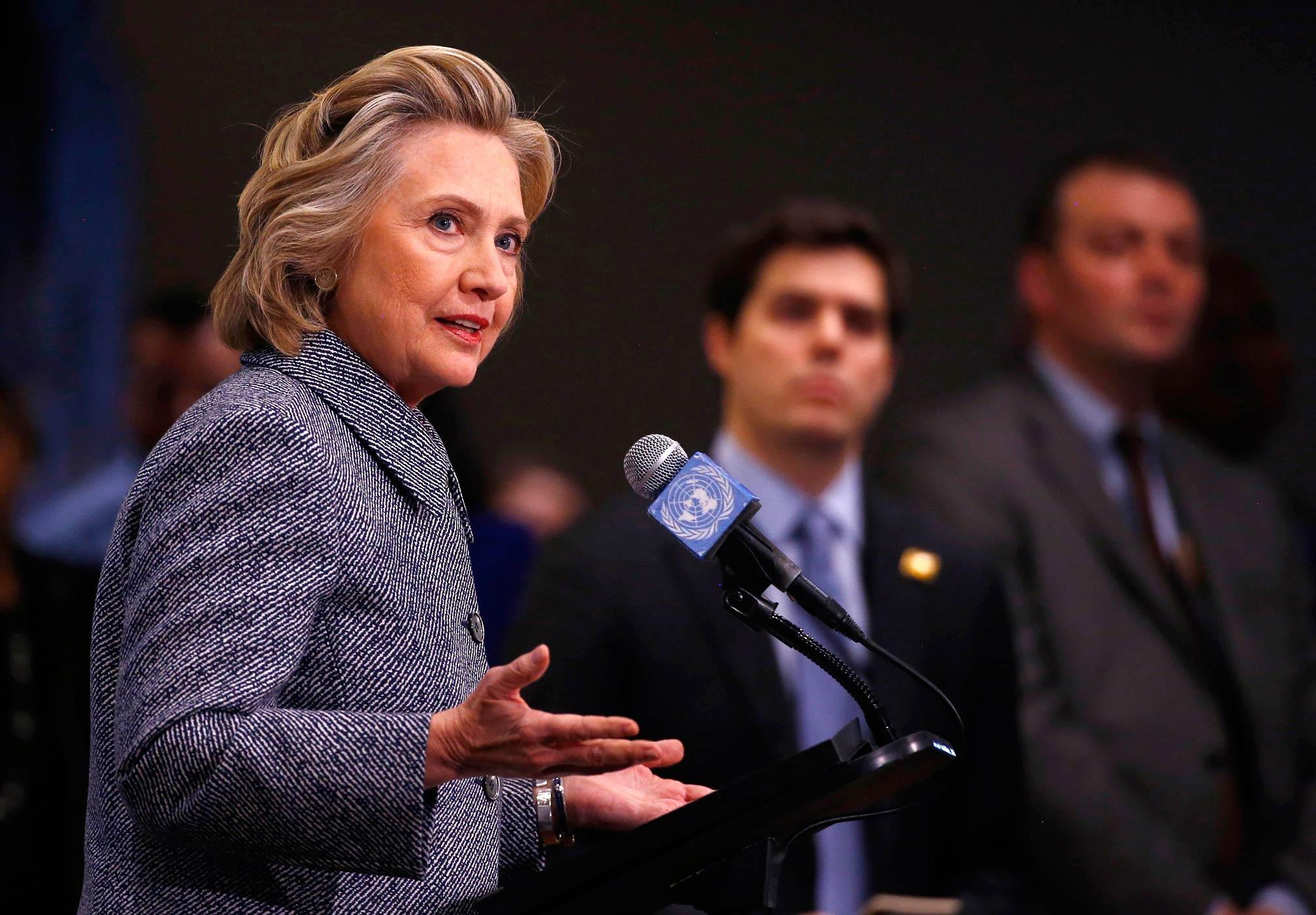
Former Secretary of State Hillary Clinton has been a prominent figure in American political coverage for decades. Her extensive history of public appearances has produced an enormous collection of photographs, interviews, campaign recordings and televised speeches.
That volume of material makes it possible to locate recordings featuring almost any ordinary facial expression or movement.
However, comparing selectively chosen footage of Clinton with the recording of Wright would not independently establish a connection between them.
A documented political relationship would ordinarily require information concerning meetings, communications, organizational involvement, campaign activity or other identifiable professional interactions.
A shared political party affiliation, where applicable, would not explain similarities in physical movements captured on camera.
The reporting concerning the November 20 press conference does not identify Clinton as having any role in the event or in the controversy surrounding Wright's appearance.
Any meaningful examination of a proposed relationship would therefore need to begin with documented political activity rather than visual comparisons.
The availability of thousands of hours of political footage creates an important statistical consideration.
Public officials regularly appear before cameras during speeches, interviews, hearings and campaign events. Each appearance generates hundreds or thousands of individual frames containing ordinary facial and bodily movements.
Searching through that material for a particular expression can eventually produce numerous examples, especially when the criteria for selecting those examples are flexible.
The resulting collection may appear significant without demonstrating that the selected behavior occurs more frequently among politicians than among other people.
A reliable comparison would need to consider how frequently similar movements occur in an appropriate comparison group. It would also need to account for the amount of footage examined.
Without those controls, a compilation of 12 unusual-looking moments may reveal more about how the recordings were selected than about the people appearing in them.
This distinction is particularly relevant when short political videos are presented as evidence of a coordinated phenomenon.
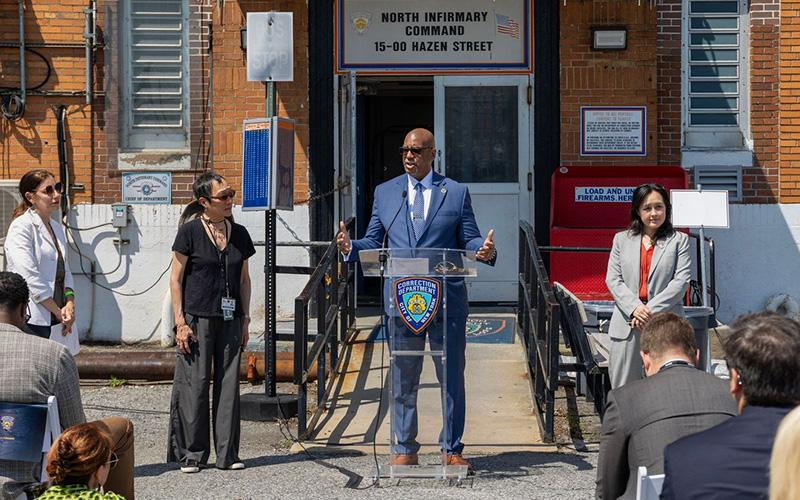
While online attention shifted toward Wright, Mamdani's original announcement addressed a substantial public policy issue affecting New York City.
The mayor proposed reducing the city's jail population by approximately 2,500 people over five years as part of an effort to close the Rikers Island complex by 2032.
Under the proposed arrangements, approximately 4,100 remaining detainees would be accommodated in four smaller borough-based detention facilities.
The proposals involve questions concerning criminal justice administration, public safety, detention conditions, construction requirements and the city's financial resources. Implementation would also involve legislative and administrative decisions.
These were the principal subjects of the press conference at which Wright appeared.
The controversy surrounding Wright revived longstanding conspiracy narratives alleging that powerful individuals conceal extraordinary identities.
Such claims existed well before the development of modern social media. Digital platforms, however, have provided new methods for distributing short recordings accompanied by interpretations that may have little connection to the original event.
An unusual-looking image can attract attention before viewers have an opportunity to examine its source. Repeated playback, close-up crops and dramatic captions may further reinforce the impression that a particular detail possesses unusual significance.
Once a recording circulates widely, subsequent coverage may introduce it to additional audiences who were unfamiliar with the original allegations.
In Wright's case, mainstream and international news organizations covered the controversy after the lawmaker responded publicly. Much of that reporting focused on the spread of the claims and his rejection of them, rather than treating the claims themselves as established findings.
A formal examination of the recording would begin with the highest-quality available source rather than a heavily compressed social media extract.
An analyst could compare the original video with later versions to determine whether cropping, playback speed, frame interpolation or other modifications affected how the movement appeared.
Recordings from additional cameras, if available, could provide another perspective on the same moment. Consistency between those recordings might help establish which aspects of the appearance resulted from the physical movement and which could be associated with the recording process.
Such an examination could address technical questions concerning the footage. It would not necessarily establish why Wright moved his eyes in a particular manner.
Medical explanations, intentional gestures and ordinary physiological responses involve considerations outside the scope of video authentication alone.
The difference between verifying a recording and interpreting the behavior it contains remains central to the controversy.
For elected officials, widespread circulation of a brief personal expression can create an unexpected challenge to public communication.
Politicians traditionally expect their public appearances to generate discussion about speeches, votes and policy positions. Social media platforms can redirect that attention toward incidental behavior having little relevance to their official duties.
Wright's response sought to return the discussion to his work as a representative, particularly his involvement in environmental justice initiatives in Harlem.
His experience also raises broader questions concerning the standards used when evaluating claims about public officials. Political accountability depends on access to reliable information, documented decisions and evidence that can withstand independent scrutiny.
Brief recordings can contribute valuable evidence when they establish what someone said or did in a relevant context. Their usefulness diminishes when conclusions extend beyond what the images can demonstrate.
The November 20 footage establishes a straightforward sequence of events. A New York state lawmaker appeared behind the mayor during a public announcement, an apparently unusual eye movement was recorded, and the resulting clip attracted widespread attention.
Wright subsequently responded to questions about the footage. Media organizations examined the controversy, and discussions of normal human eye movements introduced possible context for its appearance.
The central questions involving 12 other politicians and Hillary Clinton would require additional documentation before any meaningful connection could be established.
The availability of the longer press conference recording represents an important resource for understanding the original incident. It allows viewers to examine the movement alongside the surrounding event rather than treating an isolated moment as a complete account.
For Wright, the controversy emerged from a few seconds of footage during an announcement about New York City's jail system. For the wider public, it demonstrates the importance of distinguishing observable events from the interpretations subsequently attached to them.
The lasting significance of the incident may concern less what appeared in the assemblyman's eyes than how rapidly an ordinary political recording became the subject of extraordinary claims.
Comments (0)
Loading comments...
May You Like

PUTIN RAISES LUKOIL DEAL WITH TRUMP’S ENVOYS AS UKRAINE PEACE TALKS CONTINUE

IRAN THREATENS SHIPS OVER HORMUZ PASSAGE AFTER CLAIMING A MINE STRIKE













