
Judge Extends Block on Trump-Backed Postal Service Mail-In Ballot Requirements
A federal judge in Massachusetts has dealt another blow to the Trump administration's efforts to tighten mail-in voting rules, issuing a preliminary injunction that blocks the U.S. Postal Service from enforcing new requirements backed by President Donald Trump just weeks before the November midterm elections.
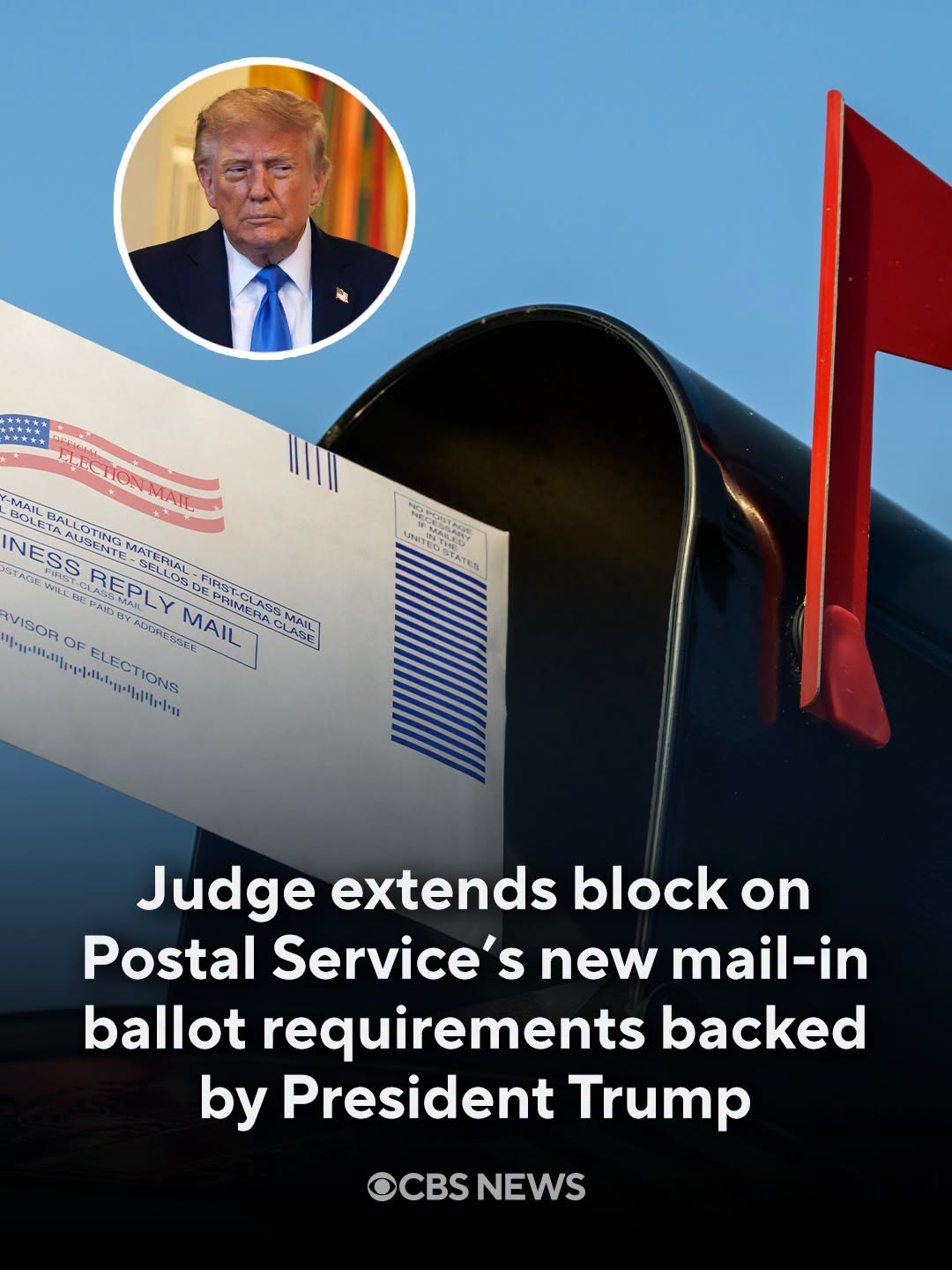
BOSTON – A striking graphic circulating on CBS News this week captures a major legal setback for the Trump administration: "Judge extends block on Postal Service's new mail-in ballot requirements backed by President Trump." The report is accurate. U.S. District Judge Indira Talwani on Friday issued a preliminary injunction that prevents the USPS from implementing sweeping new rules that would have required states to redesign ballot envelopes with unique barcodes and submit voter lists to an online portal for verification .
"The Constitution's Elections Clause tasks the States with the role of election administration, subject only to Congress's superseding legislation, and the executive has no inherent authority in this joint endeavor," Talwani wrote in her 49-page ruling . The judge warned that enforcing the mandates while ballots are already being mailed would "nearly guarantee significant disenfranchisement for eligible voters" .
What the New Rules Would Have Done
The Postal Service's final rule, issued in late August following President Trump's March executive order, would have dramatically overhauled how mail-in ballots are processed . The requirements included:
-
Envelope redesign: Every mail-in ballot envelope would need a unique, trackable barcode
Voter enrollment portal: States would be required to upload voter names, addresses, and barcode data to a USPS database
Verification and rejection authority: Postal workers could reject any ballot mailings that didn't comply with the new requirements and return them to election offices
The Postal Service said the rules were designed to improve election security and prevent noncitizens from voting — though the judge noted there was "no evidence relating to fraudulent mail voting" in the record to justify the rushed implementation .
Why the Judge Blocked the Rules
In her ruling, Talwani found that the Postal Service had overstepped its constitutional authority . She emphasized that the Constitution gives states — not federal agencies — the primary authority to administer elections, subject only to congressional oversight.
The judge also cited practical concerns. Local election officials are already consumed with voter registration, early voting, and ballot processing, making compliance with complex new rules practically impossible with the November election approaching .
During a hearing Thursday, the judge pressed Justice Department lawyers on whether the Postal Service's new online ballot portal was even operational. They could not confirm it was ready . A whistleblower also warned Congress that the portal is "untested" and its development "rushed," raising fears of "potentially catastrophic problems" .
A Coalition of States Fought Back
The lawsuit was led by a coalition of 24 Democratic-led states and the District of Columbia, with California Attorney General Rob Bonta and New York Attorney General Letitia James playing key roles .
"This ruling keeps Oregon's elections exactly where they belong: in Oregon's hands," said Oregon Attorney General Dan Rayfield in a statement.
The Trump administration has already asked the Supreme Court to intervene and lift the temporary restraining order, arguing the rule is necessary to combat voter fraud . The high court's conservative majority last month lifted a prior order Talwani issued, but that ruling was based on a procedural issue — the rule had not yet been finalized at the time .
What Happens Next?
For now, the requirements remain blocked. Mail voting will proceed under existing state rules, and voters can expect their ballots to arrive and be processed the way they always have. North Carolina became the first state to begin mailing ballots on Friday . Not a single state has announced it will voluntarily comply with the new USPS system .
The Bottom Line
| What the graphic shows | What actually happened |
|---|---|
| Judge blocked USPS mail-in ballot rules | Yes — preliminary injunction issued Sept. 4, 2026 |
| Rules were backed by President Trump | Yes — stemmed from March 2026 executive order |
| 24 states challenged the rules | Yes — coalition led by Democratic attorneys general |
| Postal Service portal wasn't ready | Yes — judge noted it was untested and not operational |
| Supreme Court appeal likely | Yes — Trump administration filed emergency request |
The ruling is a significant victory for voting rights advocates and state election officials who argued that the new requirements would create chaos and disenfranchise millions of voters. But the legal battle is far from over. With the Supreme Court now involved and the midterm elections rapidly approaching, the fate of mail-in voting rules could shift again at any moment.
For now, however, voters can cast their ballots by mail under the same rules they've used for years.
Comments (0)
Loading comments...
May You Like

OBAMA STUNS ON INSTAGRAM: MESSAGE MARKING 34-YEAR MILESTONE SPARKS A BUZZ

TRUMP’S OHIO WARNING UNDER THE SPOTLIGHT

South Korea–Ukraine Rift Deepens Over North Korean POW Transfer as PURL Draws New Scrutiny












