Kevin Sorbo Questions Accountability Standards for Politicians in Viral Social Media Post
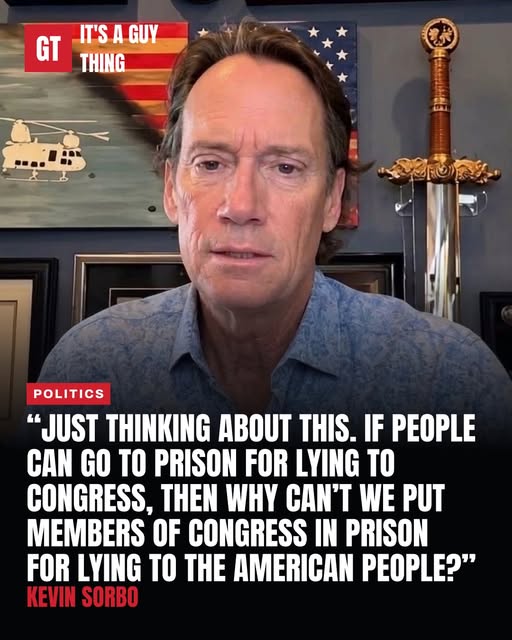
Actor and conservative commentator Kevin Sorbo has drawn attention online after sharing a statement comparing legal penalties for lying to Congress with what he described as a lack of accountability for elected officials who mislead voters.
The quote shown in the image reads: “If people can go to prison for lying to Congress, then why can’t we put members of Congress in prison for lying to the American people?”
The statement reflects a political opinion rather than a legal proposal, but it touches on a long-running debate in the United States about truthfulness, ethics, and accountability in public office.
Under U.S. law, knowingly making false statements to Congress or federal investigators can lead to criminal charges, including perjury, obstruction of justice, or making false statements to federal authorities.
Several high-profile figures from both political parties have faced investigations or prosecutions over false testimony, misleading statements, or obstruction-related allegations in recent decades.
However, political promises, campaign rhetoric, or disputed public statements by elected officials are generally treated differently under American law and are usually addressed through elections, ethics investigations, censure, or impeachment rather than criminal prosecution.
Legal scholars have long argued that criminalizing broad political speech could raise significant First Amendment concerns and create difficult questions about defining what constitutes a “lie” in politics.
Supporters of stronger accountability measures argue that elected officials should face greater consequences when they knowingly spread false information that affects public trust or government decision-making.
Critics, however, warn that giving governments the power to prosecute politicians for misleading statements could be abused for partisan purposes and threaten free political debate.
The issue has become increasingly prominent in recent years as misinformation, political polarization, and declining public trust in institutions have fueled calls for reform.
Public opinion surveys have repeatedly shown that many Americans believe honesty and transparency among elected officials are important concerns regardless of party affiliation.
Congress already operates under ethics rules, disclosure requirements, and oversight mechanisms, though critics from across the political spectrum often argue that those systems are not strong enough.
Members of Congress can face investigations by ethics committees, and in severe cases lawmakers may be censured, fined, or expelled by their colleagues.
Expulsion, however, is rare and requires a two-thirds vote in the House of Representatives or Senate.
Criminal charges against lawmakers generally occur when there is evidence of conduct that violates existing laws, such as bribery, corruption, fraud, or campaign finance violations.
Sorbo’s comment therefore reflects a broader public frustration about political accountability rather than a specific legislative proposal currently under consideration.
The viral image also illustrates how social media posts often use provocative questions to encourage debate and engagement among audiences.
Political accountability remains a recurring issue in American elections, with candidates from both parties frequently promising ethics reforms, transparency measures, and stronger oversight.
Whether through elections, institutional reforms, or legal changes, the question of how democracies hold leaders accountable continues to be widely debated.


Key Context
- Speaker: Kevin Sorbo, actor and conservative commentator.
- Nature of statement: Personal political opinion.
- Legal reality: Lying to Congress under oath can be a crime, while political statements are generally judged by voters, ethics rules, and elections.
- Broader issue: Public trust, political accountability, and debate over standards for elected officials.
Comments (0)
Loading comments...
May You Like

South Korea–Ukraine Rift Deepens Over North Korean POW Transfer as PURL Draws New Scrutiny
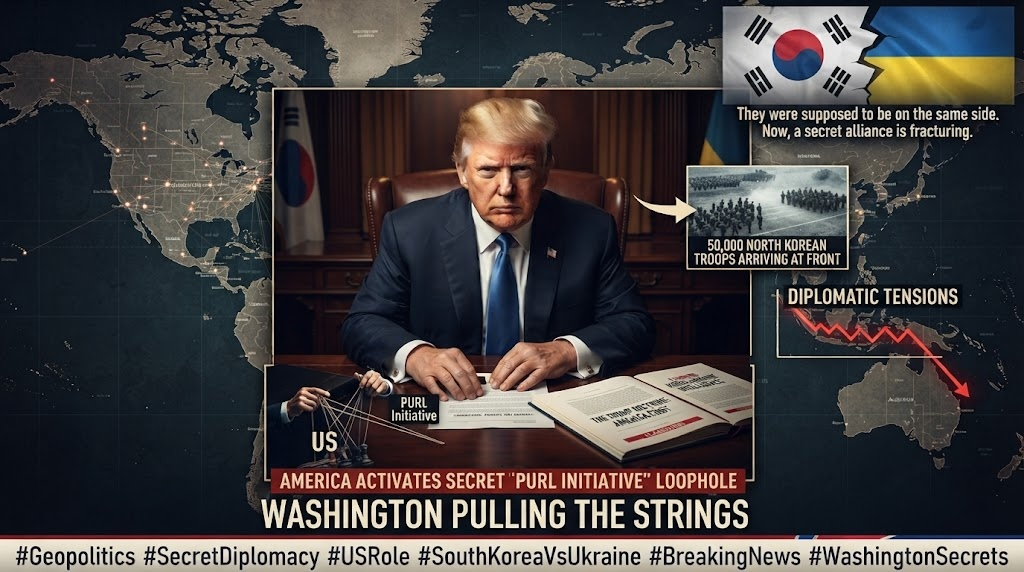
South Korea–Ukraine Rift Deepens Over North Korean POW Transfer as PURL Draws New Scrutiny
Shocking news from Ohio: an unexpected development ahead of Trump's rally