
NBA Champion Kyle Kuzma Challenges Obama’s Michigan Campaign Message, Putting Poverty and Religious Representation in the Spotlight
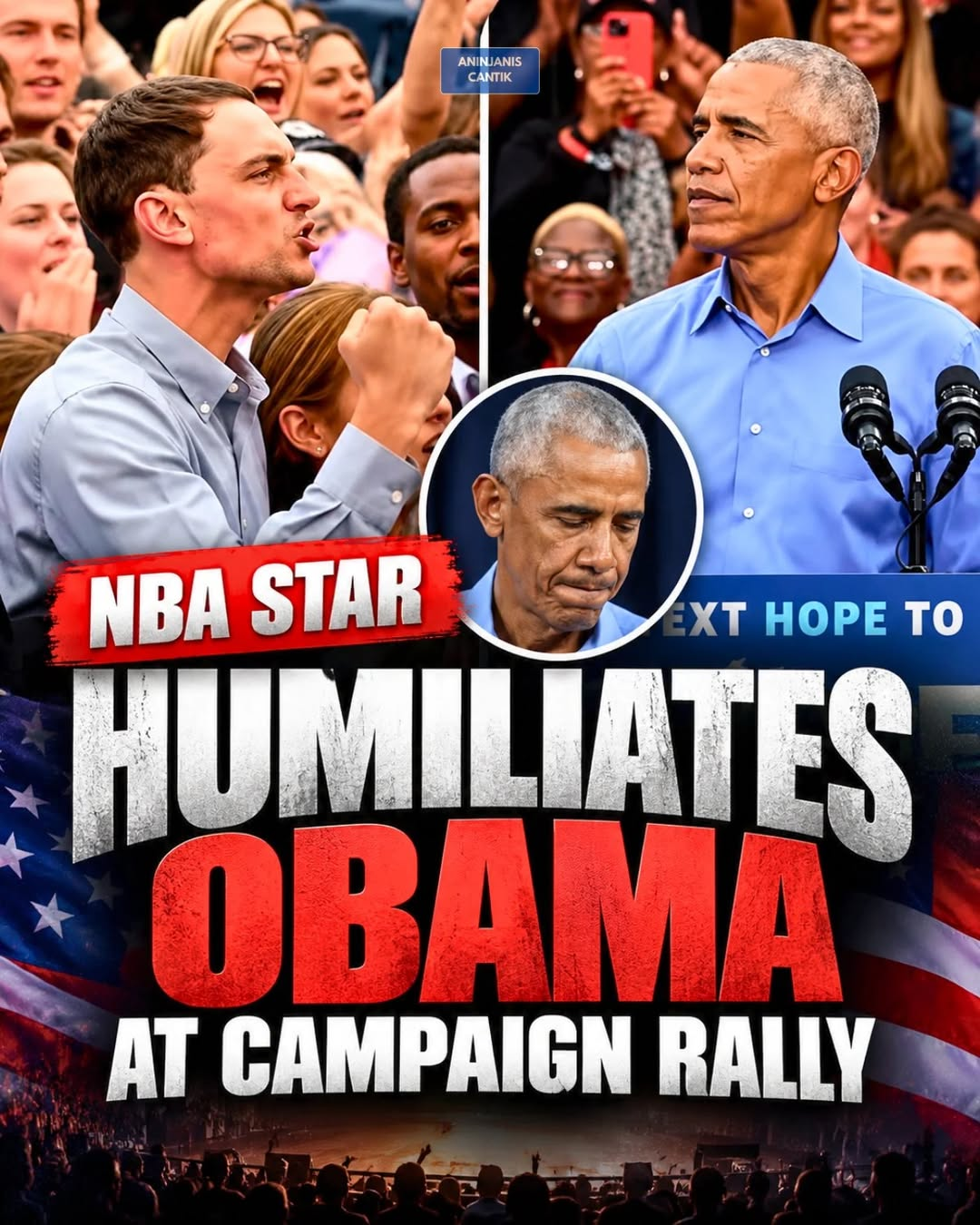
A political disagreement involving former President Barack Obama and NBA champion Kyle Kuzma has brought an unexpected sports figure into Michigan’s closely watched 2026 election campaign. Kuzma, a Milwaukee Bucks forward who grew up in Flint, Michigan, publicly criticized Obama’s remarks about the religious backgrounds of two Democratic politicians, arguing that economic hardship should receive greater attention in the state’s campaign debate.
The dispute began after Obama appeared at a Democratic rally in Detroit on October 24 to support Senate nominee Abdul El-Sayed and gubernatorial candidate Jocelyn Benson. During the event, Obama highlighted the possibility of El-Sayed, who is Muslim, and Senator Elissa Slotkin, who is Jewish, working together in the U.S. Senate.
Kuzma responded on October 25 with a post on X, describing the message as a “desperate psyop” and “unbearable to watch.” He argued that Michigan voters were facing serious economic challenges, including poverty, and questioned why a candidate’s religious identity was receiving so much attention.
The exchange quickly attracted coverage from sports and political outlets. But the viral graphic accompanying the story exaggerates what happened: Kuzma did not publicly confront Obama at the rally or deliver a speech that visibly humiliated the former president. His criticism came through a social-media post after Obama’s appearance.
What Obama actually said in Detroit
Obama spoke at Cass Technical High School in Detroit as part of a campaign appearance supporting Michigan Democrats ahead of the November 3 midterm elections.
One of the candidates he promoted was Abdul El-Sayed, a physician and former Detroit-area public health official who won the Democratic nomination for the U.S. Senate. Obama also discussed Senator Elissa Slotkin, emphasizing that El-Sayed is Muslim and Slotkin is Jewish.
“Imagine the power duo of Abdul and Elissa. You got a Muslim man, a Jewish woman, fighting for you in the US Senate. That’s something, Michigan, you can be proud of!” Obama told the crowd, according to published reports.
The former president’s remarks were part of a broader defense of El-Sayed, who had faced criticism and attacks involving his religion and background. Obama drew a comparison with the false claims about his own identity and birthplace that circulated during his political career, arguing that candidates should not be judged through prejudice or misinformation.
His message therefore had two dimensions: promoting religious representation in government and challenging attacks directed at a candidate because of his faith. Kuzma focused on the first dimension, arguing that the campaign should give greater attention to economic conditions.
Kuzma’s criticism: Why are economic problems not getting more attention?
Kuzma’s post was direct. The Flint native argued that the emphasis on a Muslim-Jewish political partnership was disconnected from the economic difficulties facing many Michigan residents.
In his message, he wrote that “1 in 4 black people in Michigan are below the poverty line” and questioned why religious identity was being presented as such a prominent campaign message.
He also argued that voters were more concerned about their financial circumstances than the religious backgrounds of politicians seeking office.
The post was a personal political criticism, not a statement made on behalf of the Milwaukee Bucks or the NBA. Nor does Kuzma’s opinion establish that all Michigan voters share his view. His comments nevertheless touched on a real question facing campaigns: how to discuss representation and inclusion while also addressing the immediate economic concerns of households.
Kuzma’s connection to Michigan gave his comments an additional local dimension. Born in Flint, he has a personal background in the state he was discussing, although that does not make his assessment representative of the wider population.
Is Kuzma’s poverty statistic accurate?
The central economic figure in Kuzma’s post deserves closer examination.
His claim that approximately one in four Black Michigan residents live below the poverty line is broadly consistent with figures reported from the U.S. Census Bureau’s 2024 American Community Survey. One report citing those data put the poverty rate for Black or African American residents in Michigan at approximately 26.3%.
That is close to one in four, although the precise percentage depends on the population definition and survey period being used. It should not be interpreted as a figure for all Michigan residents, nor does it mean that every Black community in the state experiences poverty at the same rate.
The statistic highlights an important economic challenge, but poverty is only one measure of financial hardship. Housing costs, employment, wages, healthcare expenses, food prices and access to transportation also affect household stability.
Kuzma’s broader argument was that these concerns deserve sustained attention from political candidates. Whether voters agree with his criticism of Obama’s remarks is a separate question from whether the poverty statistic is broadly supported by the available data.
The Michigan Senate contest behind the argument
The dispute is unfolding during a competitive Senate campaign that could have implications for control of Congress.
El-Sayed is the Democratic nominee challenging Republican Mike Rogers for Michigan’s U.S. Senate seat. The campaign has involved debates over healthcare, the economy, immigration, religious identity and the candidates’ positions on national issues.
Obama’s appearance was intended to energize Democratic supporters and help El-Sayed build support ahead of Election Day. The former president also backed Jocelyn Benson, the Democratic gubernatorial nominee.
The religious backgrounds of El-Sayed and Slotkin have become part of the political conversation because Obama explicitly highlighted them. For supporters of the Democratic message, the pairing represents the possibility of people from different religious backgrounds serving together in national government. For critics such as Kuzma, however, the emphasis risks distracting from material problems that voters face.
Those arguments are not necessarily incompatible. Religious representation and economic policy can both matter to voters, and campaigns can address both without treating one as a substitute for the other.
Religious identity becomes a wider campaign issue
The debate also comes amid controversy over attacks against El-Sayed because he is Muslim.
President Donald Trump intensified his criticism of the Democratic candidate at a rally in Port Huron on October 25, using the term “jihadist” and questioning El-Sayed’s loyalty to the United States. El-Sayed has rejected accusations of extremist ties, and reporting has not established that he has an affiliation with the Muslim Brotherhood.
The remarks prompted criticism from Arab American figures, including Bishara Bahbah, who had supported Trump. Other political figures argued that attacks focused on a candidate’s religion risk turning a policy debate into a question of religious identity.
Obama’s defense of El-Sayed came against that background. His comments about the Muslim-Jewish partnership were not simply a description of the candidates; they were also a response to the political attacks surrounding El-Sayed’s faith.
Why an NBA player’s political comments attracted attention
Kuzma’s involvement illustrates how professional athletes can become part of political debates well beyond their sporting careers.
As an NBA champion and a prominent professional player, he has an audience that extends beyond basketball fans. His criticism also carried a particular local connection because he grew up in Flint, a Michigan city with a long history of economic and industrial challenges.
His post did not offer a detailed policy program for reducing poverty or explain how the candidates should address the problem. Instead, it challenged the priorities and framing of a prominent campaign speech.
That distinction is important. Kuzma raised a question about what political candidates should emphasize, but he did not provide evidence that Obama’s remarks had caused economic hardship or that discussing religious representation necessarily prevents politicians from addressing poverty.
The argument is ultimately about political messaging: whether a campaign’s emphasis on identity and representation helps voters feel included, or whether it risks overshadowing issues such as wages, housing and the cost of living.
What the viral graphic gets wrong
Several details in the image and accompanying caption need to be separated from the documented events:
-
“Humiliates Obama at campaign rally”: Misleading. Kuzma criticized Obama in a post on X after the Detroit rally. He was not reported to have confronted Obama at the event.
“NBA star Kyle Kuzma”: Correct. Kuzma is an NBA champion and Milwaukee Bucks forward.
“Desperate psyop”: This wording appeared in Kuzma’s social-media criticism. It is his characterization, not an independently established description of Obama’s campaign message.
“One in four Black residents”: Broadly consistent with the cited 2024 Census survey estimate of 26.3%, but the figure refers to Black or African American Michigan residents, not the entire state population.
“The internet is completely divided”: This is an editorial description. The available reporting documents the controversy, but does not establish a representative measure of public opinion.
The central story is real, but the image turns a social-media disagreement into something resembling a face-to-face confrontation. That is not what the reporting describes.
A debate about what Michigan voters should hear
The disagreement between Kuzma and Obama reflects a wider tension in American political campaigning. Candidates and their supporters often want to speak about representation, religious freedom and the diversity of public institutions. At the same time, voters are dealing with practical concerns that can shape their daily lives, from housing and healthcare to employment and household expenses.
Obama used the Detroit rally to defend El-Sayed against attacks involving his religious background and to present the partnership with Slotkin as a source of pride. Kuzma responded by arguing that poverty and economic security should receive greater attention.
Neither position requires voters to ignore the other issue. A political campaign can defend religious inclusion while also presenting detailed plans for reducing poverty and improving household finances.
With the November 3 election approaching, the exchange has added another layer to Michigan’s Senate contest. It has also brought an NBA star into a discussion that reaches beyond sports, highlighting the competing priorities that candidates, public figures and voters are debating in the final days of the campaign.
The most accurate description is not that Kuzma humiliated Obama at a rally. It is that Kuzma publicly challenged Obama’s campaign messaging, arguing that economic hardship should have taken priority over the emphasis on religious identity. The disagreement has since become part of the broader debate over representation, poverty and the issues that deserve the most attention in Michigan.
Comments (0)
Loading comments...
May You Like

IOWA CRISIS — 150+ WITH LEAD AND MERCURY POISONING, 69 CRITICAL!

IRAN CLAIMS IT FIRED AT U.S. WARPLANES — WAS AN AMERICAN F-16 FORCED TO RETREAT?

AMERICA'S TRADE DEFICIT SURGES — WHAT DOES IT MEAN FOR AMERICAN FAMILIES?













