
"LA 110 SHOCK: TESLA FOLLOWS RIDER 20 MINUTES—HE CATCHES FIRE, THEN TESLA VANISHES! "
Tesla Driver's Identity Remains Undisclosed After Fiery Los Angeles Motorcycle Crash Caught on Dashcam
LOS ANGELES — November 20, 2026 — A California Highway Patrol investigation into a fiery motorcycle collision on Interstate 110 has focused on a Tesla's unsafe lane change, while questions remain about the driver's identity and actions immediately before the crash. The motorcyclist survived after being engulfed in flames, according to authorities.
The October 29 collision occurred at approximately 7:21 a.m. in the northbound express lanes of the 110 Freeway during heavy morning traffic.
Dashcam footage released by CHP shows the Tesla moving left shortly before a motorcycle strikes its rear. The motorcycle falls, gasoline spills and flames spread across the roadway.
The rider gets up and moves away while his clothing is still burning.
CHP told TMZ on November 19 that the motorcyclist was hospitalized with moderate, non-life-threatening injuries. The agency said its investigation was nearly complete and described the Tesla's maneuver as an unsafe lane change.
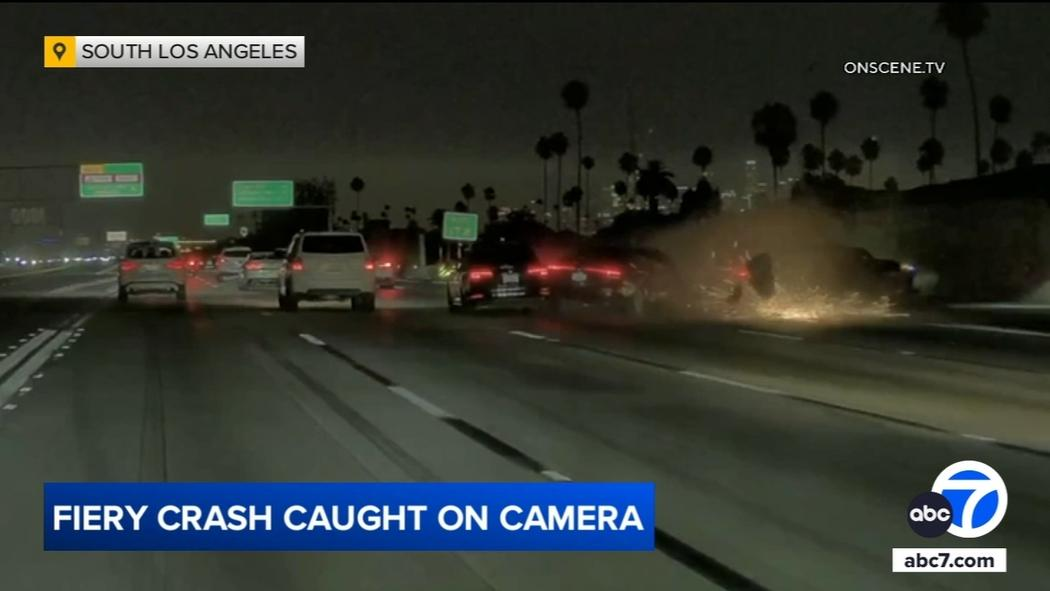
Traffic was moving slowly on the northbound 110 Freeway as Los Angeles commuters traveled through the city.
Vehicles occupied several lanes, with some moving faster than others.
The Tesla was traveling in a slower lane before moving toward the left.
At the same time, a motorcycle was approaching from behind.
The video shows the available space narrowing rapidly.
The motorcycle strikes the Tesla and falls to the pavement.
Within moments, flames appear near the fallen motorcycle.
The rider also catches fire.
The incident unfolded so quickly that the recording became an important source for reconstructing the collision.
CHP subsequently released the footage as a warning about the dangers of unsafe lane changes and the need to check mirrors and blind spots.
The recording begins shortly before the crash.
It captures the Tesla changing lanes, the motorcycle approaching and the impact.
The motorcycle then slides along the roadway as flames spread.
The rider falls but manages to stand up.
He moves away from the burning motorcycle and toward the median.
Another motorcyclist appears near the scene.
The footage provides a clear view of the collision sequence.
However, the published recording does not establish what happened during the preceding 20 minutes.
It does not show a continuous pursuit.
Nor does it identify the Tesla driver.
The distinction matters because a recording of the final seconds before a crash cannot, by itself, establish a pattern of following or deliberate targeting.
The claim that the Tesla followed the motorcyclist for 20 minutes would require evidence of the vehicles' movements before the collision.
That could include a longer authenticated recording, surveillance footage from earlier locations or other independently verified records.
The CHP footage released publicly shows the immediate collision sequence.
ABC7 and ABC News reported on the lane change and subsequent fire.
TMZ obtained additional information about the investigation and the rider's injuries.
None of those reports establishes that the Tesla followed the motorcycle for 20 minutes.
The available video shows the two vehicles coming into contact.
It does not establish when they first encountered each other.
That limitation is important when considering whether the collision was deliberate.
The published reports do not establish that the Tesla vanished or fled the scene.
The video shows the collision and the immediate aftermath.
Its limited duration does not provide a complete account of what happened to every vehicle after the recording ended.
A vehicle moving outside the camera's field of view is not necessarily evidence of a hit-and-run.
Determining whether a driver left unlawfully would require additional evidence.
Investigators could examine witness statements, dispatch records and the driver's interaction with authorities.
The available CHP account does not identify a hit-and-run investigation.
It describes a traffic collision involving an unsafe lane change.
That is the documented basis for the case as of November 20.
The Tesla driver's identity has not been publicly disclosed in the principal reports reviewed.
CHP confirmed the involvement of the vehicle and described its lane change as unsafe.
However, the agency did not provide the driver's name in its statements reported by TMZ.
ABC7 and ABC News likewise focused on the collision and the rider's survival.
The absence of a published name does not establish that investigators are unable to identify the driver.
Law enforcement agencies may withhold personal information for several reasons, including privacy considerations and the status of an investigation.
The available reporting does not explain why the driver's name has not been released.
The question of identity therefore remains unanswered in the public record.
The California Highway Patrol has provided several important facts.
The collision occurred on October 29 at approximately 7:21 a.m.
It took place in the northbound express lanes of Interstate 110.
The Tesla moved left before the motorcycle struck it.
CHP described the Tesla's maneuver as an unsafe lane change.
The rider was transported to a hospital with moderate injuries.
The agency also said it could not confirm whether the maneuver was intentional.
That final point is significant.
An unsafe maneuver may result from poor judgment, failure to check a blind spot or other driving errors.
It does not automatically establish an attempt to injure another road user.
CHP said the incident remained a traffic collision investigation.
Intent is a separate question from whether a driving maneuver was unsafe.
A driver may make an unsafe lane change without intending to cause a collision.
A deliberate collision would require evidence supporting a different conclusion.
Investigators would need to examine the driver's conduct, available warnings and circumstances before the crash.
The video shows the Tesla moving into the motorcycle's path.
But it does not reveal the driver's thoughts or establish a motive.
The agency responsible for investigating the crash has not confirmed intentional conduct.
That means the available evidence supports the unsafe-lane-change finding, not a conclusion that the motorcyclist was deliberately targeted.
The distinction is essential when reporting a potentially serious allegation involving an unidentified driver.
California traffic law requires drivers to ensure that a lane change can be made with reasonable safety.
That obligation becomes particularly important during congestion.
A driver moving from a slower lane into a faster one must account for approaching traffic.
Motorcycles can be difficult to judge because they occupy less visual space than larger vehicles.
A motorcycle may also approach more quickly than a driver expects.
The dashcam shows the Tesla moving into the lane shortly before the impact.
That sequence is consistent with the CHP's reported finding of an unsafe lane change.
However, the footage does not provide precise measurements of the motorcycle's speed.
Nor does it show everything the Tesla driver could see.
Those details may matter in determining legal responsibility.
CHP described the motorcyclist as lane splitting during heavy traffic.
Lane splitting involves riding between rows of vehicles traveling in the same direction.
California permits the practice.
However, some viewers questioned whether the motorcycle was actually between lanes when the Tesla moved left.
The recording shows the rider approaching near the left side of the Tesla's original lane.
The precise position at the moment the maneuver began has generated discussion.
That disagreement illustrates why a single camera angle may not settle every aspect of a collision.
Even where lane splitting is permitted, riders must exercise care.
Drivers must also check that a lane change can be completed safely.
The legality of lane splitting does not automatically determine responsibility for this particular crash.
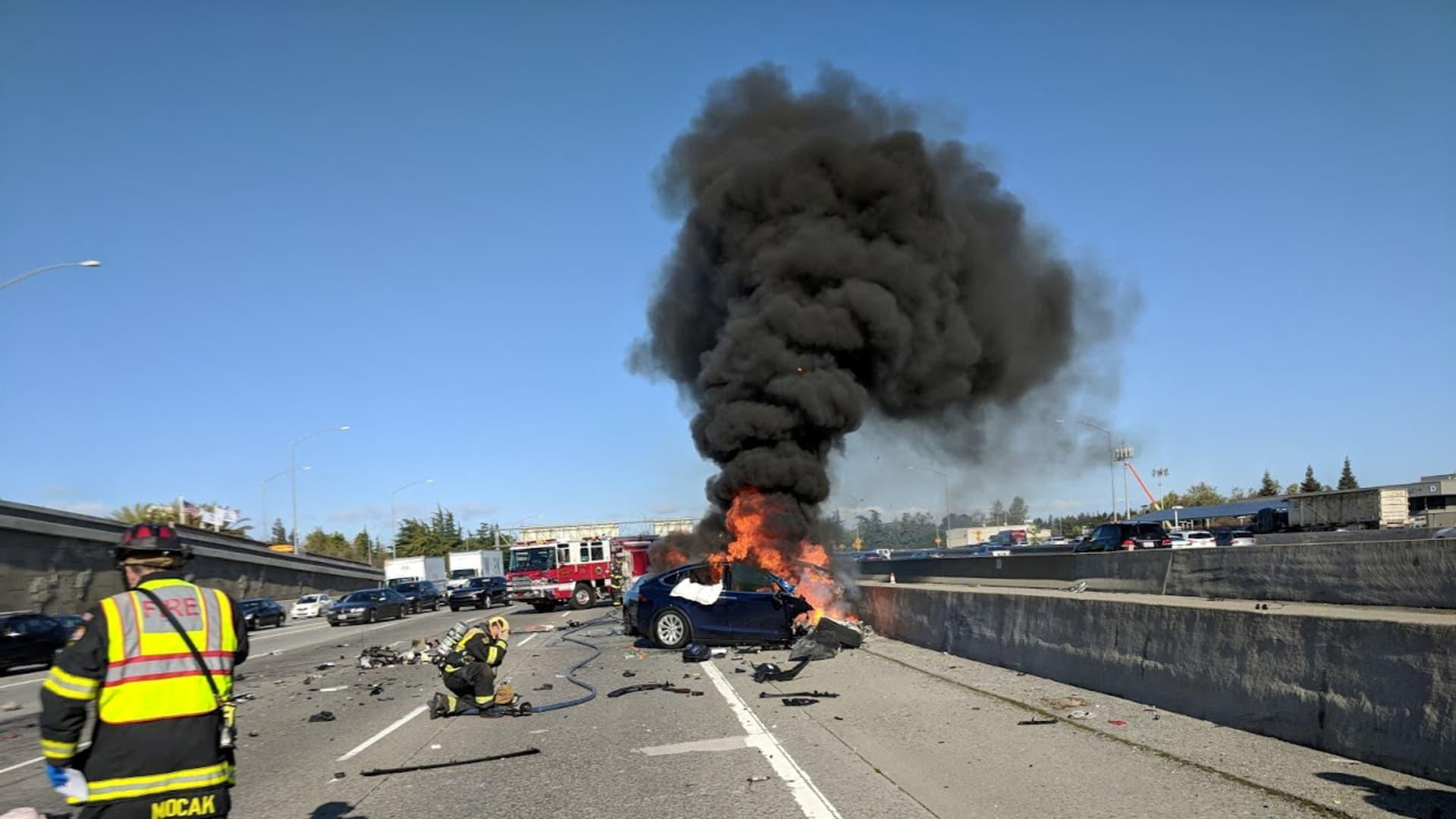
The collision caused gasoline to escape from the motorcycle, according to ABC7 Los Angeles.
The fuel then ignited.
Flames spread across the pavement and reached the rider's clothing.
The recording shows the motorcycle sliding while burning material remains visible on the road.
The presence of gasoline helps explain why the fire spread so quickly.
Motorcycle fuel systems are designed to contain fuel during normal operation.
A severe impact can damage a tank or connected components.
When gasoline escapes, it can ignite if exposed to sufficient heat or an appropriate spark.
The public reporting does not identify the exact source of the first ignition.
The video shows a Tesla involved in the collision, but that does not establish a battery fire.
Electric vehicles contain high-voltage battery systems.
Those systems can present fire hazards when damaged under certain circumstances.
However, the documented account of this crash concerns gasoline escaping from the motorcycle.
ABC7 reported that the fuel spilled and ignited after impact.
No published CHP finding identifies a Tesla battery malfunction as the cause.
Nor does the available footage establish a thermal runaway event inside the car.
A fire occurring near an electric vehicle is not necessarily a fire originating from its battery.
The distinction matters because the collision involved two different vehicles with different energy systems.
The available evidence points to motorcycle gasoline as the fuel involved in the visible blaze.
The motorcyclist fell to the pavement as the motorcycle caught fire.
Flames reached his clothing.
Within seconds, he stood up and moved away from the burning wreckage.
The footage shows him walking toward the median.
Another motorcyclist approached the scene.
The rider's ability to move was an important part of his immediate escape.
But it did not mean he avoided injury.
CHP later confirmed that he had been transported to a hospital.
The available evidence establishes that he survived the immediate incident and received medical treatment.
The collision disrupted traffic during the morning commute.
According to a report based on CHP dispatch logs, the crash occurred near the 39th Street exit.
The Los Angeles Fire Department was notified.
Emergency crews responded to the burning motorcycle and injured rider.
Multiple northbound lanes were affected.
At approximately 7:44 a.m., CHP issued a SigAlert involving the left express lane.
A tow truck was requested to remove the damaged motorcycle.
Dispatch information indicated that the roadway was cleared at approximately 8:22 a.m.
These details help establish the immediate response.
They do not establish that the Tesla driver fled or that officers were searching for a missing vehicle.
The documented emergency concerned a motorcycle collision, a fire and disruption to freeway traffic.
California law imposes obligations on drivers involved in collisions causing injury.
Those obligations generally include stopping and fulfilling specified identification and assistance requirements.
A hit-and-run investigation would examine whether a driver failed to meet those duties.
Evidence could include witness statements, vehicle identification, police reports and video recordings.
However, an allegation that a driver left the scene cannot be established solely because a published clip does not show the entire aftermath.
The camera may have stopped recording.
The vehicle may have remained outside the visible frame.
Officers may have contacted the driver later.
None of those possibilities should be treated as established without evidence.
The available reporting does not announce a hit-and-run charge or identify the Tesla as a vehicle being sought by police.Identifying a driver can help investigators reconstruct the events surrounding a collision.
The driver may provide an account of traffic conditions and the lane change.
Investigators may compare that account with video evidence and physical damage.
They may also examine whether the driver saw the approaching motorcycle.
But public disclosure of a driver's name is not necessary for every traffic investigation.
Authorities can identify and interview a motorist without releasing personal information to the media.
The principal news reports have not named the Tesla driver.
That limits what can responsibly be reported about the person.
It also means there is no verified basis for attributing a motive, prior relationship with the rider or deliberate pursuit to an identified individual.
Tesla vehicles are equipped with camera systems used for several functions.
Depending on the vehicle's model, configuration and settings, some footage may be available through recording features.
Such footage could potentially provide another view of a collision.
However, the presence of cameras does not establish that relevant video was recorded or preserved.
The public reporting does not confirm that investigators obtained footage from the Tesla.
Nor does it establish that the vehicle recorded the motorcyclist during the preceding 20 minutes.
Investigators could also consider recordings from nearby vehicles.
But any additional footage would need to be authenticated and matched to the correct time and location.
The released civilian dashcam video remains the principal publicly documented visual record of the crash.
A claim of prolonged following involves more than two vehicles appearing together before a collision.
Investigators would need to establish that the same Tesla remained behind the motorcycle over a substantial period.
They would also need to distinguish intentional following from ordinary travel along the same route.
That could require synchronized video from multiple locations.
Time stamps and identifiable landmarks would be important.
A continuous recording could help, but only if it clearly showed the relevant vehicles throughout the claimed period.
The publicly released footage does not provide that history.
No report from CHP, ABC7, ABC News or TMZ establishes a 20-minute pursuit.
Consequently, the duration cannot be used as evidence of deliberate conduct in the October 29 crash.
The distinction between an accident and an intentional act depends on evidence of the driver's state of mind and actions.
A dangerous maneuver can be negligent without being deliberate.
A collision can also involve mistakes by more than one road user.
Determining responsibility may require examination of speed, visibility, signaling and available reaction time.
CHP has identified the Tesla's lane change as unsafe.
The agency has not confirmed intentional conduct.
That is the most important official distinction in the case.
The video shows the maneuver and its consequences.
It does not establish why the driver made the decision.
Without additional evidence, describing the collision as a deliberate attack would go beyond the findings publicly reported by investigators.
A dashcam recording can help establish the sequence of visible events.
It may show when a vehicle begins changing lanes.
It can also show the positions of nearby traffic and the interval before impact.
However, technical limitations remain.
A camera's perspective can distort apparent distances.
Frame rate and motion blur can make precise timing difficult.
The recording may not capture turn signals clearly.
It also cannot reveal everything a driver saw through mirrors or windows.
A full reconstruction may involve vehicle damage, road measurements and witness accounts.
Those forms of evidence can help investigators determine how the collision occurred.
The released footage is valuable, but it is not a complete record of every relevant circumstance.
The CHP footage was released in November, several weeks after the collision.
ABC7 Los Angeles reported the incident on November 18.
ABC News published a video report the following day.
TMZ obtained additional information from CHP about the rider's injuries and the status of the investigation.
The footage attracted attention because the collision was followed almost immediately by flames.
The rider's escape while his clothing burned made the scene particularly memorable.
The video also highlighted a familiar freeway hazard: a vehicle changing lanes into the path of an approaching motorcycle.
The public response has included questions about lane splitting, driver awareness and the cause of the fire.
Those questions are supported by the visible sequence, even where some answers remain incomplete.
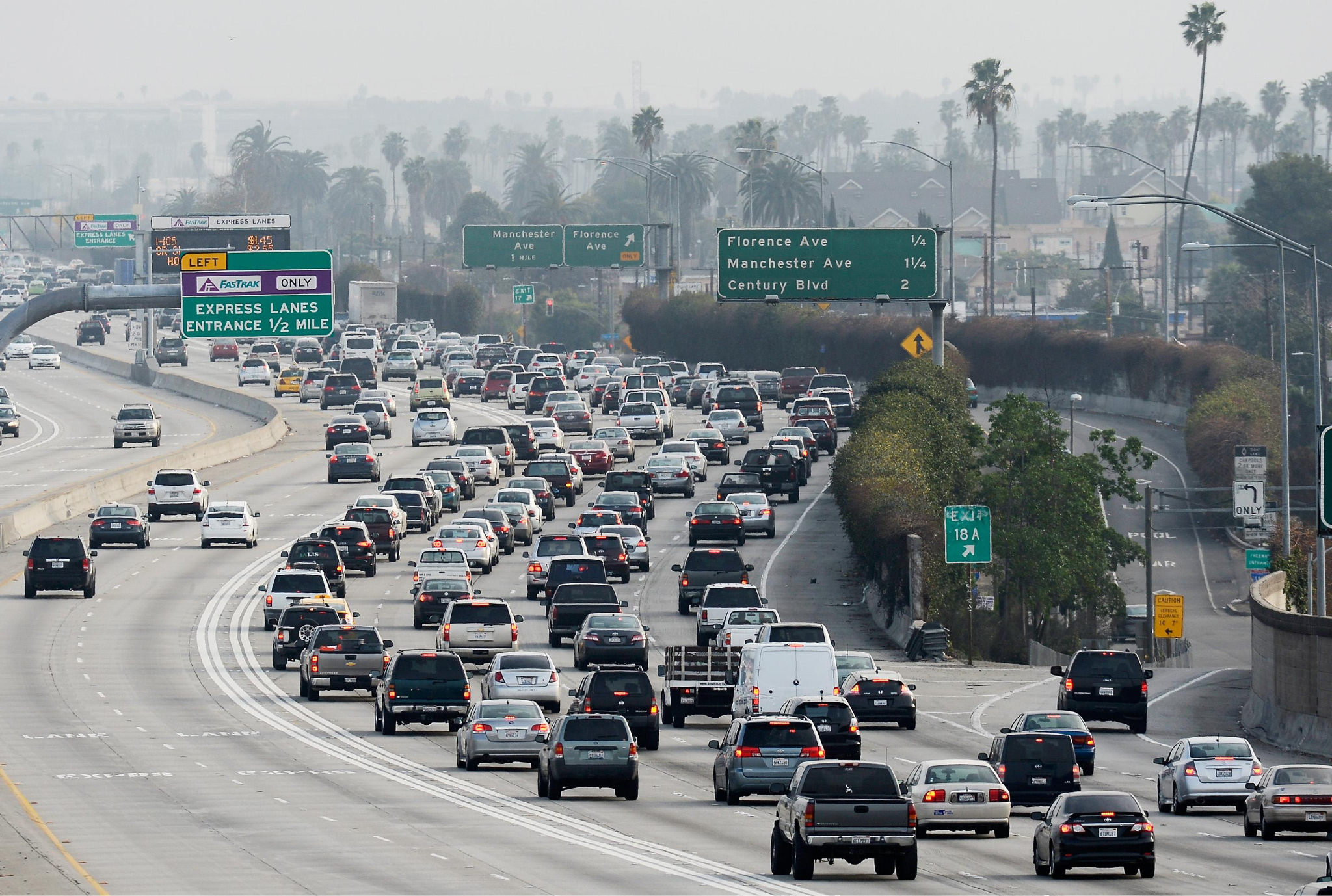
The 110 Freeway carries heavy traffic through central Los Angeles.
Drivers frequently encounter congestion, sudden changes in speed and vehicles moving between lanes.
Those conditions require attention to mirrors, blind spots and surrounding traffic.
Motorcyclists face additional risks because they are less protected during collisions.
A lane change that might result in minor vehicle damage in another situation can have much more serious consequences when a motorcycle is involved.
The CHP released the video to reinforce safe driving practices.
Its message emphasized checking mirrors and blind spots before changing lanes or turning.
The agency also reminded riders to remain aware of traffic conditions.
The collision demonstrates how a brief driving decision can have consequences extending far beyond the initial impact.
An unsafe lane change can become important evidence in a traffic enforcement or civil liability proceeding.
But the legal outcome depends on the complete investigation.
Authorities may consider whether the driver failed to ensure that the lane was clear.
They may also examine the motorcycle's position and speed.
A civil claim could involve questions about negligence and the extent of the rider's injuries.
However, the reports reviewed do not establish that the Tesla driver has been charged with a crime.
They do not identify a specific traffic citation.
They also do not report a court judgment.
CHP's assessment of the lane change is a significant finding, but it should not be presented as a completed legal determination.
The agency said the investigation was nearly complete as of November 19.
The footage raises legitimate questions about what the Tesla driver saw before moving left.
It also raises questions about the distance between the vehicles and the rider's ability to react.
Those questions can be investigated using physical evidence and video analysis.
A claim of deliberate pursuit is different.
It requires evidence of conduct extending beyond the visible collision.
The released footage does not establish such a history.
Similarly, a claim that the Tesla disappeared after the fire would require a documented account of the driver's departure.
The public reports do not provide one.
The strongest evidence remains the visible lane change, the resulting impact and CHP's assessment that the maneuver was unsafe.
Those facts are sufficient to explain why investigators focused on the Tesla's movement.
The California Highway Patrol said on November 19 that its investigation was nearing completion.
A final determination could provide additional information about the collision.
It may clarify whether any traffic citation was issued.
Further official statements could also address questions about the driver's actions.
However, no publication date for a final report has been established in the sources reviewed.
The rider's subsequent medical recovery has not been described in detail.
The public record therefore remains centered on the footage and CHP's reported findings.
The case continues to illustrate the risks of sudden lane changes in congested traffic, particularly when motorcycles are approaching from behind.
The October 29 crash began with a Tesla moving left in heavy traffic.
A motorcycle approached from behind and struck the car.
The motorcycle fell, gasoline spilled and flames spread across the roadway.
The rider escaped the immediate fire and was later hospitalized with moderate, non-life-threatening injuries.
CHP described the Tesla's lane change as unsafe.
But the public record does not identify the driver, establish a 20-minute pursuit or confirm that the vehicle fled after the collision.
The agency also said it could not determine whether the maneuver was intentional.
The final investigation, rather than the brief video alone, will determine whether additional findings are warranted.
Comments (0)
Loading comments...
May You Like

IOWA MILITARY EMERGENCY: 51 TONS OF UNSTABLE SUSPECTED BIOWEAPON WASTE FOUND AFTER 5-TON BLAST!

AMERICA'S LUCAS DRONE — A POTENTIAL GAME CHANGER IN THE SOUTH CHINA SEA?

WARNING: OVER 1 MILLION COULD LOSE POWER AND NEARLY 2 MILLION FACE WATER ALERTS ON THANKSGIVING!









Popular Posts




