
Lead Counsel Todd Blanche engages in a heated debate over freedom
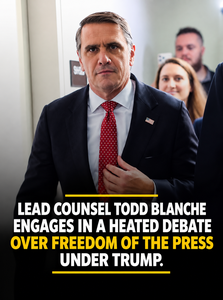
Blanche appeared on ABC’s This Week as litigation continues over Trump’s September 18 decision to remove CNN, MS NOW and Politico journalists from White House grounds.
Raddatz pressed Blanche on the meaning of the First Amendment and the role of journalists, asking why the administration could restrict reporters while defending its commitment to press freedom.
Blanche responded that journalists remain free to publish whatever they choose, but argued that access to the White House is a privilege rather than an automatic right.
He also said Trump was frustrated by what the administration considers inaccurate reporting, arguing that Americans should receive information that is accurate, fair and balanced.
A Tense Exchange Over Press Freedom
Raddatz challenged that explanation, pointing to Trump’s own comments about wanting to diminish negative coverage of his administration and Republicans during the dispute.
Blanche accused Raddatz of selecting only a few words from Trump’s broader comments, calling that interpretation “extraordinarily disingenuous” and citing the president’s repeated criticism of mainstream media outlets.
The exchange became a broader argument about whether presidential criticism of news coverage can legitimately influence decisions about which organizations receive physical access to government facilities.
Trump announced the restrictions on September 18, accusing CNN, MS NOW and Politico of repeatedly publishing what he described as false or misleading coverage.
The White House has argued that the First Amendment protects journalists’ ability to publish but does not guarantee particular reporters a hard pass, briefing-room seat or place in the presidential press pool.
The Administration’s Defense
The administration has also cited national security and accuracy concerns, saying misinformation from major outlets can affect public understanding and relationships with foreign governments.
Critics of the policy argue that government officials cannot condition press access on favorable or sufficiently positive coverage, particularly when journalists are performing an oversight function involving public officials.
Three news organizations challenged the restrictions in federal court, arguing that the administration’s decision violated constitutional protections and improperly punished outlets because of their reporting.
Court Intervention
U.S. District Judge Timothy Kelly issued a temporary restraining order on September 24 requiring the White House to restore the outlets’ hard-pass credentials for fourteen days.
Kelly’s order followed a hearing in which the administration defended presidential authority while lawyers for the news organizations argued that the restrictions were driven by disagreement with coverage.
The judge had questioned the administration’s national-security justification, noting that Trump’s public explanation focused primarily on the outlets’ reporting and alleged negativity.
The judge’s intervention temporarily restored access to the White House grounds, although questions remained about access to presidential travel and other locations outside the complex.
Air Force One and Chinese Media
During Sunday’s interview, Blanche said decisions about who travels aboard Air Force One are made by the White House and argued that excluding a particular outlet from one flight is not unusual.
Raddatz also raised the presence of Chinese journalists during President Xi Jinping’s Washington visit, questioning how the administration’s stated national-security concerns applied to different media organizations.
Blanche rejected the implication that he personally controlled access decisions, saying the dispute concerned a larger issue about the administration’s expectations for accurate reporting and national security.
The legal fight now places presidential control over press access alongside First Amendment principles, with the temporary order providing a short-term resolution while the broader dispute continues in court.
What Happens Next?
The dispute is expected to remain a significant test of how much control a president can exercise over physical media access while still complying with constitutional protections for an independent press.
Comments (0)
Loading comments...
May You Like


Obama Steps Back Into the Political Spotlight as Democrats Target Trump’s Senate Majority

South Korea–Ukraine Rift Deepens Over North Korean POW Transfer as PURL Draws New Scrutiny












