
Lindsay Clancy Juror Goes Public After Mistrial — What the “Sickening Bombshell” Really Revealed
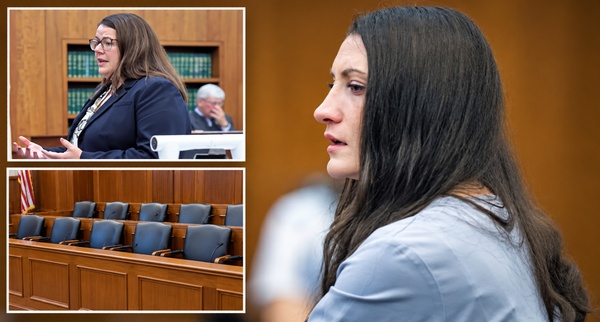
A viral graphic claims a “female Clancy juror” has gone public and dropped a “sickening bombshell.” The underlying event is real: several jurors from the Lindsay Clancy murder trial have now spoken publicly about what happened during the jury's seven days of deliberations.
But the language “sickening bombshell” is social-media sensationalism. The jurors did reveal extraordinary details about the deadlocked deliberations — especially the allegation that the lone holdout acknowledged having reasonable doubt but still refused to vote for an insanity acquittal.
Verdict: MOSTLY TRUE, BUT SENSATIONALIZED.
Three female jurors broke their silence
On September 8, three women who served on the 12-person jury spoke publicly in an interview with NBC10 Boston.
They included jury foreperson Roni Carlson, along with jurors Paula Devlin and Kellie Farina. Their interviews provided the most detailed public account yet of what happened inside the jury room after the trial ended in a mistrial.
Separately, CBS Boston interviewed another female juror, identified only as Juror No. 5, who requested anonymity. She said there was simply too much doubt for her to reach a not-guilty verdict.
So the graphic's basic claim that a female Clancy juror went public is accurate.
What the graphic doesn't explain is that multiple jurors, not just one, have now given accounts.
The biggest revelation: the holdout reportedly admitted he had reasonable doubt
The most striking claim came from Carlson, the jury foreperson.
According to her account, the jury was close to reaching a verdict after days of deliberations. At one point, she said, the lone male holdout admitted that he had reasonable doubt.
Carlson said she became so confident the dispute was resolved that she began filling out the verdict forms.
Then, she said, the juror changed course.
He reportedly told the group that despite his reasonable doubt, he still would not find Clancy not guilty by reason of insanity.
That distinction is crucial.
The trial was not simply asking jurors whether they believed Clancy killed her children. She acknowledged that she did.
The central legal question was whether she was criminally responsible for those killings because of her mental state at the time.
The jury was reportedly split 11-1
The jurors' accounts indicate the panel was effectively divided 11-1.
The 11 jurors were apparently leaning toward finding Clancy not guilty by reason of insanity, while one juror remained opposed.
The foreperson had previously sent the judge a note expressing concern that the lone juror was not following the court's instructions concerning reasonable doubt.
The dispute became so serious that Clancy's attorney, Kevin Reddington, asked Judge William Sullivan to remove the holdout.
The judge declined after questioning the jurors and determining that the disputed juror could continue serving.
The jury subsequently remained deadlocked, and on September 4 the judge declared a mistrial.
Jurors described the holdout as “arrogant”
The interviews went beyond the voting split.
Devlin characterized the holdout as “arrogant” and said he did not meaningfully engage with what the other jurors were telling him.
The jurors said they repeatedly discussed the definition of reasonable doubt and tried to work through the evidence with him.
Their frustration grew because, in their account, he appeared unwilling to reconsider his position.
That is an important caveat: these are the accounts of three jurors who favored a different outcome.
The holdout juror has not publicly given his version of events. His identity has been sealed temporarily by the court, and attempts to contact him for comment had not produced a response.
Therefore, claims that the holdout definitively “ignored the law” should be presented as an allegation from fellow jurors and the defense — not as an established judicial finding.
Why Clancy's mental health became the central issue
The case concerns the January 2023 deaths of Clancy's three children: 5-year-old Cora, 3-year-old Dawson and 8-month-old Callan.
Clancy admitted killing the children but pleaded not guilty by reason of insanity.
Her defense argued that she was experiencing postpartum psychosis, a severe psychiatric condition that can involve hallucinations, delusions and loss of contact with reality following childbirth.
Prosecutors took a fundamentally different position.
They argued that Clancy understood what she was doing, deliberately created circumstances that removed her husband from the home and then killed the children.
The trial lasted nearly six weeks and included more than three weeks of testimony.
Jurors say the evidence of her love for her children mattered
Carlson told NBC10 that evidence presented during the trial convinced her Clancy had genuinely loved her children.
She pointed to Clancy's journals and testimony from family members, including Clancy's former mother-in-law.
Carlson's interpretation was that the evidence was inconsistent with the prosecution's portrayal of a mother deliberately deciding to kill her children and instead supported the defense theory that she experienced a catastrophic psychological break.
Farina was also critical of the prosecution's approach, describing it as lacking compassion.
The jurors said the family's emotional 911 call after the killings was particularly devastating. Farina described it as one of the most horrific pieces of evidence they heard, saying jurors cried while listening to it during deliberations.
But this was not a verdict for Clancy
This is another detail the viral graphic leaves out.
Lindsay Clancy was not acquitted.
She was not convicted either.
The jury's inability to reach a unanimous decision produced a mistrial.
That means the criminal case remains unresolved. Prosecutors can potentially seek a new trial, although as of September 9 they had not announced whether they would do so. Clancy remains in a state psychiatric facility, and another court hearing is scheduled for September 29.
If prosecutors retry the case, a new jury could reach an entirely different conclusion.
So what exactly is the “bombshell”?
There is a genuine news development here.
The public now has firsthand accounts from jurors suggesting that:
- the jury was effectively 11-1;
- the majority appeared to favor an insanity acquittal;
- the lone holdout reportedly acknowledged having reasonable doubt;
- he nevertheless refused to vote for an insanity acquittal;
- other jurors considered him unwilling to engage with their arguments;
- and the disagreement ultimately contributed to the mistrial.
Those are significant revelations because jurors normally do not publicly describe deliberations in this level of detail while a case remains unresolved.
But calling the revelation “sickening” is a judgment, not an established fact.
And the holdout juror's side of the story remains unknown.
The bottom line
The viral graphic is based on a real and important development, but it packages that development in the most dramatic possible language.
Female jurors really did go public. The jury really did deadlock 11-1. And jurors really did say the holdout acknowledged reasonable doubt while refusing to support an insanity acquittal.
But “sickening bombshell” is commentary, not a factual description — and the allegations about the holdout have not been independently tested in a new trial or established as misconduct by the court.
The most consequential fact may be what comes next: Lindsay Clancy still has no verdict, and prosecutors must now decide whether to try the case again.
Comments (0)
Loading comments...
May You Like

South Korea–Ukraine Rift Deepens Over North Korean POW Transfer as PURL Draws New Scrutiny


OBAMA STEPS BACK INTO THE POLITICAL SPOTLIGHT













