Lindsay Clancy Mistrial — Why the 11–1
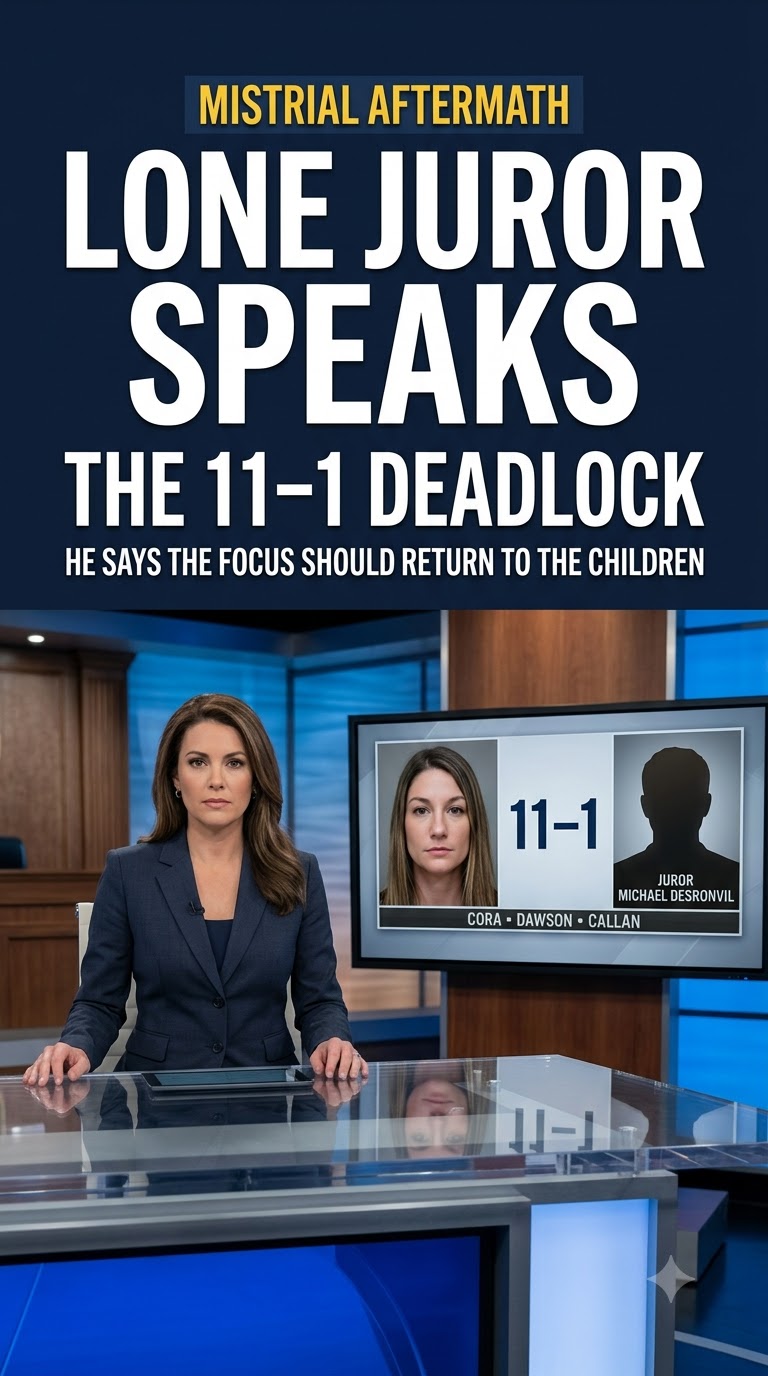
The lone juror at the center of the Lindsay Clancy mistrial has spoken publicly for the first time on video, asking that attention move away from him and back to the three children whose deaths were at the center of the case.
Michael Desronvil, who was identified after the jury deadlocked 11–1, said the focus should be on Cora, Dawson and Callan Clancy.
His comments arrived at a critical moment.
Clancy returned to Plymouth Superior Court on September 29 for her first hearing since the mistrial, while her lawyers pushed to block any retrial and asked the court to examine questions surrounding the lone holdout juror.
Prosecutors, meanwhile, had not yet announced whether they would seek another first-degree murder trial, pursue lesser charges or take a different path.
The Trial Ended With One Juror Apart From the Other 11
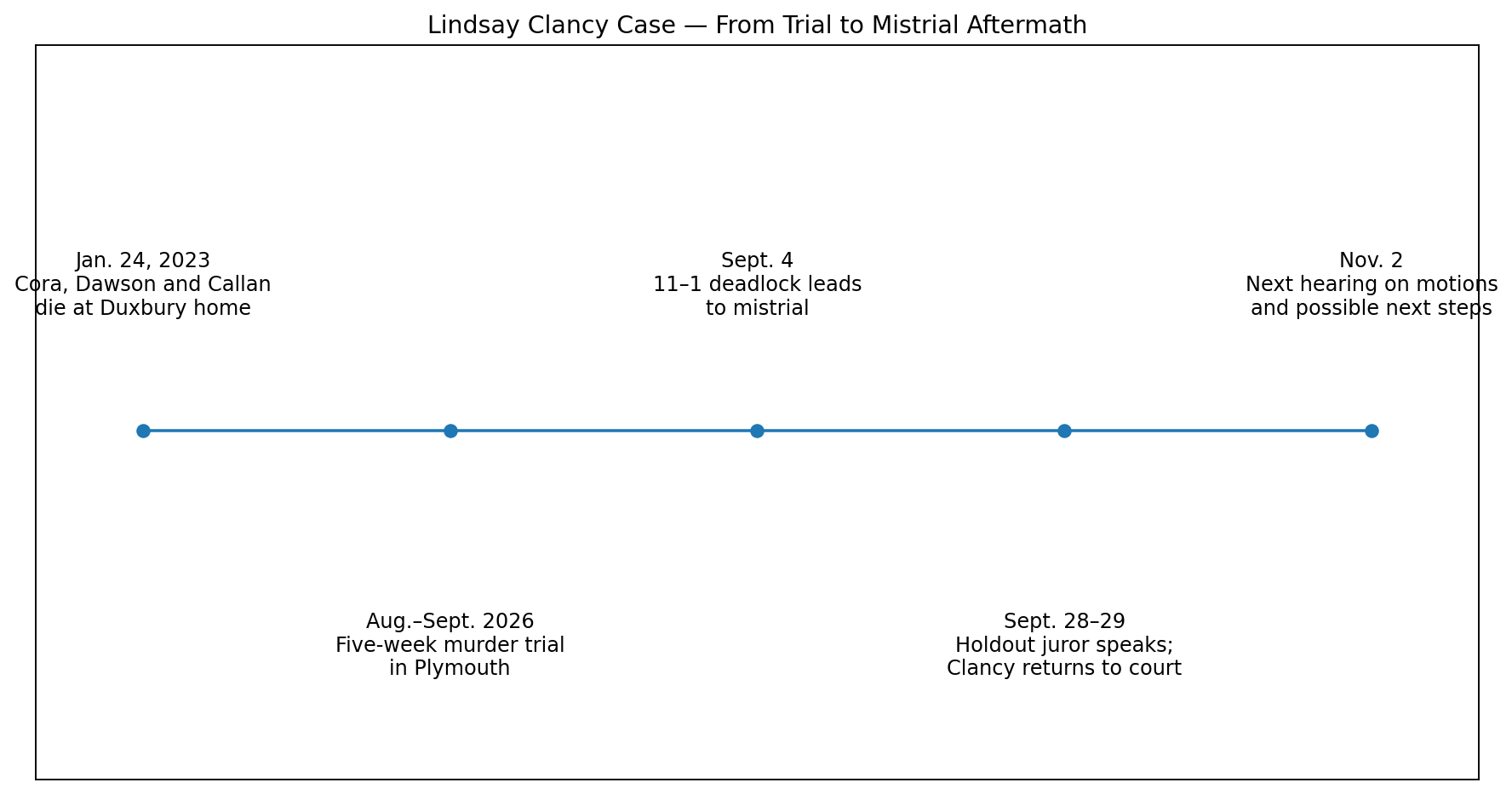
Clancy’s five-week trial ended on September 4 after nearly 40 hours of deliberations over seven days.
The jury could not reach a unanimous verdict.
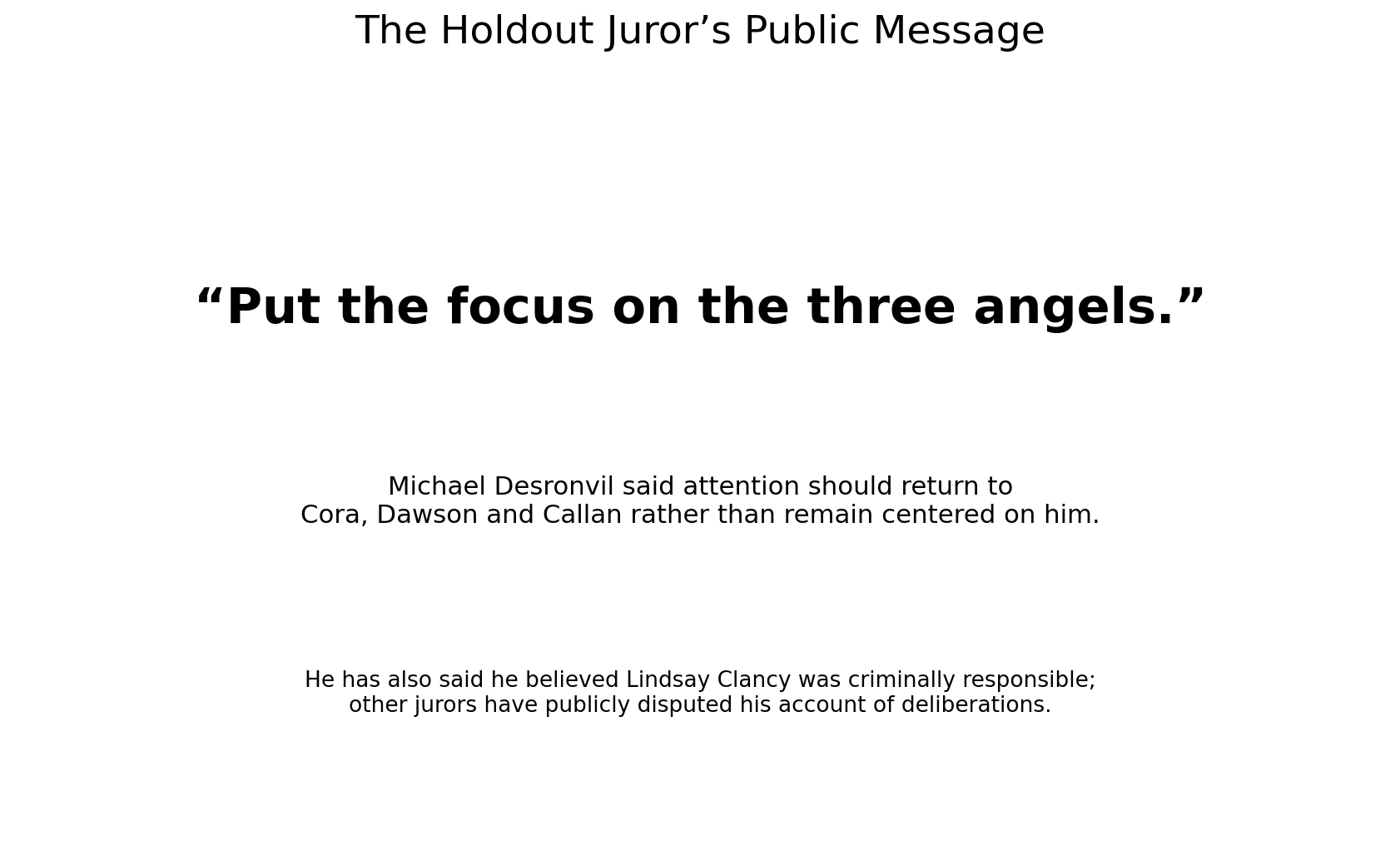
According to the foreperson and other jurors who later spoke publicly, 11 jurors favored finding Clancy not guilty by reason of lack of criminal responsibility, while one juror refused to join them.
That single disagreement was enough to prevent a verdict.
Judge William Sullivan ultimately declared a mistrial, leaving the murder charges unresolved.
The Holdout Juror Says He Had No Doubt About His Position
Desronvil has rejected the suggestion that he was confused about the legal standard or secretly uncertain about his conclusion.
In a statement released earlier in September, he said he had no doubts and believed the evidence showed Clancy knew what she was doing and planned her actions.
Other jurors have given a sharply different account.
Several have said Desronvil expressed reasonable doubt during deliberations but still refused to vote for a finding of not criminally responsible.
That disagreement over what happened inside the jury room is now feeding a separate legal fight over whether the court should examine his conduct more closely.
His First Video Message Focused on the Children
In a short recorded message aired on television on September 28, Desronvil did not walk through the evidence or debate the other jurors.
Instead, he said public attention had become too focused on him.
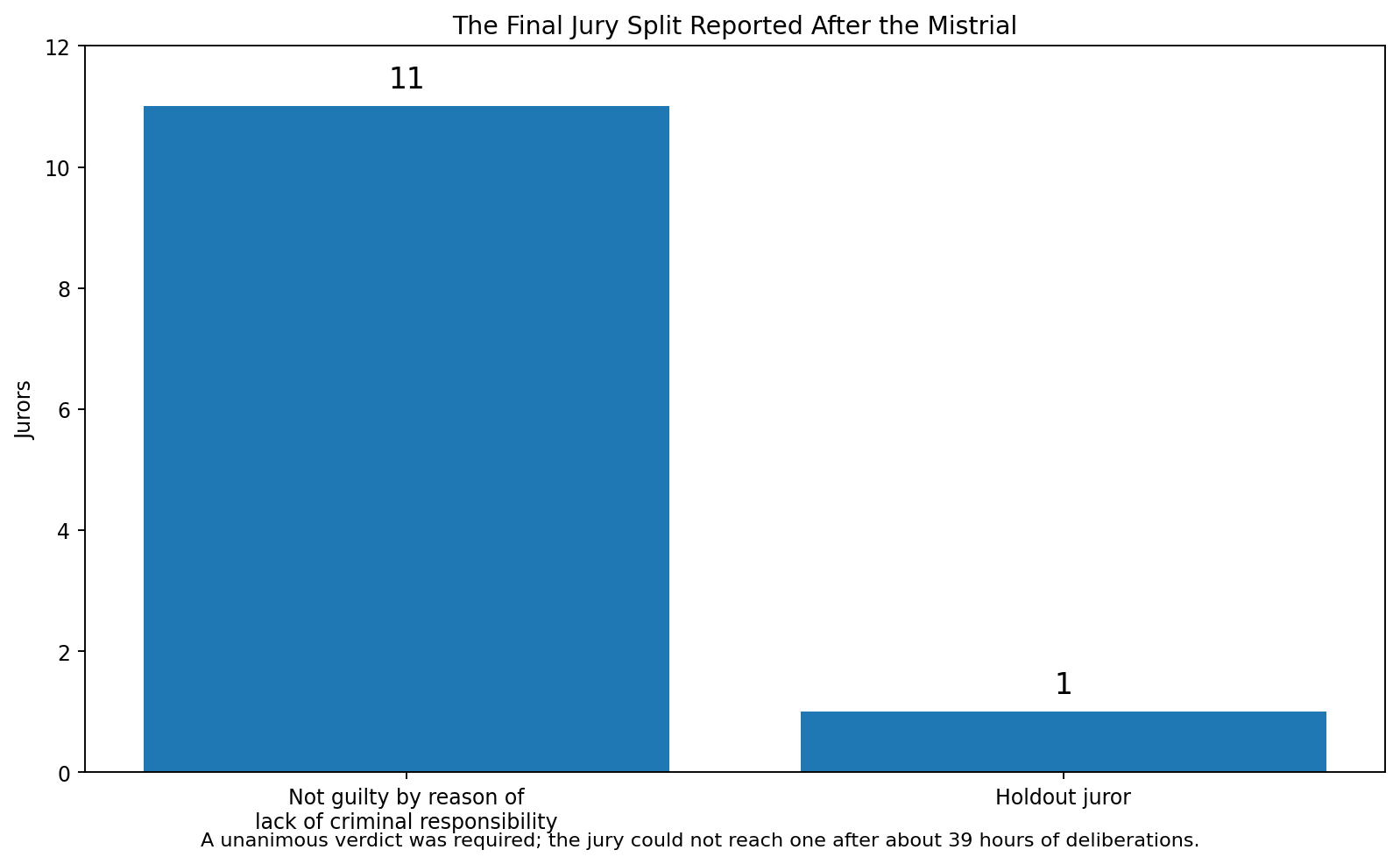
He asked people to “put the focus on the three angels,” naming Cora, Dawson and Callan.
He described them as the people in the case who could not speak, defend themselves or fight their own battles.
Desronvil also thanked supporters who had sent prayers and emotional support after the trial.
Why the 11–1 Split Matters Legally
A criminal jury in Massachusetts must be unanimous.
Eleven votes in one direction do not become an acquittal simply because one juror disagrees.
That is why the formal result of the trial was not a finding that Clancy was innocent or not criminally responsible.
It was a mistrial.
Ordinarily, a mistrial caused by a genuinely deadlocked jury can allow prosecutors to try the case again. The defense is arguing that this case should be treated differently because of what it says happened during deliberations and how the judge responded.
The Defense Wants a Limited Inquiry Into the Holdout Juror
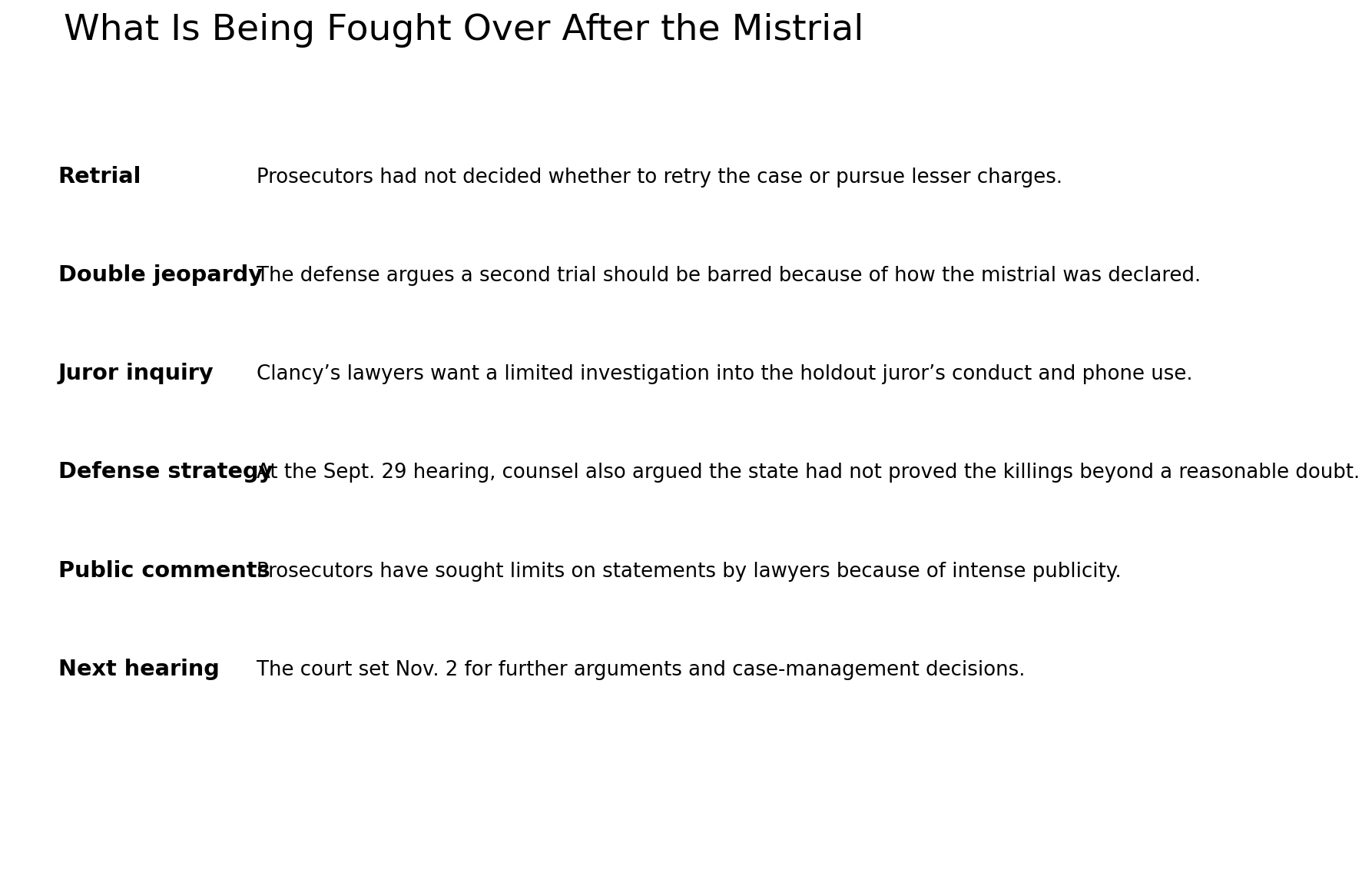
Clancy’s lawyers have asked Judge Sullivan to permit a limited investigation into Desronvil.
The defense wants access to certain phone records from the period of jury deliberations and wants the court to examine questions about his questionnaire answers, jury selection responses and whether he followed the judge’s reasonable-doubt instructions.
Desronvil now has his own attorney, Heather O’Connor.
She has objected to the defense request and argued that jurors have privacy rights that should not disappear because one juror became the focus of a high-profile case.
The judge did not resolve that fight at the September 29 hearing.
Clancy’s Lawyers Are Also Trying to Stop a Retrial Entirely
The juror issue is only one part of the defense strategy.
Clancy’s attorneys have asked the court to dismiss the charges on double-jeopardy grounds, arguing that another trial should not be allowed because the first jury was discharged under circumstances they believe should have been handled differently.
They have also sought a required finding of not guilty.
At the September 29 hearing, defense attorney Kevin Reddington went further and argued that prosecutors had not produced sufficient evidence proving Clancy killed her children.
That argument marked a notable shift from the first trial, where the defense centered its case on Clancy’s mental state and lack of criminal responsibility.
Prosecutors Say the Evidence Was Overwhelming
The prosecution strongly disputes the defense’s new approach.
Prosecutors have argued that physical evidence, testimony and the earlier defense theory all support the case that Clancy caused the children’s deaths.
During the first trial, the central disagreement was not simply over what happened inside the Duxbury home.
It was over Clancy’s mental condition and whether she could legally be held criminally responsible.
The defense presented postpartum psychosis as the explanation for her actions, while prosecutors argued that she acted with planning and understood what she was doing.
The Children Remain at the Center of the Case
Cora was 5 years old, Dawson was 3 and Callan was 8 months old when they died in January 2023.
The case has generated intense attention because it sits at the intersection of a horrific family tragedy, criminal law and debate over severe postpartum mental illness.
That attention grew even larger once jurors began speaking publicly after the mistrial.
The result has been an unusual post-trial environment in which former jurors, lawyers, advocates and members of the public have all been debating what should happen next.
Desronvil’s video was an attempt to pull that attention back toward the children.
The Jurors Who Spoke Publicly Disagree About What Happened
The mistrial did not produce a single shared account of the deliberations.
The foreperson and several other jurors have said the holdout expressed doubt about the prosecution’s case but would not join the other 11 jurors.
Desronvil has said that description is wrong.
He says he believed the evidence was sufficient and that he was cut off when trying to explain alternative theories during deliberations.
Those competing accounts matter because the defense is using the dispute to challenge whether the mistrial was properly declared.
No Decision Has Been Made on a Second Trial
Despite the intensity of the debate, prosecutors had not announced a final decision on retrial after the September 29 hearing.
Plymouth County District Attorney Timothy Cruz said his office was continuing its review.
A second first-degree murder trial remains one possibility.
Lesser charges, a negotiated resolution or a decision not to retry the case are other possible paths, depending on how the pending motions are resolved.
The court has not yet chosen among those outcomes.
The Next Major Court Date Is November 2
Judge Sullivan scheduled another hearing for November 2.
That hearing is expected to address unresolved motions involving the juror, the defense effort to prevent a retrial and other case-management questions.
Prosecutors have also asked the court to restrict public comments by lawyers, arguing that the extraordinary publicity surrounding the case could make it harder to seat an impartial jury if another trial occurs.
That request adds another layer to a case already being litigated both inside the courtroom and in public.
What the Mistrial Did — and Did Not — Decide
The September 4 mistrial did not determine whether Lindsay Clancy was guilty, not guilty or not criminally responsible.
It determined only that this jury could not reach the unanimous decision required by law.
The reported 11–1 split explains why the case came so close to a verdict, but it does not replace one.
That distinction is essential as lawyers argue about what should happen next.
The first trial is over. The underlying charges remain unresolved.
Why the Holdout’s Public Statement Matters Now
Desronvil’s decision to speak publicly added another voice to a case already filled with competing narratives.
Other jurors have criticized his role in the deadlock. The defense wants his conduct examined. His attorney is defending his privacy. Prosecutors are still deciding whether to seek another trial.
His own message was narrower.
He asked people to stop treating the case primarily as a story about one juror and remember the three children whose deaths brought everyone into the courtroom.
Whether that changes the legal fight is doubtful.
But it explains why the mistrial aftermath has become about more than the 11–1 vote: the unresolved case now includes a dispute over juror conduct, the limits of double jeopardy, a possible retrial and how a deeply emotional prosecution can move forward under intense public scrutiny.
Comments (0)
Loading comments...
May You Like

gfnhgmnghnmfgnbvvvvvvvvv

OBAMA STUNS ON INSTAGRAM: MESSAGE MARKING 34-YEAR MILESTONE SPARKS A BUZZ