Lindsay Clancy Returns to Court After Mistrial — The Next Fight Is Over Whether There Will Be a Second Trial
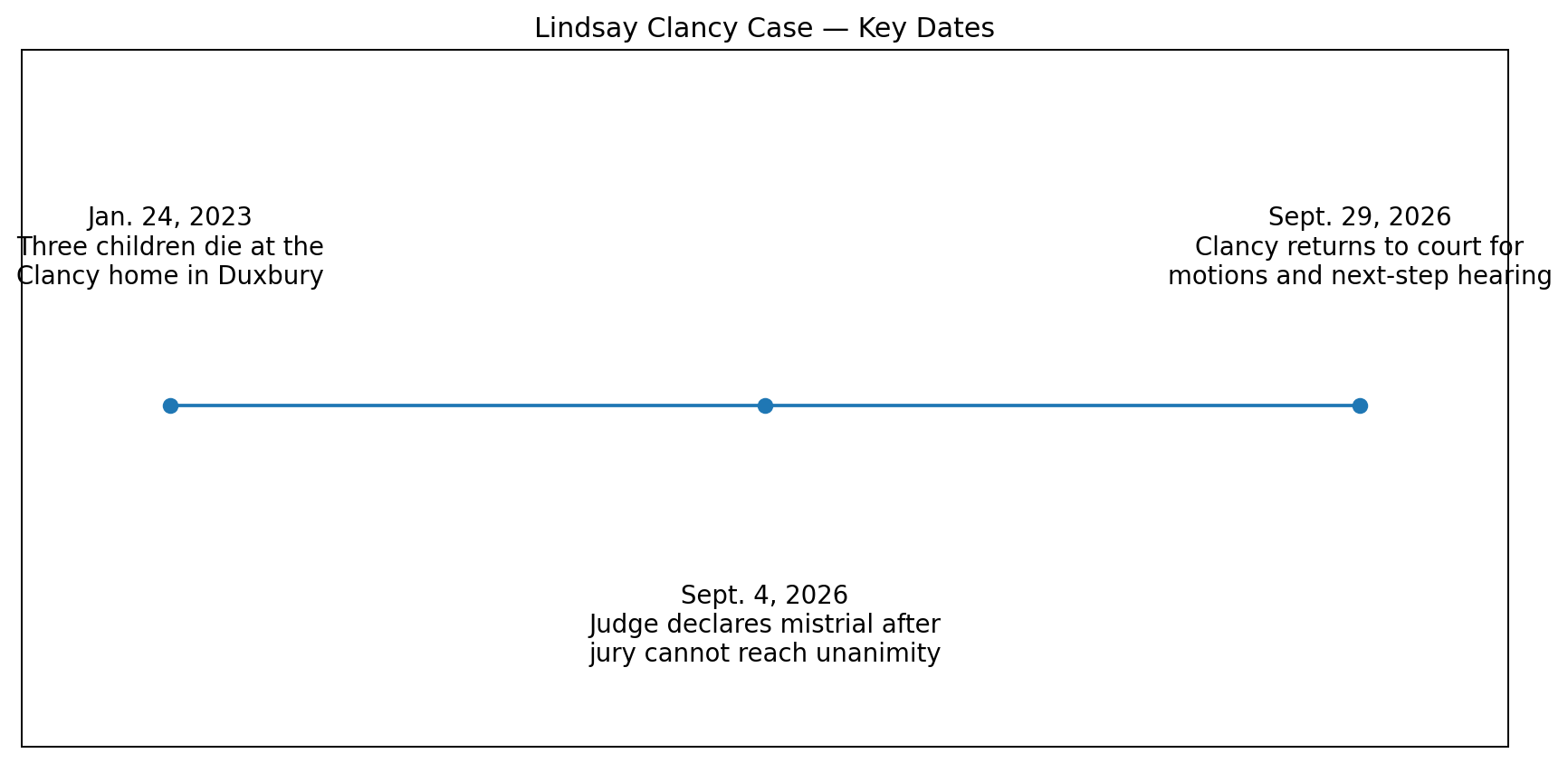
Lindsay Clancy returned to a Massachusetts courtroom on September 29 for the first time since her high-profile murder trial ended in a mistrial earlier this month.
The hearing could become one of the most important moments in the case since the jury was discharged on September 4.
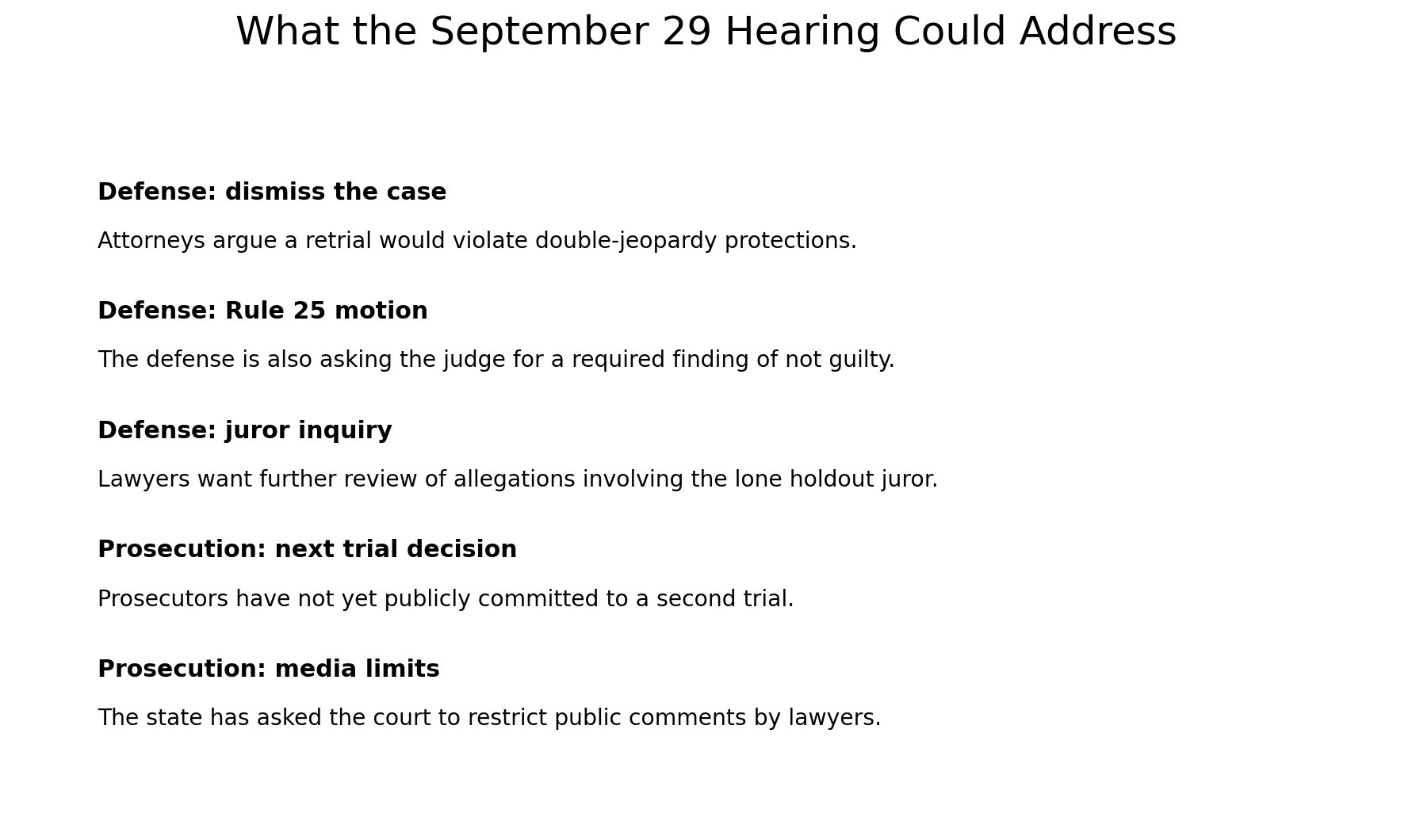
Clancy’s attorneys are asking the court to dismiss the charges, arguing that putting her through another trial would violate constitutional protections against double jeopardy. Prosecutors, meanwhile, have not publicly committed to whether they will seek a second trial.
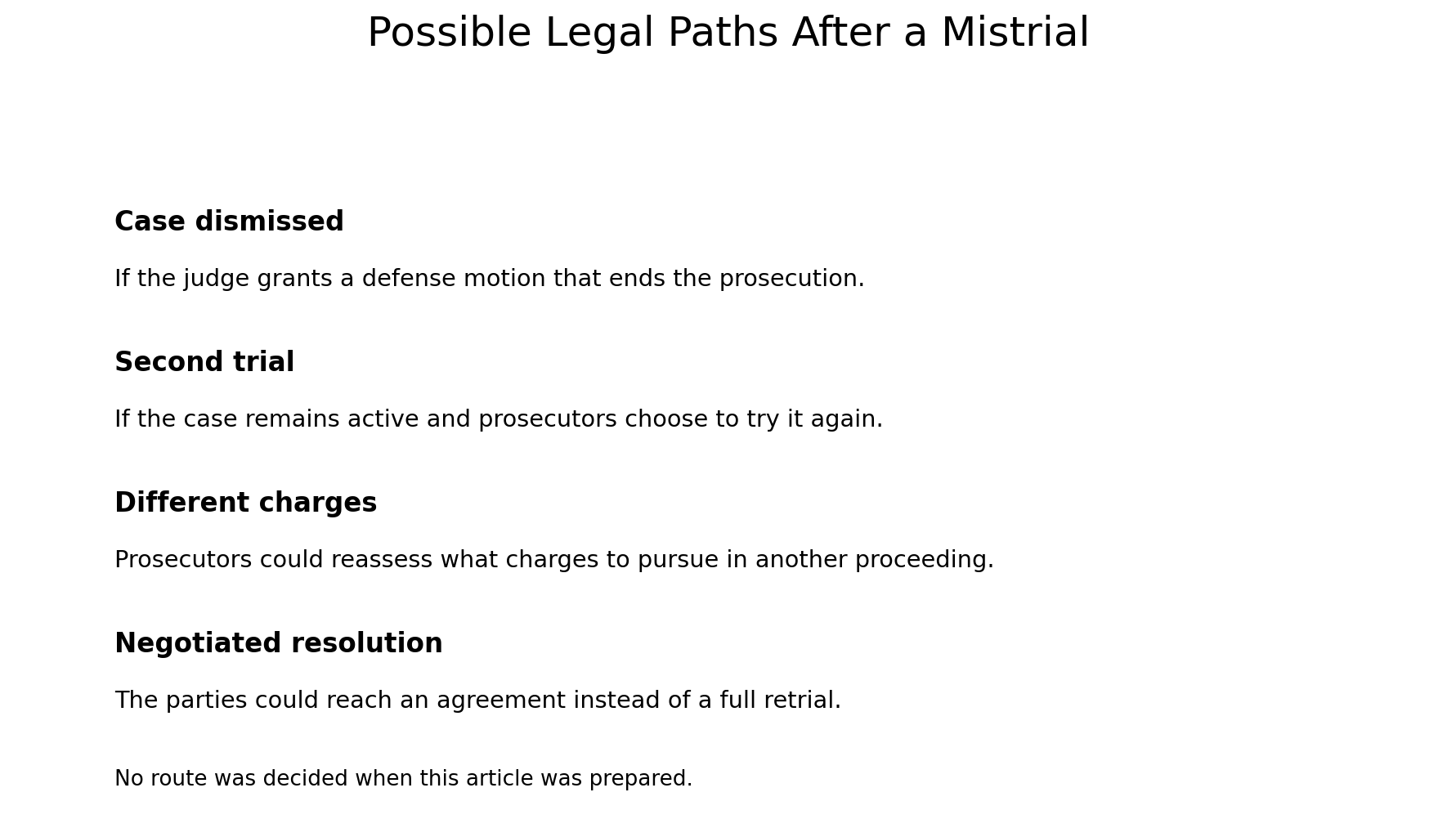
That leaves the case at a legal crossroads: dismissal, another prosecution or some other resolution could all be discussed, but none had been decided when the hearing began.
The First Trial Ended Without a Verdict
Clancy, a former labor and delivery nurse from Duxbury, Massachusetts, was charged with first-degree murder in the January 2023 deaths of her three children: Cora, 5; Dawson, 3; and Callan, 8 months.
The defense did not dispute that Clancy killed the children. The central issue at trial was whether she was criminally responsible at the time.
Her attorneys argued that she was suffering from postpartum psychosis and lacked the legal capacity required for criminal responsibility.
Prosecutors argued that she understood what she was doing and acted deliberately.
After weeks of testimony and days of deliberations, the jury could not reach a unanimous decision. Judge William Sullivan declared a mistrial on September 4.
A mistrial did not acquit Clancy and did not convict her. The murder charges remained pending.
What Jurors Said After the Trial Changed the Debate
After the jury was discharged, several jurors spoke publicly about what happened during deliberations.
Those accounts indicated that the panel was split 11-1, with 11 jurors favoring a finding that Clancy was not guilty by reason of lack of criminal responsibility and one juror refusing to join them.
Because there was no unanimous verdict, the court could not return an acquittal or conviction.
The post-trial accounts quickly became important to Clancy’s defense strategy.
Her attorneys argue that the trial judge should have done more to investigate allegations that the holdout juror was not applying the legal instructions correctly. They contend that the jury problem should have been examined before the court declared a mistrial.
The holdout juror has publicly defended his decision, saying he believed Clancy was responsible for what she did.
Those competing accounts now sit at the center of the fight over whether the case can legally be tried again.
Why the Defense Is Raising Double Jeopardy
The U.S. Constitution generally protects defendants from being prosecuted twice for the same offense after an acquittal or conviction.
A mistrial caused by a genuinely deadlocked jury is different. Courts can usually permit another trial when there was a “manifest necessity” to end the first one.
That phrase is now central to Clancy’s motion.
Her lawyers argue that there was not enough justification to declare a mistrial without a deeper inquiry into the juror dispute. If the judge agrees with that argument, the defense says a second prosecution would violate Clancy’s double-jeopardy rights.
Prosecutors oppose the attempt to end the case.
The question is not simply whether most jurors favored one side. It is whether the legal process that led to the mistrial satisfied the standard required before the state can try Clancy again.
The Defense Is Also Asking for a Not-Guilty Finding
Clancy’s lawyers are not relying on only one argument.
They have also renewed a request for a required finding of not guilty under Massachusetts criminal procedure.
That motion asks the judge to conclude that the prosecution’s evidence was legally insufficient to establish criminal responsibility beyond a reasonable doubt.
This is separate from the double-jeopardy claim.
The judge could reject one motion and still consider the other. He could also decline to dismiss the case and allow prosecutors to decide whether they want to proceed with another trial.
That is why the September 29 hearing matters even if it does not produce an immediate final decision.
The Holdout Juror Is Now Part of a Second Legal Fight
Clancy’s defense has also asked for a limited inquiry into the lone holdout juror.
The request focuses on questions about the juror’s conduct during deliberations and information that lawyers say may not have been fully disclosed during jury selection.
The juror has since retained his own attorney.
Defense lawyers argue that those issues could affect whether the mistrial was properly declared. The juror’s lawyer has rejected claims that his client acted improperly and has defended his use of the reasonable-doubt standard.
The court must now decide how far, if at all, it should investigate what happened inside the jury room.
That is a sensitive area because courts generally protect the secrecy and independence of jury deliberations. At the same time, judges can examine allegations of misconduct when they may have affected a defendant’s right to a fair trial.
Prosecutors Still Have a Major Decision to Make
Even if the defense motions fail, another trial would not automatically begin.
The Plymouth County District Attorney’s Office would still have to decide how it wants to proceed.
Prosecutors could seek another first-degree murder trial. They could consider different charges. They could negotiate a resolution with the defense. Or they could decide not to continue the prosecution.
No public retrial date had been set as the September 29 hearing began.
The decision carries practical as well as legal consequences.
The first trial lasted weeks, involved extensive expert testimony and required jurors to consider complicated questions about mental illness and criminal responsibility. A second trial would require many of those issues to be presented again.
The Case Has Always Turned on Criminal Responsibility
From the beginning, the most important disagreement in the case has not been over who caused the children’s deaths.
It has been over Clancy’s mental state.
Her defense presented evidence that she had experienced severe psychiatric symptoms after childbirth and argued that postpartum psychosis left her unable to appreciate the wrongfulness of her actions or conform her behavior to the law.
Prosecutors acknowledged that Clancy had mental-health difficulties but argued that the evidence showed planning, awareness and purposeful behavior.
Those are not merely medical questions.
Under Massachusetts law, the jury had to apply a specific legal standard for lack of criminal responsibility. That required jurors to evaluate extensive expert testimony alongside evidence about Clancy’s actions before, during and after the killings.
The first jury could not reach a unanimous conclusion.
Clancy Remains in Psychiatric Care
Clancy has remained under custody at Tewksbury State Hospital while the criminal case continues.
She was severely injured after the children’s deaths when she jumped from a window at the family’s home, leaving her paralyzed.
Her physical condition and ongoing psychiatric care have been part of the background to every stage of the prosecution.
They do not determine the legal outcome.
The questions before the court remain whether the first trial ended properly, whether the evidence was legally sufficient and whether prosecutors may pursue another case.
Why the September 29 Hearing Could Reshape the Case
A status hearing after a mistrial can sound procedural.
This one is not.
The defense is asking the judge to end the prosecution entirely. It is also asking the court to examine the juror whose vote prevented a unanimous verdict.
Prosecutors must respond to those motions while deciding whether they are prepared to take the case through another trial.
There is also a separate dispute over public comments about the case. Prosecutors have asked the judge to restrict statements by lawyers, arguing that heavy media attention could affect future proceedings.
That issue reflects another challenge facing any potential retrial: finding a new jury capable of evaluating the evidence without being overwhelmed by months of publicity.
What Happens Next
The next step depends on how Judge Sullivan handles the defense motions and what prosecutors decide to do if the case remains active.
A dismissal would end the murder prosecution unless successfully appealed.
A denial of the defense motions could clear the way for prosecutors to seek a second trial.
A negotiated outcome could take the case in another direction entirely.
For now, the key fact is that the first trial settled nothing.
Eleven jurors reportedly favored one result, one juror disagreed, and the court was left without a lawful verdict.
The September 29 hearing is about what the justice system is allowed to do after that deadlock — and whether Lindsay Clancy will ever face another jury.
Comments (0)
Loading comments...
May You Like

Jack Smith Defends His Integrity as Trump Investigations Face Renewed Political Firestorm

South Korea–Ukraine Rift Deepens Over North Korean POW Transfer as PURL Draws New Scrutiny