
Lindsay Clancy’s Case “Shocks the Nation”: What the Judge Really Said After the Hung Jury
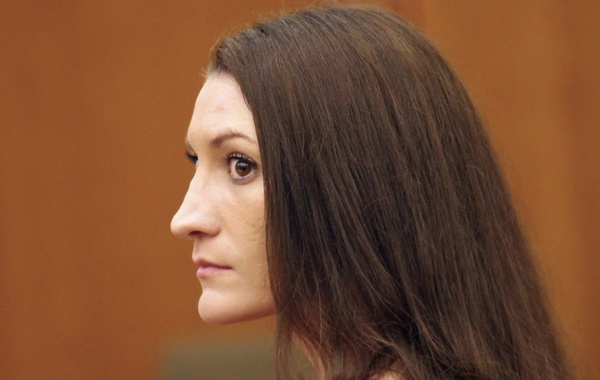
Verdict: MISLEADING — THE COURTROOM DRAMA IS REAL, BUT THE VIRAL GRAPHIC EXAGGERATES WHAT THE JUDGE ACTUALLY DECIDED
A dramatic graphic circulating online declares “Lindsey Clancy’s Case Shocks the Nation” and asks, “What did the judge really say?” It appears to refer to the extraordinary developments in the Massachusetts murder case involving Lindsay Clancy, whose trial ended in a mistrial after a jury became deadlocked.
There really was a dramatic courtroom dispute involving the judge, Clancy’s defense attorney and a lone holdout juror. And the judge ultimately declared a mistrial.
But Judge William Sullivan did not suddenly clear Clancy, declare her innocent, or announce a shocking new verdict.
Instead, the judge ruled that the jury could not reach a unanimous decision and that, under Massachusetts law, he had to declare a mistrial. The case therefore remains unresolved.
What happened in the Lindsay Clancy trial?
Clancy was charged with three counts of first-degree murder over the January 2023 deaths of her three children in Duxbury, Massachusetts.
Her defense acknowledged that she caused the children's deaths but argued that she was not criminally responsible because she was suffering from severe postpartum psychosis and other mental illness.
Prosecutors took a different position, arguing that although Clancy suffered from mental-health problems, she understood what she was doing and was criminally responsible for the killings.
The trial lasted nearly six weeks, with more than 80 witnesses and hundreds of exhibits.
Then came the jury deliberations.
The jury became deadlocked 11–1
The most extraordinary development occurred during the final days of deliberation.
The jury repeatedly told Judge Sullivan that it could not reach a unanimous decision. According to the defense and several jurors who later spoke publicly, 11 jurors favored finding Clancy not criminally responsible, while one juror would not join them.
Clancy's attorney, Kevin Reddington, argued that the holdout juror was not properly applying the judge's instructions concerning reasonable doubt.
Reddington asked Sullivan to remove the juror or conduct a more extensive inquiry.
The judge declined to do so.
That decision became one of the central disputes surrounding the eventual mistrial.
What did Judge Sullivan actually say?
The key moment came on September 4, when the jury again reported that it could not reach a unanimous decision.
Judge Sullivan ultimately concluded that the legal requirements for continuing deliberations had not been met.
His formal ruling was straightforward:
“The court declares a mistrial.”
He continued the case until September 29, 2026, for a status hearing, trial assignment and consideration of the Rule 25 motion.
That is very different from the suggestion in the graphic that the judge made some extraordinary declaration about Clancy's guilt or innocence.
He did not.
There was no verdict.
Why didn't the judge simply accept the 11–1 split?
Because a criminal jury verdict in this case had to be unanimous.
The judge could not simply treat 11 votes for one outcome as a legal acquittal.
After the jury indicated that it could not reach a unanimous decision, Sullivan determined that the jury was deadlocked and declared a mistrial. CNN's transcript of the proceeding records the judge explaining that, under the applicable statute and case law, he did not believe he had a choice but to declare the mistrial.
That distinction is critical.
11 jurors reportedly favoring an outcome is not the same thing as an acquittal.
Clancy therefore remains without a verdict.
The defense is now asking the judge to end the case
This is where the story gets genuinely significant.
Following the mistrial, Reddington filed a renewed Rule 25 motion asking Judge Sullivan to enter a finding of not guilty by reason of lack of criminal responsibility.
That motion is scheduled to be argued on September 29.
Massachusetts Rule of Criminal Procedure 25 allows a judge to enter a required finding of not guilty when the evidence is legally insufficient to sustain a conviction. The rule also specifically permits a motion to be renewed after a jury has been discharged without returning a verdict.
That does not mean Sullivan has already decided to acquit Clancy.
It means the defense is asking him to do so.
There is an important legal distinction
The viral graphic effectively asks readers to believe:
“The judge said something shocking and Clancy has effectively been cleared.”
The actual situation is:
“The defense is asking the judge to clear her, and the judge has not ruled on that request.”
Those are two very different things.
Could Lindsay Clancy still face another trial?
Yes.
The mistrial did not automatically end the prosecution.
Plymouth County District Attorney Timothy Cruz has not announced a final decision on whether prosecutors will retry Clancy. Reuters reported after the mistrial that the question remained unresolved.
The September 29 hearing is therefore extremely important.
Several possibilities remain, including:
- Judge Sullivan grants the defense's Rule 25 motion.
- The judge denies it and prosecutors pursue a retrial.
- Prosecutors decide not to retry the case.
- The parties explore another resolution.
At present, there is no new trial date and no final decision to retry her.
The holdout-juror controversy is real — but still disputed
The graphic's dramatic tone is partly rooted in the extraordinary disagreement inside the jury room.
After the mistrial, jurors began speaking publicly about what happened.
Several said the lone holdout acknowledged having reasonable doubt but nevertheless would not vote to find Clancy not criminally responsible. Other reports described heated exchanges during deliberations.
But those accounts are jurors' descriptions of deliberations after the trial, not a judicial finding that the holdout acted illegally.
That's an important distinction.
Reddington has argued that the juror failed to follow the judge's instructions. The juror's reported position and the prosecution's response complicate that claim.
Judge Sullivan ultimately did not remove the juror.
Trump also weighed in — but cannot pardon Clancy
The case received another burst of national attention when President Donald Trump was asked about the mistrial.
Trump called it a “horrible tragedy” and said he assumed another trial would follow. He also said Clancy would eventually face some consequence, such as a mental institution or jail.
Clancy's attorney subsequently publicly asked Trump to consider a pardon.
But there is a major legal problem with that request:
This is a Massachusetts state criminal case.
A president's federal pardon power does not extend to state crimes. Trump himself later acknowledged that he could not directly pardon Clancy in this case.
So the presidential-pardon angle has generated headlines, but it does not give Trump authority to end the Massachusetts prosecution.
The graphic itself is also problematic
The wording “LINDSEY CLANCY'S CASE SHOCKS THE NATION” is plainly designed for maximum emotional impact.
There are several problems with it.
1. Her name is Lindsay, not Lindsey
The defendant's name is Lindsay Clancy.
The graphic spells it “Lindsey.”
2. There was no shocking judicial verdict
The judge declared a mistrial.
He did not acquit Clancy.
3. The Rule 25 motion has not been decided
The defense is asking Judge Sullivan to find her not guilty. That request is pending.
4. The 11–1 split does not equal acquittal
Eleven jurors reportedly favored the defense position, but the jury could not reach the required unanimous result.
5. The courtroom imagery is not evidence
The supplied graphic uses highly stylized imagery rather than presenting a dated, sourced courtroom photograph. It should not be treated as a literal depiction of the proceeding.
Why this case has attracted enormous attention
The Clancy case has become much larger than a conventional murder trial because it sits at the intersection of several intensely debated issues:
postpartum psychosis, maternal mental health, criminal responsibility, psychiatric treatment, family tragedy and the limits of the insanity defense.
The prosecution and defense presented radically different interpretations of the same underlying events.
The defense argued that Clancy's mental deterioration rendered her incapable of understanding the wrongfulness of her actions.
The prosecution argued that the evidence showed planning and an understanding of what she was doing.
The fact that the first jury came so close to one side of that debate without reaching unanimity has made the case even more controversial.
What happens next?
The next major date is September 29, 2026.
Judge Sullivan is scheduled to consider the defense's Rule 25 motion and address the status of the case, including potential trial assignment.
Until then, it is inaccurate to say Lindsay Clancy has been acquitted, convicted or otherwise cleared.
The case remains unresolved.
Bottom line
The viral graphic is built around a real and extraordinary legal development, but its presentation is misleading.
Judge William Sullivan did declare a mistrial after the Lindsay Clancy jury failed to reach a unanimous verdict. The jury was reportedly split 11–1, and the dispute over the lone holdout juror became a major part of the aftermath.
But the judge did not declare Clancy innocent or not guilty.
Instead, her lawyer is now asking the judge to enter that finding under Massachusetts Rule 25. That motion remains pending, while prosecutors have not yet announced whether they will seek a retrial.
Verdict: MISLEADING — REAL MISTRIAL AND MAJOR COURTROOM DRAMA, BUT NO JUDICIAL ACQUITTAL OR “SHOCKING” FINAL VERDICT.
Comments (0)
Loading comments...
May You Like

Shocking news from Ohio: an unexpected development ahead of Trump's rally


South Korea–Ukraine Rift Deepens Over North Korean POW Transfer as PURL Draws New Scrutiny












