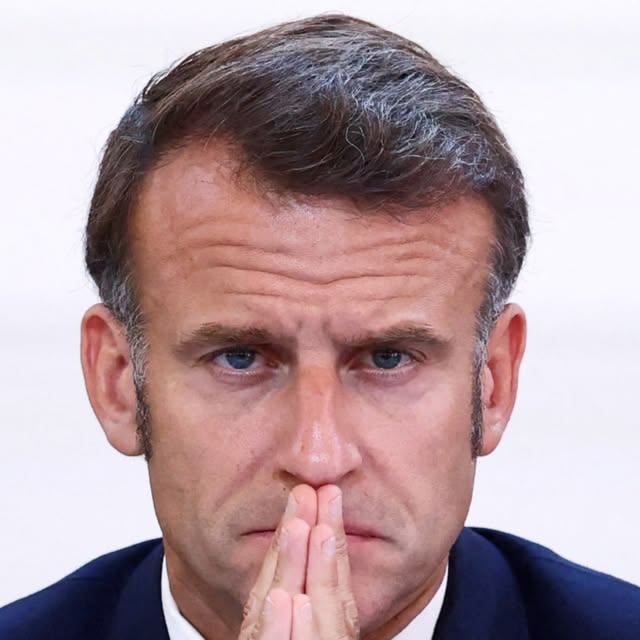
Macron Points to Trump's Iran War as France Erupts in Riots, Sparking New Political Clash
October 20, 2026 | Paris, France | World News
French President Emmanuel Macron has linked rising public anger in France to the economic consequences of the U.S.-Iran war, drawing criticism from President Donald Trump as nationwide demonstrations descend into widespread violence.
Speaking in a televised national address on October 18, Macron acknowledged legitimate concerns about soaring fuel prices while condemning rioters responsible for looting, arson, and attacks against police.
His remarks came after a weekend of extraordinary unrest that devastated businesses, damaged public institutions, and left French authorities struggling to restore order across several major cities.
The controversy has exposed competing explanations for France's political crisis, with Macron emphasizing economic pressures while Trump argues that immigration policies are responsible for the disorder.
Macron Links Economic Anger to the Iran Conflict

During Sunday's address, Macron distinguished peaceful demonstrators expressing genuine economic grievances from individuals who exploited the protests to commit violence against public institutions.
He specifically identified rising fuel costs as a source of public frustration, connecting higher energy prices to developments in the Persian Gulf conflict.
Macron emphasized that France had not participated in the war, yet French households and businesses were nevertheless experiencing its economic consequences through increasingly expensive fuel.
His comments were widely interpreted as criticism of Washington's military involvement, although he did not explicitly accuse Trump of personally organizing or causing the riots.
The distinction is significant: Macron cited the conflict as a contributing factor behind economic discontent, while separately blaming violent extremists and criminals for destructive unrest.
Trump Offers a Sharply Different Explanation
President Trump responded to France's unrest by criticizing its immigration policies, suggesting that Macron had ignored previous warnings about maintaining stronger national borders.
In public comments and social media statements, Trump portrayed the violence as evidence of broader European immigration failures rather than primarily an economic crisis.
His intervention intensified the political disagreement, bringing France's domestic security problems into an increasingly confrontational debate between Washington and Paris over immigration and international responsibility.
The disagreement also highlights broader tensions between the two leaders, whose approaches to Middle Eastern security, migration, and international diplomacy have frequently diverged.
Historic Town Hall Destroyed as Violence Spreads

The political confrontation followed nationwide demonstrations on October 17, when hundreds of thousands protested rising living costs, deteriorating public services, and government spending policies.
Although most demonstrations remained peaceful, violent groups clashed with police, looted commercial establishments, vandalized public property, and set fires in several French cities.
One of the most devastating incidents occurred in Limoges, where flames engulfed the historic town hall, destroying much of its roof and severely damaging the landmark.
Reuters reported more than 2,400 arrests and nearly 1,000 injured police officers as authorities assessed the consequences of France's worst unrest in years.
Macron condemned the destruction, promising accountability for perpetrators while acknowledging that the government must respond to legitimate public concerns about economic conditions.
Growing Pressure on Macron's Presidency
The crisis arrives during the final months of Macron's presidency, with France facing mounting fiscal pressures, political fragmentation, and declining confidence in its leadership.
Opposition figures have accused the administration of failing to address longstanding domestic problems, arguing that international developments cannot fully explain widespread dissatisfaction with government policies.
Macron has requested discussions involving students, educators, lawmakers, trade unions, and business representatives to develop proposals addressing the grievances behind the demonstrations.
He has also ordered a review of possible intelligence and policing failures, seeking to establish why security authorities struggled to anticipate the scale of violence.
The administration faces difficult choices as it attempts to restore public order without further alienating peaceful demonstrators demanding meaningful economic and social reforms.
What Happens Next?
The diplomatic dispute underscores how international conflicts can intensify domestic economic pressures, particularly when energy market disruptions affect household budgets and industrial operating costs.
For Macron, the immediate challenge is demonstrating that his government can address legitimate grievances while preventing further destruction and restoring confidence in French institutions.
For Trump, France's unrest has become another opportunity to promote his immigration arguments, extending an already contentious political disagreement between the American and French presidents.
Whether their competing explanations produce meaningful policy changes remains uncertain, but France's crisis has already become an international debate about leadership, economic stability, and public accountability.
Comments (0)
Loading comments...
May You Like
Barack Obama Makes a Major Midterm Announcement as He Steps Up Campaign Activity for Democrats
Barack Obama in Disbelief? Newly Released White House Photos
Latest Posts

Popular Posts

Trump’s administration is threatening Europe
Oct 20, 2026
Trump Impeachment Debate Intensifies
Oct 20, 2026