
MAJOR COURTROOM STUNNER AS ALL CHARGES ARE ABRUPTLY DROPPED AGAINST ILHAN OMAR
Courtroom Bombshell? What the Latest Claims About Ilhan Omar’s Charges Actually Reveal
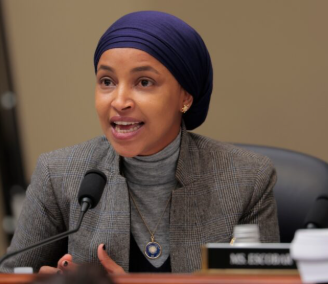
A dramatic headline claiming that charges against Representative Ilhan Omar have “just dropped” is bound to attract attention. The wording suggests a major courtroom development involving the Minnesota Democrat, but a claim this serious needs to be examined carefully: Has a prosecutor actually filed charges? Is there a court record, an indictment, or an official announcement? Or is the headline presenting an allegation or political controversy as a completed legal event?
Those distinctions matter. An investigation, a demand for prosecution, a civil complaint, and a criminal charge are not interchangeable. Until an identifiable court filing or official statement confirms that charges have been filed, it would be misleading to report that Omar has been criminally charged.

What the federal investigation is about
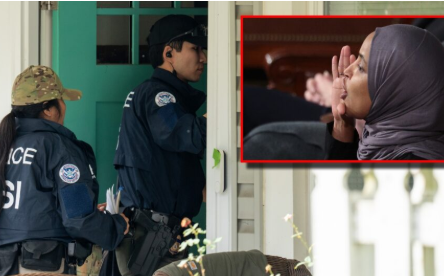
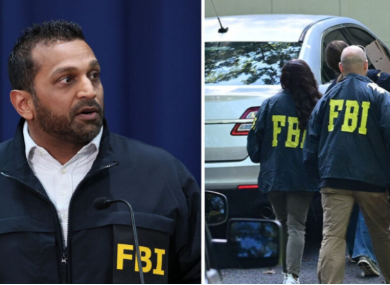
The image’s courtroom language appears to refer to a real and developing federal investigation involving Omar. On October 12, 2026, federal agents searched her Washington, D.C., residence under a court-authorized warrant. Reporting by The Washington Post says investigators are examining whether Omar or members of her family made false statements on immigration paperwork connected to their arrival in the United States and eventual citizenship. These are allegations under investigation, not findings of guilt.
The investigation has attracted particular attention because the allegations concern events dating back decades. Omar was born in Somalia, fled the civil war with her family, and later came to the United States. She became a U.S. citizen in 2000. Investigators are reportedly examining historical immigration records, including claims about information supplied on paperwork when she was younger.
Omar has repeatedly rejected allegations of immigration fraud. She has described the investigation as politically motivated and accused the Trump administration of using federal law enforcement against political opponents. Her position is that she has done nothing wrong.

Phone seizure and subpoenas add to the pressure
The investigation became more consequential after reports that federal authorities seized Omar’s phone and issued more than a dozen grand jury subpoenas. According to an Associated Press report, the subpoenas included requests involving some of her relatives and were connected to investigators’ efforts to gather evidence about possible irregularities in immigration paperwork.
Grand jury subpoenas are formal legal demands for testimony or documents. They can indicate that investigators are pursuing evidence, but they do not establish that a crime occurred. Nor do they mean that the people receiving subpoenas are themselves accused of criminal conduct.
The seizure of a phone can also provide investigators with access to potentially relevant communications and records, subject to applicable legal restrictions. However, the public does not have a complete account of what investigators took, what information they are seeking, or what evidence they believe supports their suspicions.
That lack of transparency has helped fuel speculation online. But the existence of a search warrant and subpoenas should not be confused with a criminal indictment. The distinction is especially important when the person under investigation is a sitting member of Congress.
Why the Justice Department wants the warrant kept sealed
Another important development concerns the court records behind the October search.
A coalition of news organizations, including The Washington Post, has sought to make the search-warrant materials public. Those documents could reveal more about the government's stated reasons for seeking the warrant, the scope of the search, and the evidence presented to the judge.
The Justice Department has argued that releasing the materials while the investigation remains active could damage its work. In a court filing, prosecutors said disclosure could expose investigative methods, identify sources or informants, and reveal information that could interfere with the inquiry.

The department has also told the court that investigators have not completed their review of the evidence seized during the search. Prosecutors said decisions about whether to bring charges, and whom to charge, had not yet been made.
That statement directly contradicts the impression created by the poster’s headline. If prosecutors have not made a charging decision, it is not accurate to say that charges against Omar have just been filed.
The court dispute over access to the warrant is nevertheless significant. The public has an interest in understanding why a sitting lawmaker's home was searched, while investigators have a legitimate interest in protecting an active case. The judge must weigh those competing concerns under the applicable legal standards.
Officials describe a serious investigation, but that is not a conviction
The investigation has also drawn attention because senior administration officials have publicly discussed it.
Homeland Security Secretary Markwayne Mullin described the inquiry as a “strong case” in an October 16 interview. He said investigators had executed multiple search warrants and expected to present the matter to a grand jury. He also suggested that prosecutors could examine whether alleged coordinated immigration fraud might fall under federal racketeering laws.
Those remarks indicate that officials believe the investigation deserves further examination. But a public characterization by a cabinet secretary is not a judicial finding, and it does not establish that Omar committed a crime.
A grand jury's role is to consider evidence presented by prosecutors and determine whether there is sufficient basis to issue an indictment. The process is generally conducted in secret. A subpoena can be part of that evidence-gathering process without resulting in charges against the person whose conduct is being examined.
There is also a difference between investigating possible false statements and proving that a person knowingly made a materially false statement. Prosecutors would have to establish the elements of any specific offense, including the required mental state, and address questions involving the relevant documents, dates, jurisdiction, and applicable statutes of limitation.

Political timing intensifies the controversy
The investigation has unfolded shortly before the November 2026 midterm elections, when Omar is seeking reelection. That timing has added a political dimension to an already sensitive legal matter.
Democrats have questioned whether the administration's actions risk influencing voters and have accused federal officials of targeting a prominent political opponent. The Associated Press has reported that the search of Omar's home is among several politically sensitive Justice Department actions taking place in the run-up to the midterms.
The administration, meanwhile, has defended the investigation as a law-enforcement matter. Officials have said the inquiry is based on evidence and that political considerations should not determine whether federal laws are enforced.
Both the timing and the public statements deserve scrutiny. However, timing alone does not prove that an investigation is politically motivated, just as an official assertion that a case is strong does not prove that the allegations are true.
The central questions remain factual: What exactly did investigators find? What evidence supports the allegations? Who is the subject of each part of the investigation? And will prosecutors ultimately conclude that the evidence supports criminal charges?
Those questions cannot be answered conclusively from the public information currently available.
What happens next?
The next major developments are likely to come from the investigation itself and the court proceedings over the sealed warrant.
Investigators may continue reviewing seized records, interviewing witnesses, and examining documents obtained through subpoenas. If prosecutors believe the evidence supports criminal charges, they could present their case to a grand jury. If they do not believe the evidence meets the legal standard, they could decide not to pursue an indictment.
The public may also learn more if the court orders some of the warrant materials released. Such a disclosure could clarify the government's stated basis for the search, although sensitive information might remain redacted while investigative work continues.

For Omar, the consequences are already political, even without a criminal charge. The search has placed renewed attention on old allegations, raised questions about the administration's use of federal investigative powers, and created another major issue in an already heated election season.
But the legal standard remains the same regardless of a politician's party or public profile. Investigators must establish evidence, prosecutors must identify a legally supportable offense, and any criminal case must proceed through the courts.
The key fact behind the dramatic headline is this: Ilhan Omar is the subject of a federal investigation, but the latest public reporting does not establish that criminal charges have been filed against her. The Justice Department has said that charging decisions have not yet been made.
Until an indictment or criminal complaint is made public, claims that Omar has been formally charged should be treated with caution. The investigation is serious, the political stakes are high, and more information may emerge. But an investigation is not a verdict—and a courtroom headline is not a court ruling.
Comments (0)
Loading comments...
May You Like

A TERRIFYING NEW DEVELOPMENT JUST PUT TRUMP UNDER PRESSURE
Trump’s Bold Iran War Statement
Trump Admin Suggests Nikki Minaj Could Fill Key Position

Latest Posts


Popular Posts
Danica Patrick Accuses Democrats
Nov 2, 2026


JD Vance’s Election Day
Nov 2, 2026