
Marjorie Taylor Greene Turns on Trump as Surging Fuel Prices
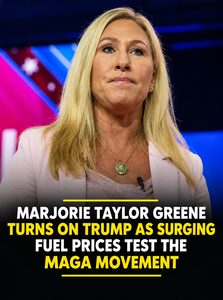
WASHINGTON — Former Rep. Marjorie Taylor Greene has sharply criticized President Donald Trump over soaring fuel costs, exposing a growing political break between the former Georgia congresswoman and her one-time ally.
Greene Takes Aim at Rising Fuel Costs
Greene recently posted videos and statements criticizing gasoline and diesel prices, arguing that Americans should not be forced to absorb increasingly expensive fuel while the administration pursues its policies.
At a California gas station, Greene highlighted prices of $6.19 per gallon for regular gasoline and $8.49 for diesel, calling the costs “way too high” and “ridiculous.”
In another statement, Greene directly blamed Trump for the elevated prices and argued that the economic consequences were reaching far beyond drivers at the pump.
“This is Trump’s fault,” Greene said in comments aired by CNN, while also arguing that the Iran war needed to end because of its impact on energy prices.
Her criticism represents a significant departure from her earlier relationship with Trump, when Greene was among his most outspoken congressional supporters and closely associated with the MAGA movement.
The Quote Circulating Online
The image accompanying this story attributes a broader statement to Greene, accusing people who previously complained about gasoline prices under President Joe Biden of remaining silent under Trump.
However, the precise wording displayed in the graphic could not be independently verified in the recent reporting reviewed for this article, so it should not be treated as a confirmed quotation.
What is documented is Greene’s recent criticism of Trump’s energy policies and her repeated complaints about gasoline and diesel prices, including several social-media posts published during September.
The distinction matters because Greene’s verified remarks have been considerably more specific, focusing on current fuel prices, the Iran conflict and the economic pressure she says American households are experiencing.
Diesel Prices Reach New Highs
Federal data show that the national average retail price for ultra-low-sulfur diesel reached $6.529 per gallon during the week ending September 21, according to the Energy Information Administration.
That represented an increase from $6.285 the previous week and remained substantially above the levels recorded during August, when prices were generally below $5.70 nationally.
Gasoline prices have also risen sharply. The EIA reported a national average of $4.610 per gallon for regular gasoline during the week ending September 21.
Higher diesel prices matter beyond transportation because diesel powers trucks, agricultural equipment and other machinery involved in producing and moving goods throughout the American economy.
Greene emphasized that connection in her CNN interview, arguing that increases in diesel costs can eventually affect food, supplies and other products transported across the country.
The Iran Conflict and Energy Markets
The recent increase in fuel prices has occurred alongside continuing conflict involving Iran and disruptions affecting international oil markets, creating additional uncertainty for refiners and consumers.
Reuters reported that oil prices remained elevated after Trump suggested at the United Nations that a possible peace agreement with Iran might not come until after November’s U.S. elections.
The Energy Information Administration has also warned that restricted tanker traffic through the Strait of Hormuz could affect global supplies and contribute to higher distillate prices.
According to the EIA, low U.S. distillate inventories and constrained Middle Eastern supply have contributed to elevated diesel prices, with seasonal refinery maintenance potentially adding pressure later this year.
The Trump administration has emphasized other factors as well. Energy adviser Jarrod Agen recently pointed to strained refining capacity while saying gasoline affordability remains a major priority for the president.
A Growing Political Break
Greene’s criticism comes after her relationship with Trump deteriorated substantially, eventually leading her to resign from Congress earlier this year following a series of public disagreements.
At the Texas Tribune Festival on September 24, Greene described herself as “politically homeless” and said “MAGA is dead,” while distinguishing the America First movement from the broader coalition supporting Trump.
Her disagreements with Trump have extended beyond energy prices, including disputes over the Iran conflict and other aspects of the administration’s foreign-policy agenda.
Earlier this month, Greene publicly called for an end to the Iran war, saying that fuel prices had become excessively high and were imposing costs on American consumers.
Trump’s Position on Prices
Trump has defended the economic consequences of the Iran conflict, describing higher gasoline prices as a relatively small cost associated with preventing Iran from obtaining nuclear capabilities.
At the same time, administration officials have emphasized that reducing fuel costs remains a priority and have pointed to domestic energy production, deregulation and refining capacity as important factors.
The competing explanations highlight the complexity of gasoline pricing, which reflects crude oil markets, refining capacity, inventories, transportation, seasonal demand and geopolitical disruptions.
What Happens Next?
With fuel prices continuing to pressure consumers, Greene’s criticism has become part of a broader political debate over the economic consequences of the administration’s approach to Iran and energy policy.
The immediate question for households remains whether gasoline and diesel prices will stabilize as global supply conditions change, particularly around the Strait of Hormuz and Middle Eastern oil production.
For Greene, the issue has also become a visible marker of her separation from Trump, as she increasingly criticizes policies associated with the president she once strongly supported.
The controversy illustrates how rising energy costs can create political tensions even within the same movement, particularly when voters and politicians confront a widening gap between economic expectations and prices at the pump.
Comments (0)
Loading comments...
May You Like

Shocking news from Ohio: an unexpected development ahead of Trump's rally

Russian Drone Strikes Kyiv Bridge as German Chancellor Arrives in Ukraine













