
MASSIVE LEADERSHIP CRISIS
Newsom’s Warning About Trump’s Insults Puts a Bigger Question in Focus
California’s governor said the president’s words set an example for children. The backstory, the White House response, and Newsom’s own tactics make the dispute more complicated than a viral quote suggests.
California Governor Gavin Newsom delivered one of his sharpest critiques of President Donald Trump in December 2025, arguing that the president's use of personal insults had consequences far beyond the political arguments of the day. In an emotional exchange about America's deeply divided climate, Newsom shifted attention from the politicians exchanging attacks to the children who hear those attacks on television and online.
The remarks, discussed in a December 12 television segment following a New York Times interview, were rooted in two well-documented incidents from the preceding month. Trump had insulted a female journalist during an exchange about Jeffrey Epstein and had used an offensive disability-related slur while criticizing Minnesota Governor Tim Walz. Newsom pointed to those moments as examples of the tone he believed the presidency was setting.
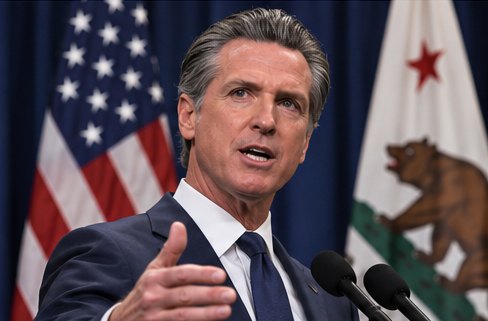
In his interview, Newsom asked what repeated exposure to hostile political behavior might mean for young Americans. He questioned whether a president who openly uses derogatory labels should be regarded as a role model. A graphic circulating online later compressed his message into a punchy quotation, but the wording on such graphics should not be mistaken for a complete, word-for-word transcript of the conversation.
One flashpoint came aboard Air Force One on November 14, 2025. Bloomberg White House correspondent Catherine Lucey asked Trump follow-up questions about the Epstein records. Trump interrupted her with the words 'Quiet, piggy,' an exchange captured on video that attracted condemnation from journalists and political opponents. The incident became a symbol for critics of the president's confrontational approach to questions from the press.
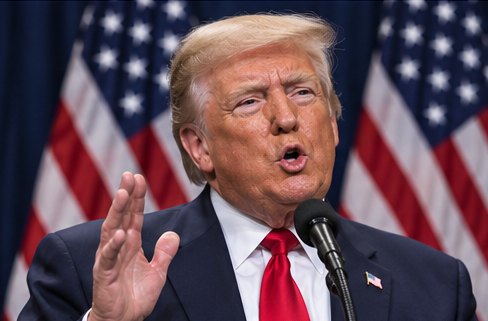
The White House rejected the view that the remark reflected a broader problem. At a November 20 briefing, Press Secretary Karoline Leavitt characterized Trump's approach to journalists as unusually frank and direct. She argued that the president regularly makes himself available to reporters and pushes back when he considers coverage unfair. The response underscored the divide between those who see his style as candor and those who view it as an abuse of influence.
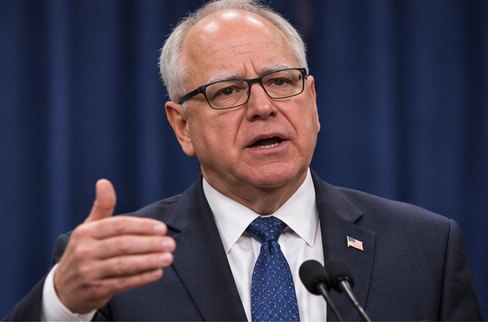
A second dispute followed on Thanksgiving Day, November 27, when Trump used an offensive term historically directed at people with intellectual disabilities while attacking Governor Walz in a social media post. His broader message criticized Minnesota's handling of immigration and public assistance issues. The wording prompted backlash not only because of its political target but because the insult carried implications for people with disabilities who were not involved in the dispute.
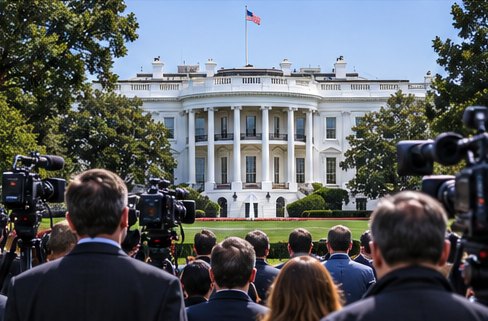
When reporters questioned Trump on November 30 about whether he stood by that language, he defended his criticism rather than retracting it. Walz, in turn, described the slur as harmful and juvenile. The disagreement extended beyond the original policy argument, becoming a debate about how language used by powerful public figures can normalize ridicule and exclusion.
Newsom's December comments connected the two episodes. He portrayed presidential language as something families cannot easily separate from everyday life, especially in an era when political confrontations circulate continuously through short video clips. His concern was not simply that elected leaders disagreed sharply, but that personal humiliation had become one of the most visible features of national politics.
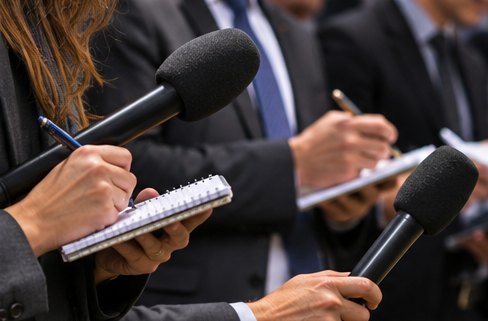
That argument carries a familiar principle: a public official can debate immigration, national security, spending, or the behavior of the media without resorting to insults about someone's body or intellectual ability. Critics of Trump's rhetoric say a president has an unusual responsibility to model restraint. Supporters counter that strong language reflects anger with a political establishment they regard as evasive and excessively scripted.
Yet Newsom's own communication style complicates the picture. His political operation has repeatedly used mocking posts and provocative images to taunt Trump. After the Air Force One exchange, Newsom and his press office circulated posts that turned the 'piggy' remark back on the president, including edited and artificial-intelligence-generated imagery. Those responses earned attention online but also exposed the governor to accusations of employing the same combative methods he criticized.
For Newsom's allies, that strategy is a deliberate attempt to compete in an information environment where restrained statements are easily ignored. They argue that responding to political mockery with sharper satire can help an opposition party command attention. For detractors, the approach risks weakening his appeal for more respectful public debate, especially when ridicule becomes a substitute for a detailed policy case.
The tension reveals a larger dilemma for modern politicians. Digital platforms reward memorable confrontations, while the habits of democratic government demand negotiation, compromise, and the ability to treat opponents as legitimate participants. A dramatic social media post can reach millions of people in a few hours; rebuilding confidence in political institutions is an entirely different undertaking.
There is also a distinction between criticizing the substance of a political leader's decisions and evaluating the example that leader sets. Newsom's comments focused on the second question. His concern about children was an argument about conduct and culture, not an empirical claim that any single statement could determine how an entire generation thinks or behaves.
Parents and educators encounter a similar challenge when public figures use insults that would draw consequences in many classrooms. Some families interpret the exchanges as evidence of deteriorating civic standards. Others see them as an honest reflection of longstanding tensions in American politics. In either case, the visibility of the presidency means that language from the Oval Office does not remain confined to Washington.
The media plays an important role in this cycle. Clips of the sharpest remarks travel faster than extended policy discussions, and framing can shape public reaction. A viral graphic featuring one angry quotation may accurately convey a speaker's position while leaving out when the statement was made, what prompted it, or how the interview continued. Those omissions can make an old political controversy appear like a new breaking event.
That timing matters here. Newsom's criticism belongs to December 2025, not to an unspecified new confrontation in November 2026. The November incidents involving the reporter and Walz preceded his interview. Recognizing the sequence makes the dispute easier to understand: first came Trump's remarks, then the responses, and finally Newsom's broader argument about the example set by elected officials.
The exchange also illustrates how rhetoric and policy are often debated on parallel tracks. Some voters prioritize the economic, immigration, or foreign-policy results they believe an administration delivers, even when they dislike its language. Others regard respectful treatment of individuals and institutions as part of effective leadership itself. Neither perspective can be reduced to a single social media quotation.
Newsom's prominence gives the dispute additional political significance. As the governor of the nation's most populous state, he has been a highly visible Democratic critic of Trump. Their contrasting communication styles generate attention because they embody competing approaches to political persuasion: confrontational populism on one side and an opposition that is increasingly experimenting with its own confrontational presentation on the other.
The immediate political consequences of the December remarks are difficult to isolate. Online engagement does not necessarily translate into changed opinions, and a widely shared criticism is not proof of a shift in voter support. What the exchange does show is that the behavior of presidents, governors, and public spokespeople has become a central part of political debate alongside their decisions in office.
Ultimately, Newsom's warning raises a question that extends beyond either man: what standards should Americans expect from leaders who know their words will be repeated in homes, classrooms, and online feeds? The answer will vary across the political spectrum, but the controversy demonstrates how one pointed remark can reopen a much larger discussion about respect, accountability, and the tone of public life.
Comments (0)
Loading comments...
May You Like

IOWA EMERGENCY: TOXIC AIR, POLLUTED WATER, 3,000 FAMILIES FORCED OUT AFTER 5-TON WASTE BLAST!


Latest Posts









Popular Posts




