
MASSIVE WHITE HOUSE SHOCKER
Trump Warned of Impeachment if Republicans Lose the Midterms — But Could He Actually Be Removed?
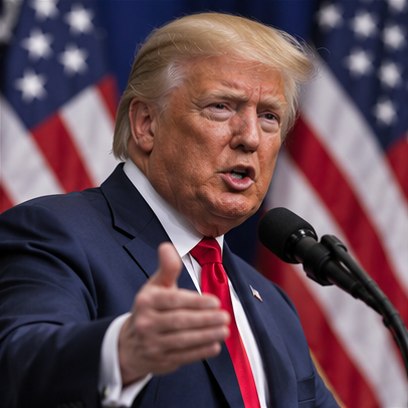
President Donald Trump is facing a consequential political test as Americans prepare to vote in the November 3, 2026, midterm elections. A striking warning he delivered earlier this year has resurfaced as the race for control of Congress approaches its conclusion: if Republicans lose their majority, he believes Democrats could attempt to impeach him again.
The warning was not merely an interpretation by political commentators. During a January 6 retreat with House Republicans in Washington, Trump explicitly urged his party to win the midterms and said Democrats would find a reason to impeach him if Republicans lost. The remarks offered an unusually candid glimpse into how the president viewed the stakes of the election.

Yet a dramatic claim circulating online goes further, suggesting Trump fears he will be thrown out of office immediately after the vote. That description confuses two very different events. Losing congressional control can expose a president to investigations and impeachment proceedings, but the midterm election itself cannot remove the president from the White House.
The distinction matters because the 2026 contest is not a presidential election. Voters will choose all 435 voting members of the House of Representatives and 35 U.S. senators, including two special Senate elections. Trump is not on the ballot for reelection, and the winning party will not automatically take over the executive branch.

What could change is the balance of power in Washington. Republicans entered the election with congressional majorities, while Democrats were campaigning to gain control of one or both chambers. A shift in the House would be particularly consequential because that chamber has the constitutional authority to begin impeachment proceedings.
If Democrats win the House, committee leaders could use their positions to investigate administration decisions, request records, summon witnesses and review how federal agencies have exercised their authority. Oversight is a regular congressional responsibility, but it can become much more intense when Congress and the White House are controlled by opposing parties.

For Trump, the possibility recalls some of the most contentious episodes of his first presidency. The House impeached him in December 2019 over accusations related to his dealings with Ukraine, including abuse of power and obstruction of Congress. The Senate later voted to acquit him.
He was impeached a second time in January 2021, following the attack on the U.S. Capitol. That impeachment concerned a charge of incitement of insurrection, and the Senate again acquitted him. These two episodes make the prospect of another impeachment uniquely personal for a president who has already gone through the process twice.
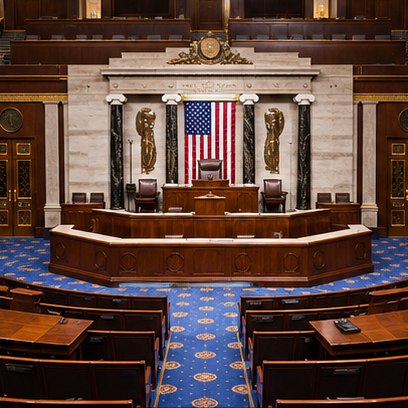
Trump has maintained that those earlier impeachment efforts were politically motivated. His political opponents have argued that impeachment is a constitutional safeguard for examining serious alleged abuses of office. That disagreement remains at the center of the debate over what a future Democratic-controlled House might do.
Still, impeachment is not synonymous with removal. Under the U.S. Constitution, a simple majority of the House can approve articles of impeachment. The Senate then conducts a trial, and conviction requires the support of two-thirds of senators present. Only a conviction results in removal from office.
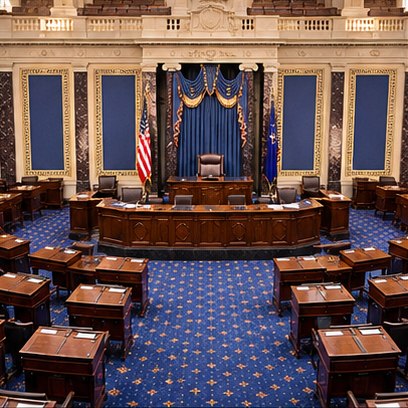
That high threshold means a president can be impeached without losing the presidency, as Trump's own history demonstrates. Even if Democrats secure a House majority, the possibility of a successful removal effort would depend on the evidence presented and the willingness of a large bipartisan coalition of senators to convict.
The president has made differing statements about this political risk over the course of the campaign. In January, he emphasized the danger of impeachment. In subsequent remarks, he spoke more dismissively about the prospect, at times suggesting that he had grown accustomed to impeachment fights and would continue to resist his opponents.
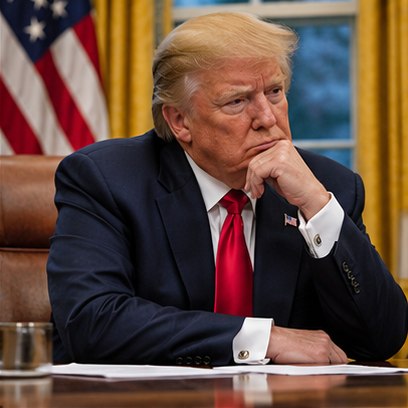
Behind the colorful rhetoric lies a concrete policy concern. A Congress controlled by Democrats could make it harder for the administration to enact legislation, approve spending priorities or advance certain appointments. House and Senate committee investigations could also consume attention that the White House would otherwise devote to its agenda.
Administration officials have reportedly considered ways to rely more heavily on executive authority if Republicans lose Congress. That approach could preserve some room for action on immigration, trade and federal administration, although courts, federal statutes and appropriations rules would continue to constrain presidential power.

Voters, meanwhile, are weighing issues that extend well beyond impeachment. Economic anxiety, the cost of living, healthcare, immigration and foreign-policy decisions have all shaped the 2026 political environment. An election framed by politicians as a struggle for power is also, for many families, a judgment about their everyday lives.
The electoral landscape remains uncertain until ballots are cast and counted. Polls and forecasts can point toward probable outcomes, but close districts, turnout patterns and late shifts in voter preferences can alter the final composition of Congress. Neither party can treat a prospective majority as an accomplished fact before the results are certified.
For congressional Republicans, the challenge is defending their majorities while also responding to the political strengths and vulnerabilities of a president who dominates national debate. Candidates in competitive districts must persuade voters on local issues even when the campaign is driven by questions about Trump's leadership.

For Democrats, retaking the House would offer more power to investigate and challenge the administration, but it would not settle whether impeachment should become a priority. Some party members favor accountability through aggressive oversight, while others worry that an impeachment confrontation could overshadow economic and policy concerns.
The most immediate consequence of a Democratic victory would therefore be a different governing relationship, not an automatic transfer of presidential authority. Trump could still sign executive actions within legal limits, veto legislation and negotiate with lawmakers, while facing greater congressional scrutiny and potentially more political gridlock.
As the country heads into Election Day, Trump's warning serves as a reminder of the stakes he has attached to congressional control. The question is not whether Americans can vote him out of office in the 2026 midterms—they cannot—but whether the election could open a new chapter of investigations, confrontation and another possible impeachment battle. The answer will begin to emerge when voters decide who controls Congress.
Comments (0)
Loading comments...
May You Like

BANGCHAK REFINERY DISASTER IN THAILAND—120,000 BARRELS A DAY SHUT DOWN, U.S. OIL PRICES SURGE 10%!


STORM WARNING: MILLIONS FACE EVACUATION, MACY'S GIANT BALLOONS GROUNDED!

Latest Posts










Popular Posts


