Mike Johnson Tells Americans: Want “More Money in Your Pockets”? Keep Republicans in Charge
The House speaker is making a direct economic pitch to voters as Republicans defend their tax record and consider Donald Trump’s controversial $5,000 dividend proposal before November’s midterm elections.
WASHINGTON, Sept. 16, 2026 — House Speaker Mike Johnson has delivered a blunt economic message to American voters, arguing they should keep Republicans in power if they want more money.
Johnson made the comment Tuesday during the weekly House Republican leadership news conference, where lawmakers promoted their economic record while defending President Donald Trump’s increasingly controversial proposal for $5,000 payments.
“If you want more money in your pockets, you’ve got to keep Republicans in charge,” Johnson told reporters while describing what he said were tangible financial benefits from Republican policies.
The speaker pointed primarily to tax reductions enacted by Republicans, arguing that the party’s policies allow Americans to keep more of their earnings rather than sending additional money to Washington.
Johnson specifically cited the Republican tax package enacted during Trump’s second presidency, highlighting provisions involving tips, overtime income, Social Security and other tax benefits promoted heavily by the party.
Republicans have branded those policies the Working Families Tax Cuts, while Johnson says the legislation represents a major reduction in taxes for working- and middle-income American households.
Johnson claimed Tuesday that an average Louisiana resident had retained $2,915 more because of Republican tax policies, although individual benefits vary considerably depending on income, household circumstances and tax liability.
Earlier this year, Johnson’s office said a family earning between $15,000 and $80,000 would receive an average 15% tax reduction, presenting the measure as evidence of Republican economic priorities.
The speaker also pointed to private-sector employment, deregulation and reduced government spending as evidence that Republicans have pursued a free-market economic strategy since taking unified control of Washington.
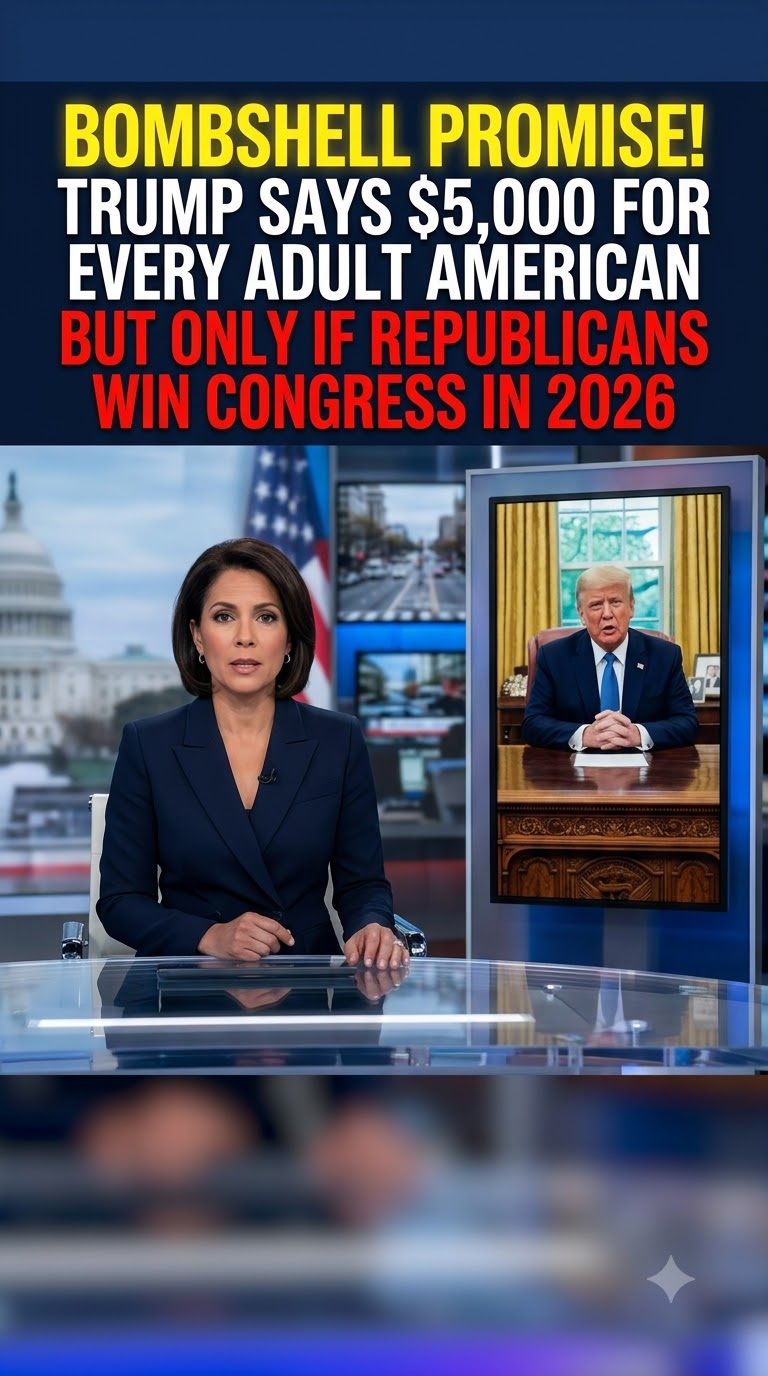
His latest comments, however, arrived during questions about a considerably more unusual Republican economic proposal: Trump’s promise to distribute $5,000 to every adult U.S. citizen if Republicans win November’s elections.


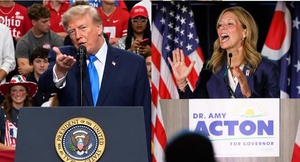
Trump announced the so-called “Trump Dividend” during the Republican midterm convention in Dallas, explicitly conditioning the payment on the GOP maintaining control of both the House and Senate.
The president has since insisted the payments will happen, telling reporters Sunday that the $5,000 dividend was going forward “100%,” despite substantial uncertainty surrounding congressional authorization and financing.
Johnson has been considerably more cautious. He confirmed Sunday that Trump would need Congress to authorize the payments and said lawmakers would examine the president’s proposal before deciding how to proceed.
Asked about the plan again Tuesday, Johnson described Trump as an ideas-driven president but emphasized that Congress was still processing the proposal and had not yet approved the payments.
The price represents an enormous obstacle. Providing $5,000 to eligible American adults could cost roughly $1.2 trillion, before additional borrowing costs, according to estimates cited by Reuters.
Several Republican lawmakers have themselves expressed reservations, warning that injecting such an enormous amount of money into the economy could worsen inflation and add substantially to federal borrowing.
Those concerns complicate Johnson’s pocketbook argument because affordability remains one of the central issues of the midterm campaign, with voters continuing to confront elevated costs for food, gasoline, housing and borrowing.
At last week’s Dallas convention, Republicans emphasized tax cuts and other household benefits while blaming former President Joe Biden and Democrats for persistent frustration over grocery and energy prices.


Trump’s $5,000 proposal gives Republicans an unusually simple financial message, but it also forces party leaders to explain how a government promising fiscal restraint could finance more than $1 trillion in payments.
Johnson has not promised Congress will ultimately approve the dividend. On Sunday, he said lawmakers would attempt to find consensus while acknowledging that legislation would be necessary before checks could be issued.
That distinction is important because Republicans hold relatively narrow congressional margins, while some GOP lawmakers remain skeptical of a proposal they fear could increase both inflation and the federal deficit.
The economic debate also extends beyond the proposed checks. Republicans are campaigning on tax reductions, private-sector employment and deregulation while Democrats are challenging the distributional effects and fiscal consequences of GOP policies.
Johnson’s statement therefore represents more than a defense of Trump’s dividend. It summarizes the broader Republican midterm argument that continued GOP control would allow the party to preserve and expand its economic agenda.
Trump has made the same election connection even more explicitly, telling supporters in Dallas that retaining Republican congressional control would result in Americans receiving the proposed $5,000 payment.
The president’s promise has consequently transformed an abstract debate over taxes and congressional control into a highly personal financial question, although the payment remains only a proposal rather than an approved federal benefit.
For voters, the competing economic claims will ultimately be evaluated against household experience — including take-home pay, taxes, grocery bills, gasoline prices, housing costs and whether wages are keeping pace with expenses.
Johnson’s message leaves little ambiguity about the Republican pitch: the speaker argues GOP policies leave Americans with more money, while Democrats dispute the party’s broader economic record and priorities.
Comments (0)
Loading comments...
May You Like
TRUMP HIT WITH 26 ARTICLES OF IMPEACHMENT

South Korea–Ukraine Rift Deepens Over North Korean POW Transfer as PURL Draws New Scrutiny

Russian Drone Strikes Kyiv Bridge as German Chancellor Arrives in Ukraine