
Mike Rogers’ Fundraising Email Promises to “Shield” Elon Musk From Congressional Scrutiny, Igniting Debate in Michigan Senate Race
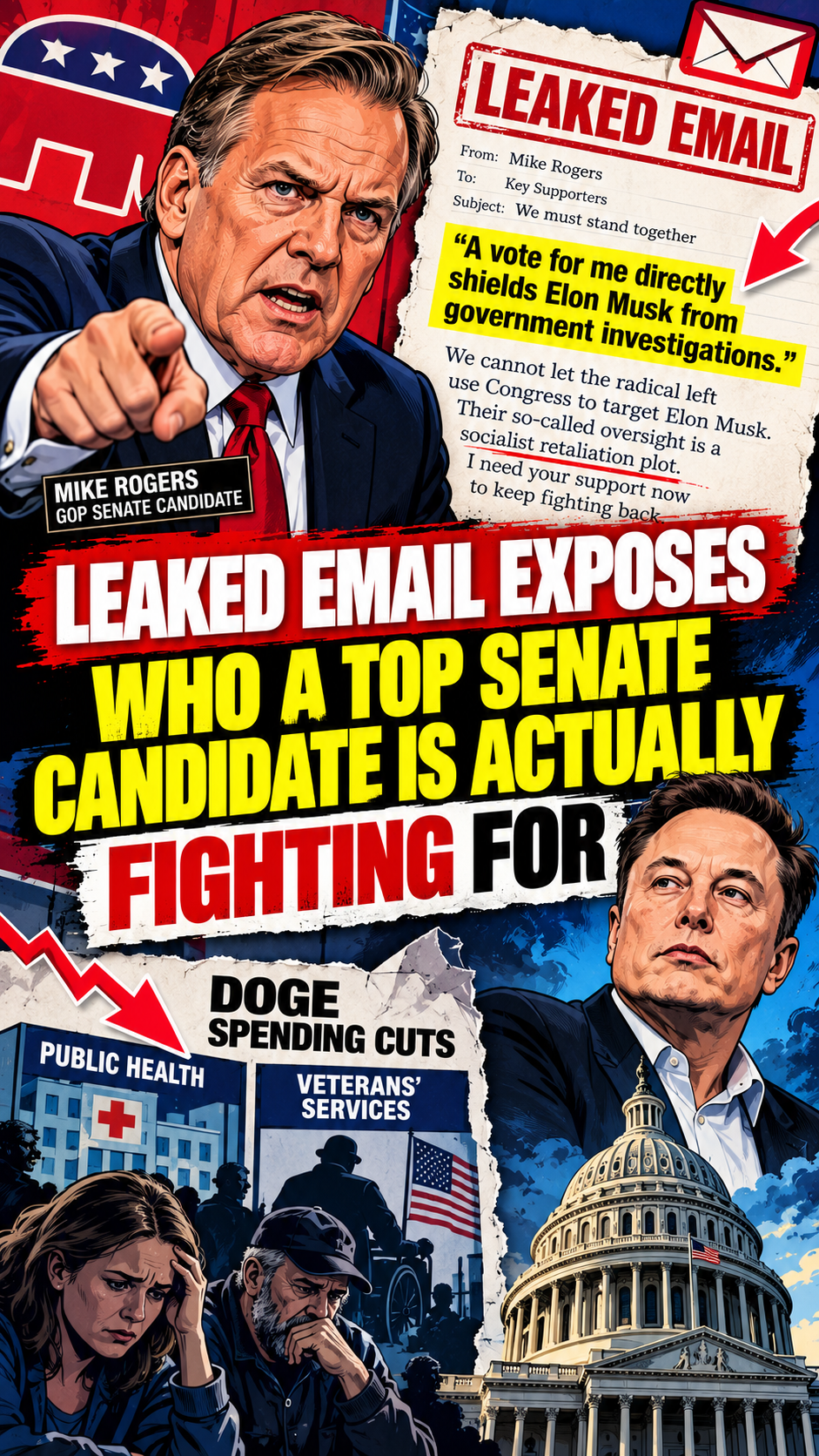
A fundraising appeal from Michigan Republican Senate candidate Mike Rogers has become the center of a political controversy after the former congressman urged supporters to contribute to his campaign as a way of protecting billionaire Elon Musk from potential congressional investigations into the Department of Government Efficiency, better known as DOGE.
The appeal, first reported by the Detroit Metro Times in July and subsequently highlighted by Michigan Democrats, offers an unusually explicit example of a congressional candidate linking campaign donations to the protection of a prominent private-sector figure from possible government scrutiny.
In the message, Rogers told potential donors that supporting his Senate campaign would mean “directly shielding Elon Musk.” He also requested an urgent contribution to help protect Musk and defend the Trump administration's political agenda.
The language immediately raised questions about the relationship between campaign fundraising, congressional oversight and the influence of wealthy individuals in American politics.
Rogers, a former chairman of the House Intelligence Committee and a longtime Republican figure in Michigan, is seeking a Senate seat in one of the country's closely watched 2026 elections.
His campaign has emphasized national security, economic growth, manufacturing and support for President Donald Trump's policies. But the Musk-focused appeal introduced another argument: that electing Republicans could prevent Democrats from pursuing investigations into the billionaire's work with DOGE.
The controversy has renewed scrutiny of the administration's government-restructuring efforts, including cuts to federal agencies and programs affecting public services.
There is an important distinction in the evidence: the fundraising appeal is documented in published reporting, but it was not a newly leaked email from October 2026. It was reported on July 22, several months before the current final stretch of the midterm campaign.
The cover image also does not reproduce an independently authenticated original email. Its text is a dramatized representation of the underlying story, and some of its wording differs from the excerpts published by news organizations.

The original report described a fundraising message sent to supporters on the preceding Saturday, July 18. In it, Rogers warned that a Democratic-controlled Senate could subpoena Musk over his role in the federal government's restructuring efforts.
The appeal was built around statements by Democratic Representative Ro Khanna of California, who had called for Musk to face congressional scrutiny.
Rogers characterized the prospect of an investigation as a politically motivated effort against a prominent Trump ally. His message used the phrase “socialist retaliation plot” and compared the proposed scrutiny to practices associated with Soviet Russia and communist Cuba.
The campaign's language presented Musk not merely as a business executive whose actions might be examined by lawmakers, but as a figure requiring political protection from an incoming Democratic majority.
That framing is significant because congressional investigations are a longstanding function of the legislative branch. Congress can conduct oversight of executive agencies, review the use of public money, examine the implementation of federal laws and seek testimony from people with relevant knowledge.
Whether a particular investigation is justified depends on its scope, evidence and purpose. Lawmakers may disagree about those matters, but the existence of a subpoena or oversight hearing does not by itself establish political retaliation.
The Detroit Metro Times reported that Rogers had previously praised DOGE's efforts to reduce the federal workforce and had discussed advising officials involved in the initiative.
The fundraising message therefore fits into a broader policy position that Rogers has expressed publicly.
He has supported efforts to reduce federal spending and limit the size of government, arguing that temporary administrative reductions would not be sufficient unless Congress also changed the underlying laws.
At an April campaign event in Saginaw County, Rogers discussed his conversations with DOGE officials and argued that reductions needed to be made permanent through legislation.
He suggested that federal staffing could grow again if lawmakers failed to act.
His position reflects a familiar argument among fiscal conservatives: that long-term reductions in government spending require structural changes rather than temporary administrative decisions.
Critics counter that aggressive cuts can weaken public services, eliminate institutional expertise and reduce the government's capacity to carry out responsibilities authorized by Congress.
The dispute is not simply about the number of federal employees. It concerns which programs should be funded, how efficiently they operate and what happens to the people who depend on them.

Musk's involvement with DOGE has been central to those disagreements.
The initiative was launched during Trump's second administration with a mandate to identify waste, reduce spending and restructure federal operations.
Supporters have argued that federal agencies contain unnecessary bureaucracy and that government should make greater use of technology, automation and administrative consolidation.
Critics have challenged the methods used to calculate savings, the consequences of workforce reductions and the extent to which decisions were subjected to independent review.
The controversy has extended beyond domestic administrative offices to programs involving international development, scientific research, public health and veterans' services.
Those areas have different funding structures and legal obligations, making it important to distinguish proposed cuts, completed reductions and the measurable consequences of individual decisions.
A reduction in an agency's budget, for example, does not automatically establish that a particular hospital closed or that a specific patient lost care. Such conclusions require evidence connecting the funding decision to the outcome.
At the same time, government spending decisions can have real consequences for employees, beneficiaries, contractors and communities.
The central oversight question is whether DOGE's changes delivered the promised savings and whether any financial benefits outweighed disruptions or losses in public services.
That question is relevant regardless of which political party controls Congress.
The administration has defended its restructuring program. In a statement reported by The National Memo, White House spokesperson Anna Kelly said the administration's reforms had reduced bureaucracy and made government more responsive to its priorities.
Former aid-program personnel interviewed in the same reporting disputed the administration's assessment, describing harmful consequences from reductions in international assistance.
Those opposing accounts highlight why independent documentation matters.
Assertions of savings should be tested against government expenditure records and agency performance. Claims of harm should be examined using program data, service-delivery records and evidence of specific outcomes.
Neither political support for DOGE nor opposition to it substitutes for that analysis.

The fundraising appeal also raises a constitutional and institutional question: What responsibility does a senator have when Congress considers investigating actions taken by the executive branch or people associated with it?
Congressional oversight is not confined to one party. Republican-led committees have investigated Democratic administrations, while Democratic-led committees have investigated Republican administrations.
Oversight can involve requests for documents, public hearings, interviews and subpoenas. It may examine government spending, regulatory decisions, contracting practices and the conduct of public officials.
A congressional investigation is not the same as a criminal prosecution, and being called to testify does not establish wrongdoing.
Likewise, an investigation into DOGE would not automatically establish that Musk committed misconduct.
The relevant questions would include what authority DOGE exercised, who made particular decisions, whether legal procedures were followed and whether the administration's stated objectives were achieved.
Rogers' fundraising appeal presented the possibility of such scrutiny as a political threat.
Khanna and other advocates of congressional investigation have presented oversight as a means of determining accountability for government decisions.
Those positions reflect different interpretations of what Congress should do with its investigative powers.
The public interest lies in establishing the facts through procedures that allow evidence to be examined and disputed claims to be tested.
The Michigan Democratic Party seized on Rogers' language as an election issue.
In a July political bulletin, the party highlighted the fundraising message and accused Rogers of prioritizing the interests of Musk and other wealthy political allies over the concerns of Michigan residents.
The party also connected the appeal to its broader criticism of federal spending cuts and rising household expenses.
Those accusations are partisan campaign arguments, not independently established conclusions about Rogers' personal motives.
Nevertheless, the underlying fundraising language was also reported by a local news organization, giving voters a documented statement against which to assess the campaign's priorities.

The issue is especially relevant in Michigan, where federal economic policy intersects with manufacturing, transportation, healthcare and public employment.
Michigan's economy is closely connected to the automotive industry and its extensive network of suppliers.
Federal trade decisions, tax policies, environmental regulations and investment incentives can affect employers and workers throughout the state.
Healthcare affordability, prescription-drug prices and the cost of living are also prominent concerns for many households.
Rogers' official campaign platform addresses several of these issues, promising to support manufacturing jobs, lower the cost of gasoline and groceries, protect Social Security and Medicare, and reduce prescription-drug expenses.
The campaign also emphasizes his background as an Army veteran, former FBI agent and former chairman of the House Intelligence Committee.
Those stated priorities provide a broader picture of his candidacy than the Musk fundraising message alone.
The controversy nevertheless creates a point of comparison between the campaign's public policy commitments and its fundraising appeals.
A candidate can support spending reductions while also arguing for the preservation of particular benefits. Whether those positions are compatible depends on the actual budget proposals and legislation the candidate supports.
Similarly, a candidate may oppose an investigation believed to be politically motivated without opposing congressional oversight in every circumstance.
The July appeal is evidence that Rogers sought donations by portraying protection of Musk as a reason to support his campaign.
It does not, on its own, establish how Rogers would vote on every future subpoena, appropriations bill or government accountability measure.
Those distinctions are important when assessing political fundraising language, which is often designed to generate urgency and encourage immediate contributions.

The broader Senate campaign has intensified as Election Day approaches.
Michigan is among the states receiving substantial attention from national political organizations as Republicans seek to maintain their Senate majority and Democrats attempt to gain seats.
On October 21, Reuters reported that MAGA Inc., a super PAC aligned with Trump, had launched an advertising effort exceeding $277 million across the final weeks of the midterm campaign.
The spending included major investments in Michigan, Texas and Ohio, with resources directed toward Republican Senate candidates including Rogers.
Reuters reported that Republicans held a 53–47 Senate majority heading into the election cycle, making competitive Senate races important to the balance of power in Washington.
Campaign spending figures demonstrate where political organizations are allocating resources. They do not establish which candidate will win.
The same caution applies to individual fundraising controversies.
An appeal that draws criticism online may become a subject of campaign advertising and media coverage, but its electoral effect cannot be determined without reliable evidence about voter responses.
The available reporting documents the appeal and the criticism surrounding it. It does not establish that the message caused a measurable shift in Michigan voters' preferences.
That limitation is particularly important when viral political graphics claim that an entire electorate has reacted with outrage.
Public criticism from journalists, political organizations and social-media users is not equivalent to a representative survey of Michigan voters.

The most consequential policy questions surrounding DOGE remain larger than any individual campaign email.
How much money did federal restructuring actually save? Which services were reduced? What safeguards governed the use of sensitive government information? Were the decisions consistent with existing laws? And what oversight mechanisms were available to identify mistakes or unintended consequences?
These questions affect taxpayers and recipients of federal services alike.
They also extend to the federal government's ability to deliver veterans' benefits, administer healthcare programs, support scientific research and respond to emergencies.
Some programs may be capable of operating more efficiently. Others may face serious operational problems if staffing or funding is reduced without adequate planning.
Determining the difference requires evidence rather than assumptions about whether every cut is beneficial or harmful.
A future congressional inquiry could examine those issues, although the precise scope of any investigation would depend on the decisions of lawmakers and relevant committees.
Musk and other individuals involved would retain the opportunity to respond to allegations and challenge disputed claims.
The public would also have an interest in understanding what decisions were made, who authorized them and how the government measured their effects.

Rogers' fundraising appeal has become politically notable because it linked those oversight questions to the fate of a prominent billionaire and Trump ally.
Instead of focusing exclusively on tax policy, federal spending or the Michigan economy, the message argued that supporting his Senate campaign would help protect Musk from potential congressional scrutiny.
That language is documented in reporting from July and has been repeated in subsequent political criticism.
But it is important not to confuse the fundraising appeal with proof of a secret agreement, an unlawful arrangement or a completed effort to obstruct an investigation.
No such conclusion follows automatically from the published excerpts.
The story concerns a candidate's public fundraising rhetoric, the political debate surrounding DOGE and competing views about the proper role of congressional oversight.
As the November 3 election approaches, Michigan voters are being presented with different arguments about economic policy, government accountability and the direction of federal institutions.
Rogers' appeal is one piece of that record.
The central documented finding is that a major Republican Senate candidate asked supporters to contribute by presenting his campaign as a means of protecting Elon Musk from possible congressional investigations.
Whether that position reflects a legitimate concern about partisan retaliation or an inappropriate effort to discourage scrutiny is a contested political question.
What is not in dispute is that Congress has an established oversight role and that the activities of the federal government—including initiatives intended to reduce its size—can be examined through that process.
The controversy therefore reaches beyond one fundraising email. It raises a question that remains relevant regardless of which party holds power: how elected officials balance loyalty to political allies with their responsibility to oversee the use of government authority.
The appeal was real and previously reported. The suggestion that it was newly leaked in October is misleading. And the illustration's purported email should not be treated as the original document.
Sources: Detroit Metro Times — Reporting on Rogers, Musk and DOGE; American Bridge research archive — Fundraising excerpts and original reporting references; Michigan Democratic Party — July criticism of the fundraising appeal; The National Memo — Rogers' appeal and DOGE oversight controversy; Mike Rogers for Senate — Official campaign positions; Reuters — October 21 reporting on national Senate campaign spending.
Editorial clarification: The cover image is a stylized political composite, not an authenticated reproduction of the original fundraising email. The appeal was publicly reported in July 2026, and its use of the word “shielding” is supported by published excerpts. Claims about illegal conduct, the candidate's private motivations or specific harms from individual spending cuts require separate evidence and should not be inferred from the image.
Comments (0)
Loading comments...
May You Like


EAST COAST CATASTROPHE — $20 BILLION AT STAKE, 5 MILLION AT RISK OF LOSING POWER, WATER AND HEAT!










Popular Posts




