Milei Escalates Falklands Claim: “The Islands Are Ours” as Argentina Targets Oil Companies
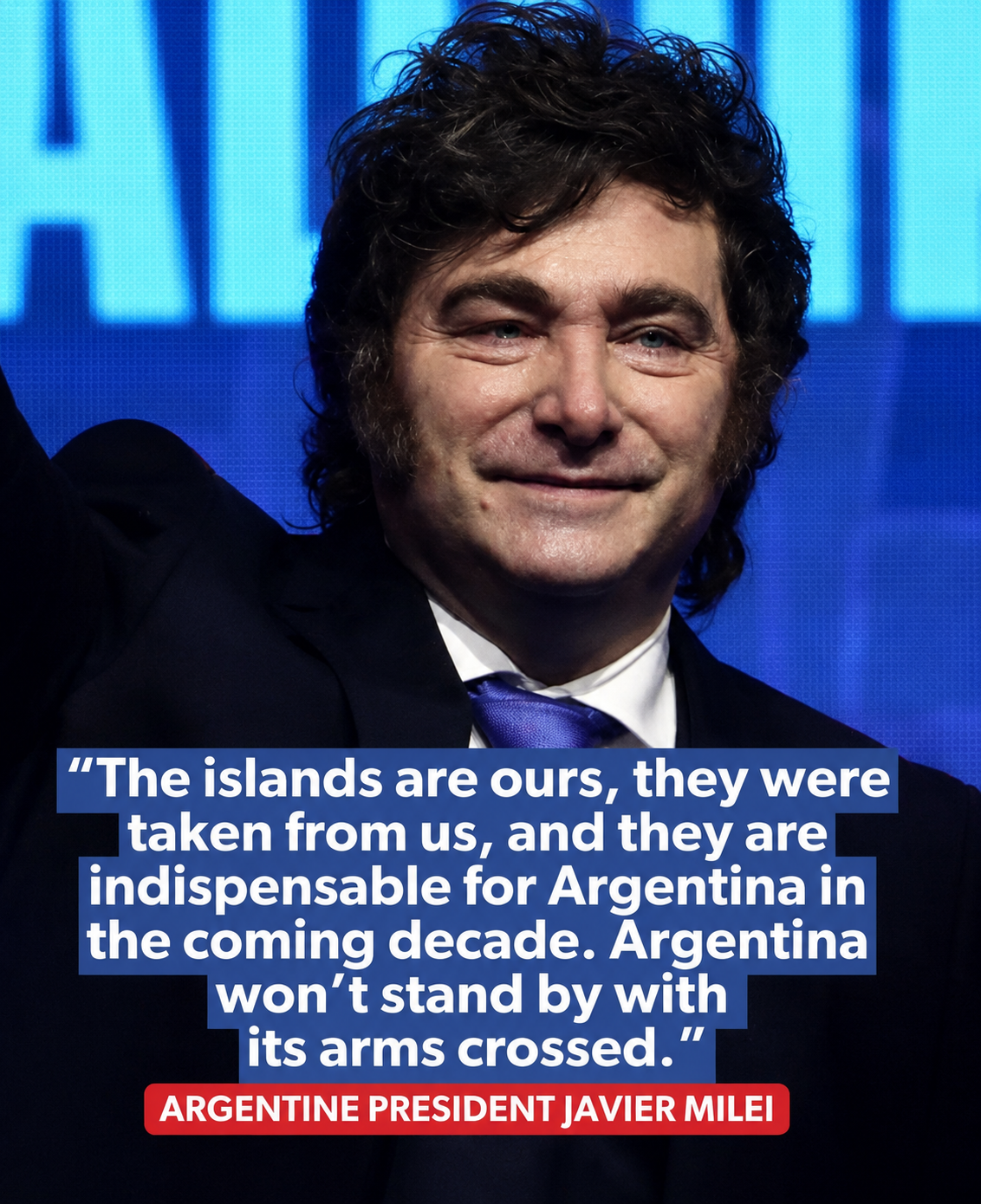
A new viral graphic featuring Argentine President Javier Milei carries a striking message about the Falkland Islands, declaring: “The islands are ours, they were taken from us, and they are indispensable for Argentina in the coming decade. Argentina won’t stand by with its arms crossed.” The image identifies the speaker as Argentine President Javier Milei.
Unlike many viral political graphics, the quote is substantially authentic. Milei made the remarks in a televised national address on Sept. 3, 2026, in which he renewed Argentina’s sovereignty claim over the British-controlled Falkland Islands — known in Argentina as the Malvinas — and announced tougher action against offshore oil development.
But the bigger story is what came immediately before and after the speech: Donald Trump has suggested that the United States could reconsider its traditional position on the dispute, while Argentina is preparing sanctions against companies involved in the potentially lucrative Sea Lion oil project.
Milei Really Did Say the Islands Are “Ours”
The Argentine government published the full national address on its official website.
In the speech, Milei argued that the Malvinas are an Argentine national cause and called for political unity behind the sovereignty claim. He described the islands as having been taken from Argentina and said they were indispensable to the country's projection in the coming decades.
The wording in the viral graphic is therefore not an invented quote.
There is, however, a small translation difference worth noting.
The image says “in the coming decade,” while English-language reporting and translations of Milei's remarks render the phrase as “in the coming decades.” The original Spanish speech refers to las próximas décadas, meaning “the coming decades.”
That distinction does not change the substance of his statement, but it is important when presenting the quotation as exact.
Argentina Is Now Targeting Falklands Oil
The speech went beyond symbolic rhetoric.
Milei announced plans for Argentina to impose tougher sanctions on companies involved in oil exploration and development around the Falkland Islands. His government says such activities violate Argentine sovereignty.
The immediate target is the Sea Lion development in the North Falkland Basin.
Reuters reports that the field is estimated to contain approximately 1.7 billion barrels of oil and is being developed by Navitas Petroleum and Rockhopper Exploration. First oil is expected in 2028.
The companies reject Argentina's legal position. Rockhopper said on Sept. 4 that the Sea Lion partnership operates under valid petroleum licenses granted by the Falkland Islands government, with the support of the British government.
Navitas likewise says Sea Lion is under development, with first oil planned for March 2028.
That means the sovereignty dispute is no longer only about territory and national identity.
Oil and natural resources have become a major economic dimension of the confrontation.
Trump Has Changed the Political Equation
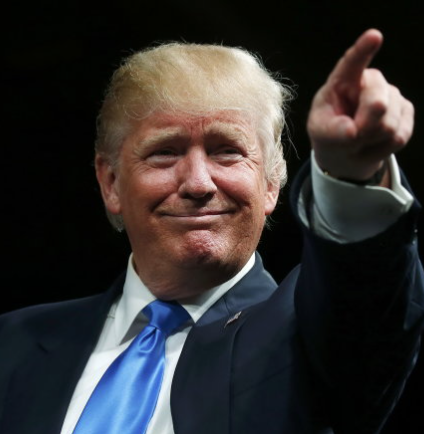
The timing of Milei's speech is especially significant because Trump has recently raised questions about Washington's position.
On Aug. 31, Trump said he was reviewing the U.S. position on the Falkland Islands. Reuters reported that the United States has traditionally maintained a neutral position over the sovereignty dispute since the 1982 war.
Trump subsequently declined to say whether Washington would support Britain if Argentina attempted to retake the islands militarily.
In an interview with GB News, Trump referred to the 1982 war and Britain's successful effort to retake the islands, while criticizing the UK for what he considered insufficient support for U.S. military operations involving Iran.
That does not amount to a formal U.S. decision to recognize Argentine sovereignty.
And that distinction matters.
There has been no announced U.S. policy change transferring recognition of the Falklands to Argentina. Trump has said he is reviewing the issue, which is considerably different from formally abandoning Britain's position.
Britain Pushes Back
The British government remains unequivocal.
The United Kingdom continues to support the Falkland Islanders' right to determine their political future and rejects Argentina's sovereignty claim.
That position has a particularly strong democratic argument behind it: in a 2013 referendum, 99.8% of voters chose to retain the islands' status as a British Overseas Territory. The vote had a turnout of about 92%.
Britain therefore argues that the wishes of the islanders must be central to any discussion about the territory's future.
Milei takes the opposite position, arguing that the islanders do not possess the right to determine sovereignty over what Argentina considers its territory. His latest speech explicitly rejected that interpretation.
That disagreement goes to the heart of the dispute.
The Falklands War Still Shapes Everything
The modern dispute cannot be separated from the 1982 Falklands War.
Argentina invaded the islands in April 1982, triggering a war with Britain. British forces ultimately retook the territory, and more than 900 people died during the conflict.
The war remains deeply embedded in Argentine national identity, while Britain regards the continued administration of the islands as an obligation to the people living there.
Milei's current approach is notable because his government had previously emphasized close relations with Britain and the West. His latest rhetoric represents a much more forceful attempt to place the Falklands claim back at the center of Argentine politics.
Why Oil Makes the Dispute More Serious
The Sea Lion project adds a potentially enormous financial incentive to the dispute.
Navitas says the project has already reached final investment decision for its initial development and plans to begin production in 2028. The company expects the field to produce for more than 30 years.
Rockhopper holds a 35% interest, while Navitas holds 65%. Reuters reports that the project is estimated to contain 1.7 billion barrels of oil.
Argentina considers the project unauthorized.
The companies and the Falkland Islands government consider the licenses legitimate.
That creates a potentially difficult collision between territorial sovereignty, international politics, resource development and corporate investment.
Argentina has already taken steps against companies connected to resource extraction around the islands, according to the latest reporting.
Milei Also Wants a Stronger Military Presence
Milei's speech included another significant announcement: plans to strengthen Argentina's military presence in the far south.
His government intends to develop a naval base in Tierra del Fuego, Argentina's territory closest to the Falkland Islands.
Milei did not announce an invasion or explicitly threaten military action in the speech.
Instead, he emphasized diplomatic, economic and legal measures while arguing that Argentina must have the capacity to defend its interests.
That distinction is important because the graphic's wording — particularly “won't stand by with its arms crossed” — could easily be interpreted as a military warning when the immediate measures announced by Milei were principally diplomatic, economic and legal.
Is Argentina Preparing for Another Falklands War?
There is no evidence from Milei's latest speech that Argentina has announced plans to invade the islands.
The immediate escalation involves:
- sanctions against companies involved in offshore oil activity;
- legislation designed to strengthen Argentina's legal response;
- diplomatic pressure;
- opposition to the Sea Lion project;
- greater military infrastructure in Tierra del Fuego;
- renewed international campaigning for Argentina's sovereignty claim.
The situation is nevertheless more sensitive because of Trump's comments.
For decades, Britain has operated under the assumption that the United States would not simply abandon its close relationship with London in a Falklands crisis. Trump's willingness to publicly question Washington's position introduces an element of uncertainty that Argentina is now openly exploiting.
Milei described Trump's remarks as evidence of “winds of change” favorable to Argentina's position.
What the Viral Graphic Gets Right — and What It Leaves Out
What it gets right:
- The quote is genuinely attributable to Milei.
- He said the Falkland Islands were “ours” and had been taken from Argentina.
- He described the islands as strategically important to Argentina for the coming decades.
- He said Argentina would not stand by passively.
- The remarks were made during a real national address in September 2026.
What needs context:
- The original Spanish says “coming decades,” not “coming decade.”
- Milei did not announce an invasion.
- His immediate actions involve sanctions, legislation, diplomacy and defense infrastructure.
- Trump's comments represent a potential shift in U.S. policy, not an announced change in U.S. recognition of sovereignty.
- Britain continues to reject Argentina's claim and emphasizes the islanders' right to self-determination.
Bottom Line
VERDICT: AUTHENTIC QUOTE — BUT THE VIRAL GRAPHIC NEEDS CONTEXT.
The central statement in the image is real. Javier Milei did say that the Falkland Islands are Argentina's, that they were taken from Argentina and that they are indispensable to the country in the coming decades. Argentina's government has published the speech, and multiple major news organizations independently reported the remarks.
What makes the story significant in September 2026 is not simply that Argentina has renewed its longstanding claim. It is the combination of three developments: Milei's tougher sovereignty campaign, the approaching Sea Lion oil project, and Donald Trump's public questioning of America's traditional position in the dispute.
For now, there is no announced military confrontation. But the diplomatic and economic stakes around the Falklands have clearly risen.
Comments (0)
Loading comments...
May You Like

OBAMA STUNS ON INSTAGRAM: MESSAGE MARKING 34-YEAR MILESTONE SPARKS A BUZZ
Jack Smith Defends His Integrity as Trump Investigations Face Renewed Political Firestorm